
Headline
US Blocks Nigerian’s Cryptocurrency Fraud, Imposes $50,000 Fine

The Kansas Attorney General’s Office, United States, successfully thwarted an attempt by Bimbo Toyin Akinyemi, a Nigerian national, to defraud a Kansas resident of cryptocurrency.
This was revealed in a statement titled, “State of Kansas, U.S., Thwarts Attempt by Nigerian Crypto Scammer to Defraud Resident, Attracting Over $50,000 in Civil Penalties.”
BitKE, known for reporting on Bitcoin, crypto, and blockchain activity in Africa, disclosed the news on Monday via its X handle #BitcoinKE.
According to the Attorney General’s Office, Akinyemi promised the victim a large return for investing in cryptocurrency. Court documents show that Akinyemi entered into a contract with the unnamed victim on 15 July 2023, where the victim was to purchase Bitcoin and deposit it into Akinyemi’s ‘investment wallet address,’ with an expected return of $500 to $1,240.
READ ALSO: Binance Reacts As FG Drops Tax Charges Against Executives
Akinyemi exploited the victim’s lack of understanding of cryptocurrencies, misleading them by concealing the traceability of fund transfers and falsely claiming that depositing funds into a digital wallet would ‘activate’ it as an investment account. After receiving the deposits, Akinyemi transferred the funds to his own account.
A fraudulent $1,000 cheque was then sent to the victim, which was never cashed. The Kansas Attorney General’s Office stated that the victim is entitled to a refund of their $250 investment, and Akinyemi is responsible for $50,000 in civil penalties for five violations, $4,000 in investigation fees and expenses, and all court costs.
The Charities and Financial Scams Unit of the Attorney General’s Office filed a lawsuit against Akinyemi under the Kansas Consumer Protection Act.
Authorities seized Akinyemi’s wallet, which reportedly contained half of a Bitcoin valued at over $28,900, as well as other digital currency worth more than $4,000.
READ ALSO: EFCC Arrests 46 Internet Fraudsters In Warri
A local judge issued a default judgment against Akinyemi after they failed to respond to the summons and petitions sent to their email address. In addition to the financial penalties, Akinyemi has been prohibited from engaging in consumer transactions within the state.
“Cryptocurrency is a borderless asset that allows international scammers to target and defraud Kansans from the comfort of a keyboard,” said First Assistant Attorney General Nathanial Castillo.
“Scammers realise they have a better chance of getting away with fraud if they convince victims to send cryptocurrency. Kansans should always thoroughly scrutinise anyone they meet online before sending payment in cryptocurrency.”
The U.S. Department of Justice (DoJ) and the FBI were also part of the investigations.



Headline
U.S. Lawmaker Reacts To Nigeria, U.S. Airstrikes
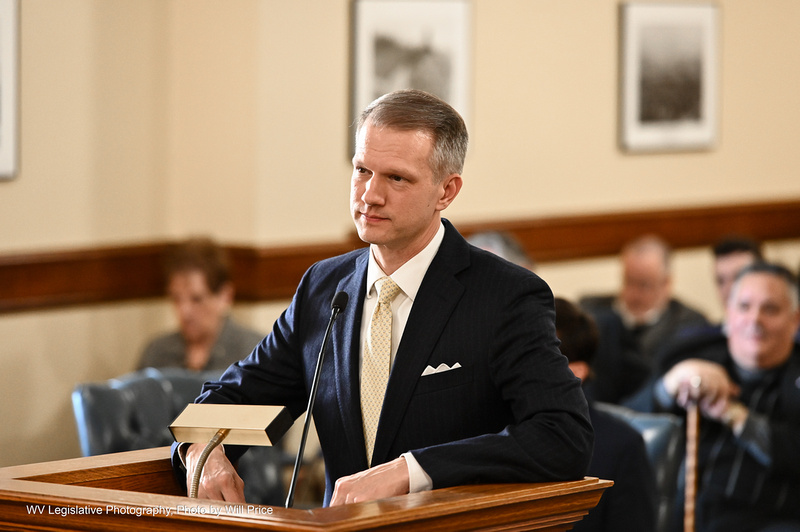
United States Congressman, Riley Moore, has stated that President Donald Trump is determined to put an end to the killing of Christians in Nigeria, warning that further action may follow if the violence persists.
Moore made the statement on Friday via his official X handle.
According to the lawmaker, the strike represents the first step in addressing what he described as the ongoing slaughter of Christians and the broader security crisis affecting Nigerians across religious and ethnic lines.
READ ALSO:US Dept Of War Shares Video Of Air Strikes In Nigeria
“President Trump has been clear that the killing of Christians in Nigeria must end,” he said.
He that the administration’s resolve on the matter should not be underestimated.
“As I stated at the outset: Do not test President Trump‘s resolved in this matter.
READ ALSO:JUST IN: US Forces Bomb Terrorists Camps In Nigeria
“Tonight’s strike in coordination with the Nigerian government is just the first step to ending the slaughter of Christians and the security crisis affecting all Nigerians,” he said.
He stressed that the operation signals a stronger stance by the United States in support of Nigeria’s efforts to tackle terrorism and violent extremism, noting that further measures could be taken if the situation does not improve.
Headline
US Dept Of War Shares Video Of Air Strikes In Nigeria
A video footage of the US military air strikes in Nigeria has emerged.
The video was released by the US Department of War following its air strikes against terrorists in Sokoto.
Earlier, the US secretary of War, Pete Hegseth had confirmed that military air strikes hit terrorists in Nigerians, saying it was deadly.
Later on, the US. African Command, confirmed that it conducted the attacks described as very deadly by President Donald Trump.
Trump said he was only keeping the promise he made earlier last month to strike the terrorists he believes are killing innocent Christians.
READ ALSO:JUST IN: US Forces Bomb Terrorists Camps In Nigeria
Although described as powerful and deadly, the casualty caused by the attack is yet to be released.
Explaining further, security expert, Brant Philip, said the strikes may have been launched “from the USS Paul Ignatius, using a Tomahawk missile.”
The Nigerian government through its ministry of foreign affairs has also confirmed that the strikes were successful.
Watch video here
Headline
JUST IN: US Forces Bomb Terrorists Camps In Nigeria
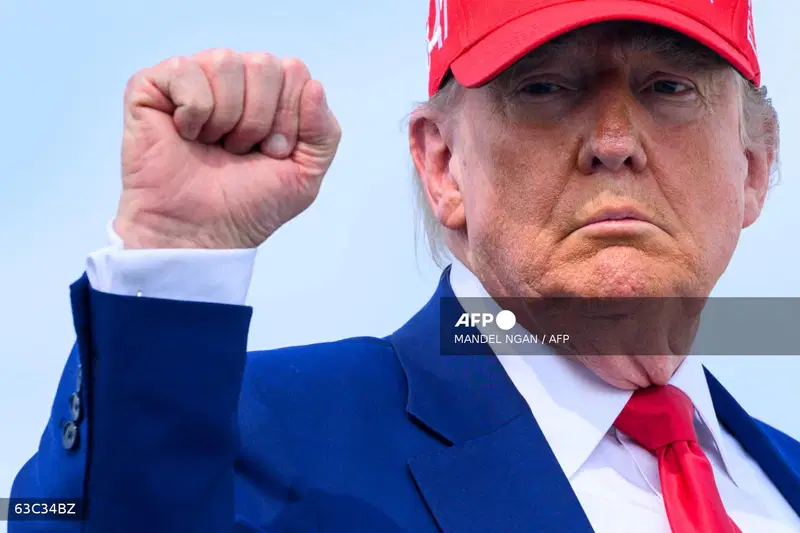
United States President Donald Trump said US forces conducted deadly strikes against Islamic State terrorists in northwestern Nigeria, and vowed more attacks if the militants keep killing Christians.
“I have previously warned these Terrorists that if they did not stop the slaughtering of Christians, there would be hell to pay, and tonight, there was,” Trump posted on his Truth Social platform, adding that “the Department of War executed numerous perfect strikes.”
READ ALSO:JUST IN: Kano Lawmaker, Sarki Aliyu Daneji, Dies Hours After Colleague’s Passing
Trump stated that the Department of War “executed numerous perfect strikes, as only the United States is capable of doing. Under my leadership, our Country will not allow Radical Islamic Terrorism to prosper.”
The US president wished everyone Merry Christmas, “including the dead Terrorists, of which there will be many more if their slaughter of Christians continues.”
Details later.

 News4 days ago
PHOTOS: New Era In Furupagha-Ebijaw As Okpururu 1 Receives Staff Of Office
- News3 days ago
UBTH CMD Marks 120 Days In Office, Expresses Commitment To Providing Conducive Working Environment
- News4 days ago
OPINION: Gumi And His Terrorists
- News4 days ago
FIRS Confirms NIN As Tax ID
- News4 days ago
FG Declares Public Holidays For Christmas, New Year Celebrations
- Metro3 days ago
Fintiri Pardons Man Sentenced To Death For ‘Killing Herdsman In Self-defence’, Others
- News4 days ago
OPINION: Christmas And A Motherless Child
- News2 days ago
JUST IN: Kano Lawmaker, Sarki Aliyu Daneji, Dies Hours After Colleague’s Passing
 News4 days ago
OPINION: My Man Of The Season
- News4 days ago
KWAM 1 Withdraws From Awujale Race, Ends Court Challenge


