
Headline
US House Approves $61bn In Military Aid For Ukraine

After months of stalling, the US House of Representatives finally approved more than $61bn worth of military assistance to help Ukraine in its desperate defense against Russia, as well as billions for other allies including Israel and Taiwan.
In a bipartisan vote, 210 Democrats and 101 Republicans joined to support Ukraine, with 112 Republicans – a majority of the GOP members – voting against. It came after the Republican speaker, Mike Johnson, forced a series of bills onto the floor in the face of fierce resistance within his own Republican party, many of whom oppose spending more on Ukraine’s defense.
Voting began hours ahead of schedule in an extraordinary Saturday session that delayed the House’s planned recess. The House erupted into applause when the Ukraine bill passed, with the chair, Marc Molinaro of New York, admonishing members not to wave Ukrainian flags.
In a powerful effort to sum up the stakes before the vote, the former Democratic speaker, Nancy Pelosi, made a stridently graphic appeal: “I hope our colleagues will choose democracy and decency rather than autocracy and evil because I fear if you choose the Putin route, you will have blood on your hands, blood of the children, blood of their mothers raped in front of their parents, raped in front of their children,” she said.
Volodymyr Zelenskiy, Ukraine’s president, recently warned that his country “will lose the war” without US assistance, as its military has struggled with ammunition and air defense shortages and Russia has pressed a growing advantage in firepower as Congress prevaricated.
Immediately after the bill passed, ZelenskIy released a statement expressing his gratitude to both parties “and personally Speaker Mike Johnson for the decision that keeps history on the right track”.
READ ALSO: War: Russia Attacks Ukraine’s Capital, Kyiv With Drones
“Democracy and freedom will always have global significance and will never fail as long as America helps to protect it,” he said. “The vital US aid bill passed today by the House will keep the war from expanding, save thousands and thousands of lives, and help both of our nations to become stronger. Just peace and security can only be attained through strength. We hope that bills will be supported in the Senate and sent to President Biden’s desk. Thank you, America!”
Members were voting on a package worth close to $95bn in total, but which had been broken up into four separate bills, as Johnson effectively de-coupled the vote on Ukraine from funding for Israel, which is more widely supported among both Democrats and Republicans.
The vote on granting additional funding for Israel also easily passed the House, with 365 in favor and only 57 opposed: 36 Democrats and 21 Republicans.
By splitting the bill into four, Johson sought to give recalcitrant far-right members of his own GOP conference the opportunity to vote with their conscience on the parts they disliked.
First to be voted on was a bill including legislation on border security, which failed, as expected. Many rightwing Republicans do not want the Biden administration to win credit for resolving a crisis at the US border with Mexico, where there has been an upsurge of asylum seekers, during an election year. The GOP’s presumptive presidential nominee, Donald Trump, is seeking to make the border an election issue.
The $95bn in total funding includes roughly $61bn for Ukraine (with much of the funding going towards replenishing American munitions); $26bn for Israel; $8bn for US allies in the Indo-Pacific region, including Taiwan; and $9bn in humanitarian assistance for civilians in war zones, such as Haiti, Sudan and Gaza, though the package also includes a ban on direct US funding for the United Nations Relief and Works Agency for Palestine Refugees (Unrwa), an agency providing key assistance to Gaza, until March 2025.
READ ALSO:Moscow Fingers Western Powers As Russian Journalist Is Killed In Ukraine
In the Ukraine bill, of the $60.7bn, a total of about $23bn would be used by the US to replenish its military stockpiles, opening the door to future US military transfers to Ukraine. Another $14bn would go to the Ukraine Security Assistance Initiative, in which the Pentagon buys advanced new weapon systems for the Ukrainian military directly from US defense contractors.
There is also more than $11bn to fund current US military operations in the region, enhancing the capabilities of the Ukrainian military and fostering intelligence collaboration between Kyiv and Washington, and about $8bn in non-military assistance, such as helping Ukraine’s government continue basic operations, including the payment of salaries and pensions.
The package largely mirrors the foreign aid proposal passed by the Senate in February, although it designates $10bn of the Ukraine funding as a repayable loan to appease some Republican members.
The Israel bill includes about $4.4bn to replenish depleted US supplies given to Israel; $4bn for missile defense, including the much-vaunted Iron Dome, and $1.2bn for the Iron Beam; and $3.5bn to help Israel buy weapons. There are also provisions to make it easier to supply Israel with US munitions held in other countries.
The bill supporting American allies in the Asia-Pacific region, chiefly Taiwan, included more than $8bn for countering Chinese activities, about $3.3bn for submarines and $2bn of military assistance to Taiwan.
Another bill included a provision to force the Chinese company ByteDance to sell its popular social media app TikTok, which Congress is worried gives China the ability to gain information about American citizens. That bill – the 21st Century Peace through Strength Act – also included the seizure of frozen Russian sovereign assets, and more sanctions on Iran.
READ ALSO: What Zelensky Told Ukraine’s National Team After Euro Qualifier Victory Over Iceland
The passed bills will be combined into a single package to simplify the voting process for the Senate, which will need to reapprove tuhe proposal before it can go to President Joe Biden’s desk for his signature.
In a statement after the vote passed, Biden said: “Today, members of both parties in the House voted to advance our national security interests and send a clear message about the power of American leadership on the world stage. At this critical inflection point, they came together to answer history’s call, passing urgently needed national security legislation that I have fought for months to secure.
“This package will deliver critical support to Israel and Ukraine; provide desperately needed humanitarian aid to Gaza, Sudan, Haiti and other locations impacted by conflicts and natural disasters around the world; and bolster security and stability in the Indo-Pacific. It comes at a moment of grave urgency, with Israel facing unprecedented attacks from Iran, and Ukraine under continued bombardment from Russia.” He called on the Senate to quickly pass the bill “so that I can sign it into law and we can quickly send weapons and equipment to Ukraine to meet their urgent battlefield needs”.
Simply getting the bills to a vote on the floor required Johnson to seek help from Democrats across the aisle. A procedural vote to get it to the floor was 316-94, with 165 Democrats and 151 Republicans supporting the motion.
Johnson’s reliance on Democratic votes to pass key pieces of legislation, including a major government funding bill that cleared the House last month, has outraged some hard-right Republicans.
READ ALSO: US Announces $325m New Arms Aid For Ukraine
“What else did Johnson give away while he’s begging Democrats for votes and protection?” Marjorie Taylor Greene, a Republican representative of Georgia, said on Friday on X. “We do not have a Republican majority anymore, our Republican Speaker is literally controlled by the Democrats and giving them everything they want.”
Last month, Greene unveiled a motion to remove Johnson as speaker, although she has not yet moved to force a vote on the matter. In the past week, two more House Republicans – Thomas Massie of Kentucky and Paul Gosar of Arizona – have signed on as co-sponsors.
Democrats have said they may support Johnson in any effort by the Republican far-right to oust him over Ukraine aid.
Speaking from the Capitol earlier this week, Johnson said providing aid to Ukraine was “critically important” and “the right thing” despite the potential power of his opponents to bring him down in yet another internal party coup.
“I really believe the intel and the briefings that we’ve gotten,” Johnson said. “I believe that Xi and Vladimir Putin and Iran really are an axis of evil. I think they are in coordination on this. I think that Vladimir Putin would continue to march through Europe.
“I am going to allow an opportunity for every single member of the House to vote their conscience and their will,” he said, adding: “I’m willing to take a personal risk for that, because we have to do the right thing. And history will judge us.”
The US has so far sent Ukraine roughly $111bn in weapons, equipment, humanitarian assistance and other aid since the start of the war more than two years ago.
Source: The Guardian, UK

Headline
Indian Court Denies Bail To Nigerian Man Over Drug Charges
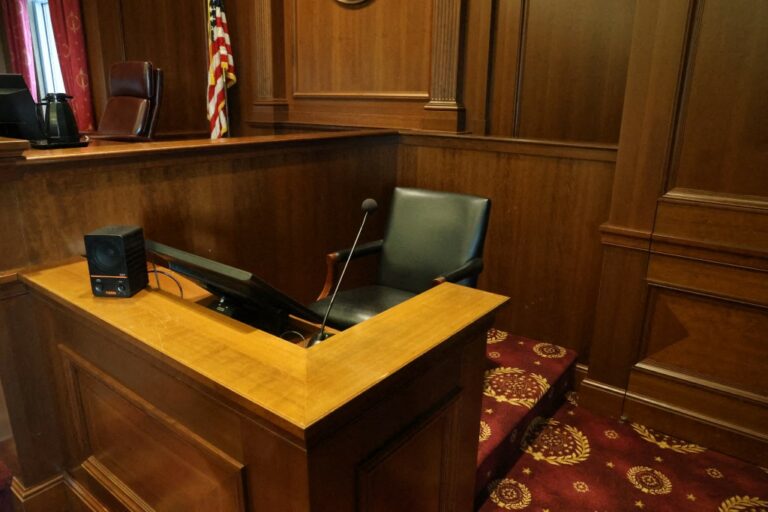
A court in India has denied bail to a 44-year-old Nigerian national, Cristian Soporuchukwu, who is currently facing drug trafficking charges in the country.
Cristian Soporuchukwu initially entered India on a business visa but was later arrested over allegations of involvement in the sale of hard drugs.
Reports indicated that after arriving in India, Soporuchukwu travelled through Goa, Delhi, and Mumbai, where he allegedly established links with suspected drug traffickers.
READ ALSO:Indian National Arraigned In Lagos Over Alleged N22m Supermarket Fraud
He was accused of purchasing MDMA crystals and distributing them to college students and information technology workers.
According to reports, operatives of the Beguru Police arrested Cristian Soporuchukwu in April 2025 for allegedly selling MDMA crystals around Begur Lake and the AECS Layout Road area.
The New Indian Express reported that the High Court of Karnataka subsequently dismissed the Nigerian’s bail application.
READ ALSO:NDLEA Intercepts Indian Lady With 72 Parcels Of Heroin ON n Chocolate Wraps
“The anti-narcotics wing seized about 1 kg of MDMA crystals, a pocket weighing machine, 10 zip-lock covers, a mobile phone and a scooter from him,” the report stated.
Justice V. Srishananda, while ruling on the bail application, reportedly held that errors relating to the grounds of arrest could not automatically justify bail in serious narcotics-related offences under the Narcotic Drugs and Psychotropic Substances, NDPS, Act.
The court further noted that Cristian Soporuchukwu had allegedly overstayed his visa in India, according to the report.
Headline
Strait Of Hormuz: US Announces Sanctions Against Iran

The United States Treasury has announced sanctions against Iran’s Persian Gulf Strait Authority.
Treasury Secretary, Scott Bessent, said this in a statement on Wednesday.
The statement extended the threat of sanctions to anyone paying the fees, saying they may be providing support to and receiving services from Iran’s Revolutionary Guards, and therefore may be exposed to sanctions risk.
READ ALSO:Strait Of Hormuz: Pakistan Thanks Trump For Pausing ‘Project Freedom’
“The Iranian military’s latest attempt to extort global maritime trade is proof that Economic Fury has left the regime desperate for cash.
“Treasury has deprived the Iranian regime of revenue for their weapons programs, terrorist proxies, and nuclear ambitions,” Bessent said.
Bessent added that the US has succeeded in disrupting tens of billions of dollars’ worth of revenue from being accessible to Tehran.
Headline
US Launches New Airstrikes On Iran
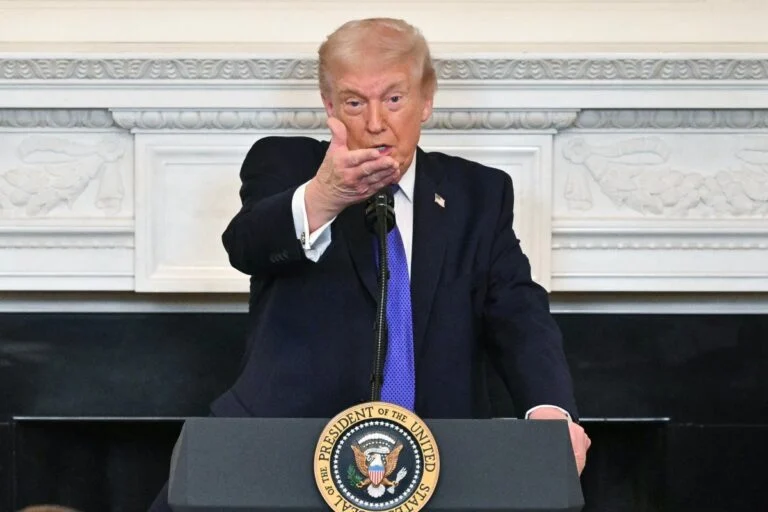
The United States has launched new airstrikes in southern Iran.
The strike shot down four one-way attack drones that posed a threat around the Strait of Hormuz and then a ground control site.
A US official revealed that American forces struck an Iranian ground control station in Bandar Abbas that was about to launch a fifth drone.
READ ALSO:US Restricts Entry Routes For Travellers From DRC, Uganda, South Sudan Over Ebola Outbreak
The official described the strikes as purely defensive, saying the US intended to maintain the ceasefire.
Report says this is the second time in three days that the US has carried out self-defense strikes against Iranian military targets in southern Iran.
Recall that on Monday the US carried out airstrikes against Iranian missile locations and boats that US Central Command said were preparing to launch mines in the Strait of Hormuz.

 Headline4 days ago
Woman Passes Out After Receiving 100 Strokes Of Cane
- Headline4 days ago
JUST IN: White House Locked Down Briefly As Gunman Opens Fire At Security Checkpoint
- Politics5 days ago
Warri Ijaw Hail INEC Delineation Report, Call For Additional Electoral Wards, Others
- Politics3 days ago
Two Masked Men Gun Down Politician In His Rivers State Hotel
- Metro4 days ago
Police Reject N500m Bribe, Recover N7.8bn Illicit Drugs In Lagos
- News3 days ago
More Pain For Nigerians As Cooking Gas Price Increases Nationwide
- News5 days ago
Alleged Terrorism: Court Rejects Defendant’s Bid To Travel Abroad
- Politics5 days ago
What I’ll Do As President Of Nigeria — Amaechi
- News3 days ago
FG Declares Two Days Public Holiday For Eid-el Kabir Celebration
- Politics3 days ago
‘Tinubu’s Borrowing In 24 Months Surpasses 55 Years’ Debt Record’


