

Headline
US Lifts Restrictions On Visa Validity For Ghanaians, Leaves Nigeria’s Unchanged

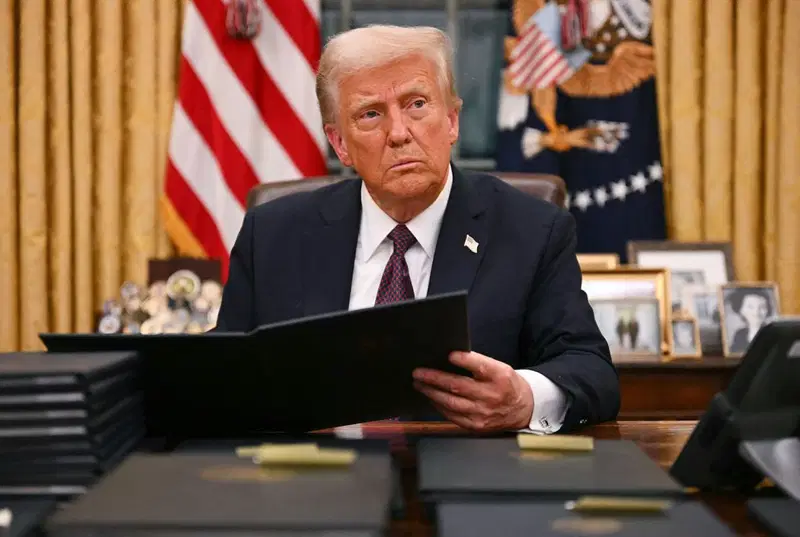


The United States has restored the maximum validity periods for all categories of nonimmigrant visas for Ghanaian nationals following Ghana’s agreement to accept West African deportees, but similar restrictions for Nigerians remain in place.
The B1/B2 visitor visa is now valid for up to five years, with multiple entries allowed, while the F1 student visa’s maximum validity has been restored to four years, with multiple entries permitted.
“The U.S. Embassy is pleased to announce that the maximum validity periods for all categories of nonimmigrant visas for Ghanaians have been restored to their previous lengths. The maximum validity allowed for the B1/B2 visitor visa is again five years, multiple entry. The maximum validity for the F1 student visa is again four years, multiple entry,” the U.S. Embassy announced in a tweet on Saturday.”
Ghana’s Foreign Minister, Samuel Ablakwa, also announced in a tweet that the new policy now allows citizens to apply for five-year multiple-entry visas.
READ ALSO:Japan Scraps ‘Africa Hometown’ Project After Visa Confusion
Ablakwa also stated that the reversal of the restriction comes with other enhanced consular privileges, adding that the development was the result of months of diplomatic engagement.
“The U.S. visa restriction imposed on Ghana has been reversed. Ghanaians can now be eligible for five-year multiple-entry visas and other enhanced consular privileges,” Ablakwa stated.
“This good news was directly communicated to me by U.S. Under Secretary of State for Political Affairs, Allison Hooker, at a bilateral meeting earlier today, in the margins of the UN General Assembly. I am really pleased that months of high-level diplomatic negotiations have led to a successful outcome.”
These changes reverse earlier restrictions imposed under the Trump administration, which had limited most visas to single-entry and a three-month validity period.
READ ALSO:H-1B Visas: Trump To Impose $100,000 Annual Fee For Skilled Foreign Workers
The restrictions affected several African countries, including Ghana and Nigeria, and were based on concerns over visa reciprocity and the acceptance of deported migrants.
In July, the U.S. Consulate in Nigeria announced updates to its reciprocal nonimmigrant visa policy, stating: “The United States Department of State has announced updates to its reciprocal non-immigrant visa policy, impacting several countries, including Nigeria. Effective immediately, most non-immigrant and non-diplomatic visas issued to citizens of Nigeria will be single-entry visas with a three-month validity period.
“Those U.S. non-immigrant visas issued prior to July 8, 2025, will retain their status and validity. We wish to underscore that, as is standard globally, visa reciprocity is a continuous process and is subject to review and change at any time, such as increasing or decreasing permitted entries and duration of validity. You can view the latest information on visa reciprocity schedules for all countries at travel.state.gov.”
Reports indicate that the U.S. pressured some African nations to accept deported migrants, including Venezuelan detainees from U.S. prisons.
READ ALSO:US Defends New Social Media Vetting For Nigerian Visa Applicants
Nigerian Foreign Minister Yusuf Tuggar rejected these pressures, stating that Nigeria would not serve as a “dumping ground” for deportees.
“It would be difficult for countries like Nigeria to accept Venezuelan prisoners into Nigeria,” Tuggar said during a televised interview.
“We have enough problems of our own; we cannot accept Venezuelan deportees to Nigeria. We already have 230 million people.”
Meanwhile, Ghanaian President John Mahama confirmed that Ghana had begun accepting deported West African nationals after U.S. requests.
“We were approached by the U.S. to accept third-party nationals who were being removed from the U.S., and we agreed with them that West African nationals were acceptable,” Mahama said.
“All our fellow West African nationals don’t need visas to come to our country.”




Headline
Indian Court Denies Bail To Nigerian Man Over Drug Charges

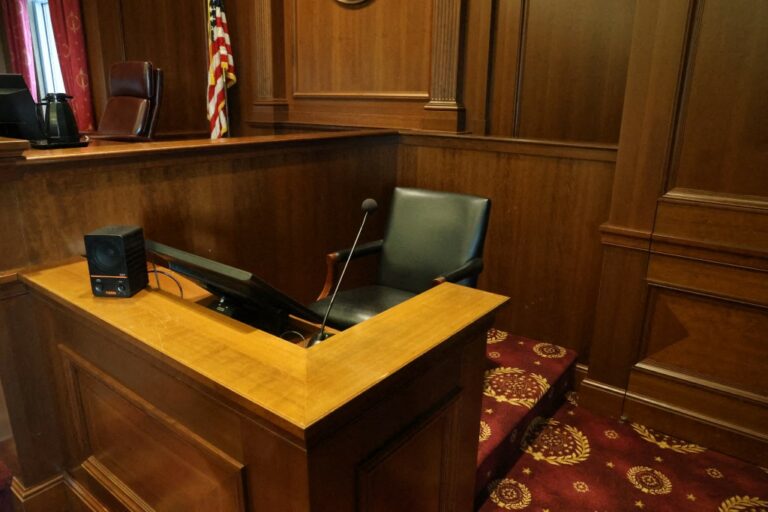
A court in India has denied bail to a 44-year-old Nigerian national, Cristian Soporuchukwu, who is currently facing drug trafficking charges in the country.
Cristian Soporuchukwu initially entered India on a business visa but was later arrested over allegations of involvement in the sale of hard drugs.
Reports indicated that after arriving in India, Soporuchukwu travelled through Goa, Delhi, and Mumbai, where he allegedly established links with suspected drug traffickers.
READ ALSO:Indian National Arraigned In Lagos Over Alleged N22m Supermarket Fraud
He was accused of purchasing MDMA crystals and distributing them to college students and information technology workers.
According to reports, operatives of the Beguru Police arrested Cristian Soporuchukwu in April 2025 for allegedly selling MDMA crystals around Begur Lake and the AECS Layout Road area.
The New Indian Express reported that the High Court of Karnataka subsequently dismissed the Nigerian’s bail application.
READ ALSO:NDLEA Intercepts Indian Lady With 72 Parcels Of Heroin ON n Chocolate Wraps
“The anti-narcotics wing seized about 1 kg of MDMA crystals, a pocket weighing machine, 10 zip-lock covers, a mobile phone and a scooter from him,” the report stated.
Justice V. Srishananda, while ruling on the bail application, reportedly held that errors relating to the grounds of arrest could not automatically justify bail in serious narcotics-related offences under the Narcotic Drugs and Psychotropic Substances, NDPS, Act.
The court further noted that Cristian Soporuchukwu had allegedly overstayed his visa in India, according to the report.
Headline
Strait Of Hormuz: US Announces Sanctions Against Iran

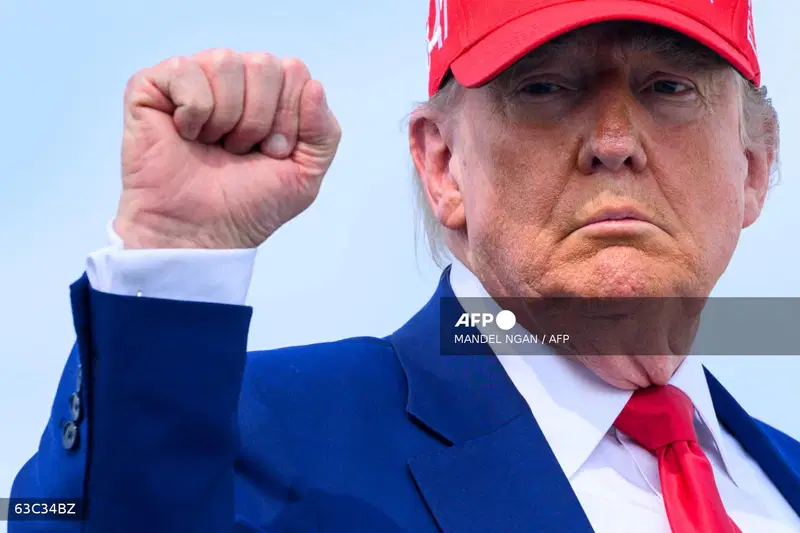
The United States Treasury has announced sanctions against Iran’s Persian Gulf Strait Authority.
Treasury Secretary, Scott Bessent, said this in a statement on Wednesday.
The statement extended the threat of sanctions to anyone paying the fees, saying they may be providing support to and receiving services from Iran’s Revolutionary Guards, and therefore may be exposed to sanctions risk.
READ ALSO:Strait Of Hormuz: Pakistan Thanks Trump For Pausing ‘Project Freedom’
“The Iranian military’s latest attempt to extort global maritime trade is proof that Economic Fury has left the regime desperate for cash.
“Treasury has deprived the Iranian regime of revenue for their weapons programs, terrorist proxies, and nuclear ambitions,” Bessent said.
Bessent added that the US has succeeded in disrupting tens of billions of dollars’ worth of revenue from being accessible to Tehran.
Headline
US Launches New Airstrikes On Iran
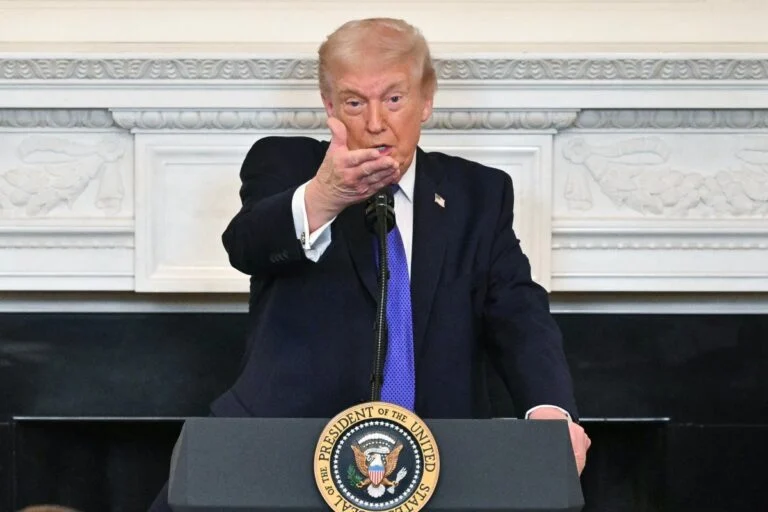
The United States has launched new airstrikes in southern Iran.
The strike shot down four one-way attack drones that posed a threat around the Strait of Hormuz and then a ground control site.
A US official revealed that American forces struck an Iranian ground control station in Bandar Abbas that was about to launch a fifth drone.
READ ALSO:US Restricts Entry Routes For Travellers From DRC, Uganda, South Sudan Over Ebola Outbreak
The official described the strikes as purely defensive, saying the US intended to maintain the ceasefire.
Report says this is the second time in three days that the US has carried out self-defense strikes against Iranian military targets in southern Iran.
Recall that on Monday the US carried out airstrikes against Iranian missile locations and boats that US Central Command said were preparing to launch mines in the Strait of Hormuz.
-

 Metro5 days ago
My Husband Abandoned Me On Our Wedding Night To Attend Political Meeting, I Want Our Marriage Dissolved
-

 Headline4 days ago
Woman Passes Out After Receiving 100 Strokes Of Cane
-

 Politics5 days ago
Warri Ijaw Hail INEC Delineation Report, Call For Additional Electoral Wards, Others
-

 Headline4 days ago
JUST IN: White House Locked Down Briefly As Gunman Opens Fire At Security Checkpoint
-

 Politics3 days ago
Two Masked Men Gun Down Politician In His Rivers State Hotel
-

 News3 days ago
More Pain For Nigerians As Cooking Gas Price Increases Nationwide
-

 Metro4 days ago
Police Reject N500m Bribe, Recover N7.8bn Illicit Drugs In Lagos
-

 News5 days ago
Alleged Terrorism: Court Rejects Defendant’s Bid To Travel Abroad
-

 Metro5 days ago
My Wife Stop Cooking My Food, Beats Me Black And Blue All the Time, Man Tells Court
-

 Politics5 days ago
What I’ll Do As President Of Nigeria — Amaechi