
Headline
What To Know About New NNPC Ltd

President Muhammadu Buhari on Tuesday unveiled the new Nigerian National Petroleum Company Limited in Abuja.
The new NNPC has been described as a child of the Petroleum Industry Act, passed into law in 2021. In September 2021, the Corporate Affairs Commission completed the incorporation of the new company.
Here are 10 interesting facts you need to know about the new NNPC Ltd:
1- Section 53(1) of the PIA 2021 requires the Minister of Petroleum Resources to cause the incorporation of the NNPC Limited within six months of the enactment of the Act in consultation with the Minister of Finance on the nominal shares of the company.
2- What this means is that with the transition, the government will no longer have control over the staffing of the NNPC.
3- Section 53 (5) of the Act stipulates that shares of the company held by the government are not transferable or mortgaged unless approved by the government and the National Economic Council.
4- With the NNPC Limited coming on board, the new company will not concern itself with issues of petrol price determination, and subsidy.
5- The new NNPC will no longer remit into the Federal Account Allocation Committee. This invariably means no more money to be shared by state governors.
6- Sector 54(9) provides that the initial capitalisation of the NNPC Limited will not be less than its financial requirements to effectively discharge its commercial duties and deal with its obligations and liabilities transferred to it.
READ ALSO: Buhari’s Aide Clears Air On FG Selling NNPC Limited
7- Following the transition of the NNPC Ltd to a commercial entity, it is believed the Federal Government will put an end to funding the oil firm’s projects as was obtainable since it was established in 1977.
8- The PIA also mandates the NNPC Ltd to conduct its affairs on a commercial basis in line with the Companies and Allied Matters Act. According to the law, the company will run on a commercial basis in a profitable and efficient manner without recourse to government funds. It shall declare dividends to shareholders and retain 20 percent of profits as retained earnings to grow its business.
9- Apart from profit-seeking, NNPC Limited is expected to operate above board by mandatorily making disclosures for every financial year.
10- It is expected that NNPC Limited may decide to go public later in future.



Headline
How Our Airstrikes Stopped Christmas Attacks In Nigeria — US Lawmaker
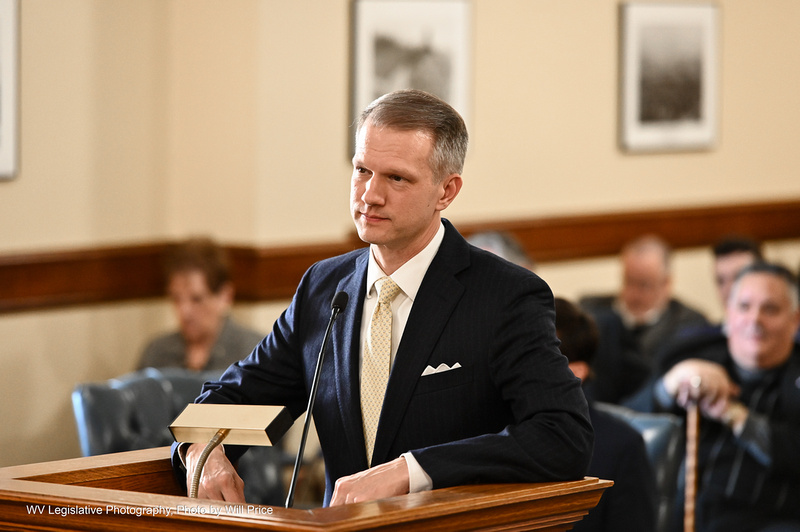
Riley Moore, a member of the United States House of Representatives from West Virginia’s 2nd District, has linked the absence of Christmas attacks in Nigeria this year to US military airstrikes carried out against Islamist militants on Christmas Day.
In a post on his official X account on Saturday, Moore contrasted the situation with the past two Christmas seasons, during which he claimed Christians were killed in attacks across parts of Nigeria.
The lawmaker noted that this year’s response targeted extremist groups instead of marking another period of violence.
READ ALSO:Rep Moore Confirms 12 Tomahawk Missiles Launched In Sokoto
He added that US forces acted decisively against militants in coordination with the Nigerian government.
“For the past two Christmases, Christians have been murdered in Nigeria. This year, thanks to @POTUS, Radical Islamic Terrorists were on the receiving end of 12 Tomahawk missiles as a present.
“The successful strikes on ISIS, in coordination with the Nigerian government, are just the first step to secure the country and end the slaughter of our brothers and sisters in Christ,” Moore wrote.
US President Donald Trump said on Thursday that American forces had conducted deadly strikes against Islamic State terrorists in north-western Nigeria.
Trump, who spoke via his Truth Social platform, warned that more attacks would follow if the militants continued killing Christians, adding that the Department of War executed numerous “perfect strikes.”
Headline
U.S. Lawmaker Reacts To Nigeria, U.S. Airstrikes
United States Congressman, Riley Moore, has stated that President Donald Trump is determined to put an end to the killing of Christians in Nigeria, warning that further action may follow if the violence persists.
Moore made the statement on Friday via his official X handle.
According to the lawmaker, the strike represents the first step in addressing what he described as the ongoing slaughter of Christians and the broader security crisis affecting Nigerians across religious and ethnic lines.
READ ALSO:US Dept Of War Shares Video Of Air Strikes In Nigeria
“President Trump has been clear that the killing of Christians in Nigeria must end,” he said.
He that the administration’s resolve on the matter should not be underestimated.
“As I stated at the outset: Do not test President Trump‘s resolved in this matter.
READ ALSO:JUST IN: US Forces Bomb Terrorists Camps In Nigeria
“Tonight’s strike in coordination with the Nigerian government is just the first step to ending the slaughter of Christians and the security crisis affecting all Nigerians,” he said.
He stressed that the operation signals a stronger stance by the United States in support of Nigeria’s efforts to tackle terrorism and violent extremism, noting that further measures could be taken if the situation does not improve.
Headline
US Dept Of War Shares Video Of Air Strikes In Nigeria
A video footage of the US military air strikes in Nigeria has emerged.
The video was released by the US Department of War following its air strikes against terrorists in Sokoto.
Earlier, the US secretary of War, Pete Hegseth had confirmed that military air strikes hit terrorists in Nigerians, saying it was deadly.
Later on, the US. African Command, confirmed that it conducted the attacks described as very deadly by President Donald Trump.
Trump said he was only keeping the promise he made earlier last month to strike the terrorists he believes are killing innocent Christians.
READ ALSO:JUST IN: US Forces Bomb Terrorists Camps In Nigeria
Although described as powerful and deadly, the casualty caused by the attack is yet to be released.
Explaining further, security expert, Brant Philip, said the strikes may have been launched “from the USS Paul Ignatius, using a Tomahawk missile.”
The Nigerian government through its ministry of foreign affairs has also confirmed that the strikes were successful.
Watch video here

 News4 days ago
JUST IN: Kano Lawmaker, Sarki Aliyu Daneji, Dies Hours After Colleague’s Passing
- News4 days ago
FULL LIST: Churches That Don’t Celebrate Christmas
- Headline3 days ago
JUST IN: US Forces Bomb Terrorists Camps In Nigeria
- News3 days ago
Okpebholo Slams ₦25bn Libel Suit On Edo PDP Chairman
- Headline3 days ago
US Dept Of War Shares Video Of Air Strikes In Nigeria
- Entertainment4 days ago
AFCON 2025: Davido Wins $96,000 After Super Eagles Beat Tanzania
- News5 days ago
OPINION: The Day Friendship Died
- News4 days ago
Sheikh Gummi Sues Two Over Alleged False Facebook Publication
- News4 days ago
7 Health Risks Of Owning A Cat
- Headline4 days ago
Coup: Guinea-Bissau Junta Releases Six Held Opposition Politicians


