

Business
Why 4,173 Bureau De Change Operators’ Licences Were Revoked – CBN

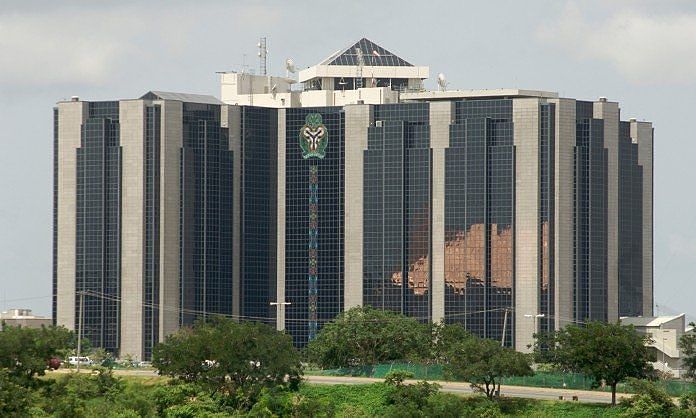


The Central Bank of Nigeria on Friday revoked the licences of 4,173 Bureau De Change operators over their failure to meet regulatory guidelines.
The apex bank disclosed this in a statement by its acting Director, Corporate Communications, Sidi Hakama.
This means there will now be 1,517 operational BDCs from the initial 5,690.
However, the President, Association of Bureau De Change of Nigeria, Aminu Gwadabe, when contacted for comments on the development, told The PUNCH that he wanted to pray at some minutes before 8pm.
Subsequent calls to his line were not taken.
READ ALSO: [BREAKING] Forex Crisis: CBN Revokes Operational Licenses Of 4,173 BDCs, Gives Reason
In the CBN statement, Hakama said the licence withdrawal was in exercise of the powers conferred on the apex bank by the Bank and Other Financial Institutions Act, 2020, Act No. 5, and the Revised Operational Guidelines for Bureaux De Change, 2015.
The statement read in part, “The Central Bank of Nigeria, in the exercise of the powers conferred on it under the Bank and Other Financial Institutions Act, 2020, Act No. 5, and the Revised Operational Guidelines for Bureaux De Change, 2015, has revoked the licences of 4,173 Bureaux De Change Operators.
“The list of affected BDC operators is available on the Bank’s website (www.cbn.gov.ng).”
It added that the affected institutions failed to observe at least one of the regulatory provisions.
READ ALSO: Ex-FCCPC Boss, Irukera Breaks Silence Over Sack
According to the statement, the regulatory provisions include payment of all necessary fees, including licence renewal, within the stipulated period.
It added, “The affected institutions failed to observe at least one of the following regulatory provisions: Payment of all necessary fees, including licence renewal, within the stipulated period in line with the guidelines.
“Rendition of returns in line with the guidelines; compliance with guidelines, directives, and circulars of the CBN, particularly Anti-Money Laundering, Countering the Financing of Terrorism and Counter-Proliferation Financing regulations.
“The CBN is revising the regulatory and supervisory guidelines for Bureau de Change operations in Nigeria. Compliance with the new requirements will be mandatory for all stakeholders in the sector when the revised guidelines become effective.
“Members of the public are hereby advised to take note and be guided accordingly.”
READ ALSO: 27 Year Old Kills Father, Removes His Eye In Abia
Recall that the CBN had recently introduced a draft guideline for BDC operations across the country.
Major provisions introduced in the guidelines include the introduction of N2bn minimum share capital for Tier-1 BDCs, limiting buying and selling of forex in cash by BDCs to $500, and $10,000-year limit for school fees, among others.
Reacting to the development, the Chief Executive Officer of the Centre for the Promotion of Private Enterprise, Dr Muda Yusuf, applauded the move to regulate the operations of the BDCs.
He said, “Definitely, revoking the licences of non-operational BDCs is the appropriate thing to do now. It is the right move because the previous number was difficult to manage and unwieldy.”




Business
Naira Appreciates Against Dollar At Official FX Market

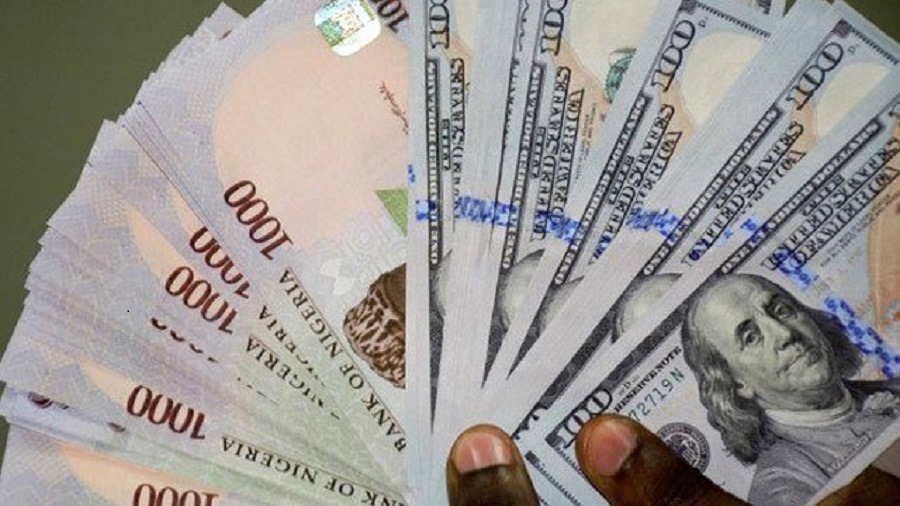
…Black market (Buying and selling rates): N1,385— N1,390
The Nigerian naira appreciated against the United States (US) dollar, trading at N1,331.2027 at the Central Bank of Nigeria (CBN) official foreign exchange (FX) window on Friday, September 18, 2026.
The data shared on the CBN’s official platform shows that the naira traded at the Nigerian Foreign Exchange Market (NFEM) rate of N1,331.2027 per dollar and closed at N1,329.9900 per dollar.
The currency, which traded at an NFEM rate of N1,331.2812 on September 17, 2026, appreciated by at least N0.08 after trading activities on Friday.
READ ALSO: Naira To Dollar Exchange Rate At Official FX Market
At the parallel market, both the buying and selling rate decreased by N5, when compared to the previous trading rate on Thursday, September 17, 2026.
According to Aboki FX , the Naira-to-dollar exchange rate at the black market on Friday, September 18, 2026, was N1,385 and N1,390 per dollar for buying and selling rates, respectively.
Business
Again, Naira Depreciates Against Dollar At Official FX Market
…Black market (Buying and selling rates): N1,380— N1,385
The Nigerian naira depreciated against the United States (US) dollar, trading at N1,329.8568 at the Central Bank of Nigeria (CBN) official foreign exchange (FX) window on Wednesday, September 16, 2026.
The data shared on the CBN’s official platform shows that the naira traded at the Nigerian Foreign Exchange Market (NFEM) rate of N1,329.8568 per dollar and closed at N1,329.5600 per dollar.
The currency, which traded at an NFEM rate of N1,329.1485 on September 15, 2026, depreciated by at least N0.71 after trading activities on Wednesday.
READ ALSO: Naira To Dollar Exchange Rate At Official FX Market
At the parallel market, both the buying and selling rate remained the same, when compared to the previous trading rate on Tuesday, September 15, 2026.
According to Aboki FX , the Naira-to-dollar exchange rate at the black market on Wednesday, September 16, 2026, was N1,380 and N1,385 per dollar for buying and selling rates, respectively.
Business
How To Buy Dangote Refinery Shares As IPO Opens September 14


Investors seeking to own a stake in the Dangote Petroleum Refinery and Petrochemicals FZE will be able to subscribe to its initial public offering (IPO) from September 14, 2026.
The ₦2.15 trillion offer by Dangote, valued at about $1.6 billion, involves 4.1 billion ordinary shares priced at an indicative ₦525 per share.
The offer, which is expected to become Nigeria’s largest-ever public share sale, will remain open until October 13, 2026.
The development gives Nigerians and other eligible investors an opportunity to acquire shares in the refinery as the Dangote Group moves to broaden ownership of the business.
At the signing of the IPO documents in Lagos on September 7, President of Dangote Group, Aliko Dangote, said the offer was designed to enable ordinary Nigerians to become shareholders in the refinery.
“What we are trying to achieve is to make sure our drivers, cooks, servants, and everybody have the opportunity of having stakes in the refinery,” Dangote said.
READ ALSO: BREAKING: Dangote Refinery Reduces Petrol, Diesel Prices
How to subscribe
According to the Managing Director, Investment Banking, Chapel Hill Denham, Mr Lanre Buluro, prospective investors can subscribe digitally using a bank account, Bank Verification Number (BVN) and a mobile phone or laptop.
He said an investor can complete the process within two to three minutes, with the minimum subscription set at 10 shares.
At ₦525 per share, the minimum subscription of 10 shares will cost ₦5,250.
Buluro said investors could access the offer through platforms including Moniepoint, MTN MoMo, Airtel, Payaza, Piggyvest, Paga, Bamboo and Chapel Hill Denham’s Invest Naija platform.
Do I need a CSCS account?
Buluro said prospective investors do not necessarily need an existing Central Securities Clearing System (CSCS) identity number before subscribing.
READ ALSO: Dangote Refinery Reduces Petrol Gantry Price
According to him, a CSCS account can be created for a new investor during the subscription process after the investor’s BVN and bank account details have been verified.
He explained that stockbrokers are behind the participating platforms and would contact subscribers after the transaction to provide their CSCS and Clearing House Number (CHN).
The allotted shares will subsequently be domiciled in the investor’s CSCS account.
What happens after subscription?
Investors can subscribe throughout the offer period, which runs from September 14 to October 13.
At the close of the offer, the advisers and the Securities and Exchange Commission (SEC) will assess the total subscriptions and determine the final allotment.
This means investors may not necessarily receive all the shares they apply for if the offer is oversubscribed.
READ ALSO: Dangote Unveils 10-day Credit Facility For Petrol Station Owners
Buluro disclosed that the offer has a provision to accommodate additional subscriptions in the event of oversubscription.
He said up to about 30 per cent additional shares could be issued under the oversubscription provision, potentially increasing the number of shares available from 4.1 billion to about 5.3 billion.
Before you invest
Buluro advised prospective investors, particularly first-time investors, to read the IPO prospectus carefully and seek guidance from a qualified financial adviser before committing their funds.
Investors should also understand that subscribing to an IPO does not guarantee a profit. The value of shares can rise or fall after allotment, depending on the company’s performance and market conditions.
The Dangote Refinery IPO is expected to significantly deepen public participation in the Nigerian capital market by allowing more individuals to take direct equity positions in one of the country’s largest industrial projects.
(TRIBUNE)
-

 News4 days ago
BREAKING: Tinubu Extends Working Vacation
-

 Headline4 days ago
How To Format An Academic CV For US Master’s, PhD Applications
-

 News4 days ago
Benue Govt Suspends Muslim Pilgrims Welfare Board Chairman, Secretary
-

 News4 days ago
OPINION: The Stranger In APC’s Kitchen
-

 News4 days ago
FULL LIST: Names Of 37 Illegal Miners Who Died In NSCDC Custody
-

 Entertainment4 days ago
Why Funke Akindele Was Not At My Movie Premiere – Kamo State
-

 Politics4 days ago
Crisis Rocks NDC Over Obi-Kwankwaso Campaign Council
-

 Sports4 days ago
5 Football Players Who Excelled In Multiple Positions
-

 News3 days ago
Edo To Shut Health Facilities Operating Below Approved Standards
-

 Headline4 days ago
Italy PM Meloni Announces Plan To Ban Niqabs, Burqas In Schools
