
News
Why I Crossed To Biafra To Meet Ojukwu – Wole Soyinka
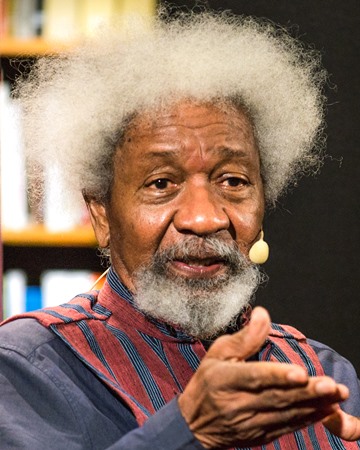
The life and times of Prof. Wole Soyinka, especially in a piece that attempts to chronicle his acts of bravery, will be incomplete without the familiar story of how he broke into the Nigerian Broadcasting Corporation studio in Ibadan during the Western Region’s political crisis in 1965.
Soyinka tersely dismisses the question on that with this:
“I had matured into a period of a people on the rise, on the move – people of dignity who refused that their voices should be stolen, arrogantly and contemptuously. There have been quite a few moments of my existence among people like that… I was one of them, my voice was being stolen. I could not sit down and accept that somebody should steal my voice. I felt at one with the majority of the people.”
Wole Soyinka’s involvement in the Nigeria-Biafra Civil War for which he was sent to prison is even a bigger event in his life without which his life history will be incomplete.
Hear him: “We were more or less a family of artistes at Independence. There was a creative family and that family was being scattered. I was in Stockholm in 1967 for the Scandinavian-African Writers conference. And one of the saddest moments for me was that so many faces were missing from Nigeria – expected but not there: Christopher Okigbo, Chinua Achebe, Gabriel Okara – the Biafrans were missing even in safe Stockholm. The drums of war were no longer muted.
“It was the last chance for us to meet and talk about what was now inevitable but could still, just maybe, be averted at the last moment. I returned to Nigeria very sad and I was feeling as if I lost a limb – several limbs in fact. It was like – was this going to be it? We would become enemies confronting each other across the line of fire? There were people who were ready to take up arms – like Christopher Okigbo.
“At the time I had already run into Christopher Okigbo – it took place in Brussels – I even recall the name of the hotel – Hotel Koenisburg – purely by accident, and I knew he had come to purchase arms for Biafra. I challenged him and he admitted it. All these fortuitous encounters impressed on me a sense of urgency. Later I had a meeting earlier in London – I mention that in my IBADAN – where we talked about the possibility of going to Biafra on a last-minute mission of intervention. Again, as I disclosed in my memoirs, Aminu Abdullahi who is now dead, actually volunteered to go – this was at the meeting in London.
READ ALSO: Isese Festival: Emir Of Ilorin Chides Soyinka Over Accusation
“We hooked up around a place called the Transcription Centre. We didn’t even know which way some of us would go. Would JP consider himself an Easterner or westerner? It was the breakup of a robust circle of creativity. We decided that Aminu should not go because he looked so clearly a northerner. We said, “Look, you won’t even get past the first roadblock.”
“Because at that time, there was such bitterness, murderous paranoia, and it was understandable… on account of the pogrom which had taken place earlier…. I went to the conference, my colleagues were not present and when I returned to Nigeria, the first skirmishes had taken place – on the northern border, and I realised that soon, it would be impossible to travel to Biafra. I was restless.
“I knew I couldn’t function until I had crossed the lines in search of them. I said, ‘When I get there, I will find Christopher (Okigbo) somewhere’ and then get to Ojukwu. That was the reason why I went, a chance at that last moment that something could be done. Some people continue to narrate that I went across to persuade Ojukwu to renounce the secession. No, I didn’t go to persuade Ojukwu to renounce anything – it was far more complicated.
“Some of us still felt that it was still possible to avoid an all-out shooting war. Let me state this clearly that I totally disagree with the philosophy of unity at any cost, a simplistic rendition of that pietistic mantra: United we stand, divided we fall. What infantile nonsense! It has no basis in logic or rationality whatever. Sometimes, not only is it that “small is beautiful” but also “small is perfectible”.
People have the right anytime to say, “We want to leave this union, whatever it is”, any kind of union, politically or whatever type of union. Peoples have the right at any time to say, “Let’s have a referendum in this area.”. That is, for me, part and parcel of democracy. Look at what’s happening in even England today – Scotland wants independence. Long, long ago, Cameroon and Nigeria, the people detached themselves from Nigeria here and went to Cameroon. Ethiopia-Eritrea remains instructive, so does the even more recent example of the Sudan. Whenever things get to a certain unmanageable stage, people look at separationist options.
READ ALSO: Why Peter Obi Visited Me – Wole Soyinka [FULL TEXT]
“There is nothing – I want to stress this – absolutely nothing morally wrong or pernicious in a people saying – we want our own autonomous unit. It’s a childish notion, something which has been implanted in our brain, to chant or be conditioned by the gospel of: “What white man has put together, let no black man put asunder.”
“What kind of nonsense is that? True, I do prefer that we stay together, if only because I don’t like to keep spending time obtaining visas when I want to go see a former next-door neighbour and collaborators. Also, I am partial to existence within a plurality of cultures. It offers a richness of resources, a dynamic of infinite sensibilities. But to say that you must go to war over “unity”? No! Go the civilised way – plebiscite.
“Instead we wasted an estimated two million lives through bullets, sickness and starvation – to preserve a European myth? It’s a lack of maturity.
In the interview, Soyinka has a piece of advice for the Abachas. He also appealed to the then President Jonathan Goodluck to delete the name of Abacha from the list of recipients of national honours for the planned centenary celebration:
“My advice to young Abacha is “Don’t take on your betters, you are a neophyte. Don’t try to intervene in what you don’t understand. Go and learn from my attitude towards your sister whom I met without any rancour and learn to deal with history in the same way. Above all, don’t promote calumny”.… We must speak candidly.
“It is also a symptom of where we are, that the son of a thief, an international thief, so attested, documented, whose crimes are being unveiled every day, should feel entitled to defend the name of his father at the expense of truth. And that is where I wish to end this theme – I repeat my call on President Jonathan to have the moral courage to rescind – I know he won’t do it, but we shall keep saying it at every opportunity – he must find a way to rescind that Centenary Honours List because that it is a disgrace and a shame on this nation.
“It makes me embarrassed to call myself a Nigerian; that a sitting president should compile the names of a hundred supposedly worthy people and include that of a loathsome dictator among them. It should have been sufficient, if he wanted to honour the military, he should just have picked one representative of the breed – maybe somebody like Murtala Muhammed.
READ ALSO: Obi Visits Soyinka, Hails Him As ‘Fighter For Equity And Justice’
“So that the military don’t complain that they were passed over. But to put Sani Abacha on that list side by side with Chinua Achebe, Emeka Anyaoku, Mike Adenuga etc. etc., is an abomination. That Honours event was an abomination. Jonathan’s act was a symbolic negation, a desecration of everything a number of us have stood for in all our lives. Let that list be discarded and consigned to oblivion to make way for a truly sustainable one. And no amount of trickle-down or newly inventive calumny will stop that call, as long as I choose to carry a document of Nigerian citizenship.”
“For those who criticise Soyinka’s writing as being too Eurocentric, too modernist, and of Soyinka himself suffering from Hopkins Disease, Kongi has these for them:
“I write as the Muse dictates, not the critic. I distinguish between censorship and criticism. Censorship is telling a writer you must use this sole ideological prism to view and transmit reality or your art is engaged in social treachery. For me, that is pernicious, intolerably arrogant and fascistic.”
From this interview, we learn that Wole Soyinka once enlisted in the army with the aim of going to fight for the freedom of South Africans and Nelson Mandela. However, he deserted on learning he was going to be drafted to defend the Suez Canal:
“I have been obsessed with South Africa since I was politically conscious. I told you, that was why I entered the military as a student joining the officer corps for a short while. I fled when they were going to pack me to the Suez instead of where I wanted to go – which was South Africa. I packed up my kit, saying “No, I wanted to train for South Africa, not for the Suez. You go and capture a canal on someone’s land, then declare war when he resists, and then you call me up to serve. Remember the Anglo-French invasion? I was called up and I said “No, that was not it”. That was why I left the officer corps.”
On the granting of pardon to Mohammed Abacha by Goodluck Jonathan on the N446 billion issue, Soyinka says it’s obscene:
“It is obscene. Whether we are talking about Alamieyeseigha or we are going backwards to take in Obasanjo’s pardon to Salisu Buhari when a precedent was set. And it’s sad that Jonathan has continued in that line of cavalier pardon and especially in Mohammed Abacha who has been proven to be a torturer in addition to an incontinent receiver of national loot. Please, all of you bear in mind, it’s not as if these crimes are not in the public domain.”
VANGUARD

News
NAF Launches Attack On Terrorists In Borno
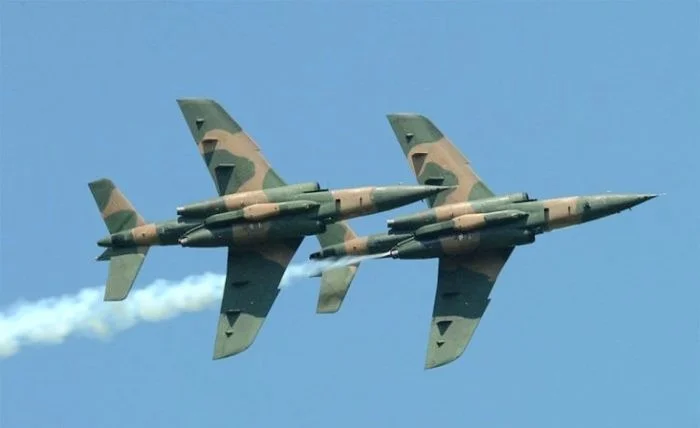
The Nigerian Air Force, NAF, operating as part of the joint task force of Operation Hadin Kai, has carried out a coordinated air interdiction at AbbagaJiri in the Timbuktu Triangle, Borno State.
According to Air Commodore Ehimen Ejodame, Director of Public Relations and Information of NAF, the air strikes successfully paved the way for ground troops.
He explained that the operation was based on actionable intelligence from multiple sources, which confirmed the presence of terrorists, their structures, and concealed logistics facilities in the area.
Ejodame stated that NAF air assets were deployed in integrated surveillance and precision strike roles to target identified threats.
READ ALSO:NAF Hits Bandit Logistics Hub, Neutralises Many In Zamfara
The operation aimed to degrade terrorist capabilities, deny them sanctuary, and shape the battlefield for ground forces, all while strictly adhering to rules of engagement and protecting civilians.
He added, “The Identified terrorist structures were decisively engaged and destroyed, denying the terrorists freedom of action, while a follow-up engagement neutralised armed elements observed converging on the location.”
“Subsequent advances by ground troops into the area confirmed the effectiveness of the air strikes and validated the success of the joint air–land operation.”
Speaking on the mission, Chief of the Air Staff (CAS), Air Marshal Sunday Aneke, said, “The success of the mission reflects the NAF’s resolve to dominate the air domain in support of joint operations.”
READ ALSO:NAF Hits Bandit Logistics Hub, Neutralises Many In Zamfara
Aneke further emphasized that the operation highlighted the service’s commitment to providing precise and decisive air power in support of ground forces.
In his words, “We will continue to deny terrorists freedom of movement, sanctuary, and logistics wherever they seek to hide. Air operations will remain relentless and intelligence-driven.”
“Our operations are carefully planned and intelligence-led, ensuring maximum effect on hostile elements while safeguarding innocent civilians.”
READ ALSO:NAF Announces Two-hour Road Closure In Abuja For 10km Walk
“The Nigerian Air Force will sustain pressure until terrorist networks are completely dismantled.”
He further noted that the operation showcased NAF’s aggressive stance, precision employment of airpower, and dedication to sustained joint operations.
Aneke added that such missions play a crucial role in enabling ground troops to maintain momentum and deliver decisive outcomes against terrorist networks threatening lives, property, and Nigeria’s national security.
News
Lagos Parks To Close For Maintenance – State Govt
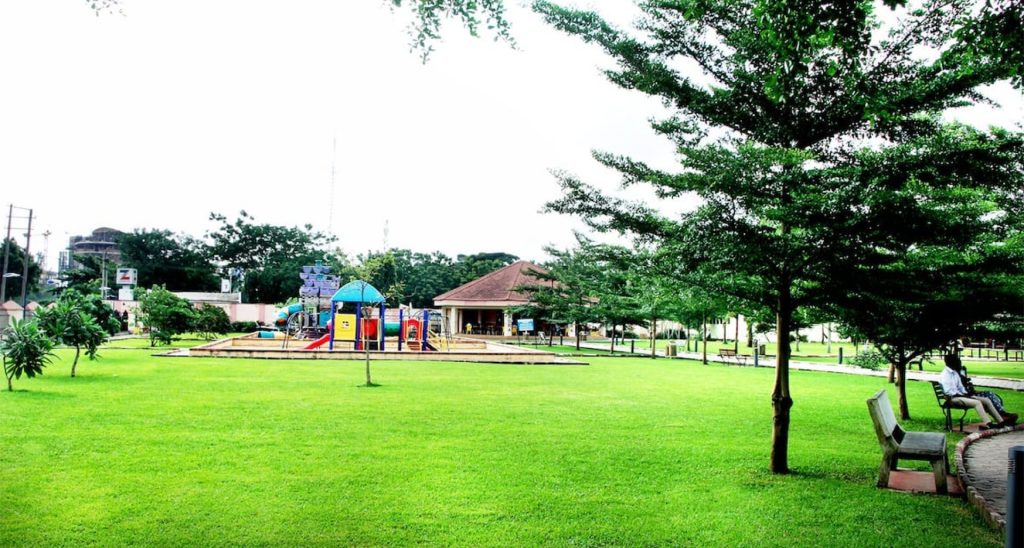
The Lagos State Parks and Gardens Agency, LASPARK, has announced that all public parks under its management across the state will be temporarily closed for routine maintenance and upgrades.
In a statement released on January 9 and shared via its official platforms early Saturday, LASPARK said, “All parks under our management will be closed to the public from January 12 to January 31, 2026.
“This follows increased visitor activity during the recent festive season.”
The agency listed several popular recreational spots that will be affected, including “Ndubisi Kanu Park, Alausa JJT Park, Dr. Finnih Abayomi Park in Oregun, and all other LASPARK-managed parks across Lagos State.”
READ ALSO:
Explaining the reason for the closure, LASPARK added, “The temporary shutdown is necessary to carry out essential landscaping, facility repairs, and general upgrades to ensure that our parks remain safe, clean, and enjoyable for residents and visitors.”
The agency also stressed that the exercise aligns with its broader mandate, noting, “This maintenance programme is part of our commitment to providing well-maintained green spaces that promote relaxation, wellness, and environmental sustainability.”
LASPARK assured residents that “all parks will reopen at the end of the maintenance period.”
News
PAP Sends Additional 34 Foreign Post-graduate Scholarship Beneficiaries To UK Varsities
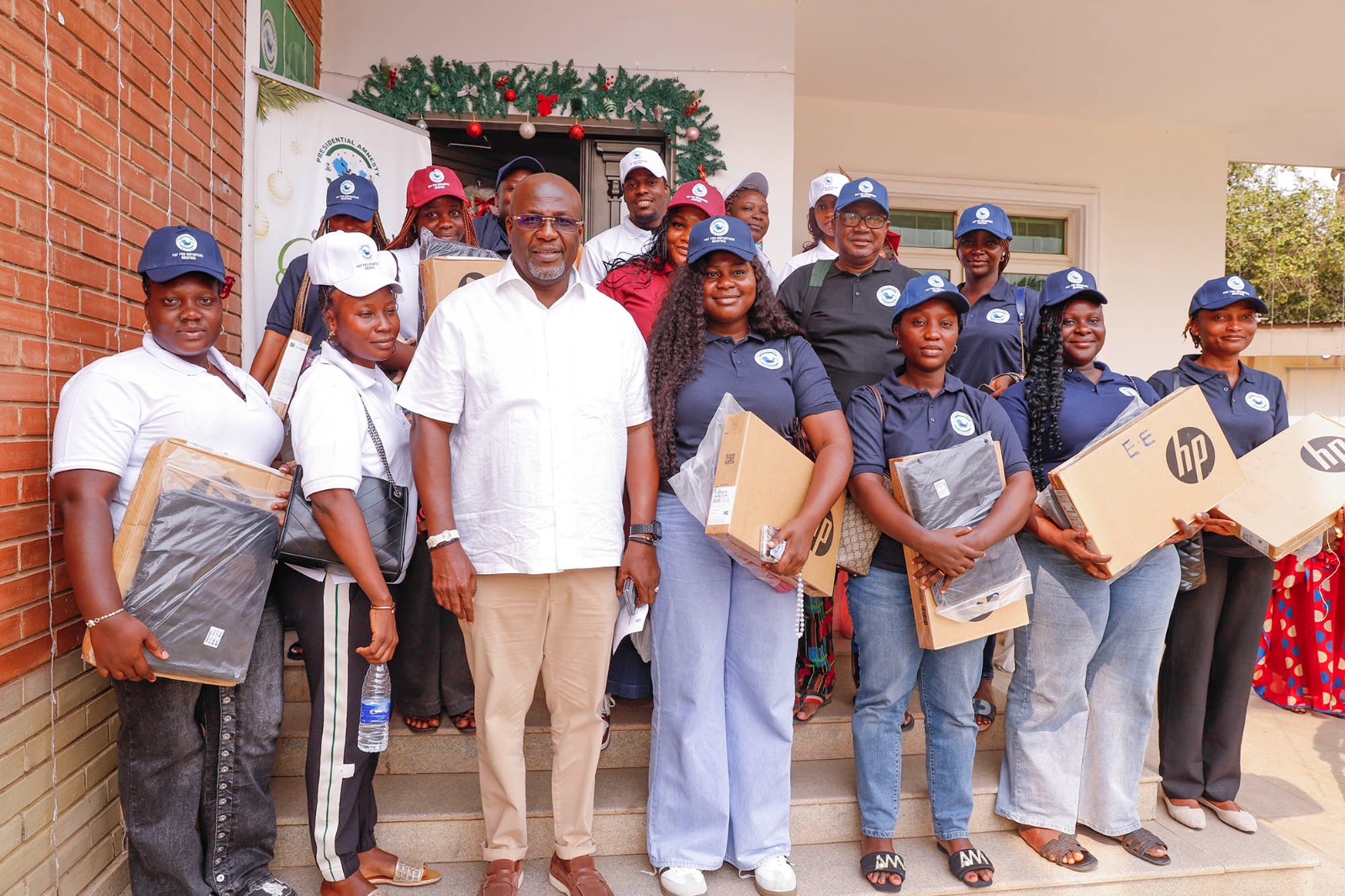
The Presidential Amnesty Programme (PAP) has deployed an additional 34 foreign post-graduate scholarship beneficiaries to various universities in the United Kingdom for the 2025-2026 academic year.
This was contained in a statement made available to newsmen in Warri by Mr Igoniko Oduma, Special Assistant on Media to Dr. Dennis Otuaro, the Administrator, PAP.
According to the statement, the scholars’ programmes include data science, fintech analytics, cyber security, international energy law and policy, construction project management, public health, agri-food technology, electrical and petroleum engineering, among others.
The statement added that more foreign post-graduate scholars will be sent to UK universities in the current academic session.
“In December 2025, nine students, who were the first set of offshore post-graduate scholarship developments by the PAP Administrator, Dr Dennis Otuaro, for the 2024-2025 academic year, graduated from their various programmes in UK universities.
READ ALSO:PAP Scholarship Scheme Vehicle For Better Future For Niger Delta —Otuaro
“Otuaro has deployed over 9000 students to universities within and outside Nigeria for different industry-relevant programmes since he assumed office in March 2024,” the statement partly reads.
Speaking at the pre-departure orientation programme for the scholars at the PAP headquarters in Abuja, on Thursday, Otuaro said that the large-scale deployment was aimed at making the Niger Delta a knowledge-driven region.
He said that his leadership reinvigorated the programme to give it a new momentum in service delivery to the people of the region based on the mandate of President Bola Tinubu.
Otuaro said, “We are sending all of you for post-graduate studies in various universities in the United Kingdom.
“The PAP now has a new momentum and direction because of the repositioning and broad reforms that we carried out in line with the mandate of His Excellency, President Bola Ahmed Tinubu GCFR.
READ ALSO:Otuaro Tasks Media On Objective Reportage
“The objective behind the huge scholarships deployment is to ensure that we develop the needed human capital to transform the Niger Delta and generate knowledge-wealth.
“We want to develop relevant manpower in critical disciplines for our region and by extension, the country, because you are expected to contribute your quota to national development after successful graduation.”
The PAP boss, who was represented at the event by his Technical Assistant, Mr Edgar Biu, advised the scholars to study hard to achieve academic excellence in their various fields of research.
According to him, the scholars have an obligation to justify the Federal Government’s investment in their education and future.
READ ALSO:I’m Not Distracted By Anti-Niger Delta Elements, Says PAP Boss, Otuaro
He reiterated his warning that beneficiaries should not take for granted the opportunity to further their academic pursuits in the interest of the Niger Delta and indeed the country.
Otuaro expressed appreciation to President Tinubu for his “enormous interest and support for the Programme”, particularly the approval of an upward review of the programme’s budget from N65billion to N150billion.
He also expressed gratitude to the National Security Adviser, Mallam Nuhu Ribadu, for his impeccable guidance and supervision of the programme’s initiatives.
Otuaro, therefore, cautioned the scholars to obey their host country’s laws and the rules and regulations of their various institutions, stressing that they are ambassadors of Nigeria, the Niger Delta and their communities and families.
Highpoint of the orientation programme was the presentation of laptops to the scholars to help them in their studies.

 News4 days ago
How To Calculate Your Taxable Income
- Metro4 days ago
Edo widow-lawyer Diabolically Blinded Over Contract Seeks Okpebholo’s Intervention
- News3 days ago
Expert Identify Foods That Increase Hypertension Medication’s Effectiveness
- Headline4 days ago
Russia Deploys Navy To Guard Venezuelan Oil Tanker Chased By US In Atlantic
- Politics3 days ago
APC Leaders, Tinubu/Shettima Group Call For Wike’s Removal As FCT Minister
- Entertainment4 days ago
VIDEO: ‘Baba Oko Bournvita,’ Portable Drags His Father, Alleges Bad Parenting, Extortion
- Metro4 days ago
JUST IN: Court Grants Malami, Wife, Son N500m Bail Each
- Politics4 days ago
2027: Details Of PDP Leaders, Jonathan’s Meeting Emerge
- Headline2 days ago
Science Discovers Why Hungry, Broke Men Prefer Bigger Breasts
- Politics3 days ago
Wike A ‘Pestilence’ On Rivers, I Resigned Because Of It – Ex-Commissioner


