

News
Why Mothers Of Twins Are Denied Access To Water In Akwa Ibom Community Revealed

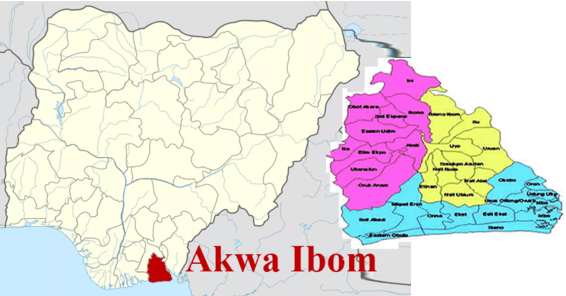


The Coordinator of the Water, Sanitation and Hygiene – Gender Project Team, Prof. Emmanuel Akpabio, on Friday, disclosed that menstruating women and mothers of twin children were not allowed access to drinking water at a community in Akwa Ibom State over beliefs that the water would dry up.
Akpabio, who is the Director, Directorate of International Programmes, University of Uyo, stated this in Uyo while briefing newsmen to highlight the report of the team’s research in three local government areas of Akwa Ibom State.
According to him, the community in the Mbiabet Ikot Udo in Ini Local Government Area of the state has been upholding this belief for decades without being confronted. This is a result of a lack of drinking water and worries that the only source of water in the region might be poisoned.
The professor who noted that the lack of access to WASH constrains women, girls, and other vulnerable individuals from engaging in economic and educational activities called for strong public intervention in providing water for such communities, adding that it would also tackle the problem of open defecation.
READ ALSO: Coup: Seven Moves Tinubu-Led ECOWAS Has Decided To Make Against Niger
“For Mbiabet Ikot Udo, there is only a single source of drinking but stagnant water (idim Affia) sustained through under surface outflow with brown coloration. This serves an estimated population of 1,200 and six more villages (over 6000 people) in the dry season when other available sources would have dried up. This water source is also obtained for domestic and other needs.
“Mothers of twin children are restricted from accessing this water. We were told the stream will spew all manner of impurities and strange substances and gradually dry up anytime it is accessed by a mother of twins, and only comes back to normalcy once sacrifices/rituals are performed by the community.
“Women in their menstrual cycles are also traditionally restricted from having access to the stream and the consequence for violation is prolonged blood discharge. The victims can only get water through their spouses, children, paid services, or voluntary support from members of the community. Where they cannot get any support, they will stay without water for that period,” Akpabio said.
He disclosed that the practice has fuelled gender-based discrimination in access to WASH services and subjected women to psychosocial and other forms of gender-based violence, which would in turn affect their health.
READ ALSO: We Must Reject A Fractured Nigeria – Onaiyekan
According to him, the discrimination was pronounced in ecologically fragile and difficult areas where WASH infrastructure for public use are severely limited, adding that intersectional factors like biology, disability, socio-cultural norms, and economic circumstances also complicate the problem.
“Our attention was drawn to the challenges of menstrual hygiene management (MHM) in the study communities. There have been so much misconception, myths, and gaps in knowledge and awareness around MHM for women and girls.
“When women and girls are denied access to water on account of menstruation, when they have to walk long distances to access WaSH facilities, or when acute water scarcity forces reliance on available but usually of degradable quality sources, their right to decent, hygienic and sanitary living is severely compromised, creating avenues for possibilities for disease outbreaks.
READ ALSO: Anxiety, Fear As Suspected Herders Taker Over Edo Community Farm Roads, Abduct Five
“The stress of having to contend with stigmatisation and extra physical and mental efforts to secure sanitary living translates to serious psychosocial violence.
“MHM needs adequate access to water, soap, sanitary towels, and safe space for using water and changing menstrual towels. A majority of women and girls in our rural areas can neither afford nor have access to these basic necessities.
“When women in their menstrual cycles are denied access to water and safe spaces for menstrual hygiene management as in Mbiabet Ikot Udo, they are directly and indirectly subjected to psychosocial and other forms of gender-based violence, as well as affect their health, as they struggle to make up for such deprivation. Their human dignity is severely violated, and they lack the voice and capacity to surmount such challenges,” Akpabio said.




News
Transfer: Premier League Clubs Scramble For Dele-Bashiru


Lazio midfielder, Fisayo Dele-Bashiru is a subject of interest from three Premier League clubs, according to Sky Sports.
Lazio reportedly rejected offers from Nottingham Forest and Bournemouth for the Nigeria international in January.
READ ALSO:Film Premiere: Edo In Talks With Embassies To Promote Safe Migration —Agazuma
La Biancolesti are bracing for more interest in Dele-Bashiru ahead of the summer transfer window, according to Sky Sports.
The 24-year-old has two years left on his contract with the Serie A club.
The attacking midfielder joined the Rome-based club from Turkish Super Lig outfit Hatayspor in 2024.
He has been a regular feature for Lazio this season.
News
Xenophobic Attacks: Nigerian Students To Picket MTN, MultiChoice, Other Businesses


The leadership of the National Association of Nigerian Students, NANS South-West Zone D, has announced plans to picket South African companies in Nigeria following the ongoing xenophobic attacks in the country.
DAILY POST reports that some Nigerians were recently killed in South Africa over the violent attacks.
A statement issued to newsmen by Comrade Adeyemo Josiah Kayode, Coordinator, NANS South-West, Zone D, said that the association is mobilizing to take decisive and lawful action by organizing peaceful picketing and mass advocacy against South African business interests operating in Nigeria.
READ ALSO:Xenophobic Attacks: Oshiomhole Tells FG To Retaliate Against South African Companies In Nigeria
“We categorically state that the continued targeting of Nigerians under any guise is unacceptable and must come to an immediate end.
“This will include major corporations such as MTN Group and MultiChoice Group. It is morally indefensible for businesses to thrive in an environment where the lives of Nigerians are protected, while Nigerians are subjected to fear and violence elsewhere.
“This contradiction will no longer be tolerated,” the statement said.
News
N5m, N10m Zero-interest Loans: SheVentures Opens Applications For Women Entrepreneurs


First City Monument Bank (FCMB) has opened a new round of applications for its SheVentures proposition, offering zero-interest loans of up to ₦10 million to women entrepreneurs to ease access to working capital and support business growth.
The facility provides loans ranging from ₦500,000 to ₦5 million under a general category, and ₦5 million to ₦10 million for sector-specific businesses, with funding capped at up to 50% of an applicant’s average monthly turnover.
At the centre of the offering is a 0% interest rate, with all charges embedded in a transparent structure.
Repayment is structured over four or six months, allowing businesses to match obligations with their cash flow cycles.
READ ALSO:I’ve Been Blacklisted In Music Industry For 13 Years – Seun Kuti
Yemisi Edun, Managing Director and Chief Executive of First City Monument Bank (FCMB), said the initiative reflects a deliberate approach to inclusive growth.
“Inclusive growth requires access to capital and the right conditions for businesses to deploy that capital effectively.
“Women-led enterprises are critical to economic activity, yet they face structural barriers.
This intervention aims to help close that gap by providing financing that supports job creation, business expansion, and long-term sustainability for women entrepreneurs.”
“Access to affordable finance remains a major constraint for women entrepreneurs,” said Nnenna Jacob-Ogogo, Group Head, SheVentures and Impact Segments at First City Monument Bank (FCMB).
READ ALSO:My Beef With Wizkid Is For Life – Seun Kuti
“By removing the cost barrier and offering quick, flexible funding, this zero-interest loan is designed to safeguard existing jobs, enable businesses to invest in growth initiatives, and foster resilience in challenging economic conditions.”
Women-owned businesses account for a significant share of Nigeria’s small and medium-sized enterprises but continue to face high borrowing costs and limited access to credit.
Through these efforts, SheVentures tackles persistent financing gaps facing women-led businesses, combining targeted funding with broader support to empower women entrepreneurs, encourage business innovation, and enhance their ability to compete on a national scale.
Applications for the zero-interest loan are now open.Apply now.
-

 Politics4 days ago
2027: Tinubu’s Re-election May Put An End To Nigeria — Baba Ahmed Warns
-

 Politics5 days ago
BREAKING: 2027: Former Adamawa APC Guber Candidate, Aishatu Binani Defects To NDC
-

 Business4 days ago
JUST IN: Nigerian Filling Stations Reduce Fuel Price After Hike
-

 Entertainment5 days ago
Actress Eniola Badmus Gets New Federal Appointment
-

 News2 days ago
BREAKING: Wike Picks Alabo George For Rivers Governorship
-

 News4 days ago
2027: Pastor Adeboye Speaks On Nigeria’s Next President
-

 Politics4 days ago
NDC Speaks On Peter Obi, Kwankwaso Joining Party
-

 News3 days ago
OPINION: Why South Africans Murder Nigerians In Cold Blood
-

 Politics2 days ago
JUST IN: Why I left ADC For NDC With Kwankwaso – Peter Obi Opens Up
-

 Business2 days ago
Why We Sited Our Multi-Billion Naira Automobile Firm Branch in Benin – Skyewise Group CEO
