

Business
Why Naira Re-denomination Will Fail In Nigeria — Experts

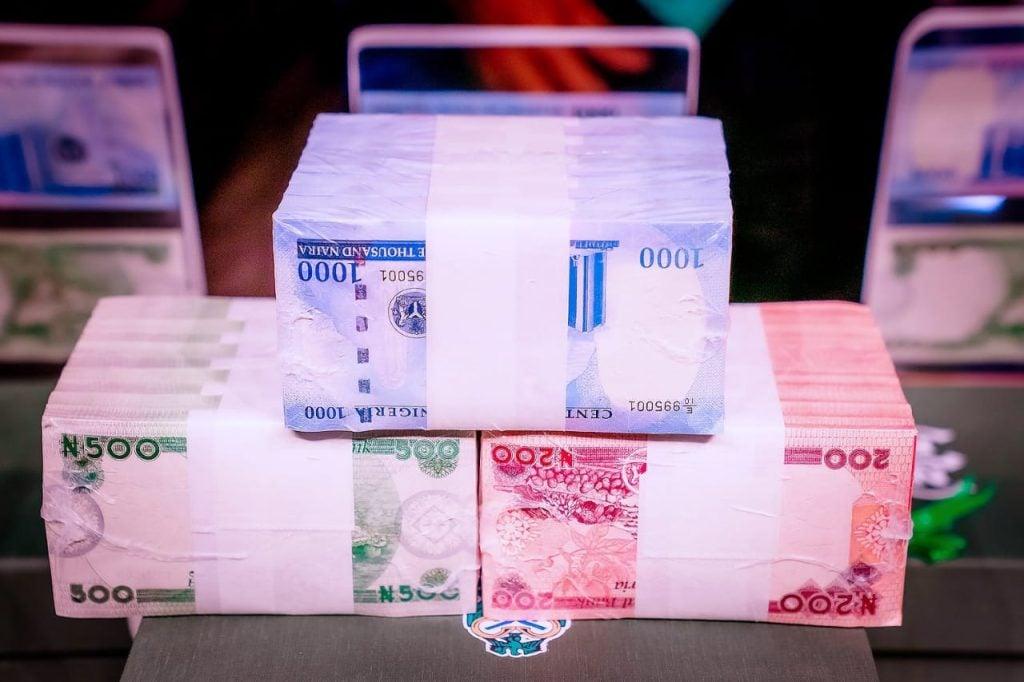


Against the backdrop of sustained rumors about the introduction of the Naira re-denomination by the current government, economy analysts and corporate chieftains have painted a discomforting picture of what the policy may entrench on the economy if carried out.
In the past month, there have been many insinuations from several quarters that the Central Bank of Nigeria, CBN, is planning to onboard the measure as part of its overall monetary policy package from the new team at the apex bank.
Re-denomination is often used to describe a process in which a country adjusts its currency by changing the nominal value which changes the actual purchasing power of the currency.
Though the CBN had denied the rumor many sources hinted that the apex bank has already consulted officially for the policy roll out and may have slated January next year for commencement.
Some experts who spoke to Vanguard also believe that it is either the apex bank is flying a kite to sample public opinion or they are actually about to announce the policy because ‘‘there is not smoke without fire’’.
Giving insight into the policy measure some of them, however, told Vanguard that it can improve price stability by making transactions more manageable and reducing the likelihood of hyperinflation.
But they also said it’s essential to caution that Naira re-denomination alone won’t directly impact inflation rates positively.
Some also noted that the talks about redenomination may be part of the struggle by the current administration to gain the acceptance of the people, but also explained that the success or otherwise of re-denomination as an economy booster depends on its implementation and the complementary measures taken to address underlying economic issues, particularly in the areas of price stability, foreign investment, and engagement with key stakeholders.
There could be elements of truth with persistence of the rumor – Adonri
In his own comments, David Adonri, Financial Analyst and Executive Vice Chairman, at Highcap Securities Limited, said: “The re-denomination of the Naira was first muted by Charles Soludo’s Central Bank of Nigeria, CBN, leadership but CBN did not implement the plan. It has resurfaced again after Godwin Emefiele shelved it. When rumours persist for long, there could be elements of truth in them.
READ ALSO: LG Chairman Lauds UNICEF On Campaign Against Cervical Cancer In Bauchi
“However, since CBN has dispelled the rumor, we shall take their word for it but remain alert.
“On the surface, such a policy will match the foreign exchange rate with new value of the re-denominated Naira.
“However, the reality may not be the case. It is not likely to enhance price stability because Nigeria’s inflation is scarcity derived amidst severe shortage of hard currencies. The huge supply gap will make the program unsustainable.
“Under present economic conditions, re-denomination will be an exercise in futility. It could further weaken the Naira and reduce the purchasing power of consumers as producers will lash on the opportunity to increase prices.”
It would amount to further macroeconomic instability — Olayinka
Reacting to the alleged plan by the CBN to redenominate the Naira, Tajudeen Olayinka, CEO, Wyoming Capital and Partners said: “Since CBN has continually denied the plan to embark on such a program, I also don’t find the rumor credible.
“However, should they eventually decide to embark on that journey now, I will advise they delay such a decision till a more auspicious time.
“And the reasons are simple: You cannot embark on currency redenomination when you are still grappling with the difficulty of stabilizing the macroeconomic environment. Doing so means that you will have to repeat the program multiple times in a short period, as the effort would amount to further macroeconomic instability in the short term.
“The essence of currency redenomination is to strengthen the new lower denominations as the medium of exchange, store of value and unit of account, by improving on pricing mechanism in the economy, where rounding up of asset prices could be possibly avoided to stabilize the general price level.
“Doing it at the wrong time, when the economy is in a prolonged state of disequilibrium could be counter-productive, as instability may soon return.
“With the current poor state of Nigeria’s foreign reserves and multiple emergency foreign borrowings coming up to create dollar liquidity, it could send a wrong signal to foreign investors that Nigeria is in an emergency situation, and that proper forecast of future exchange rate might be difficult.
“As mentioned earlier, currency redenomination is good for an economy that is currently enjoying a semblance of macroeconomic stability, so that its timely adoption could promote further stability. Doing it at a wrong time will not be helpful to effective exchange rate post-redenomination.
READ ALSO: AfDB, Partners Inject $1bn To Fund Nigeria’s SAPZs
“The government should continue to run its ongoing adjustment program, with the appropriate policy framework, to a point of restoring external equilibrium, before embarking on currency redenomination, in order to have a stable effective exchange rate, post-redenomination.
“Good and careful planning of currency redenomination program, with timely implementation, could herald a new beginning for macroeconomic stability, especially, a new era of a very low or near absence of inflation, due to improved pricing mechanism in the economy.”
Re-denomination can aid price stability, but … — Adebija
For Gbenga Adebija, Chief Executive Officer, Business in Nigeria/ Former Director-General of the Nigeria-German Chamber of Commerce, the talks about redenomination may be part of the struggle by the current administration to gain the acceptance of the people.
He also explained that the success or otherwise of re-denomination as an economy booster depends on its implementation and the complementary measures taken to address underlying economic issues, particularly in the areas of price stability, foreign investment, and engagement with key stakeholders.
He stated: “The Tinubu administration is evidently working to establish trust and credibility with the public. Therefore, it is crucial to grant them the benefit of the doubt on this matter until proven otherwise’’.
However, he gave further insight on what should happen in the event of embarking on such policy.
He stated: “Re-denomination, in isolation, does not impact the exchange rate because it doesn’t alter the actual value of the currency relative to other currencies.
“Consequently, the exchange rate of the (Naira) re-denominated currency with others should remain relatively stable.
‘‘Re-denomination can, however, contribute to price stability by simplifying price calculations and accounting which are usually impacted by high inflation rates.
“Re-denomination, by itself, does not influence the true value of the currency or the economic fundamentals of the country. It primarily alters the way prices are expressed and how people interact with the currency.
“Often, it serves as a prelude to broader economic and monetary reforms, such as addressing inflation or introducing a new, more stable currency.
‘‘Therefore, the success of Naira re-denomination as an economy booster depends on its implementation and the complementary measures taken by the Government and Central Bank to address underlying economic issues, particularly in the areas of price stability, foreign investment, and engagement with key stakeholders.”
READ ALSO: BEDC Staff Electrocuted While Trying Fix Faulty Cable
Enabling environment should come before re-denomination — Azeez
Also speaking to Vanguard on the Naira re-denomination kite, Olowu Babs Azeez, National Treasurer of the Association of Mobile Money and Banks Agents of Nigeria (AMMBAN), noted that since CBN has not said it would embark on the policy it is not necessary to appraise the policy.
However, Azeez who is also the Chief Executive Officer of Obat Global Investment Limited, stated: “If such should happen, the government should first do the needful by providing enabling environment for business to thrive which would encourage foreign investors, promote small scale businesses and sizeable numbers of entrepreneur.
“This has to do with good roads, adequate electricity supply, business-friendly government policy, tax reduction, avoid unnecessary levels on business establishment, reduce export duty and import duty on raw materials but increase import duty on products that can be manufactured or produced in Nigeria in other to promote local production.
“I believe with this, the economy has lot to benefit and it will strengthen our currency.”
Focus should be on comprehensive economic reforms – Oyelaja
Abiodun Oyelaja, Chief Executive Officer Motion Yield Nigeria Ltd, said Naira re-denomination does not affect the exchange rate.
He explained thus, “The term “redenomination” is often used to describe a process in which a country adjusts its currency by changing the nominal value of its currency without changing its real value or the actual purchasing power of the currency.
“This is different from devaluation or revaluation, which involves changing the real exchange rate of a currency.
“Redenomination alone doesn’t directly affect the exchange rate. It’s mostly a psychological change, as the real value of the currency remains the same.
“Exchange rates are determined by various economic factors, including supply and demand, interest rates, and the overall health of the economy. It can however improve price stability by making transactions more manageable and reducing the likelihood of hyperinflation.
“However, it’s essential to caution that redenomination alone won’t directly impact inflation rates.
‘‘Redenomination is often part of a broader economic reform strategy. Nigeria should consider comprehensive economic reforms to address issues like inflation and exchange rate stability.
READ ALSO: IG Orders Treatment Of Gunshot Victims Without Police Report
“Care should also be taken to manage public expectations, as redenomination doesn’t solve underlying economic problems but can help improve currency management.
“Public education is essential if the government finally decides to undertake the reform strategy.
“The government through the CBN should closely monitor inflation rates and take measures to control inflation, which is a significant factor affecting the purchasing power of the currency.
“I advise that Nigeria should consider redenomination only as part of a more comprehensive economic strategy aimed at addressing issues related to exchange rates, inflation, and overall economic stability.”
Ghana’s example, Soludo justified
Most of the experts spoke on the Ghana experience which has spanned 17 years now without any positive result.
On the Ghana experience, Olayinka stated: “When Ghanaian government announced the program in 2006, the country’s economy had not attained a semblance of stability, hence, the continued instability in the economy. Coming back to Nigeria, it could have been an appropriate program in 2007, when Prof. Charles Soludo introduced it before it was ignorantly shut down by late President Yar’adua.
“At that time, Nigeria had a right macroeconomic environment for timely implementation of the program, which include the following: Huge foreign reserves, enough to cover 36 months of import bills; Stable exchange rate; Stable interest rate; Stable and low inflation; Low level of public debt; High velocity of money that was accompanied with low inflation (very unusual to have this phenomenon); Continuous FDI and FPI inflows; Steady and reasonable level of economic growth; Low level of unemployment; Cash Reserve Ratio of about 4% means that economy was not troubled in any way; Availability of consumer credit across the spectrum of the economy and steady growth in capital formation; A near efficient financial markets, etc.
‘‘So, Nigerian economy could have benefited more from Naira re-denomination in 2007. It was unfortunate that late President Umaru Yar’adua denied Nigeria the timely implementation of currency redenomination program in 2007.”
Speaking on the Ghana experience with re-denomination, Mr Oyelaja stated: “When Ghana carried out the redenomination of its currency, the Cedi in 2007, it adjusted the nominal value of the currency by removing four zeros from the currency, making the currency more manageable. The real value of the currency did not change. The process only aimed to simplify transactions and accounting.
“The lessons from Ghana’s re-denomination experience underscore the significance of meticulous planning, public education, and alignment of the re-denomination process with more extensive efforts to stabilize the economy.
READ ALSO: DSS Confirms Release Of Former EFCC Boss, Bawa
“It is essential to acknowledge that re-denomination is not a standalone remedy but should be an integral part of a comprehensive economic reform strategy.
“Thus, factors such as effective stakeholder communication, continuous monitoring and evaluation, coordination, and safeguarding the integrity of macroeconomic structures are of paramount importance.”
For Mr Adebija there are lots of lessons Nigeria can learn from the Ghana’s experience with the re-denomination policy.
He stated: “The lessons from Ghana’s re-denomination experience underscore the significance of meticulous planning, public education, and alignment of the re-denomination process with more extensive efforts to stabilize the economy.
“It is essential to acknowledge that re-denomination is not a standalone remedy but should be an integral part of a comprehensive economic reform strategy.
“Thus, factors such as effective stakeholder communication, continuous monitoring and evaluation, coordination, and safeguarding the integrity of macroeconomic structures are of paramount importance.”
On the Naira issue for Adonri, Ghana recorded a worsened economy arising from re-denomination.
He stated: “The program in Ghana failed to achieve the desired objectives. It worsened the purchasing power of the Cedi. Re-denomination is effective if the inflation is due to over-employment of the factors of production.
“Nigeria’s situation is the direct opposite with gross factor underemployment. It is not a viable option to pursue now if the economy is to be rescued.”
VANGUARD




Business
Why We Sited Our Multi-Billion Naira Automobile Firm Branch in Benin – Skyewise Group CEO


Dr. Elvis Abuyere, Chief Executive Officer and Managing Director of Skyewise Group, an automobile firm, has explained the reason for establishing a branch of the company in Benin City, the Edo State capital, describing the ancient city as “a growing economy full of enormous potential for vibrant youth.”
He added that the company considers Edo State one of the most interesting states, noting that the decision aligns with its long-term vision.
Abuyere, who spoke in Benin on Monday while taking journalists on a tour of the new automobile facility, said:
“We started very small — from Abuja to Lagos and now Benin. It is a joy and privilege for us to have completed this amazing regional office with Skyewise Group.”
READ ALSO:BREAKING: Wike Picks Alabo George For Rivers Governorship
According to him, beyond the automobile business, Skyewise Group is in Benin to invest in real estate, logistics, youth empowerment, and credit management. “Aand also to lend our support to what the Edo State Government is doing, knowing the fact that there is an agenda,” he added.
The young CEO urged youths in Nigeria, particularly those in Edo State, to embrace entrepreneurship, stressing that “we believe it is the future of Africa,” especially Nigeria.
He said Nigeria stands as the giant of Africa and that its youth must take bold steps in the entrepreneurship landscape.
According to Abuyere, to ensure Edo youths actualise their entrepreneurial potential, the company has prepared soft loans to help them start businesses, adding that Skyewise Group is not limited to automobile operations.
READ ALSO:Senatorial Seat: Ogbakha-Edo Warns Against Imposition Of Candidates In Edo South
He said: “More importantly to us is youth empowerment. We want our youth to be empowered, and this is where the Skyewise Foundation comes in.
“We believe the future of Africa is entrepreneurship, and that future lies in the hands of the young people of Nigeria. We want to empower them to stand the test of time, build something meaningful, and reduce unemployment and insecurity in our land.
“I believe we need to begin taking bold steps by refining the mindset of our young people. We need to give them a sense of belonging and direction.
“We have been addressing the liquidity gap in society by providing microloans to support businesses in our environment and in Benin City.”
When asked why he chose Benin City for the multi-billion naira automobile firm, Abuyere noted: “I think this is the first automobile showroom in Edo State where you can see a car lifted from the ground floor to the first floor and beyond.”
Business
JUST IN: Nigerian Filling Stations Reduce Fuel Price After Hike

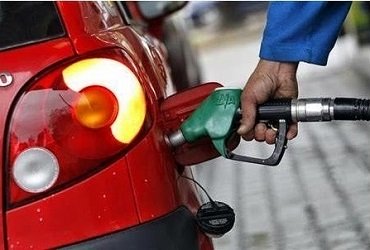
Nigerian filling stations reduced their Premium Motor Spirit price on Saturday, barely 24 hours after the hike.
Checks by DAILY POST showed that Ranoil, Empire Energy, and other filling stations in Abuja adjusted their petrol pumps to N1,365 and N1,375 per litre respectively, down from N1,440 per litre on Friday.
This means that petroleum marketers dropped their fuel price by N65 and N75 per litre. DAILY POST reports that the move was to attract patronage from customers.
Recall that three days ago, Nigerian filling stations had raised their petrol pump price to between N1,365 and N1,440 nationwide after Dangote Refinery and depot owners increased ex-depot prices to around N1,275 and N1,290 per litre.
According to DAILY POST, while the Nigerian National Petroleum Company Limited and MRS Bovas filling stations raised their petrol price to around N1,365 per litre, others adjusted theirs above N1,440 per litre.
READ ALSO:Drivers Protest Fuel Increase, Raise Fares in Benin
However, with the latest fuel price reduction by Ranoil and Empire Energy, the majority of filling station outlets now dispense petrol between N1,365 and N1,375 per litre.
This development comes as the ripple effect of crude oil prices continues to impact Nigeria’s domestic fuel price.
Brent and West Texas Intermediate crude rose to $114 and $105 per barrel before dropping to $108 and $101 after the filing of this report.
Business
Dangote Refinery Hikes Petrol Price


Dangote Refinery has increased the ex-depot price of petrol by N75.
The refinery announced the increase on Wednesday, hiking the the price from N1,200 to N1,275 per litre.
In the same way, coastal prices have gone up to N1,215 per litre.
READ ALSO:Dangote Sugar Announces South New CEO
This adjustment amid Brent crude trading at $114.80 per barrel marks a 3.15% increase.
DAILY POST reports that Brent crude has increased to $115 per barrel, while West Texas Intermediate rose to $103 per barrel on Wednesday.
-

 Politics4 days ago
2027: Tinubu’s Re-election May Put An End To Nigeria — Baba Ahmed Warns
-

 Metro5 days ago
I’m A Street Girl’ – Bimbo Ademoye Clashes With Area Boys [VIDEO]
-

 Politics4 days ago
Senatorial Seat: Ogbakha-Edo Warns Against Imposition Of Candidates In Edo South
-

 Politics4 days ago
BREAKING: 2027: Former Adamawa APC Guber Candidate, Aishatu Binani Defects To NDC
-

 Business3 days ago
JUST IN: Nigerian Filling Stations Reduce Fuel Price After Hike
-

 Entertainment4 days ago
Actress Eniola Badmus Gets New Federal Appointment
-

 News5 days ago
10 African Countries With Highest Petrol Prices In Prices In April 2026
-

 News1 day ago
BREAKING: Wike Picks Alabo George For Rivers Governorship
-

 News3 days ago
2027: Pastor Adeboye Speaks On Nigeria’s Next President
-

 Politics4 days ago
2027: Pondi, Otuaro, Other Delta South Stakeholders, Endorse Senator Joel-Onowakpo For Second Term
