
Business
Why Petrol, Diesel Prices May Not Drop Despite Dangote Refinery — Experts

Experts believe that prices of petrol and diesel may not crash significantly despite the commencement of production at the Dangote Petroleum Refinery.
With the removal of subsidy on petrol in May 2023, the price per litre of petrol jumped from around N184 to over N600 depending on the location. Diesel also sells for about N1500 per litre at retail outlets.
Petrol marketers are optimistic that production at Dangote refinery will significantly force down the prices of petrol and diesel.
But the experts said though the behemoth refinery is located in Lagos, Nigeria, the input cost for the operationalisation of the $20bn facility is import-dependent, adding that the volatility of the foreign exchange rates might make it difficult for any marginal reduction in the prices of the premium commodities.
These were the thoughts of the Publisher of Sweet Crude Reports, Hector Igbikiowubo; and Nairametrics Founder, Ugodre Obi-Chukwu; on Inside Sources with Laolu Akande, a socio-political programme aired on Channels Television on Friday.
Both Igbikiowubo and Obi-Chukwu commended Africa’s richest man, Aliko Dangote, for defying all odds to ensure that his dream to build a functional refinery came to life.
They said Dangote demonstrated that the Federal Government has no excuse not to get the country’s four dormant refineries working and urged the Nigerian National Petroleum Company (NNPC) Limited to increase crude supply to the private refinery.
READ ALSO: Petrol Price May Crash to N300/Litre If…– Modular Refineries
The billionaire business tycoon recently said his refinery would continue to import 24 million barrels of West Texas Intermediate crude due to insufficient local crude production and supply by the state-run NNPC.
The experts said though the private refinery won’t solve Nigeria’s energy security needs, its operations would go a long way in making premium petrol products available in the country.
“The Dangote Refinery cannot solve the problem because the Dangote Refinery will continue to pay for crude oil in USD (United States Dollar),” Igbikiowubo said.
“The question now is how come the NNPC isn’t allotting all of its 445,000 barrels per day to the Dangote Refinery for refining? Why is it convenient to export crude oil when you have a facility like the Dangote Refinery up and running? You make more money if you export refined petroleum products than if you export crude oil.”
Obi-Chukwu agreed with Igbikiowubo that the dominance of the greenback in the operational cost of the Dangote Refinery might not necessarily lower the cost of the refined products for end users.
READ ALSO: Marketers Kick As NNPCL Delays Fuel Supply
Obi-Chukwu said, “As much as the refinery is local, most of the input cost for that refinery is still going to be imported. Whether it is the personnel that will service the refinery. Whether it is the spare parts that will be changed and serviced. Even the crude itself is also being imported.
“A lot of the breakdown of the cost still has foreign components in there. So, it is quite unlikely that you might see a substantial amount of savings to the end consumers. Nevertheless, even if we get 10% savings, it is still better than what we currently have.”
The refinery sited in Lagos and owned by the billionaire businessman commenced operations last December with 350,000 barrels a day. The refinery hopes to achieve its full capacity of 650,000 barrels per day by the end of the year.
The refinery has begun the supply of diesel and aviation fuel to marketers in the country while petrol supply is expected to commence mid-July.
Energy Security
The experts said though the Dangote Refinery has been operational, the country’s four refineries sited in three locations across the country should be made to function to guarantee energy security for the country.
READ ALSO: Woman Wrongly Convicted Of Murder Freed After 43 Years In Prison
The four state-owned refineries which are in dilapidated condition are sited up north in Kaduna with three units sited in the southern region – Port Harcourt and Warri. Attempts to get them working for about two decades have not been successful despite billions of naira spent on turnaround maintenance.
The newspaper publishers believe the Bola Tinubu administration should do all in its ability to make the state-owned refineries work.
Igbikiowubo said, “The essence of having the NNPC refineries working is to guarantee energy security for the Nigerian state.”
He said though the NNPC has about 20% stake in the Dangote Refinery, the refinery does not belong to the Nigerian state.
“We should have a coherent energy security in place,” he said. “If you have refineries, those refineries should work.”
Igbikiowubo said privatisation of the state-owned refineries does not guarantee energy security as the private company is interested in profit-making for its shareholders and not necessarily ensuring that the populace gets the premium commodities easily and at cheap rates.
“Where is NITEL today? It was privatised. Where is Daily Times today? It was privatised. We need to be accountable. The money sunk into the refineries, what happened to them?”Igbikiowubo asked.
“Last year, the petroleum minister granted an interview that the Port Harcourt Refinery would be up by December. This is June and nothing has happened. He is not being held to account.”
He said subsidy removal should be predicated on local refining and not import-dependent products controlled by the vagaries of foreign exchange.
“You have a group of persons who are benefitting with the status quo and they will do everything to ensure the status quo remains,” said the Sweet Crude Reports publisher.
‘Privatise With Clear Mandate’
The publisher of Nairametrics posited that privatisation can work – and it has worked before in other sectors of the country – if done the right way.
“We’ve practiced one model before, the government trying to run the refineries. It hasn’t worked. What we see now is funds being misappropriated from the very limited funding space that we have as a country and these funds are being squandered. So, there is no point. The same thing with the Ajaokuta Steel.
“You have to privatise properly with a clear mandate and key performance indicators including public list on the Nigerian Stock Exchange (NSE),” he said.
He urged the government to set the right policies to allow private businesses to flourish in the country.



Business
Naira Appreciates Against Dollar At Official FX Market
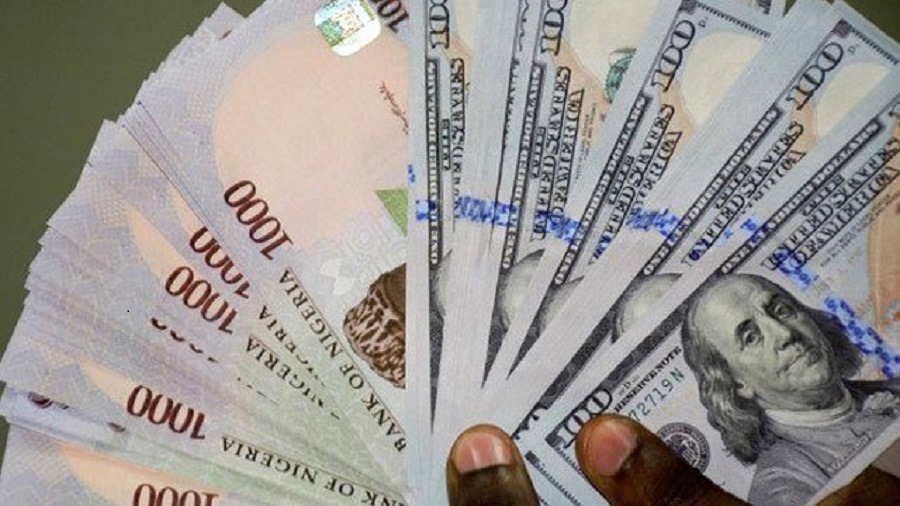
…Black market (Buying and selling rates): N1,385— N1,390
The Nigerian naira appreciated against the United States (US) dollar, trading at N1,331.2027 at the Central Bank of Nigeria (CBN) official foreign exchange (FX) window on Friday, September 18, 2026.
The data shared on the CBN’s official platform shows that the naira traded at the Nigerian Foreign Exchange Market (NFEM) rate of N1,331.2027 per dollar and closed at N1,329.9900 per dollar.
The currency, which traded at an NFEM rate of N1,331.2812 on September 17, 2026, appreciated by at least N0.08 after trading activities on Friday.
READ ALSO: Naira To Dollar Exchange Rate At Official FX Market
At the parallel market, both the buying and selling rate decreased by N5, when compared to the previous trading rate on Thursday, September 17, 2026.
According to Aboki FX , the Naira-to-dollar exchange rate at the black market on Friday, September 18, 2026, was N1,385 and N1,390 per dollar for buying and selling rates, respectively.
Business
Again, Naira Depreciates Against Dollar At Official FX Market
…Black market (Buying and selling rates): N1,380— N1,385
The Nigerian naira depreciated against the United States (US) dollar, trading at N1,329.8568 at the Central Bank of Nigeria (CBN) official foreign exchange (FX) window on Wednesday, September 16, 2026.
The data shared on the CBN’s official platform shows that the naira traded at the Nigerian Foreign Exchange Market (NFEM) rate of N1,329.8568 per dollar and closed at N1,329.5600 per dollar.
The currency, which traded at an NFEM rate of N1,329.1485 on September 15, 2026, depreciated by at least N0.71 after trading activities on Wednesday.
READ ALSO: Naira To Dollar Exchange Rate At Official FX Market
At the parallel market, both the buying and selling rate remained the same, when compared to the previous trading rate on Tuesday, September 15, 2026.
According to Aboki FX , the Naira-to-dollar exchange rate at the black market on Wednesday, September 16, 2026, was N1,380 and N1,385 per dollar for buying and selling rates, respectively.
Business
How To Buy Dangote Refinery Shares As IPO Opens September 14
Investors seeking to own a stake in the Dangote Petroleum Refinery and Petrochemicals FZE will be able to subscribe to its initial public offering (IPO) from September 14, 2026.
The ₦2.15 trillion offer by Dangote, valued at about $1.6 billion, involves 4.1 billion ordinary shares priced at an indicative ₦525 per share.
The offer, which is expected to become Nigeria’s largest-ever public share sale, will remain open until October 13, 2026.
The development gives Nigerians and other eligible investors an opportunity to acquire shares in the refinery as the Dangote Group moves to broaden ownership of the business.
At the signing of the IPO documents in Lagos on September 7, President of Dangote Group, Aliko Dangote, said the offer was designed to enable ordinary Nigerians to become shareholders in the refinery.
“What we are trying to achieve is to make sure our drivers, cooks, servants, and everybody have the opportunity of having stakes in the refinery,” Dangote said.
READ ALSO: BREAKING: Dangote Refinery Reduces Petrol, Diesel Prices
How to subscribe
According to the Managing Director, Investment Banking, Chapel Hill Denham, Mr Lanre Buluro, prospective investors can subscribe digitally using a bank account, Bank Verification Number (BVN) and a mobile phone or laptop.
He said an investor can complete the process within two to three minutes, with the minimum subscription set at 10 shares.
At ₦525 per share, the minimum subscription of 10 shares will cost ₦5,250.
Buluro said investors could access the offer through platforms including Moniepoint, MTN MoMo, Airtel, Payaza, Piggyvest, Paga, Bamboo and Chapel Hill Denham’s Invest Naija platform.
Do I need a CSCS account?
Buluro said prospective investors do not necessarily need an existing Central Securities Clearing System (CSCS) identity number before subscribing.
READ ALSO: Dangote Refinery Reduces Petrol Gantry Price
According to him, a CSCS account can be created for a new investor during the subscription process after the investor’s BVN and bank account details have been verified.
He explained that stockbrokers are behind the participating platforms and would contact subscribers after the transaction to provide their CSCS and Clearing House Number (CHN).
The allotted shares will subsequently be domiciled in the investor’s CSCS account.
What happens after subscription?
Investors can subscribe throughout the offer period, which runs from September 14 to October 13.
At the close of the offer, the advisers and the Securities and Exchange Commission (SEC) will assess the total subscriptions and determine the final allotment.
This means investors may not necessarily receive all the shares they apply for if the offer is oversubscribed.
READ ALSO: Dangote Unveils 10-day Credit Facility For Petrol Station Owners
Buluro disclosed that the offer has a provision to accommodate additional subscriptions in the event of oversubscription.
He said up to about 30 per cent additional shares could be issued under the oversubscription provision, potentially increasing the number of shares available from 4.1 billion to about 5.3 billion.
Before you invest
Buluro advised prospective investors, particularly first-time investors, to read the IPO prospectus carefully and seek guidance from a qualified financial adviser before committing their funds.
Investors should also understand that subscribing to an IPO does not guarantee a profit. The value of shares can rise or fall after allotment, depending on the company’s performance and market conditions.
The Dangote Refinery IPO is expected to significantly deepen public participation in the Nigerian capital market by allowing more individuals to take direct equity positions in one of the country’s largest industrial projects.
(TRIBUNE)

 News4 days ago
BREAKING: Tinubu Extends Working Vacation
- Headline4 days ago
How To Format An Academic CV For US Master’s, PhD Applications
- News4 days ago
Benue Govt Suspends Muslim Pilgrims Welfare Board Chairman, Secretary
- Politics4 days ago
Crisis Rocks NDC Over Obi-Kwankwaso Campaign Council
- Entertainment4 days ago
Why Funke Akindele Was Not At My Movie Premiere – Kamo State
- Sports4 days ago
5 Football Players Who Excelled In Multiple Positions
 News3 days ago
OPINION: The Stranger In APC’s Kitchen
- News5 days ago
[OPINION] Wike-APC: Fights Always End Adultery
- News4 days ago
FULL LIST: Names Of 37 Illegal Miners Who Died In NSCDC Custody
- Sports4 days ago
Premier League Predictions For Matchweek 5 Fixtures


