
News
Why Russian Investors Should Localise Production In Nigeria — Envoy
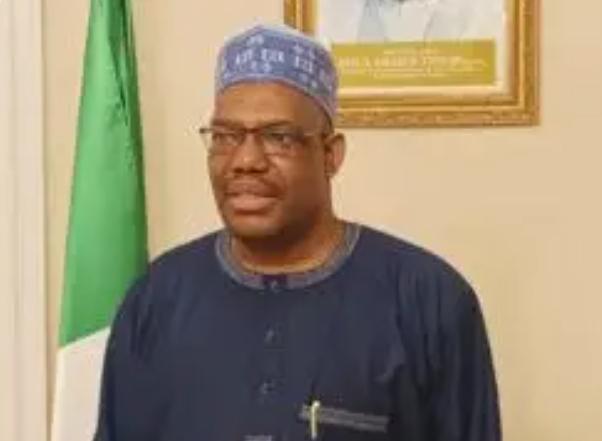
Amb. Abdullahi Shehu, Nigerian Ambassador to the Russian Federation with concurent accreditation to the Republic of Belarus.
Amb. Abdullahi Shehu, Nigerian Ambassador to the Russian Federation on Tuesday encouraged investors from Russian to localise the production of their goods in Nigeria.
Shehu, in an interview with the News Agency of Nigeria (NAN) in Moscow urged the Russian investors to explore the enormous potential in Africa, particularly Nigeria.
Speaking on the just concluded 2nd Russia-Africa Economic and Humanitarian Summit, Shehu identified trade as one of the areas Nigeria would focus in its economic cooperation with Russia.
READ ALSO: Subsidy Removal: Nigeria On Brink Of Collapse — Catholic Bishops
According to him, with the platform provided by the summit we can see that there are areas that each country can focus on.
“These include the area of trade. Almost all African countries are interested in trading with Russia. But the point that the Nigerian delegation made is that trade is good but investment and financing are better.
“It is so because under the current geopolitical situation, it is hard to buy and sell and transport goods from Russia to Africa because the logistic chains have been affected by the sanctions.
“Therefore, the best thing to do is to encourage Russia to understand the African market.
READ ALSO: Senate Halts Screening Of 3 Ministerial Nominees Over Alleged Forgery, Age Falsification
“They should explore the possibilities of investment in Nigeria and take advantage of its huge market and localise the production of their goods in Nigeria,’’ he said.
The Ambassador emphasised that there was a convergence of needs and opportunities in Africa, particularly in Nigeria.
“The needs are there and the Russian companies have the opportunities to invest in ICT, food production, energy and mining and other sectors.
“So, this is why Nigeria came with a vision to see that they sensitise the Russian companies with respect to graduating from trading to investment.
“And this cooperation is in vast areas with other African countries,’’ he said.
READ ALSO: TCN Disconnects Osogbo From National Grid Over Staff Assault
Shehu, who described the summit as a success, said that it did not only deepen the bilateral relations between Russia and African countries but it also fostered continental cooperation.
“So, now we believe that a platform for strategic partnership has been created,’’ he said.
NAN reports that the Russia-Africa Economic and Humanitarian Forum 2023 which held on July 27 and July 28 in St. Petersburg recorded the participation of 17 Heads of State and over 15 African countries represented.
(NAN)





News
NMA To Withdraw Medical Services In Edo Over Kidnapped Colleagues
The Nigeria Medical Association (NMA), Edo State Branch, has threatened to withdraw medical services across the state, effective from Saturday, 10 January, 2026.
This followed the recent abduction of two medical doctors on January 1st and 2nd, 2026.
Chairman of the NMA Edo State branch, Dr. Eustace Oseghale, in a statement made available to newsmen in Benin on Friday, stated that the withdrawal of services was a direct consequence of the abduction of their colleagues and a reflection of the heightened sense of vulnerability among medical practitioners in the state.
READ ALSO:Doctors’ Strike Continues As NARD Demands Fair Deal, Better Pay
Oseghale, on behalf of the NMA, called for immediate release of the abducted doctors and implementation of measures to prevent future incidents.
The statement reads: “This incident raises concerns about healthcare professionals’ safety in Edo State, threatening their lives and undermining healthcare delivery.
“We demand the immediate release of our abducted colleagues as well as enhanced security protocols for Edo State residents and regular engagement between NMA Edo and the Edo State Government on security concerns.”
READ ALSO:Edo Targets 2.2 Million Children For Measles, Rubella Vaccination
The NMA Chairman, while insisting on withdrawal of services statewide if their demands aren’t met, stressed that a safe working environment is crucial for healthcare providers.
“We’ll continue to withhold services until our demands are met and colleagues are safe.
“We urge a swift resolution and the safe return of our colleagues. Security operatives should take this seriously, as they’ll be held responsible for the consequences of our action,” Oseghale said.
News
Edo Targets 2.2 Million Children For Measles, Rubella Vaccination
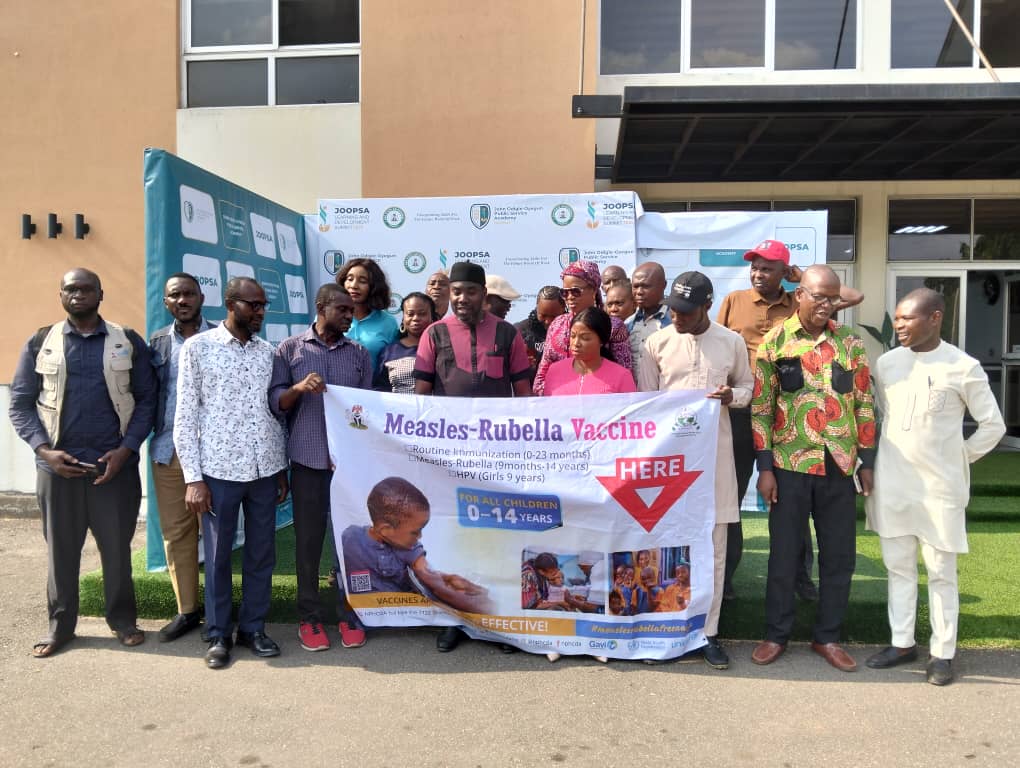
The Edo State Government says it is targeting about 2.2 million children aged between 0 and 14 years for measles and rubella vaccination across the state.
The Director of Disease Control and Immunization at the Edo State Primary Health Care Development Agency, Dr. Eseigbe Efeomon, who disclosed this during stakeholders’ sensitisation meeting in Benin City, said this would be done in collaboration with development partners.
Efeomon, while noting that the vaccination exercise scheduled to hold simultaneously from January 20 to January 30, 2026, across the 18 local government areas of Edo State at designated health facilities and temporary vaccination posts, said the campaign aims to contribute significantly to the reduction of measles and rubella in Nigeria.
He explained that achieving this target requires increased population immunity through sustained vaccination.
READ ALSO:Man Arrested In Edo For Alleged Abduction Of 4-year-old
Dr. Efeomon stressed that only qualified and certified health workers would be recruited as vaccinators because the vaccines are injectable.
According to him, the vaccination strategy would involve fixed posts and temporary fixed posts, and vaccination cards would be issued to all vaccinated children as proof, which parents and caregivers are advised to keep for future reference.
He added that vaccination teams would visit schools, churches, mosques, markets, motor parks, internally displaced persons’ camps and other public places, while children who receive the vaccine would be finger-marked to prevent double vaccination.
He reiterated that the overarching goal of the campaign is to drastically reduce rubella incidence nationwide and protect children from preventable diseases through effective immunisation coverage.
READ ALSO:Edo widow-lawyer Diabolically Blinded Over Contract Seeks Okpebholo’s Intervention
Also speaking, the World Health Organization Local Government Facilitator, Mr. Ajaero Paul, described measles and rubella as major causes of death and congenital abnormalities among children globally.
He said both diseases are preventable through the measles-rubella vaccine, which he described as safe and effective,
He added that sustained advocacy is critical to reducing child mortality and lifelong disabilities.
On his part, UNICEF Social and Behavioural Change Health Officer, Yakubu Suleiman, emphasised that the measles-rubella vaccine is safe and effective for all children aged nine months to 14 years.
READ ALSO:Edo: Suspected Kidnappers Kill Victim, Hold On To Elder Brother
He stated that the government has fully paid for the vaccines, making them available at no cost to all eligible children in government health facilities across the state.
Suleiman explained that vaccination not only protects individual children but also safeguards communities from deadly vaccine-preventable diseases such as measles and rubella.
He added that even children who had previously received the measles vaccine should still be given the measles-rubella vaccine and appealed to schools and other key stakeholders to support the campaign to ensure that no child is left behind.
News
Togo, Niger, Benin Owe Nigeria Over $17.8m For Supplied Electricity – NERC

Nigeria’s electricity regulator has disclosed that three neighbouring countries, Togo, Niger and Benin, are indebted to Nigeria to the tune of $17.8 million, equivalent to more than N25 billion at prevailing exchange rates, for power supplied under bilateral electricity agreements.
The Nigerian Electricity Regulatory Commission, NERC, made this known in its Third Quarter 2025 report, which reviewed market performance within the Nigerian Electricity Supply Industry, NESI.
According to the report, the international customers were billed a total of $18.69 million by the Market Operator for electricity supplied during the third quarter of 2025. However, only $7.125 million was paid, leaving an unpaid balance of $11.56 million for the period under review.
NERC also revealed that the same international offtakers had outstanding legacy debts amounting to $14.7 million from previous quarters. Of this amount, $7.84 million was settled, leaving a residual balance of $6.23 million.
READ ALSO:Expert Identify Foods That Increase Hypertension Medication’s Effectiveness
When combined with the Q3 2025 shortfall, the total outstanding debt stood at $17.8 million, which translates to about N25.36 billion at an exchange rate of N1,425 to one US dollar.
The regulator identified the international electricity customers as Compagnie Énergie Électrique du Togo, Société Béninoise d’Énergie Électrique of Benin Republic, and Société Nigérienne d’Électricité of Niger Republic.
NERC stated that the three utilities collectively paid just $7.125 million against the $18.69 million invoice issued for electricity supplied in the third quarter, resulting in a remittance performance of 38.09 per cent.
This meant that more than half of the billed amount remained unpaid at the close of the quarter.
READ ALSO:Electricity Workers Threatens Shutdown Over Staff Brutality
The commission explained that the electricity exported to the three countries was generated by grid-connected Nigerian generation companies and delivered through cross-border bilateral power supply arrangements.
By contrast, NERC reported a stronger payment performance among domestic bilateral customers. According to the report, local customers paid N3.19 billion out of the N3.64 billion invoiced for the same quarter, representing a remittance rate of 87.61 per cent.
The regulator further noted that some bilateral customers, both international and domestic, made additional payments to offset outstanding invoices from earlier quarters.
READ ALSO:Reps Ask NERC, DISCOs To Reverse Band A Tariff Hike
Specifically, the Market Operator received $7.84 million from international customers and N1.3 billion from domestic customers in settlement of previous obligations.
Beyond bilateral transactions, NERC disclosed that Nigeria’s 11 electricity distribution companies remitted a total of N381.29 billion to the Nigerian Bulk Electricity Trading Plc and the Market Operator in the third quarter of 2025. This was out of a cumulative invoice of N400.48 billion, translating to an overall remittance performance of 95.21 per cent.
The commission said the figures were derived from reconciled market settlement data submitted as of December 18, 2025, as part of its statutory evaluation of the commercial health and performance of the electricity market.

 News5 days ago
What I Saw After A Lady Undressed Herself — Pastor Adeboye
- Headline5 days ago
PROPHECY: Primate Ayodele Reveals Trump’s Plot Against Tinubu
- Metro5 days ago
Armed Robbers Shot PoS Operator To Death In Edo
- Business3 days ago
NNPCL Reduces Fuel Price Again
- Metro4 days ago
AAU Disowns Students Over Protest
- Metro5 days ago
Joint Task Force Kills 23 Bandits Fleeing Kano After Attacks
- Politics5 days ago
2027: Rivers APC Pledges To Follow Wike’s Instructions
- Metro4 days ago
Edo: Suspected Kidnappers Kill Victim, Hold On To Elder Brother
- Metro4 days ago
Nine Soldiers Feared Dead In Borno IED Explosion
- Headline2 days ago
Russia Deploys Navy To Guard Venezuelan Oil Tanker Chased By US In Atlantic


