
Headline
17 African Countries Back Electricity Reforms—World Bank
The World Bank said seventeen African governments have committed to reforms and actionable plans to expand electricity access as part of Mission 300, an ambitious partnership led by the lender and the African Development Bank Group that aims to connect 300 million Africans to electricity by 2030.
The lender said in a statement on Wednesday that governments from Benin, Botswana, Burundi, Cameroon, Comoros, the Republic of the Congo, Ethiopia, Gambia, Ghana, Guinea, Kenya, Lesotho, Mozambique, Namibia, São Tomé and Príncipe, Sierra Leone, and Togo endorsed National Energy Compacts at the Bloomberg Philanthropies Global Forum.
The Bank described the compacts as policy blueprints intended to guide public spending, drive reforms, and attract private investment, while serving as a model for the rest of the world.
Nigeria was not part of the latest group; it had joined earlier this year alongside Chad, Côte d’Ivoire, Democratic Republic of Congo, Liberia, Madagascar, Malawi, Mauritania, Niger, Senegal, Tanzania, and Zambia. Collectively, those countries pledged more than 400 policy actions to strengthen utilities, reduce investor risk, and remove bottlenecks.
READ ALSO:World Bank Appoints Africa’s Richest Man, Dangote
“Electricity is the bedrock of jobs, opportunity, and economic growth.
“That’s why Mission 300 is more than a target; it is forging enduring reforms that slash costs, strengthen utilities, and draw in private investment,” World Bank Group President Ajay Banga said.
Since the launch of Mission 300, 30 million people have already been connected, with more than 100 million in the pipeline.
African Development Bank Group President Dr Sidi Ould Tah said, “Reliable, affordable power is the fastest multiplier for small and medium enterprises, agro-processing, digital work, and industrial value-addition.
“Give a young entrepreneur power, and you’ve given them a paycheck,” he added.
READ ALSO:FBI Places $10,000 Bounty On Nigerian Wanted For Bank Fraud
National Energy Compacts are at the core of Mission 300, developed and endorsed by governments with technical support from development partners. Tailored to each country’s context, these practical blueprints integrate three core tracks: infrastructure, financing, and policy.
The World Bank Group and the African Development Bank Group are working with partners, including the Rockefeller Foundation, Global Energy Alliance for People and Planet, Sustainable Energy for All, and the World Bank’s Energy Sector Management Assistance Program trust fund, to align efforts in support of powering Africa. Many development partners and development finance institutions are also supporting Mission 300 projects through co-financing and technical assistance.
President of Botswana, Duma Boko, said, “This National Compact is our shared pledge to ensure accessible, reliable and affordable energy as a basic human need, to transform our economy and create jobs, and to electrify our journey to an inclusive high-income country.”
President of the Republic of Cameroon, Paul Biya, said, “The government of the Republic of Cameroon is committed, through its Energy Compact, to a determined transition towards renewable energies, promoting inclusive universal access and sustainable development based on partnerships and ambitious reforms to build a low-carbon future.”
READ ALSO:Police Restores Peace After Bomb Explosion Rocks Imo Community
President of the Union of the Comoros, Azali Assoumani, noted, “The Comoros Energy Compact is a call for collective action to achieve universal access to electricity by 2030, to ensure the country’s emergence in dignity, equity, and shared progress.”
President of Ethiopia, Taye Atske Selassie, noted, “Our National Energy Compact exemplifies Ethiopia’s unwavering dedication to ensuring universal, affordable, and sustainable energy access for all.
“By unlocking our vast renewable resources and strengthening regional interconnections, we aim to foster inclusive growth domestically and propel Africa’s collective momentum toward ending energy poverty. Together, we are committed to building a resilient, equitable, and sustainable energy future for generations to come.”



Headline
‘Pioneer Of Cable TV News’: Key Facts About CNN Founder, Ted Turner
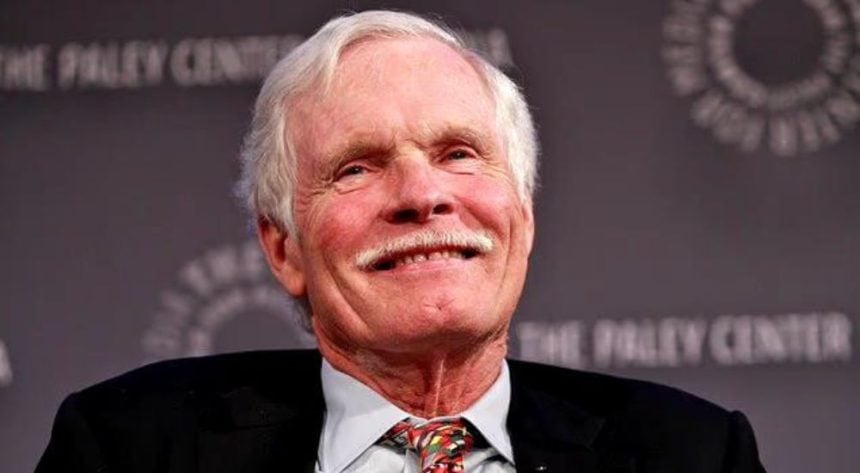
Ted Turner, the media businessman who founded CNN died at the age of 87. He died peacefully on Wednesday, surrounded by family, according to Turner Enterprises.
Contents
Launched 24-hour news television
Built a media network
Expanded through sports
Recognition and influence
Philanthropy and global causes
Environmental efforts
Health and later years
Early career path
Leadership and legacy
Personal life
Exit from business
Family
Below are key facts about his life and impact:
Launched 24-hour news television
Turner founded CNN on June 1, 1980, introducing the first 24-hour news channel and changing how audiences follow global events.
READ ALSO:CNN To Layoff 200 Staff Amid Attempts To Modernise Business
Built a media network
He moved from billboards into broadcasting, turning an Atlanta TV station into a national superstation in 1976. His business later grew to include CNN International, TNT, Turner Classic Movies and Cartoon Network.
Expanded through sports
Turner invested in sports broadcasting and owned teams including the Atlanta Braves and the Atlanta Hawks, using television to reach wider audiences.
Recognition and influence
In 1991, he was named Time magazine’s Man of the Year for his role in shaping modern news coverage.
Philanthropy and global causes
He founded the United Nations Foundation and supported campaigns against nuclear weapons. In 1997, he pledged $1 billion to the United Nations.
READ ALSO:CNN President, Jeff Zucker Resigns After Failing To Disclose Secret Affair With Colleague
Turner supported conservation work, including reintroducing bison in the United States, and backed environmental education through the “Captain Planet” cartoon.
Health and later years
In 2018, Turner revealed he had Lewy body dementia. He also recovered from a mild case of pneumonia in early 2025.
Early career path
He took over his father’s billboard company at 24 after his father’s death and later expanded into radio and television, despite limited experience in journalism.
“I worked until 7 o’clock, and when I got home the news was over,” he once said. “So I missed television news completely. And I figured there were lots of people like me.”
Leadership and legacy
READ ALSO:CNN Reporter Protests Nigeria’s $215 Single Entry Visa Fee
“Ted was an intensely involved and committed leader, intrepid, fearless and always willing to back a hunch and trust his own judgement,” Mark Thompson, Chairman and CEO of CNN Worldwide, said in a statement. “He was and always will be the presiding spirit of CNN. Ted is the giant on whose shoulders we stand, and we will all take a moment today to recognize him and his impact on our lives and the world.”
Personal life
Turner married actress Jane Fonda in 1991, and they later divorced after 10 years, though they remained close.
“I would never love anyone like I love him,” she said. “But I just couldn’t keep moving in his world, along the surface for the rest of my life. I knew that I would get to the end of my life and regret not doing the things that I also needed to do for me.”
Exit from business
He sold his company to Time Warner in 1996 and later stepped away following its merger with AOL.
Reflecting on his life, Turner once said: “I lost Jane. I lost my job here. I lost my fortune, most of it. Got a billion or two left. You can get by on that if you economize.”
Family
He is survived by his five children, 14 grandchildren and two great-grandchildren.
Headline
Iran’s Nationwide Internet Shutdown Hits 70 Days

NetBlocks, a monitoring group, has disclosed that an internet shutdown enforced by the Iranian regime has entered its 70th day, severing key access from swathes of the population under the shadow of war.
NetBlocks reported on Friday that the blackout has now surpassed 1,656 hours, marking more than two months since US-Israeli strikes pounded Tehran and escalated across the Middle East.
“Digital connectivity is vital in times of crisis,” NetBlocks said in a post on X. “Limiting service harms those most in need – people with disabilities, students, small businesses and the general public.”
READ ALSO:US Underestimated Iran Before War – France’s Bardella
According to CNN, Iran imposed a separate internet shutdown on the country’s 92 million people earlier this year, when it launched the most lethal crackdown on anti-government protesters since the Islamic Republic’s founding 47 years ago.
CNN further reports that the latest blackout has cut off another potential lifeline for Iranian residents faced with high unemployment and economic pressure exacerbated by the US-Israeli campaign.
(CNN)
Headline
Gas Prices In US Edge Down After Two Weeks Of Increases
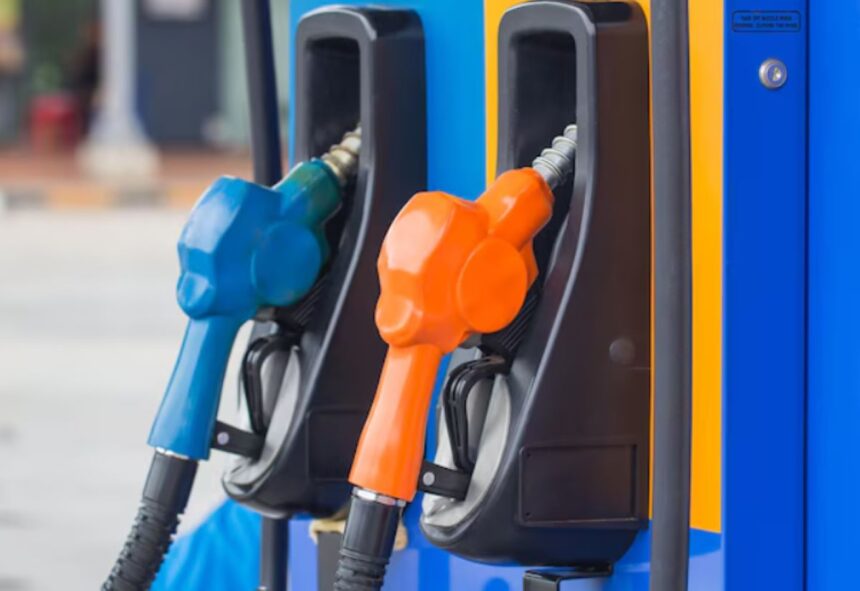
The cost of a gallon of regular gas in the United States (US) has edged down a little more than a penny to $4.55.
According to AAA’s readings, this marks the first decline in the average gas price after 15 straight days of increases.
The decline is minuscule compared to the large increases in gas prices over the last two weeks.
According to CNN, gasoline costs rose an average of nearly 4 cents a day during that period and had several daily increases of between 7 and 9 cents.
READ ALSO:Gas Station Explosion Rocks Calabar, Scores Injured, Property Destroyed
Also Read: Trump insists US-Iran ceasefire intact despite recent exchange of fire
CNN also reports that based on past gas spikes, it will likely take weeks for gas prices to get down below $4 a gallon.
The report, however, states that a previous two-week stretch of gas price declines only shaved 14 cents off the average price, taking the average price to $4.02, before the recent 15-day run of increases.
READ ALSO:Tinubu Signs Executive Order To Protect Nigeria’s Oil & Gas Revenue
According to CNN, it could take months for the average price to fall below $3 per gallon, as it did before the war in Iran.
CNN further reports that only one state – Oklahoma – now has an average price of less than $4 a gallon, and its average stands at $3.98. California has the highest average price at $6.16.
(CNN)

 Politics5 days ago
Fubara Clears Air On ‘Defection’ To NDC [VIDEO]
- News4 days ago
Gun Battle In Oyo Forest As Police Disrupt ₦10m Ransom Collection Plot
- Politics3 days ago
Four Fubara Loyalists Disqualified As APC Clears 21 For Rivers Reps Primaries
- News5 days ago
Ex-power Minister Jailed 75 Years Over Fraud
 Metro4 days ago
Drama As Teenagers Stage Secret Wedding With N3,000 Bride Price
- News3 days ago
Lagos Sanctions 15 Money Lending Companies For Sharp Practices
- Politics3 days ago
2027: Court Rebukes Plaintiff, Lawyer In Suit Against Jonathan, Awards N1m Fine
- Politics5 days ago
2027: Daniel-Abiodun Feud Deepens Over Senatorial Ticket For Ogun East
- News4 days ago
PAP Sends Additional 15 Scholarship Beneficiaries For Post-Graduate Studies In UK
- Politics5 days ago
2027: APC Clears Delta Speaker, Disqualifies 36 Aspirants


