
Headline
Japan Scraps ‘Africa Hometown’ Project After Visa Confusion
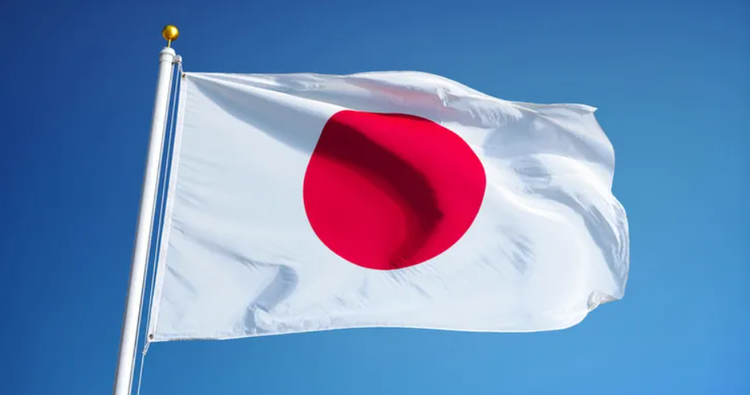
The Japan International Cooperation Agency has cancelled its ‘JICA Africa Hometown’ initiative, citing “misunderstandings and confusion” over the programme.
JICA announced the withdrawal in a statement on its website on Thursday, weeks after reports claimed Japan would create a special visa category for Nigerians who wished to relocate to Kisarazu, a city designated as “hometown” to Nigerians and other Africans under the scheme.
On August 26, the Japanese government denied the visa plan after the Director of Information at the State House, Abiodun Oladunjoye, issued a statement relaying that Japan would introduce a “special visa category” for highly skilled, innovative, and talented young Nigerians who want to move to Kisarazu to live and work.
Clarifying its position, JICA said the use of the term “hometown” and the idea of “designating” Japanese municipalities as such led to “misunderstandings and confusion within Japan, placing an excessive burden on the four municipalities.”
READ ALSO:Two Japanese Boxers Die From Brain Injuries At Same Event
The statement read, “Originally, under this initiative, it was envisioned that exchange programs would be coordinated and implemented among the Japanese local governments, relevant African countries, and JICA. The specific details were to be determined later.
“However, JICA believes that the very nature of this initiative—namely, the term “hometown” and the fact that JICA would ‘designate’ Japanese local Governments as “hometowns”—led to misunderstandings and confusion within Japan, placing an excessive burden on the four municipalities. JICA sincerely apologizes to the municipalities involved for causing such situation.
“JICA takes this situation seriously. After consulting with all parties involved, JICA has decided to withdraw the “JICA Africa Hometown” initiative.”
The initiative was launched in August during the 9th Tokyo International Conference on African Development with the goal of promoting exchanges between four Japanese municipalities and four African countries through cultural and educational programmes.
READ ALSO:Japan City Mulls Two-hour Daily Smartphone Limit
JICA, however, stressed that it had never undertaken initiatives to promote immigration and has “no plans to do so in the future,” adding that it would continue supporting other forms of international exchange.
In August, confusion arose after the State House announced that Japan had designated Kisarazu city as the “hometown” for Nigerians and would introduce a special visa category for young, skilled Nigerians wishing to live and work there.
However, the Japanese government quickly dismissed the claim.
READ ALSO:Japan’s Petabit: What To Know About Internet Speed That Can Download 67 Million Songs In A second
The Ministry of Foreign Affairs of Japan clarified that while the JICA Africa Hometown initiative aimed to promote cultural and developmental exchanges between selected African countries and four Japanese cities, it did not involve immigration benefits or special visas.
The clarification came after Nigeria’s Chargé d’Affaires in Japan, Florence Akinyemi Adeseke, and Kisarazu’s Mayor, Yoshikuni Watanabe, publicly received a certificate naming the city the “hometown” of Nigerians, further fuelling reports of migration opportunities.



Headline
US Launches New Airstrikes On Iran

The United States has launched new airstrikes in southern Iran.
The strike shot down four one-way attack drones that posed a threat around the Strait of Hormuz and then a ground control site.
A US official revealed that American forces struck an Iranian ground control station in Bandar Abbas that was about to launch a fifth drone.
READ ALSO:US Restricts Entry Routes For Travellers From DRC, Uganda, South Sudan Over Ebola Outbreak
The official described the strikes as purely defensive, saying the US intended to maintain the ceasefire.
Report says this is the second time in three days that the US has carried out self-defense strikes against Iranian military targets in southern Iran.
Recall that on Monday the US carried out airstrikes against Iranian missile locations and boats that US Central Command said were preparing to launch mines in the Strait of Hormuz.
Headline
Woman Passes Out After Receiving 100 Strokes Of Cane
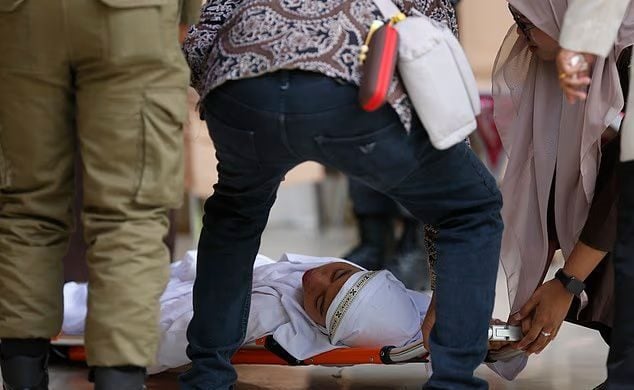
A woman has passed out after she and her partner were each flogged 100 times in public for engaging in sex outside marriage under strict Sharia laws in Indonesia’s Aceh province.
The woman, whose identity was not disclosed, was later carried away after the punishment was carried out in Banda Aceh, located at the northern tip of Sumatra island on Thursday.
A masked official dressed in brown robes administered the caning before members of the public who gathered to witness the punishment.
Her partner was also seen wincing in pain while receiving the lashes.
READ ALSO:Ex-INEC REC Reveals 2026 Electoral Act Provisions That Could Undermine 2027 Election
The pair were among several individuals punished for violating Sharia regulations in the province.
Authorities from the Banda Aceh Sharia Court and the Prosecutor’s Office handed down punishments ranging from 25 to 100 lashes for offences including extramarital sex allegedly arranged through online applications.
Aceh remains the only province in Muslim-majority Indonesia operating under Sharia law, where unmarried couples are prohibited from having sexual relations.
Caning is commonly used in the province as punishment for offences such as gambling, alcohol consumption, same-sex relations and sex outside marriage.
READ ALSO:UN Facing ‘Imminent Financial Collapse’ — Secretary General Lamenets
Under Aceh’s Sharia regulations, child rape offenders face some of the harshest penalties, including up to 200 strokes of the cane, a prison sentence of as long as 200 months or fines equivalent to two kilograms of gold.
The punishments are usually carried out publicly as a way of shaming offenders in addition to inflicting physical pain.
Such canings are often conducted outside mosques or in open public spaces, with residents watching and taking photographs during the exercise.
Human rights organisations have continued to condemn the practice, arguing that it causes emotional trauma and violates international human rights standards.
READ ALSO:18-year-old OAU Medical Student Dies While Sleeping
Amnesty International and Human Rights Watch have repeatedly criticised the punishments, saying they conflict with Indonesia’s constitution and global legal obligations.
Amnesty said in a statement: “Caning contravenes Indonesia’s constitution and is in clear violation of international human rights law and standards.
‘It constitutes a cruel, inhuman and degrading punishment and can amount to torture in violation of the UN Convention against Torture and other international covenants, to which Indonesia is a State Party.’”
Despite the criticism, local authorities have defended the punishments as part of Aceh’s religious and cultural identity, insisting they serve as a deterrent against immoral behaviour.
Earlier in January, another couple in the province reportedly received 140 lashes each after being found guilty of drinking alcohol and engaging in sex outside marriage.
(Daily Mail)
Headline
Senegal’s President Sacks Prime Minister After Months-long Feud
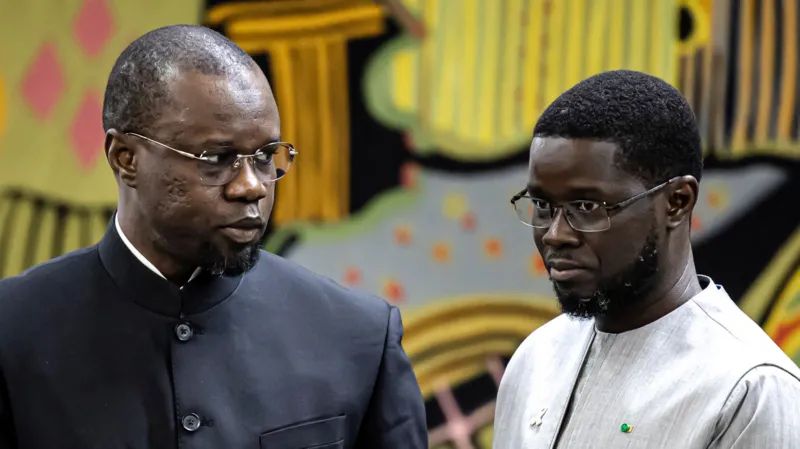
Senegal’s President Bassirou Diomaye Faye has sacked Prime Minister Ousmane Sonko and dissolved the government following months of rising political tension between the two former allies.
The decision was announced in a surprise decree read on national television by a presidential aide, stating that Faye had “ended the duties” of Sonko and “consequently those of the ministers and secretaries of state who are members of the government”.
Sonko, who remains a highly influential figure among Senegal’s youth, responded on social media, saying he would “sleep with a light heart”.
READ ALSO:Senegal Lawmakers To Debate Same-sex Relations Bill
The political fallout comes at a time of growing economic strain in the country, with the International Monetary Fund (IMF) putting Senegal’s public debt at 132% of its GDP.
His removal followed a tense parliamentary session on Tuesday, where Sonko openly criticised President Faye’s handling of the debt situation.
The development is striking given that Faye’s rise to power was largely tied to Sonko’s popularity and political backing.
READ ALSO:French Army To Leave Senegal Amid Africa Downsizing
Sonko would almost certainly have contested the presidency himself in 2024, but was barred from the race due to a defamation conviction. Instead, he threw his support behind Faye, rallying voters with the slogan “Diomaye is Sonko, Sonko is Diomaye”.
The alliance helped unseat former President Macky Sall in a dramatic electoral victory, despite both men having been released from prison only days before the vote.
Tensions between the two leaders had been building for months, with Faye reportedly accusing Sonko of excessive dominance within the ruling Pastef party, while Sonko accused the president of weak leadership and failing to defend him against critics.
(BBC News)

 Metro5 days ago
My Husband Abandoned Me On Our Wedding Night To Attend Political Meeting, I Want Our Marriage Dissolved
- Headline4 days ago
Woman Passes Out After Receiving 100 Strokes Of Cane
- Politics5 days ago
Warri Ijaw Hail INEC Delineation Report, Call For Additional Electoral Wards, Others
- Headline4 days ago
JUST IN: White House Locked Down Briefly As Gunman Opens Fire At Security Checkpoint
- Politics3 days ago
Two Masked Men Gun Down Politician In His Rivers State Hotel
- Metro5 days ago
My Wife Stop Cooking My Food, Beats Me Black And Blue All the Time, Man Tells Court
- News5 days ago
Alleged Terrorism: Court Rejects Defendant’s Bid To Travel Abroad
- News3 days ago
More Pain For Nigerians As Cooking Gas Price Increases Nationwide
- Politics5 days ago
What I’ll Do As President Of Nigeria — Amaechi
- News3 days ago
FG Declares Two Days Public Holiday For Eid-el Kabir Celebration


