
Politics
2027: Jonathan Opens Up On Eligibility To Run Again
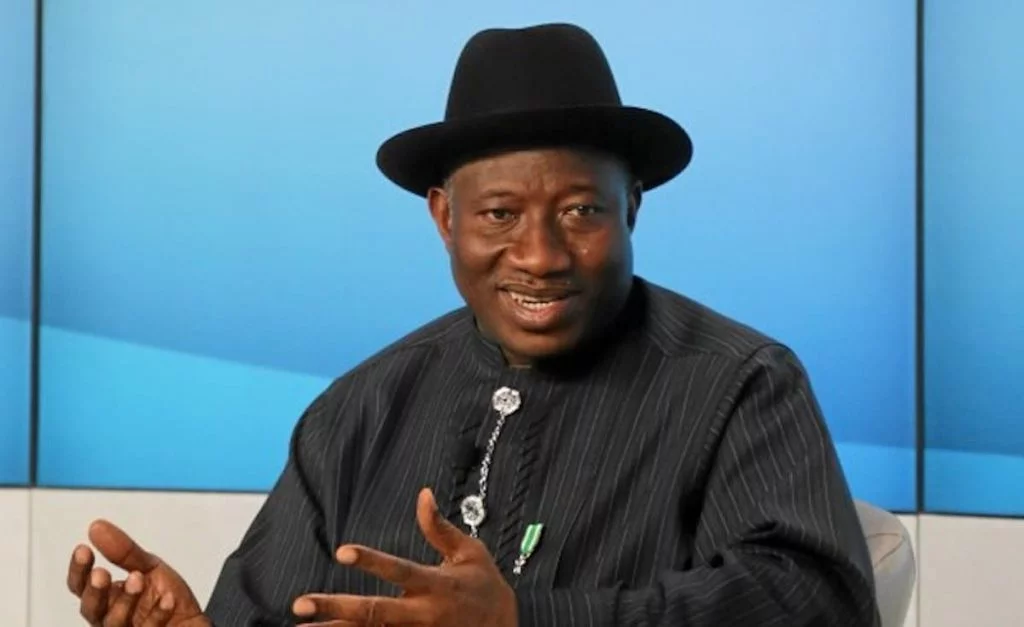
The controversy over the eligibility of former President Goodluck Jonathan to join the 2027 presidential race took a twist last week when it emerged that a court had cleared the obstacle to his being sworn in for the third time as president.
Critics had cited Section 137(3) of the 1999 Constitution (as amended) which provides that no elected person into public office in Nigeria shall be sworn-in more than twice, basing their argument on the former president’s swearing-in in 2010 after his predecessor, the late President Umaru Yar’Adua, died in office, and 2011 when he won his own election. He left office in 2025 after losing reelection and the Section 137(3) wasn’t law until 2018, three years later, triggering the argument on whether or not the law can apply to him retroactively.
Significantly, some leaders of the Peoples Democratic Party (PDP) are pushing for him to contest on the platform of the party the 2027 presidential election.
Vanguard obtained the judgment of the Federal High Court Yenagoa which heard the case and the trial judge, Hon. Justice Isa H. Dashen, while reviewing the submissions made before him on May 27, 2022, quoted copiously from the Counter-Affidavit in which Jonathan made his case, saying he could not be legally stopped from participating in presidential election in the future based on Section 137(3) of the Constitution.
Dashen agreed with the former president’s position.
Curiously, the All Progressives Congress (APC) and the Independent National Electoral Commission (INEC), which were both joined as Defendants in the suit filed by two persons who described themselves as APC members (Andy Solomon and Ibidiye Abraham), failed to make appearances despite being served with all the processes, forcing the presiding judge to remark that they agreed with all the facts of the case as pleaded by the Plaintiffs and Jonathan who was the First Defendant.
On this, he noted: “As earlier stated, both 2nd and 3rd Defendants (APC and INEC) did not file any processes in response or reaction thereto despite service of the Originating process on them.
“In the locus classicus case of OYEYIPO VS OYINLOYE (1987) I
READ ALSO:Court Ruling Clears Jonathan For 2027 Presidential Bid Amid Pressure From Parties
NWLR (Part 50) 350, the Apex Court held thus: ‘A Defendant who fails to enter appearance or file Counter-Affidavit in response to the averments in support of the Originating Summons would be presumed to have Demurred and admitted the facts deposed to in the Affidavit filed in support Originating Summons.
“See the recent case of FUTMINA & ORS VS OLUTAYO (2017)
LPELR- 43827 (SC) and CHEVRON (NIG) LTD VS IMO STATE
HOUSE OF ASSEMBLY AND ORS (2016) LPELR- 41563 (CA) where the Appellate Courts confirmed the above position”.
The Jonathan case
Dashen, in his judgment while referring to Jonathan’s Counter-Affidavit in which he made his case, said: “The 1st Defendant’s Counter-Affidavit is of Twelve (12) paragraphs and is deposed to by one Engr. Peletiri John Debetimi who described himself as an Assistant to the 1st Defendant.
“One (1) exhibit marked as Exhibit EKOI was annexed to the said Counter-Affidavit.
“Exhibit EKOI is a copy of the Official Gazette containing the 4th Alteration to the Constitution of the Federal Republic of Nigeria, 1999.
“In summary, the 1st Defendant’s response, as stated in his Counter-
Affidavit, is that he has never been ‘elected’ into the Office of the President of the Federal Republic of Nigeria on Two (2) previous occasions.
“The 1st Defendant stated that the oath of office he took on the 6th of May, 2010 was taken upon his ‘Election’ as President of the Federal Republic of Nigeria.
“The 1st Defendant further asserted that he took the said oath to complete the aborted tenure of the late President Umar Yar’ Adua.
“The 1st Defendant referred the Court to the decision of the Court of Appeal in the case of CYRIACUS NJOKU VS.GOODLUCK EBELE JONATHAN (2015) LPELR-24496 wherein the Court of Appeal held that the oath of office he took on 6th May, 2010 cannot be taken into account in the interpretation of the provisions of Section 137(1) (b) of the Constitution.
“The 1st Defendant, thereafter, stated that he has only been elected to the Office of President once and in year 2011.
READ ALSO:2027: Jonathan’s Cousin Tackles Keyamo Over Ex-president Not Qualified Comment
“With respect to the provisions of Section 137(3) of the Constitution, the 1st Defendant stated that from Exhibit EKOI (i.e. the Official Gazette of the 4th Alteration of the Constitution), ‘Commencement’ date of the said amendment to the provisions of Section 137 of the Constitution therein contained is said to be ‘7th Day of June, 2018’. “Therefore, the 1st Defendant contended that the amendment introduced by sub-section (3) of Section 137 of the Constitution came into effect and became operational from 7th June, 2018.
“On the basis of the foregoing, the Defendant contended that since he took the first oath of office as President in year 2010 and the second oath of office in year 2011 respectively, the 4th Alteration of the Constitution which took effect from th June, 2018 cannot be applied retrospectively to prevent him from exercising his right to contest for the Office of President of the Federal Republic of Nigeria, which said right accrued to him since year 2015 before the 4th Alteration to the Constitution was effected.
Three questions
“In his written address, the 1st Defendant formulated three (3) questions for the determination of this Court.
“Whilst the 1st Defendant adopted questions 2 and 3 submitted by the Plaintiffs, he re-phrased question 1 submitted by the Plaintiffs.
“Therefore, the questions submitted by the Plaintiffs and the 1st Defendant are congruent and are not substantially different.
“The questions submitted by the 1st Defendant read as follows:
1. Whether in view of the provisions of:
a. Section 137(1)(b) of the Constitution of the Federal Republic of Nigeria, 1999 (as altered); and
b. Section 137 (3) of the Constitution of the Federal Republic of Nigeria, 1999 (as altered) (as contained in the 4th Alteration (No.16) Act 2017), the 1st Defendant is qualified to contest for the office of the President of the Federal Republic of Nigeria in the 2023 General Elections.
2. If the answer to 1 above is in the affirmative, then: Whether the
2nd Defendant is entitled to field the 1st Defendant as its presidential candidate in the 2023 General Elections.
3. Whether the 3rd Defendant is entitled to disqualify the 1st Defendant from contesting and/or from 2nd Defendant’s presidential candidate in the 2023 General Elections.
“Again, at paragraphs 4.00 4.05 of his written address, the 1st Defendant raised a Preliminary Point challenging the locus standi of the Plaintiffs to institute the instant suit.
READ ALSO:APC Mocks Jonathan As ADC Woos Him For 2027 Race
“I shall deal with this preliminary point whilst considering the substantive Originating Summons.
“On the basis of the foregoing, the 1st Defendant asserted that he is eminently qualified to contest for and/or nominated for election into the Office of the President of the Federal Republic of Nigeria.
“The 1st Defendant therefore urged the Court to discountenance the Plaintiffs’ contentions and answer the questions submitted in the Originating Summons in his favour and against the Plaintiffs and refuse the reliefs sought for by the Plaintiffs”.
For the part of the Plaintiffs, the questions they wanted resolved by the court, according to the judge, are:
1. Whether, in view of the provisions of Section 137(1)(b) and (3) of the Constitution of the Federal Republic of Nigeria, 1999 (as altered) and the fact that the 1st Defendant had earlier been sworn-in as the President of the Federal Republic of Nigeria in 2010 and 2011 respectively, the 1st Defendant is qualified to contest for the office of the President of the Federal Republic of Nigeria in the 2023 General Elections to be organized by the 3rd Defendant (INEC).
2. If the answer to 1 above is in the negative, then: Whether the 2nd
Defendant (APC) is entitled to field the 1st Defendant as its presidential candidate in the 2023 General Elections.
3. Whether the 3rd Defendant (INEC) is entitled to disqualify the 1st Defendant (Jonathan) from contesting and/or from being presented as the 2nd Defendant’s (APC) presidential candidate in the 2023 General Elections.
Juxtaposition
Reading his judgment, Justice Dashen said: “Having carefully considered the arguments of the parties, I am of the view that the determination of the application or otherwise of the provisions of sub-section (3) of Section 137 of the Constitution to the 1st Defendant lies on the juxtaposition of the date when the 1st Defendant claims to have acquired his present right to be sworn-in as President and the date on which sub- section (3) of Section 137 of the Constitution took effect.
“The starting point is to acknowledge the fact that sub-section (3) of Section 137 of the Constitution was not originally part of the corpus of the Constitution. Sub-section (3) of Section 137 of the Constitution was introduced by the 4th Alteration to the said Constitution.
“Although the 1st Defendant attached the Official Gazette wherein this alteration was published as Exhibit EKO I (i.e. Exhibit) to his Counter-Affidavit, this Court is empowered to take judicial notice of the law by virtue of the provisions of Section 122(2)(a) of the Evidence Act 2011. A cursory look at Exhibit EKO1 (i.e. Exhibit) will reveal that the 4th Alteration introduced a restriction with regard to the number of times a person, sworn-in as President of the Federal Republic of Nigeria to complete the term for which another person was elected, can be sworn-in as President after completing the remainder of the said term.
“Sub- section (3) of Section 137 of the Constitution states that any person who was so sworn-in shall, after completing the term of such other person, be eligible to be only elected to the office of President for a single term.
“Further scrutiny of Exhibit EKOI (i.e. Exhibit) also reveals that the 4th Alteration was enacted by the National Assembly in 2017; however, the ‘commencement’ date for same was expressly set for ‘7th Day of June, 2018’.
“Having the benefit of reading the Official Gazette (i.e. Exhibit ÉKO1), I therefore have no difficulty in holding that provisions of subsection (3) of Section 137 of the Constitution took effect from 7th June, 2018. And I so hold”.
(VANGUARD)



Politics
Crisis Rocks NDC Over Obi-Kwankwaso Campaign Council
A fresh crisis appears to be brewing within the Nigeria Democratic Congress (NDC) following a sharp disagreement between the party’s National Chairman, Senator Cleopas Moses, and the OK Movement over the latter’s role and independence ahead of the 2027 general elections.
The OK Movement, in a statement signed by its National Secretary, Saadatu Sani, accused the NDC National Chairman of making statements it described as defamatory and reflective of a misunderstanding of the movement’s structure, independence and constitutional foundation.
The statement followed a recent publication attributed to Moses concerning the movement and the involvement of its National Director General, Hon. John Ughulu, in the Lagos State primaries.
The OK Movement had, on Thursday, unveiled a 59-member presidential campaign council ahead of the 2027 general elections. Cleopas, however, on Saturday, dissociated itself from the porported campaign council.
READ ALSO: 2027: NDC Demands Lagos CP’s Suspension Over Alleged Pro-Tinubu Action
The OK Movement urged the NDC chairman to familiarise himself with the party’s constitution before making assertions about the rights, responsibilities and independence of political movements associated with the party.
“Leadership is ultimately measured by knowledge, restraint, integrity and respect for established rules, not by insults, personal attacks or defamatory assertions,” the statement said.
The movement stressed that its support for the NDC and its candidates did not make it subject to the personal approval of any individual within the party.
According to the statement, the OK Movement recognises the supremacy of political parties within their constitutional and statutory sphere and intends to campaign for the NDC’s presidential and vice-presidential candidates, as well as other party candidates across the country in areas where it has resolved to support them.
READ ALSO: 2027: I Will Lead NDC To Defeat Federal Might – Seriake Dickson
However, it maintained that it remained an independent political organisation with its own leadership, organisational structure, ideology and internal processes.
“We will campaign for the presidential and vice presidential candidates of the party,” the statement said.
“We will campaign for candidates of the NDC Party across the country where the movement has resolved to support them. But we do not require the personal validation or approval of any individual before exercising our legitimate organisational functions,” it added.
READ ALSO: 2027: Court Denies Ordering Deregistration Of NDC
The movement further rejected suggestions that its activities were driven by the pursuit of political appointments or positions within the party.
It said the organisation was built from the grassroots and did not depend on the sponsorship of any individual or political office holder.
The OK Movement also claimed to have approximately 2.5 million registered members and coordinators in its internal database, describing itself as a long-term political movement rather than a temporary support group established for an election cycle.
The organisation said its objective was to mobilise Nigerians around demands for improved governance, economic opportunity, accountability and citizen-centred development.
Politics
Why I Lent Peter Obi My Vehicle During Benue Visit — Ortom
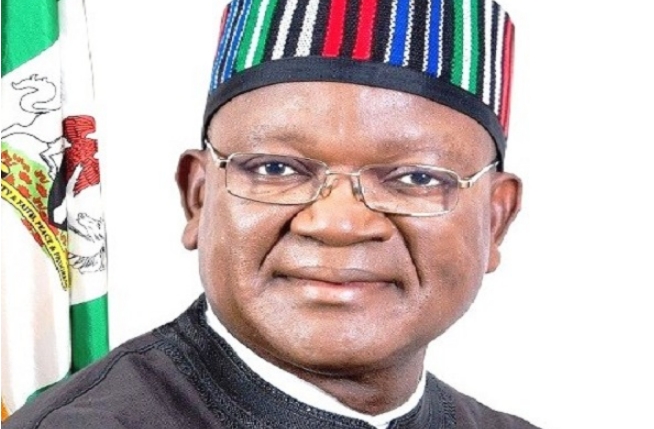
Former Benue Governor, Samuel Ortom, has explained why he lent his vehicle to the presidential candidate of the Nigeria Democratic Congress (NDC), Peter Obi, during the latter’s recent visit to the state.
Ortom, through his media aide, Terver Akase, said he decided to assist Obi with transportation as a matter of courtesy, stressing that refusing to help a former governor and presidential candidate would have been “petty” and unbecoming of a former governor.
Obi had visited Benue last Tuesday as part of plans to meet victims and families affected by the June 2025 massacre in Yelewata.
However, his planned movement from Makurdi to Yelewata was disrupted after youths reportedly blocked his convoy around Gyado Villa, a few kilometres from the airport.
READ ALSO: Peter Obi Reveals Strategy To Protect Votes During 2027 Election
Following the incident, Governor Hyacinth Alia’s Chief Press Secretary, Kula Tersoo, alleged that Ortom was involved in facilitating Obi’s visit.
Tersoo said a state government investigation traced the vehicle used to convey Obi from Makurdi Airport to Ortom.
He identified the vehicle as a Toyota Land Cruiser with registration number GWA 608 BT, claiming that Federal Road Safety Corps records showed it was registered in Ortom’s name and linked to his Judges Quarters address in Makurdi.
The governor’s aide also questioned why Ortom, who has declared support for President Bola Tinubu ahead of the 2027 presidential election, would provide his vehicle to Obi.
READ ALSO: Trump Suggests Renaming Strait Of Hormuz As ‘Trump Strait’
But Ortom dismissed the suggestion that lending his vehicle to Peter Obi amounted to political collaboration.
He said Obi, as a former governor and presidential candidate, deserved basic courtesy while visiting the state on what he described as a humanitarian mission.
“Peter Obi is a former governor, a presidential candidate and one of the most prominent political figures in the country,” he said.
READ ALSO: US Secret Service Reacts To Iran’s Alleged Threat To Trump’s Son Life
Ortom added that refusing to assist Obi would have been viewed as “petty, inhospitable and beneath the dignity of a former governor.”
He described attempts to politicise the gesture as “ridiculous and shameful”, accusing the Alia administration of creating controversy around what he called a “humane, courteous and statesmanlike gesture.”
Ortom also rejected claims that his action made him “double-faced”, noting that although he supported Obi in 2023, he had since publicly declared his support for Tinubu in the 2027 presidential election.
Politics
2027: Tinubu Edges Peter Obi By 1.55% In Oxford-Metro Poll
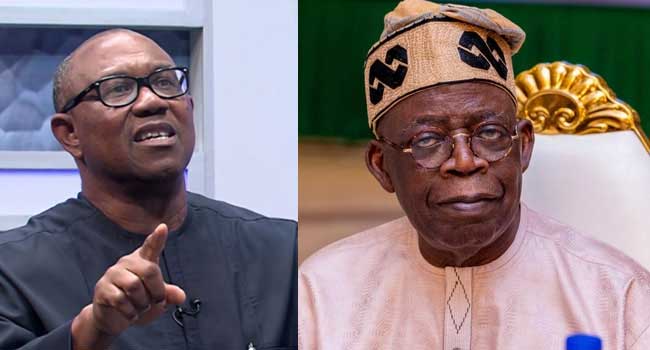
President Bola Tinubu has edged Peter Obi by 1,067 responses, representing 1.55% points in the Oxford-Metro Analytics’ National Trust Poll ahead of the 2027 presidential election.
The Oxford-Metro poll, which closed on September 7, recorded 69,110 approved and unflagged responses in its final analytical dataset.
Tinubu polled 24,469 responses, representing 35.41 per cent of the total, while Obi received 23,402 responses, accounting for 33.86 per cent.
The figures placed Tinubu 1.55 percentage points ahead of Obi.
Former Vice-President Atiku Abubakar came third with 18,430 responses, representing 26.67 per cent of the total participation.
READ ALSO: Peter Obi Reveals Strategy To Protect Votes During 2027 Election
The poll’s regional breakdown, however, showed a different picture from the outcome of the 2023 presidential election, with Tinubu recording leads in 20 states and the Federal Capital Territory.
Obi and Atiku, meanwhile, recorded the highest number of responses in eight states each.
Tinubu’s strongest gains were recorded in parts of Northern Nigeria, where he led in Kaduna, Katsina and Gombe, states won by Atiku in the 2023 presidential election.
He also led in Kano, where New Nigeria Peoples Party (NNPP) presidential candidate Rabiu Kwankwaso won the 2023 presidential election.
At the geopolitical zone level, Tinubu led in the South-West, North-West and North-Central, while Obi dominated the South-East and South-South. Atiku recorded his strongest showing in the North-East.
In the South-West, Tinubu polled 10,968 responses, representing 43.53 per cent of the zone’s total participation.
READ ALSO: VIDEO: 10 Things My Marriage Taught Me — Korra Obidi
He also led in the North-West with 4,129 responses, accounting for 43.10 per cent, while his 6,370 responses in the North-Central represented 36.97 per cent of the zone’s participation.
Obi recorded his strongest regional performance in the South-East, where he secured 5,796 responses, representing 63.97 per cent.
He also led in the South-South with 2,389 responses, accounting for 41.48 per cent of the region’s total.
Atiku dominated the North-East with 1,235 responses, representing 55.46 per cent of participation in the zone.
Despite Tinubu’s wider geographical spread, the national figures showed a close contest between the three leading candidates.
Some state-level results also recorded narrow margins. In Kogi, for instance, Tinubu received 39 responses, compared with 38 for Atiku and 33 for Obi, out of 110 responses recorded.
READ ALSO: 2027: Why Peter Obi, Atiku Can’t Form Coalition Against Tinubu – Umar Ardo
In the FCT, Tinubu polled 5,599 responses against Obi’s 5,278, giving him a margin of 321 responses, while Atiku received 3,954.
Tinubu also led Obi in Rivers, where he received 975 responses against Obi’s 892, while Atiku polled 568.
Beyond the three leading contenders, Omoyele Sowore received 1,016 responses, followed by Seyi Makinde with 519 and former President Goodluck Jonathan with 284.
Anita Zugwai-Chukwu received 18 responses, Sandy Onor six, and Prince Kennedy Ahanotu two.
A total of 638 participants selected “I Do Not Trust Any Candidate Yet”, while 204 were undecided and 122 selected “Other Candidate”.
The poll also showed significant geographical concentration in participation, with Lagos and the FCT accounting for 54.44 per cent of all responses.
The final dataset contained 56 diaspora responses, which were excluded from the six domestic geopolitical-zone tallies.

 News3 days ago
BREAKING: Tinubu Extends Working Vacation
- News4 days ago
Six Hidden Health Benefits Of Unsweetened Zobo
- News4 days ago
Jehovah’s Witnesses Announce New Position On Blood Transfusion Policy
- News4 days ago
2027: Step-by-step Guide To Applying For INEC Ad Hoc Staff Recruitment
- News4 days ago
How 36 Nigerian States Got Their Names
- Headline4 days ago
Nigerian Man Jailed After Masturbating In Front Of Woman On UK Train
- Headline3 days ago
How To Format An Academic CV For US Master’s, PhD Applications
- News4 days ago
Stop Acid Reflux Pain: Foods You Must Ban From Your Kitchen
- Headline4 days ago
Nigerian Woman Arrested, Charged Over Illegal Voting In US
- News4 days ago
8 Natural Ways To Keep Your Home Cool Without AC


