

Business
5 Reasons Naira Is Depreciating

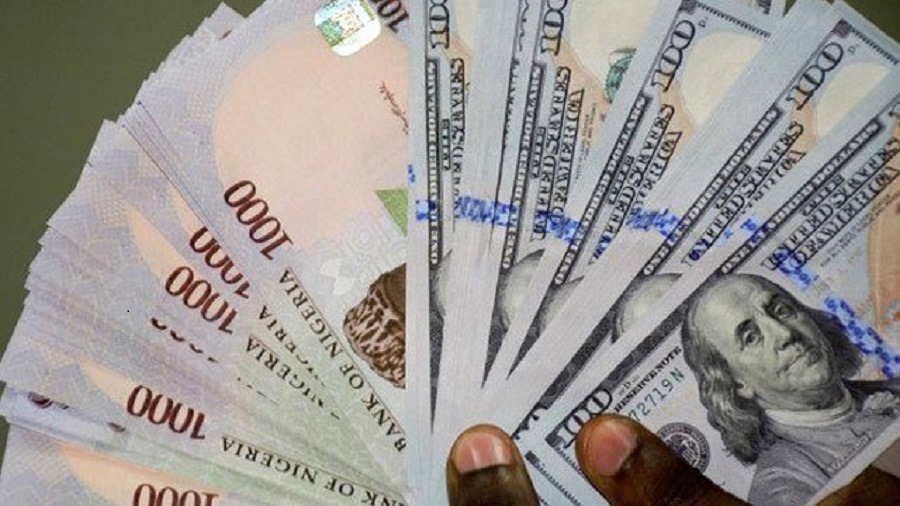


The question in the minds of Nigerians today is why is the Naira depreciating or why is the exchange rate of the dollar rising rapidly?
This is a valid question given the sharp and persistent depreciation of the Naira since June 14 when the Central Bank of Nigeria, CBN announced new operational measures in the foreign exchange market.
Since then, the Naira has depreciated by 21 per cent to N930 per dollar in the parallel market, and by 66 per cent to N781.34 per dollar in the official market, namely the Investors and Exporters, I&E window.
This is more worrisome, as this trend will translate to further increase in price of goods and services, higher inflation rate, given that most of what Nigerians consume are imported or have significant import components. These include petroleum products, wheat, raw materials etc.
There are two major reasons why the exchange rate is rising rapidly, especially since June 14.
1. Declining Forex Supply
The first reason, which is also the root cause of the naira depreciation, is that supply of dollars into the economy has been declining while demand for dollars remains relatively unchanged courtesy of the country’s huge demand for dollars fuelled by dependence on imported goods for many economic activities.
This is reflected in persistent fall in the nation’s external reserves, which represents the amount of dollars and foreign currency available to the country for importation and transactions with other countries.
Data from the CBN shows that the nation’s external reserves fell by $3.23 billion or 8.5 per cent to $33.92 billion on July 9 from $37.15 billion on December 31st 2022.
Foreign exchange inflow, which represents supply, into the external reserves, comes from export earnings, diaspora remittances, foreign investment, foreign aid, external loans etc.
READ ALSO: Naira Gains Against Dollar At Investors, Exporters Window
Foreign exchange outflow, which represents demand from the reserves, occurs via funding of importation, external debt service, payment for services, travel etc.
When the inflow is more than the outflow the external reserves rises. But when outflow is more than inflow, the external reserves falls.
2. Net Forex inflow
A very critical measure of forex inflow and outflow into the economy is Net Forex Inflow, NFI. When inflow is more than outflow, NFI rises. When outflow surpasses inflow, NFI falls. Data from the CBN shows that Net Forex Inflow into Nigeria has been falling since 2019.
According to the CBN, NFI stood at $76.38 billion in 2019. It fell by 6.6 per cent to $70.65 billion in 2020, it fell again by 25.4 per cent to $52.72 billion in 2021, and again by 28.3 per cent to $37.94 billion in 2022. Thus Net Forex Inflow into the country fell by half (49.5 per cent) within four years.
A major factor responsible for this persistent decline in NFI, is the fall in foreign investment inflow into the economy. According to the National Bureau of Statistics, NBS, Capital Importation (Foreign Investment) into Nigeria fell from $23.99 billion in 2019 to $5.33 billion in 2022. This represents a huge 77.8 per cent decline in a major dollar supply source into the country.
The fact that the external reserves fell by $3.23 billion or 8.5 per cent this year indicates that the above trend in Net Forex Inflow and foreign investment inflow, has not changed.
That is confirmed by the sharp decline in the volume of dollars traded (turnover) in the official forex market, represented by the Investors and Exporters, I&E window.
In the first six months of this year, H1’23, turnover in the I&E window fell to $13.11 billion. This represents a 35 per cent fall when compared with turnover of $20.23 billion recorded in the first half of 2022, H1’22.
The above trend explains the acute dollar scarcity in the economy.
READ ALSO: Naira Further Depreciates As CBN Lifts Restrictions Naira
And like other commodities when demand is higher than the supply, the price will rise, all things being equal. Hence the continuous rise in the exchange rate, which is the price of exchanging Naira for dollars.
3. New Forex Market Measure
The second reason behind the sharp depreciation of the naira in recent times is the new operational measures for the forex market announced by the CBN on June 14.
These measures include elimination of multiple exchange rates in the official market, introduction of the willing buyer willing seller model for determination of exchange rate in the I&E window.
Prior to these measures, the CBN maintained different exchange rates for its various intervention or forex sales in the official forex market. Also the official exchange rate was kept at a level determined by the CBN.
Meanwhile, due to the decline in external reserves the CBN could not meet all genuine demand for forex, a situation that pushed many organisations to rely on the parallel market for their forex needs.
Thus while the exchange rate in the official market was relatively stable, the exchange rate in the parallel market rose steadily. Hence on June 13, the parallel market exchange rate stood at N768 per dollar while the official exchange rate stood at N471.67 per dollar, leading to a gap of N296.33 per dollar.
4. Tinubu’s Promise
The multiple exchange rates in the official market, wide gap between the official and parallel market exchange rates implied forex subsidy and opportunity for round tripping and other malpractice.
This anomaly, which was severely criticised by investment analysts, the World Bank, IMF and global rating agencies, discouraged foreign investment inflow into the country. It also discouraged repatriation of export proceeds through the banks, as well as Diaspora remittances into the country.
Thus President Bola Tinubu in his inauguration speech promised to correct this anomaly, saying that the CBN will work to achieve a single exchange rate.
READ ALSO: Naira Depreciation, Subsidy Removal Push Inflation To 22.79%
The measures announced by the CBN on June 19 were in line with the promise of the President.
Consequently, on June 14, the CBN eliminated multiple exchange rates in the I&E window, allowing demand and supply to determine the exchange rate via the ‘willing buyer willing seller model’. Also transactions in the I&E window must be trade-backed, while government forex transactions were priced at the weighted average of exchange rate of transactions in the I&E window.
Furthermore, the CBN stopped selling forex to banks for onward sale to end users i.e SME, PTA, BTA etc. All forex needs and hence demand must be done via the I&E window based on ‘willing buyer willing seller’ arrangement.
5. Objectives of the New Forex Measures
The objective of these measures however is to create transparency and confidence in the forex market in order to encourage forex inflow into the economy, especially foreign investment inflow which as noted above shrinked by 77 per cent in the last four years.
However, given the dearth of forex supply compared to the huge demand, especially backlog of unmet forex demand, estimated to be more than $2 billion, the above measures triggered a sharp rise in the exchange rate in the I&E window to N781.34 as at yesterday from N471.67 per dollar on June 13.
This also led to the continued rise of the exchange rate in the parallel market to N930 yesterday from N768 per dollar on June 13.
What Next?
This trend will continue for a while, maybe more than six months, with sharp fluctuations (volatility) in the I&E window exchange rate, until forex supply (inflow) exceeds the huge demand for forex and thus increase in the Net Forex Inflow and the external reserves.
The current situation is akin to what happened in between 2016 and 2017, which led to the creation of the I&E window and other measures which enhanced forex inflow especially from foreign investors leading to appreciation of the Naira and eventual convergence of the official market and parallel market exchange rates.
From N520 per dollar in the parallel market in February 2017 prior to introduction of the measures by the CBN, the parallel market exchange rate dropped steadily and converged with the I&E window rate at N360 per dollar in 2019.
Hopefully, this trend will be repeated in the next 12 to 18 months.
VANGUARD




Business
Again, Dangote Refinery Hikes Fuel Price


Dangote Refinery has increased the ex-depot price of petrol by N75, bringing the price up to N1,350 per litre from the previous price of N1,275.
This is the first fuel increase by the Refinery in the month of May.
READ ALSO:JUST IN: Dangote Refinery Reduces Petrol Price
This latest development is coming seven days after the refinery raised its ex-depot price from N1,200 to N1,275 per litre.
Recall that the refinery on April 29 increased the ex-depot price of petrol by N75.
Business
Why We Sited Our Multi-Billion Naira Automobile Firm Branch in Benin – Skyewise Group CEO


Dr. Elvis Abuyere, Chief Executive Officer and Managing Director of Skyewise Group, an automobile firm, has explained the reason for establishing a branch of the company in Benin City, the Edo State capital, describing the ancient city as “a growing economy full of enormous potential for vibrant youth.”
He added that the company considers Edo State one of the most interesting states, noting that the decision aligns with its long-term vision.
Abuyere, who spoke in Benin on Monday while taking journalists on a tour of the new automobile facility, said:
“We started very small — from Abuja to Lagos and now Benin. It is a joy and privilege for us to have completed this amazing regional office with Skyewise Group.”
READ ALSO:BREAKING: Wike Picks Alabo George For Rivers Governorship
According to him, beyond the automobile business, Skyewise Group is in Benin to invest in real estate, logistics, youth empowerment, and credit management. “Aand also to lend our support to what the Edo State Government is doing, knowing the fact that there is an agenda,” he added.
The young CEO urged youths in Nigeria, particularly those in Edo State, to embrace entrepreneurship, stressing that “we believe it is the future of Africa,” especially Nigeria.
He said Nigeria stands as the giant of Africa and that its youth must take bold steps in the entrepreneurship landscape.
According to Abuyere, to ensure Edo youths actualise their entrepreneurial potential, the company has prepared soft loans to help them start businesses, adding that Skyewise Group is not limited to automobile operations.
READ ALSO:Senatorial Seat: Ogbakha-Edo Warns Against Imposition Of Candidates In Edo South
He said: “More importantly to us is youth empowerment. We want our youth to be empowered, and this is where the Skyewise Foundation comes in.
“We believe the future of Africa is entrepreneurship, and that future lies in the hands of the young people of Nigeria. We want to empower them to stand the test of time, build something meaningful, and reduce unemployment and insecurity in our land.
“I believe we need to begin taking bold steps by refining the mindset of our young people. We need to give them a sense of belonging and direction.
“We have been addressing the liquidity gap in society by providing microloans to support businesses in our environment and in Benin City.”
When asked why he chose Benin City for the multi-billion naira automobile firm, Abuyere noted: “I think this is the first automobile showroom in Edo State where you can see a car lifted from the ground floor to the first floor and beyond.”
Business
JUST IN: Nigerian Filling Stations Reduce Fuel Price After Hike

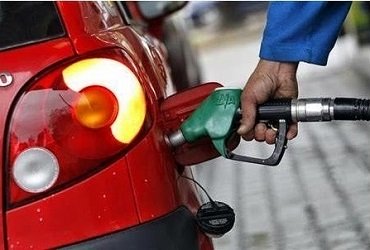
Nigerian filling stations reduced their Premium Motor Spirit price on Saturday, barely 24 hours after the hike.
Checks by DAILY POST showed that Ranoil, Empire Energy, and other filling stations in Abuja adjusted their petrol pumps to N1,365 and N1,375 per litre respectively, down from N1,440 per litre on Friday.
This means that petroleum marketers dropped their fuel price by N65 and N75 per litre. DAILY POST reports that the move was to attract patronage from customers.
Recall that three days ago, Nigerian filling stations had raised their petrol pump price to between N1,365 and N1,440 nationwide after Dangote Refinery and depot owners increased ex-depot prices to around N1,275 and N1,290 per litre.
According to DAILY POST, while the Nigerian National Petroleum Company Limited and MRS Bovas filling stations raised their petrol price to around N1,365 per litre, others adjusted theirs above N1,440 per litre.
READ ALSO:Drivers Protest Fuel Increase, Raise Fares in Benin
However, with the latest fuel price reduction by Ranoil and Empire Energy, the majority of filling station outlets now dispense petrol between N1,365 and N1,375 per litre.
This development comes as the ripple effect of crude oil prices continues to impact Nigeria’s domestic fuel price.
Brent and West Texas Intermediate crude rose to $114 and $105 per barrel before dropping to $108 and $101 after the filing of this report.
-

 Politics4 days ago
2027: Tinubu’s Re-election May Put An End To Nigeria — Baba Ahmed Warns
-

 Business4 days ago
JUST IN: Nigerian Filling Stations Reduce Fuel Price After Hike
-

 Politics5 days ago
BREAKING: 2027: Former Adamawa APC Guber Candidate, Aishatu Binani Defects To NDC
-

 Entertainment5 days ago
Actress Eniola Badmus Gets New Federal Appointment
-

 News2 days ago
BREAKING: Wike Picks Alabo George For Rivers Governorship
-

 News4 days ago
2027: Pastor Adeboye Speaks On Nigeria’s Next President
-

 Politics4 days ago
NDC Speaks On Peter Obi, Kwankwaso Joining Party
-

 News3 days ago
OPINION: Why South Africans Murder Nigerians In Cold Blood
-

 Politics5 days ago
2027: Pondi, Otuaro, Other Delta South Stakeholders, Endorse Senator Joel-Onowakpo For Second Term
-

 Politics2 days ago
JUST IN: Why I left ADC For NDC With Kwankwaso – Peter Obi Opens Up
