

Business
Fresh Fuel Price Hike Looms As Landing Cost Rises By 37.4%



There are strong indications that pump price of petrol is expected to record another round of increases, the third within 10 weeks as oil marketers hint that the landing cost of petrol has risen month-on-month, MoM, by 37.4 per cent to N632.17 per litre in July 2023, from N460 per litre in June 2023.
The landing cost excludes other additional costs which includes deport related charges, transportation logistics and marketers’ margin, which would combine to bring delivery at filling stations at nearly N700/litre.
Sources around oil marketers told Vanguard that the landing cost for August is expected to rise further as the factors that propelled the rise in July figures have worsened as at last week.
Giving further insight, they said foreign exchange has been a major concern where scarcity has persisted while exchange rate has also continued to deteriorate.
As at last weekend Naira had depreciated by about 6.5 percent in the official market and 25 percent in the parallel market since the last pump price raise.
The marketers also noted that cost of fuel import is rising in response to the recent rises in price of crude oil in the international market.
READ ALSO: Use Money Saved From Subsidy Removal To Fund Education, UK Govt Tells Tinubu
A transactional analysis of a major operator, sighted by Financial Vanguard last weekend showed that marketers were paying N604.14 per litre as total direct cost.
A breakdown shows product cost per liter at N578.46, freight (Lome-Lagos) at N10.37, port charges at N7.37, NMDPRA levy of N4.47, storage cost at N2.58, Marine insurance cost at N0.47, fendering cost at N0.36 and ”others” at N0.05 as well as a finance cost amounting to N28.04.
Specifically, the transactional analysis put the landing cost of 28,000 metric tons of imported petrol at over $25 million, including total product cost, total direct cost, total finance cost, capable of generating more than N22 billion as sales revenue, indicating a loss of over N1.6 billion.
As a result of this development, the marketers said it would be unprofitable to import at current pump price, while the government has not guaranteed a free float of pump prices.
Consequently, the Nigerian National Petroleum Company Limited, NNPCL, has remained the only importer aside the minor private importation recorded last month.
The situation appears worsening as Nigeria’s crude oil output is now declining threatening the capacity to import refined products.
READ ALSO: Subsidy Removal: Tinubu Moves To Placate Labour With Wage Award After Protest
In its August 2023 Monthly Oil Market Report, MOMR, obtained by Financial Vanguard, the Organisation of Petroleum Exporting Countries, OPEC, noted the dwindling output of many nations, adding that Nigeria’s oil production dropped on a year-on-year, YoY, basis by 6.5 per cent to 1.26 million barrels per day, bpd in July 2023, from 1.2 million bpd recorded in the corresponding period of 2022.
It also noted that on a month-on-month, MoM basis, the nation’s output dropped by 3.0 per cent to 1.26 million bpd in July 2023, from 1.3 million bpd in June 2023.
Experts give insight
Commenting on the oil price situation in a telephone interview with Vanguard, weekend, the National Operations Controller, Independent Petroleum Marketers Association of Nigeria, IPMAN, Mike Osatuyi, said: “It is good because the high crude oil prices mean additional revenue to the federal government. The revenue would likely be used to fund projects and programmes because the government is no more involved in the payment of fuel subsidy.”
He, however, added: “But Nigerians will have to pay more for fuel, which prices have been deregulated. The prices are currently high, but we are optimistic that the prices will fall as a result of competition in future.”
Market volatility discourages importation, investment – Marketer
The Managing Director of a major operator, who pleaded anonymity, said the instability and volatility being experienced now in the downstream sector have discouraged, not only importation, but also massive investment expected of a deregulated market.
He urged President Bola Tinubu to intervene in the management of the nation’s foreign exchange in order to rescue deregulation and the nation’s downstream sector from confusion, stagnation and eventual collapse.
READ ALSO: Nigerians Going Through ‘Shegeh’ – Paul Okoye Amid Fuel Subsidy Ordeals
He stated: “We havea point where President Bola Tinubu’s intervention is inevitable. Even if we have the resources to import, we cannot be very sure at what price the product would be sold. So, it is better to hold on and see the way things would unfold in the coming months.”
Crude oil prices, Naira depreciation will continue to impact market — Argus
However, checks by Vanguard showed that the situation could worsen, putting pressure on local and international dealers to adjust prices as Argus, a United Kingdom-based market intelligence, stated: “Nigerian crude values have seen an upward trend over the past few weeks, which could be attributed to steady demand from Europe.”
In her email response to Vanguard inquiries, the Business Development Manager, West Africa, Funmi Bashorun, stated: “Indeed, high crude prices and continuous depreciation of the Naira pose as deterrents to the effectiveness of the deregulation and active participation by more marketers.
“However, as long as Nigeria still has to import gasoline, European oil traders will still look to cover that supply. The volumes, of course, may be less to Nigeria and more direct to other parts of West Africa because of less smuggling, but the prices will still be high.
“We at Argus encourage, as we have been, that importers look more into the pricing terms from their suppliers. For transparency in the supply chain, fairness and more; the pricing benchmark for gasoline should be Argus’ Eurobob.”
VANGUARD




Business
Naira Appreciates Against Dollar At Official FX Market

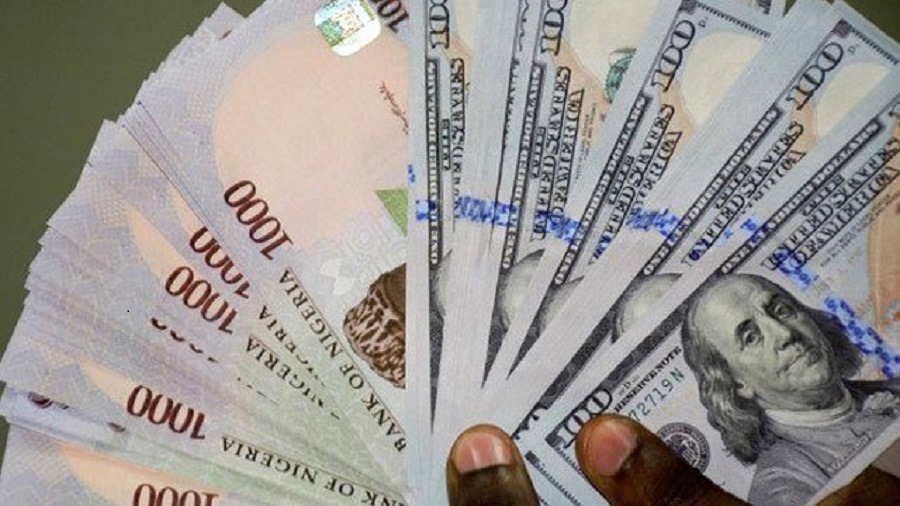
…Black market (Buying and selling rates): N1,385— N1,390
The Nigerian naira appreciated against the United States (US) dollar, trading at N1,331.2027 at the Central Bank of Nigeria (CBN) official foreign exchange (FX) window on Friday, September 18, 2026.
The data shared on the CBN’s official platform shows that the naira traded at the Nigerian Foreign Exchange Market (NFEM) rate of N1,331.2027 per dollar and closed at N1,329.9900 per dollar.
The currency, which traded at an NFEM rate of N1,331.2812 on September 17, 2026, appreciated by at least N0.08 after trading activities on Friday.
READ ALSO: Naira To Dollar Exchange Rate At Official FX Market
At the parallel market, both the buying and selling rate decreased by N5, when compared to the previous trading rate on Thursday, September 17, 2026.
According to Aboki FX , the Naira-to-dollar exchange rate at the black market on Friday, September 18, 2026, was N1,385 and N1,390 per dollar for buying and selling rates, respectively.
Business
Again, Naira Depreciates Against Dollar At Official FX Market
…Black market (Buying and selling rates): N1,380— N1,385
The Nigerian naira depreciated against the United States (US) dollar, trading at N1,329.8568 at the Central Bank of Nigeria (CBN) official foreign exchange (FX) window on Wednesday, September 16, 2026.
The data shared on the CBN’s official platform shows that the naira traded at the Nigerian Foreign Exchange Market (NFEM) rate of N1,329.8568 per dollar and closed at N1,329.5600 per dollar.
The currency, which traded at an NFEM rate of N1,329.1485 on September 15, 2026, depreciated by at least N0.71 after trading activities on Wednesday.
READ ALSO: Naira To Dollar Exchange Rate At Official FX Market
At the parallel market, both the buying and selling rate remained the same, when compared to the previous trading rate on Tuesday, September 15, 2026.
According to Aboki FX , the Naira-to-dollar exchange rate at the black market on Wednesday, September 16, 2026, was N1,380 and N1,385 per dollar for buying and selling rates, respectively.
Business
How To Buy Dangote Refinery Shares As IPO Opens September 14


Investors seeking to own a stake in the Dangote Petroleum Refinery and Petrochemicals FZE will be able to subscribe to its initial public offering (IPO) from September 14, 2026.
The ₦2.15 trillion offer by Dangote, valued at about $1.6 billion, involves 4.1 billion ordinary shares priced at an indicative ₦525 per share.
The offer, which is expected to become Nigeria’s largest-ever public share sale, will remain open until October 13, 2026.
The development gives Nigerians and other eligible investors an opportunity to acquire shares in the refinery as the Dangote Group moves to broaden ownership of the business.
At the signing of the IPO documents in Lagos on September 7, President of Dangote Group, Aliko Dangote, said the offer was designed to enable ordinary Nigerians to become shareholders in the refinery.
“What we are trying to achieve is to make sure our drivers, cooks, servants, and everybody have the opportunity of having stakes in the refinery,” Dangote said.
READ ALSO: BREAKING: Dangote Refinery Reduces Petrol, Diesel Prices
How to subscribe
According to the Managing Director, Investment Banking, Chapel Hill Denham, Mr Lanre Buluro, prospective investors can subscribe digitally using a bank account, Bank Verification Number (BVN) and a mobile phone or laptop.
He said an investor can complete the process within two to three minutes, with the minimum subscription set at 10 shares.
At ₦525 per share, the minimum subscription of 10 shares will cost ₦5,250.
Buluro said investors could access the offer through platforms including Moniepoint, MTN MoMo, Airtel, Payaza, Piggyvest, Paga, Bamboo and Chapel Hill Denham’s Invest Naija platform.
Do I need a CSCS account?
Buluro said prospective investors do not necessarily need an existing Central Securities Clearing System (CSCS) identity number before subscribing.
READ ALSO: Dangote Refinery Reduces Petrol Gantry Price
According to him, a CSCS account can be created for a new investor during the subscription process after the investor’s BVN and bank account details have been verified.
He explained that stockbrokers are behind the participating platforms and would contact subscribers after the transaction to provide their CSCS and Clearing House Number (CHN).
The allotted shares will subsequently be domiciled in the investor’s CSCS account.
What happens after subscription?
Investors can subscribe throughout the offer period, which runs from September 14 to October 13.
At the close of the offer, the advisers and the Securities and Exchange Commission (SEC) will assess the total subscriptions and determine the final allotment.
This means investors may not necessarily receive all the shares they apply for if the offer is oversubscribed.
READ ALSO: Dangote Unveils 10-day Credit Facility For Petrol Station Owners
Buluro disclosed that the offer has a provision to accommodate additional subscriptions in the event of oversubscription.
He said up to about 30 per cent additional shares could be issued under the oversubscription provision, potentially increasing the number of shares available from 4.1 billion to about 5.3 billion.
Before you invest
Buluro advised prospective investors, particularly first-time investors, to read the IPO prospectus carefully and seek guidance from a qualified financial adviser before committing their funds.
Investors should also understand that subscribing to an IPO does not guarantee a profit. The value of shares can rise or fall after allotment, depending on the company’s performance and market conditions.
The Dangote Refinery IPO is expected to significantly deepen public participation in the Nigerian capital market by allowing more individuals to take direct equity positions in one of the country’s largest industrial projects.
(TRIBUNE)
-

 News3 days ago
BREAKING: Tinubu Extends Working Vacation
-

 News4 days ago
Six Hidden Health Benefits Of Unsweetened Zobo
-

 News4 days ago
Jehovah’s Witnesses Announce New Position On Blood Transfusion Policy
-

 News4 days ago
2027: Step-by-step Guide To Applying For INEC Ad Hoc Staff Recruitment
-

 News4 days ago
How 36 Nigerian States Got Their Names
-

 Headline4 days ago
Nigerian Man Jailed After Masturbating In Front Of Woman On UK Train
-

 Headline3 days ago
How To Format An Academic CV For US Master’s, PhD Applications
-

 News4 days ago
Stop Acid Reflux Pain: Foods You Must Ban From Your Kitchen
-

 Headline4 days ago
Nigerian Woman Arrested, Charged Over Illegal Voting In US
-

 News4 days ago
8 Natural Ways To Keep Your Home Cool Without AC