
Headline
7 Things To Know About Daylight Saving Time As It Ends Sunday

At 2 a.m. on Sunday, Nov. 3, it’s time to set clocks back one hour as daylight saving time (DST) comes to an end.
This yearly time change has an interesting history, and we’ve gathered some fascinating details about its origins and unique practices worldwide.
1. A Bug Hunter’s Idea Sparked Daylight Saving Time
In 1895, George Hudson, a New Zealand entomologist, conceptualized the modern idea of DST. His motivation was simple yet unusual: Hudson wanted more sunlight after work during summer so he could go bug hunting. He proposed a two-hour time shift to the Wellington Philosophical Society, though the idea gained little traction at first. In 1905, British builder William Willett suggested a similar concept, advocating for seasonal time changes to maximize daylight. Willett’s idea reached British Parliament in 1909, and by 1916, the United Kingdom officially adopted DST.
READ ALSO: 33m Nigerians To Face Food Crisis In 2025 – Report Food
2. Germany Led the Way in Observing Daylight Saving Time
Germany became the first country to officially implement DST on April 30, 1916, as a wartime measure to conserve electricity. This change was quickly followed by the United Kingdom, which introduced “summer time” soon after.
3. It’s Daylight ‘Saving’ – Not ‘Savings’
While it’s often called “daylight savings time,” the correct term is “daylight saving time” – without the extra “s.”
4. The United States Standardized DST in 1966
In the United States, Congress first passed a national law for DST during World War I in 1918, allowing states to decide whether they’d continue the practice after the war ended. The idea resurfaced during World War II, again as a fuel-saving measure. But it wasn’t until the Uniform Time Act of 1966 that DST became widely recognized across the country. Congress later set DST to start in March and end in November beginning in 2007.
READ ALSO: UK Navy Ship Docks In Lagos For Joint Military Exercise
5. Some States Don’t Observe Daylight Saving Time
While DST is a widespread practice in the U.S., it’s not universal. Hawaii and parts of Arizona, among a few other areas, do not observe DST due to their unique daylight needs and climate.
6. DST Affects More Than Just Clocks
Daylight Saving Time impacts more than just our clocks—it affects various sectors and activities. Public transportation, broadcasting, medical schedules, and even agriculture are all influenced by the time shift. Airlines and train schedules can become complicated, with some regions observing DST and others not. Farmers also face challenges since their routines are closely tied to sunrise and sunset, which do not change with the clock.
7. DST Can Impact Health and Productivity
The time change disrupts the body’s natural circadian rhythm, which regulates sleep and wake cycles. Studies have shown that adjusting clocks can lead to sleep deprivation, resulting in reduced productivity, impaired cognitive function, and even increased risk of heart attacks and strokes. On the Monday following the “spring forward” time change, there is often a noticeable spike in workplace accidents and injuries, as people struggle to adapt to the lost hour.
Source: Vanguard

Headline
Indian Court Denies Bail To Nigerian Man Over Drug Charges
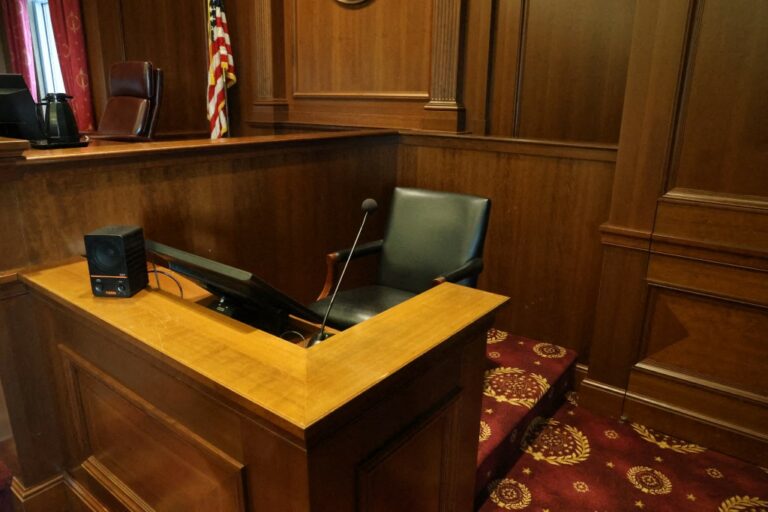
A court in India has denied bail to a 44-year-old Nigerian national, Cristian Soporuchukwu, who is currently facing drug trafficking charges in the country.
Cristian Soporuchukwu initially entered India on a business visa but was later arrested over allegations of involvement in the sale of hard drugs.
Reports indicated that after arriving in India, Soporuchukwu travelled through Goa, Delhi, and Mumbai, where he allegedly established links with suspected drug traffickers.
READ ALSO:Indian National Arraigned In Lagos Over Alleged N22m Supermarket Fraud
He was accused of purchasing MDMA crystals and distributing them to college students and information technology workers.
According to reports, operatives of the Beguru Police arrested Cristian Soporuchukwu in April 2025 for allegedly selling MDMA crystals around Begur Lake and the AECS Layout Road area.
The New Indian Express reported that the High Court of Karnataka subsequently dismissed the Nigerian’s bail application.
READ ALSO:NDLEA Intercepts Indian Lady With 72 Parcels Of Heroin ON n Chocolate Wraps
“The anti-narcotics wing seized about 1 kg of MDMA crystals, a pocket weighing machine, 10 zip-lock covers, a mobile phone and a scooter from him,” the report stated.
Justice V. Srishananda, while ruling on the bail application, reportedly held that errors relating to the grounds of arrest could not automatically justify bail in serious narcotics-related offences under the Narcotic Drugs and Psychotropic Substances, NDPS, Act.
The court further noted that Cristian Soporuchukwu had allegedly overstayed his visa in India, according to the report.
Headline
Strait Of Hormuz: US Announces Sanctions Against Iran

The United States Treasury has announced sanctions against Iran’s Persian Gulf Strait Authority.
Treasury Secretary, Scott Bessent, said this in a statement on Wednesday.
The statement extended the threat of sanctions to anyone paying the fees, saying they may be providing support to and receiving services from Iran’s Revolutionary Guards, and therefore may be exposed to sanctions risk.
READ ALSO:Strait Of Hormuz: Pakistan Thanks Trump For Pausing ‘Project Freedom’
“The Iranian military’s latest attempt to extort global maritime trade is proof that Economic Fury has left the regime desperate for cash.
“Treasury has deprived the Iranian regime of revenue for their weapons programs, terrorist proxies, and nuclear ambitions,” Bessent said.
Bessent added that the US has succeeded in disrupting tens of billions of dollars’ worth of revenue from being accessible to Tehran.
Headline
US Launches New Airstrikes On Iran
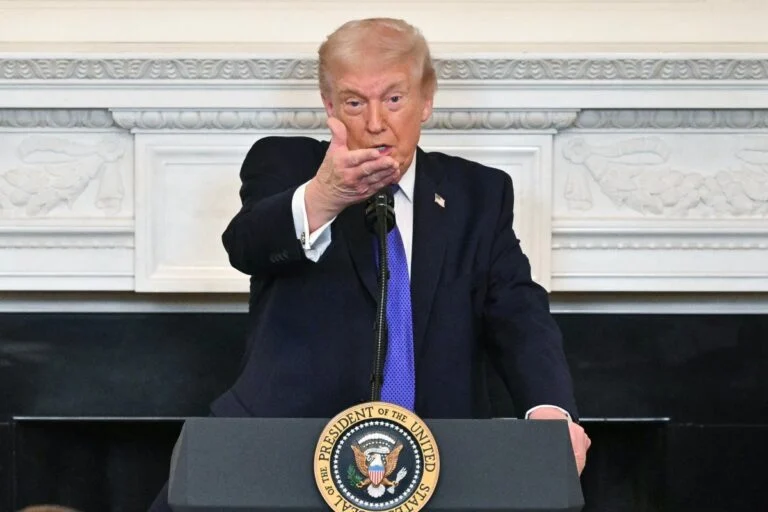
The United States has launched new airstrikes in southern Iran.
The strike shot down four one-way attack drones that posed a threat around the Strait of Hormuz and then a ground control site.
A US official revealed that American forces struck an Iranian ground control station in Bandar Abbas that was about to launch a fifth drone.
READ ALSO:US Restricts Entry Routes For Travellers From DRC, Uganda, South Sudan Over Ebola Outbreak
The official described the strikes as purely defensive, saying the US intended to maintain the ceasefire.
Report says this is the second time in three days that the US has carried out self-defense strikes against Iranian military targets in southern Iran.
Recall that on Monday the US carried out airstrikes against Iranian missile locations and boats that US Central Command said were preparing to launch mines in the Strait of Hormuz.

 Headline4 days ago
Woman Passes Out After Receiving 100 Strokes Of Cane
- Headline4 days ago
JUST IN: White House Locked Down Briefly As Gunman Opens Fire At Security Checkpoint
- Politics5 days ago
Warri Ijaw Hail INEC Delineation Report, Call For Additional Electoral Wards, Others
- Politics3 days ago
Two Masked Men Gun Down Politician In His Rivers State Hotel
- Metro4 days ago
Police Reject N500m Bribe, Recover N7.8bn Illicit Drugs In Lagos
- News3 days ago
More Pain For Nigerians As Cooking Gas Price Increases Nationwide
- Politics5 days ago
What I’ll Do As President Of Nigeria — Amaechi
- News3 days ago
FG Declares Two Days Public Holiday For Eid-el Kabir Celebration
- Politics3 days ago
‘Tinubu’s Borrowing In 24 Months Surpasses 55 Years’ Debt Record’
- Politics2 days ago
Court Clears Goodluck Jonathan To Contest 2027 Presidential Election


