
Headline
All To Know Ahead Of Conclave To Elect New Pope
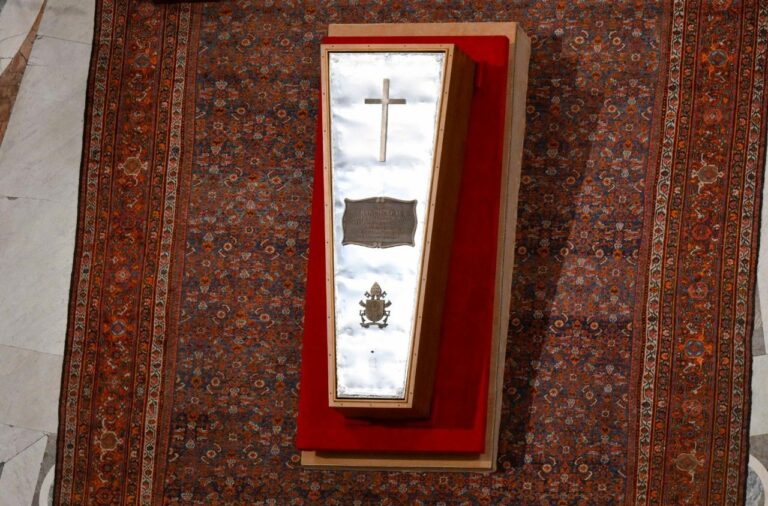
Cardinals from around the world will meet under Michelangelo’s frescoes in the Sistine Chapel on May 7 to elect a new leader of the Catholic Church after Pope Francis’s death.
Dating back to the Middle Ages — when the idea of sovereigns being elected was somewhat revolutionary — the gathering, known as a conclave, has an air of mystery about it, as all participants are sworn to secrecy for life.
Here is what we know about the process:
• Where and when –
On Monday May 5, two days before the conclave, officials and staff taking part in the conclave will gather at 5:30 pm (1530 GMT) to sign an oath of secrecy.
The day itself, Wednesday May 7, will begin with a special mass at 10:00 am in St Peter’s Basilica.
The conclave begins at 4:30 pm following a prayer in the Vatican’s Pauline Chapel.
Cardinals will walk in procession to the Sistine Chapel before taking their oath of secrecy.
The conclave will last until a new pontiff is elected.
READ ALSO: Francis Laid To Rest As 400,000 Mourn Pope ‘With An Open Heart’
Cardinals wear different garments depending on whether they are from the Latin or Eastern churches.
Those in the Latin Church will don a “red robe with sash, rochet, mozzetta, pectoral cross with red and gold cord, ring, zucchetto (cap) and biretta”, while those in the Eastern Church wear their “own choir dress”, the Vatican said.
Each cardinal will wear an accreditation badge around his neck to help identify them as electors.
While it took almost three years to appoint Pope Gregory X in the 13th century — the longest conclave to date — modern gatherings are usually a matter of days.
Both Francis and his predecessor, Benedict XVI, were elected after two days of voting.
• Who takes part –
Only 133 of the Church’s 252 cardinals are expected to take part in the conclave, as only those aged under 80 are eligible to vote for a new pope.
READ ALSO: 10 Cardinals Who Might Succeed Pope Francis
There are 135 eligible voters but the Vatican announced on Tuesday that two cardinals had dropped out for health reasons.
The archdiocese of Valencia in Spain confirmed to AFP that its archbishop emeritus, Cardinal Antonio Canizares was one of those who would not attend.
Most of those — around 80 percent — allowed to vote were appointed by Francis. They hail from all corners of the globe, with many from under-represented regions.
• Secrecy and security –
The word conclave comes from the Latin for “with key”, a reference to the lockdown imposed on cardinals during the conclave.
Their deliberations are held in the strictest secrecy on pain of instant excommunication. Smartphones and any internet access are off-limits and cardinals cannot read newspapers, listen to the radio or watch TV.
READ ALSO: JUST IN: Pope Francis Is Dead
The cardinals stay in the Santa Marta residence at the Vatican until they elect a new pope.
Any contact with the outside world is permitted only for “grave and urgent reasons”, which need to be confirmed by a panel of four peers.
Only cardinal electors are allowed to be present during the actual voting, although others including doctors, clerical assistants and housekeeping staff are authorised to enter at different times.
• How voting unfolds –
Cardinals hold four ballots a day — two each in the morning and afternoon — until one candidate wins two-thirds of the votes, currently 89 ballots.
At the end of each session, the ballots are burned in a special stove. With the addition of chemicals, the stove’s chimney stack emits black smoke if no one has been elected, or white smoke if there is a new pope.
READ ALSO: Pope Waves, Says ‘Thank You’ After Returning Home From Hospital
If no new pope is elected after three days, cardinals take a break and hold a day of prayer and talks.
Any single Catholic adult male can be elected pope, although in practice it is almost always one of the cardinals.
Sick cardinals are allowed to cast their ballots from their beds within the Vatican.
• What happens next –
The winning candidate is asked by the Dean of Cardinals if he accepts the pontificate and, if the answer is ‘yes’, what name he chooses as pontiff.
He then retreats to a room known as the Room of Tears to put on the papal garb — three sizes of which have been left there in advance.
The new leader of the world’s 1.4 billion Catholics then comes out onto a balcony overlooking the crowds in St Peter’s Square as a senior cardinal cries: “Habemus Papam” (We have a pope)!
AFP



Headline
British Family Accused Of Boarding Dead Grandmother On EasyJet Flight

A British family has been accused of trying to board a dead relative onto an EasyJet flight from Málaga, Spain, to London Gatwick on Thursday, passengers said.
The woman, reportedly 89 years old, was wheeled onto the plane by five family members, who told airline staff she was unwell and had fallen asleep.
Witnesses said the woman was pushed in a wheelchair to the rear of the plane and lifted into her seat. Some claimed they overheard a family member tell a boarding clerk, “It’s OK, she’s just tired,” adding, “It’s OK, we’re doctors.”
READ ALSO:Gunmen Invade Church, Kill Priest’s Wife In Anambra
Just before takeoff, the cabin crew realized the woman had died, and the plane was turned around, delaying the flight by 12 hours.
Petra Boddington, a passenger, said: “easyJet, when did you start letting dead people onto planes? Seriously!” Another, Tracy-Ann Kitching, added: “I saw her being wheeled onto the plane; someone was holding her head as they passed me! A doctor on board confirmed that was already dead when they sat her down.”
EasyJet has denied that a deceased person boarded the plane. The airline said the passenger had a fit-to-fly certificate and was alive when she boarded.
READ ALSO:UK Charges Nigerian-British Art Dealer Ochuko Ojiri With Terrorism-related Offence
“The flight returned to the stand prior to take-off due to a customer on board requiring urgent medical assistance. The flight was met by emergency services, but sadly the customer passed away,” a spokesperson said.
The Guardia Civil in Málaga confirmed officers attended the aircraft, and the woman was declared dead on board. No arrests have been made.
Headline
Russian Strike On Odesa Region Kills Eight, Injures 27
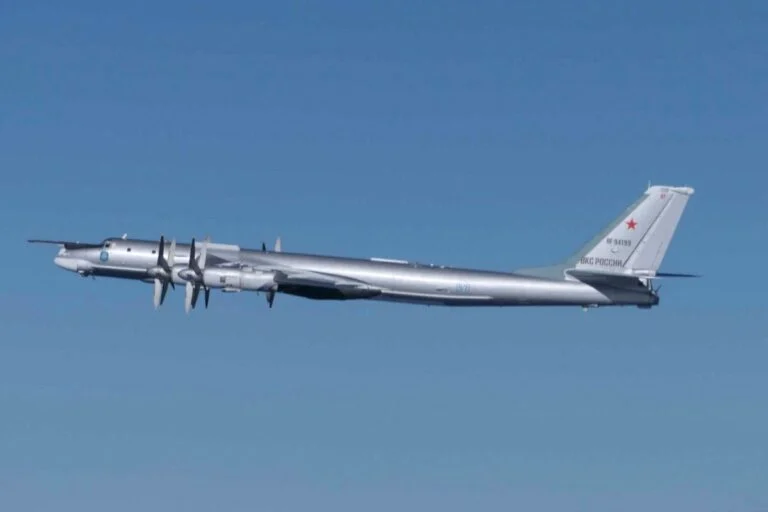
Ukraine’s State Emergency Service has reported at least eight people killed and 27 others injured on Friday night after a Russian ballistic missile strike hit the southern Ukrainian city of Odesa.
According to Ukrainian authorities, the attack targeted port infrastructure facilities in the town of Pivdenne, near Odesa, and damaged nearby civilian vehicles.
The strike came one week after much of Odesa was left without power, heat, and water following a “severe” aerial assault.
“Some of the injured were on a bus that was at the epicenter of the shelling. Trucks caught fire in the parking lot, and cars were also damaged,” the State Emergency Service said.
READ ALSO:Russia Insists Ukraine Must Cede Land Or Face Continued Military Push
Emergency officials said the deaths occurred at a port infrastructure facility. Medical teams and first responders were deployed after the strike, but their work was disrupted by “ongoing air raid alerts,” according to Oleh Kiper, head of Odesa’s regional administration.
Russia has carried out repeated attacks on Odesa in recent days, damaging port facilities, civilian vessels, and key infrastructure.
Two major bridges linking the northern and southern parts of the Odesa region have also been hit, with repairs under way, Kiper said.
Elsewhere, Ukraine’s State Emergency Service reported a “massive” drone attack on the southern Mykolayiv region, which damaged civilian infrastructure and vehicles. No casualties were reported.
READ ALSO:19 Die From Alcohol Poisoning In Russia
Odesa, Ukraine’s largest seaport and a major hub in the Black Sea region, has been a frequent target since the start of the war.
Last week, civilian, energy, and industrial sites in the city suffered extensive damage after what regional officials described as “one of the enemy’s most severe airstrikes,” leaving many areas without power and water.
Russia’s Defence Ministry has not commented on the attack.
Speaking hours before the strike during his annual Direct Line call-in show, Russian President Vladimir Putin said Russia was yet to “see Ukraine’s readiness for peace”.
“[Russia] is ready for negotiations and for ending the conflict via peaceful means,” Putin said, adding that it was up to Russia’s “Western opponents” to end the war.
(CNN)
Headline
Aircraft Crashes In Owerri With Four Persons Onboard
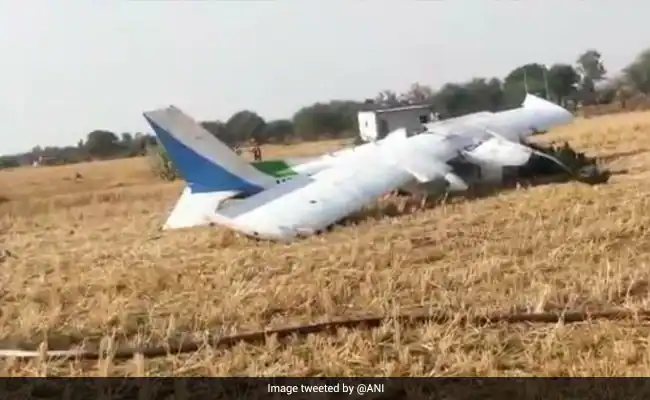
A Cessna 172 aircraft with registration number 5N-ASR, operated by Skypower Express, has crashed at the Sam Mbakwe International Cargo Airport, Owerri, Imo State.
The aircraft had departed Kaduna International Airport en route to Port Harcourt International Airport before diverting to Owerri after the crew declared an emergency.
The crash occurred at about 8:00 pm on the airport premises, with four passengers and crew members onboard.
Confirming the incident, the Director, Public Affairs and Family Assistance of the Nigerian Safety Investigation Bureau (NSIB), Mrs. Bimbo Oladeji, said the agency had been notified of the crash.
READ ALSO:Social Media Feud Spills Into Aircraft As VDM, Mr Jollof Exchange Blows
According to the NSIB, the aircraft crashed on the approach area of Runway 17, but no fatalities have been recorded so far.
The statement said: “Following the occurrence, airport emergency services were successfully activated and arrived on site promptly. Reports indicate that there was no post-crash fire, and the runway remains active for flight operations, with other aircraft taking off safely after the incident.
“Efforts are currently underway to coordinate the recovery and evacuation of the distressed aircraft from the crash site to allow for a detailed wreckage examination.”
The NSIB said it has officially activated its investigation protocols in line with its statutory mandate
READ ALSO:Ogun To Prosecute DJ Over Multiple Road Crashes
The Director-General of NSIB, Capt. Alex Badeh Jr., sympathised with the management of Skypower Express over the incident and expressed relief that no lives were lost.
Badeh Jr. added that the Bureau’s investigation team is already coordinating with relevant authorities to secure the crash site and commence a detailed investigation into the cause of the accident.
Two days ago, 11 persons narrowly escaped death as a private jet crash-landed at Mallam Aminu Kano International Airport, Kano, on Sunday morning.
The occupants, including passengers and cabin crew, were safely evacuated amid an intense atmosphere, eyewitnesses told The Guardian.
READ ALSO:Tanker Crash Kills Three, Fire Razes Shops In Kano
The private jet, owned by Flybird Aviation, crash-landed at about 9:30 a.m. while approaching Kano Airport en route to Abuja.
The incident attracted urgent attention, with emergency staff and other stakeholders converging at the runway to render rescue operations.
The management of the Federal Airports Authority of Nigeria (FAAN) is yet to release an official statement on the incident. Unofficial sources disclosed that the passengers have been taken to an unknown destination.
Several aircraft incidents have occurred at Kano Airport, with several lives lost.
The last incident occurred in May 2002, when an EAS Airline aircraft departed the runway at Aminu Kano International Airport at 1:29 p.m. local time en route to Lagos.

 Metro4 days ago
Alleged Organ Harvesting: Bereaved Families Rush To Check Corpses
- News4 days ago
Forest Reserve: Okpebholo Broker Peace Between Host Communities, Investors
- News3 days ago
Police Confirm Edo Tanker Explosion, say No Casualty
- News2 days ago
Former Delta North senator Peter Nwaoboshi Dies
- News4 days ago
Edo SSG Calls On Media To Support Govt Policies, Assures Better Welfare
- Metro1 day ago
JUST IN: Former Edo Information Commissioner Is Dead
- News3 days ago
Grassroots To Global Podium: Edo Sports Commission Marks Enabulele’s First Year In Office
- News3 days ago
Otuaro Tasks Media On Objective Reportage
- News3 days ago
IPF Hosts Media Conference, Seeks Protection For N’Delta Environment
- News3 days ago
Okpebholo Sympathises With Otaru, People of Auchi Over Tragic Tanker Fire Incident


