
News
[OPINION] Trump: Kurunmi’s Lessons For Tinubu

By Festus Adedayo
Greek philosopher, Socrates, may be the most famous Western figure of his time to have swallowed the poisonous plant’s juice called hemlock. But, Africa, too had its. As he was sentenced to death in 399 BCE, Socrates was forced to drink this poisonous plant secretion which causes muscular paralysis, leading to respiratory failure. As he lay dying, having swallowed his own hemlock kept in a calabash bowl, the tragic life of Kurunmi, 19th century Yoruba military general and Yoruba race’s 10th Aare Ona Kakanfo, stands as a huge lesson for contemporary leaders. Though Kurunmi learned the lesson too late, its precepts are that, through decisions or indecision, leaders lead their people to avoidable bloodshed.
If irascible Donald Trump eventually attacks Nigeria as he has been roaring to do in the past one week or thereabout, Nigerians have their leaders of the 4th Republic to blame. If this happens, one historical narrative often deployed as a fitting recollection of such invasion is the story of Kurunmi, one of the governors of the Alaafin of Oyo, Oba Atiba.
In the infamous Ijaiye war with Ibadan, Kurunmi lost all. His warlords’ stubborn insistence on crossing River Ose was one of the first steps to spell a monumental disaster for the Ijaiye warriors. They all perished inside the river. Kurunmi lost Iwawun which came to him as a chilling news. The generalissimo was contemptuous of Ibadan’s military might, having earlier defeated the people in the battle of Odogido. He derogatorily called Ibadan “bush goats” and “horses full of muscles, small in sense.” The BasorunOgunmola warriors had to fight to the last pint of their blood to reclaim their pride. In the process, they demonstrated to Kurunmi that they had huge sense and possessed sterner military prowess.
When the poison’s pang meandered through his entrails with deathly searing pain, Kurunmi cursed his remaining generals, Mosadiwin and Abogunrin. The curse would assume its potency, he pronounced, if they did not inter him immediately but allow “my body stay(s) here for the vultures of Ibadan to peck at… if my skull serves as drinking cup for Adelu.” His last words as he committed suicide, was, “When a leader of men has led his people to disaster, and what remains of his present life is but a shadow of his proud past, then it is time to be leader no more.”
The above earlier excerpts were the result of a literary, though fictional re-calibration of what was left of the true but tragic life of Kurunmi, one of Yorubaland’s most famous war generals. Written by Professor Ola Rotimi in his epic drama, Kurunmi, Rotimi also characterized Kurunmi as a great military leader and war general whose fatal ending came as a result of a leadership Achilles’ heel. It is, taking others for granted.
MORE FROM THE AUTHOR:OPINION: Abulu, The Prophetic Madman, At Akure Summit
In the days of yore, in centuries that preceded the advent of colonial rule, vile comments against a people, the type of which was recently credited to American president, Donald Trump, were enough to provoke a war. Kurunmi said as much against the Ibadan and provoked their anger. “Bush goats” and “horses full of muscles, small in sense” were as villainous as “the now disgraced country” of Trump’s description of Nigeria. The disgrace isn’t that it was coming from the leader of another country; the disgrace is that Nigerian leaders are actually disgraceful. They are the proverbial self-advertizing ripe fruits of an orange tree who invite stones and wood-pummeling on the mother tree. From Olusegun Obasanjo, to Umaru Yar’Adua, Goodluck Jonathan, Muhammadu Buhari and now to Bola Tinubu, Nigerian leaders of the Fourth Republic have left their food plates unwashed and have invited Trump, the green fly, to feast on their failures.
When Boko Haram insurgency began under Modu Ali Sheriff as governor of Borno State, Obasanjo was in the saddle. While holding court in Maiduguri, on July 28, 2002, Mohammed Yusuf, founder of the dreaded Islamist organization and its spiritual leader, got surrounded by Nigerian military troops. They enveloped the sect members and arrested Yusuff two days after. Captured by the military in that expedition, Yusuf was taken to custody of the police where, for fear that he could name his sponsors in government, Yusuff was summarily executed outside of the police headquarters. Rather than decisively stamp his feet on this potentially viral cells of an affliction, President Obasanjo would rather order the rout of Odi and ZakiBiam.
I was one of the reporters who covered the blood-curdling news of the amputation of Jangebe, the first victim of the politicization of Islam, in Gusau, Zamfara State in 1999. On October 27 of that year, Ahmed Sani Yerima, as governor, dared Obasanjo and introduced the Sharia law. The eleven other states in northern Nigeria who parade majority Muslim populations, immediately followed suit, regardless of the stipulations of the Nigerian constitution which stated that Nigeria is not a religious state. Obasanjo had the renown of the warrior, Morilewa who Odolaye Aremu sang his panegyrics as “Òtagììrìp’egbèjeènìyàn” – one who, with the clinical sprint of a tiger, eliminates 140 people at a go.
In this instance, however, because he wanted to be politically correct and didn’t want to hurt the north, Obasanjo became too feeble to stop the north. There were vehement protests everywhere against the move, including riots, leading to several deaths. Yet, Obasanjo was too busy demolishing towns where policemen and soldiers got killed to bother about this stoked national fire.
MORE FROM THE AUTHOR:OPINION: Ted Cruz’s Genocide, Blasphemy And Ida The Slave Boy
Yes, since 1960, there had been calls for Northern Nigeria to return to the Sharia, which is a way of life of Muslims. Reference was made to its seamless practice in the Sokoto Caliphate and Kanem-Bornu empire before the British colonial rule of the 19th and 20th centuries. Yes, this empire prospered tremendously under Sharia and the people wanted a return to “the glory of former times”. Were southern Nigeria to seek a return to “the old glory” of the buoyant Oyo empire, it could also have advocated for this movement backwards to move forward. Moving backwards to the Oyo empire would have meant a wholesale reproduction of the draconian laws and the barbaric precepts of kings seizing women that caught their fancies, which were not in consonance with modernity. Beheading of opponents to the king’s command would also have come with the broth. However, since the introduction of the criminal Sharia laws into the penal laws of the 12 northern states in 2000, Northern Nigeria has remained backward, more existentially challenged ever, while its political leaders use Sharia as a draw-card for votes.
Boko Haram indeed sidled into Nigeria under the veil of Islam. Under Jonathan, who literally threw his hands up in surrender, and Buhari, whose amorphous anger against the Islamist group was undisguisable, the insurgents became such a hydra whose taming was a huge challenge.
Now, Nigeria has come to the valley of decision. An untrained child would receive cudgel training outside their father’s compound. Donald Trump has come with his disgraceful cudgel for Nigeria. As usual, Nigerians are hiding behind a finger. The almost 26 years of leadership hypocrisy, politicizing of faith, ineptitude, abetment of mass killings of Nigerians, all in the name of looking good in the sight of northern voters, have come full throttle. It reminds me of Peter Tosh, the iconoclast Jamaican reggae musician, warning, in his No Way track, that, “Nobody feel no way/It’s coming close to payday I say…/Everyman get paid a quota’s work this day/Can I plant peas and reap rice/Can I plant cocoa and reap yam/Can I plant turnip and reap tomato/Can I plant breadfruit and reap potato?”
Nigeria planted breadfruit over the past 26 years and desires to reap potato. The world endured the nuisance of our leaders for decades; it waited with bated breath to see whether renaissance would come from within. Now, a Sheriff for whom scruple, precis and diplomatese and the concept of national sovereignty are balderdash, is in the saddle. You may dislike the gruff of Trump as I do; in his CPC tag on Nigeria, you may see through a veil of seeking to please his American evangelicals and harvesting support at home, amid a shutdown of American government. However, you cannot denounce Trump’s statistics that brim with blood of our innocent compatriots. Their only crime was being Nigerians practicing their faith.
In my piece entitled Ted Cruz’s genocide, blasphemy and Ida the slave boy (October 26, 2025) I laid bare the crux of Ted Cruz’s matter. The world cannot stand successive Nigerian governments’ hypocrisy any longer. Citizens have resigned themselves to their fates in the hands of their oppressive leaders. In the north, faiths other than Islam cannot be practiced without fear. In the name of blasphemy, many have had their heads decapitated and burnt. In the words of Catholic Bishop of Sokoto, Mathew Hassan-Kukah in Lagos on Friday, “If Nigeria does not kill the dragon of religious extremism, it will be only a matter of time before we become a larger Gaza.”
MORE FROM THE AUTHOR:OPINION: Amupitan’s Magical Marriage To A Buffalo
But, supremacists flourish like cedars of Lebanon here. The first thing to do is to face the fact that, the forefathers of insecurity in Nigeria – banditry, Fulani herdsmen, kidnapping etc – are Boko Haram and ISWAP. They kill, maim and destroy churches and mosques, in the name of a religion. Yes, we should agree that they are ill-informed and unrepresentative of what Islam, the religion of peace, truly stands for. But, with the genealogy of Boko Haram and ISWAP that we know, it will then be very disingenuous and hypocritical to claim that the killings in Nigeria’s northern states are in equal proportion of both Christian and Muslim adherents.
In the figures they gave of casualty of Boko Haram and ISWAP’s genocidal rout, Trump, Cruz and others spearheading this genocide claim on Nigerian Christians cannot be wrong. They may be wrong on the functionality that the grim statistics serve for them. If and when the Islamists strike, not only do they shout “Allahu Akbar,” a census of opinions of victims in northern Nigeria would reveal that their killings tilt more towards Christians and the Kafir Muslims who the insurgents see as no better than Christians.
I believe Tinubu can rout the Islamists. He stands at a tangential point to do this due to his syncretist background of being both Christian and Muslim, by birth and marriage. Trump’s irascibility is a wake-up call on Aso Rock. It is also a blessing to Nigeria. We don’t want America to storm Nigeria with her missiles. We want Trump to make Tinubu bend over backwards to smoke out those bloodsucking animals and their apologists off our land. Tinubu can do it if he blinds his eyes to the enticing pie of a second term re-election. To do this, he must heed the clarion call in the Ola Rotimi proverb which says that, “When an elder sees a mudskipper, he must not afterwards say it was a crocodile”.
Tinubu must call the mudskipper of Boko Haram sponsors their real names. He should begin by flushing out bloated vermin military generals who sell arms to Boko Haram and their allies in barracks who warehouse Intel reports for sale. Since we began voting trillions of Naira for fighting insurgency, military Generals and their civilian allies have stolen billions of our national patrimony yearly. I am sure America has their dossiers. She should smoke them out. America must then banish their feet from her precious soil where they love to move their blood-encrusted heists. It is in this that Trump can “attack fast, vicious, and sweet”. It will hit the insurgents hard, thereby bringing peace to the “cherished Christians”.
Lastly, I love a tweet on X last week credited to military General, Ibrahim Babangida. He wrote: “During our time in the Nigerian Military, we don’t (sic) negotiate with terrorists or offer any form of amnesty to radical groups. Those who pose(d) a significant threat (were) scheduled for court to see the judge, while those who pose(d) a much more dangerous (threat) are (sic) scheduled to see God.” It is high time the Tinubu government applied the same stratagem.



News
Shatta Wale Bailed Burna Boy From Ghana Prison After Arrest For Smoking Weed – Captan
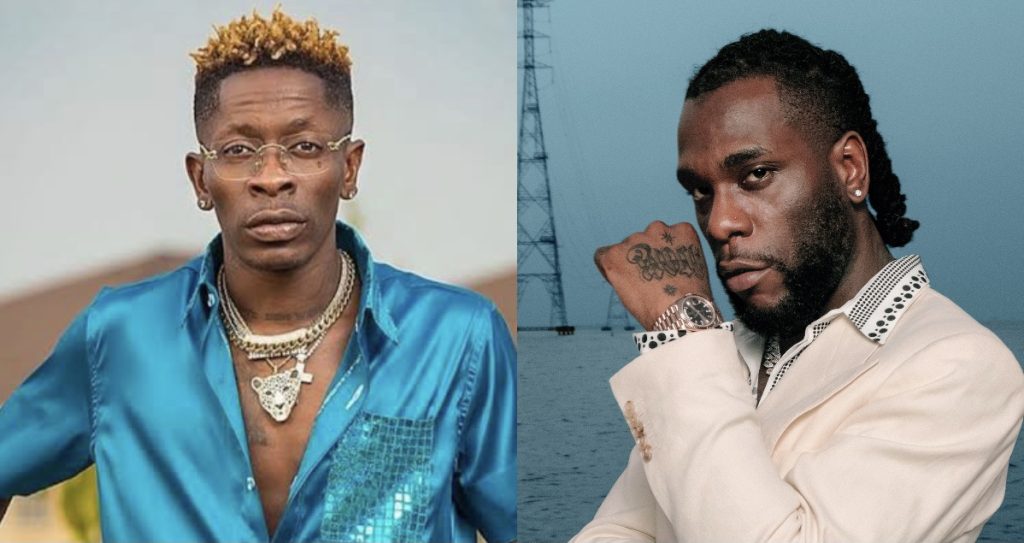
Ghanian singer, Captan, has claimed that his former record label boss, Shatta Wale, once bailed Nigerian singer Burna Boy out of prison in Ghana after he was allegedly arrested for smoking weed.
Speaking in a recent podcast interview, Captan claimed that Shatta Wale sent him and others to free Burna Boy from police custody.
He also claimed that Shatta Wale and his group once accommodated Burna Boy when he was being hunted by some dangerous men.
READ ALSO: Wale Edun Opens Up After Sack
Captan said, “I once bailed Burna Boy out of prison in Ghana when he was arrested for smoking weed. Shatta Wale sent me and some guys to go and free him from police custody.
“There was a time we also accommodated him when some people were after his life. We helped him settle the case.”
He added that he and Burna Boy are no longer in good terms after the Nigerian artist’s fallout with his mentor, Shatta Wale.
He, however, said he and Shatta Wale are open to reconciling with Burna Boy if he asks for it.
Watch the video here
News
Children’s Day: Chaos At Ogbe Stadium As Dozens Faint

Chaos erupted on Wednesday during the Children’s Day celebration as dozens of students reportedly collapsed following a stampede triggered by the use of pepper spray.
The event,
organised by the Edo State Ministry of Education at the Samuel Ogbemudia Stadium was disrupted after some male students of Ihogbe College allegedly made uncompromising advances towards female students at the venue.
A parent who identified himself as Oboh Emmanuel said, “the behaviour of those uncultured students attracted the attention of bouncers stationed at the stadium as they rebuked the male students.”
Oboh said the affected students later regrouped and attacked the bouncers, leading to a confrontation within the crowded arena.
READ ALSO:Children’s Day: Edo Commits To Child Protection
It was gathered that in the ensuing confusion, the bouncers were reported to have deployed pepper spray in an area occupied by a large number of students.
Several students, particularly female students, reportedly fainted after inhaling the substance, while others sustained injuries after being stepped on during the ensuing melee.
The panic was said to have spread across the stadium as students, teachers and parents scampered for safety.
Many of the affected students were reportedly rushed to the Edo Specialist Hospital for medical attention.
READ ALSO: Egor LG Chair, Ogbemudia, Vice, Osawe Impeached
Reacting to the incident, Chief Press Secretary to Governor Monday Okpebholo, Dr Patrick Ebojele, said the security personnel that fired the tear gas had been detained.
He said all the students, except two, that were rushed to the hospital have been discharged.
Ebojele stated that doctors wanted to observe the students till tomorrow before allowing them to go home.
“The two students are not seriously injured. Doctors want to observe them overnight. Permanent Secretary, Ministry of Education is still at the hospital. The man who used pepper spray has been detained.
“The incident did not happen the way it is being exaggerated. All modalities were put in place to ensure the children enjoyed their day.”
News
Okpebholo Salutes Edo Muslims, Seeks Continued Support, Prayers
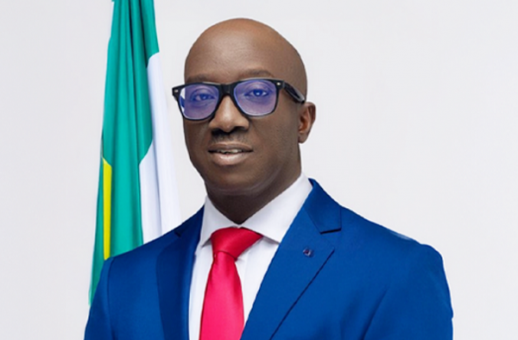
Governor Monday Okpebholo of Edo State has urged Muslims and all Nigerians to continue to pray for peace, unity and progress in the country even as they celebrate the annual Eid-al-Adha
The governor, who was represented by his deputy, Dennis Idahosa, stated this during the annual Eid-al-Adha celebration with Muslim faithfuls held at Government House in Benin City.
He reiterated his administration’s commitment to fairness, inclusivity and equal opportunities for all citizens irrespective of religion and tribe.
READ ALSO:ADC Penetrates Okpebholo’s District As Defections Strengthen Party in Edo Central
According to him, the present administration remains determined to building a government that reflects the diversity of Edo State, noting that competent and qualified Muslims have continued to play vital roles in his government because of their capacity, integrity and commitment to service.
“As a government, we remain committed to fairness, inclusivity and equal opportunity for every Edo citizen, irrespective of religion, ethnicity or political affiliation. This is why quality and competent Muslims are serving in key positions in our administration.”
Okpebholo appreciated the Muslim community in Edo State for their unwavering support and continuous prayers for his administration, noting that such prayers and support have contributed immensely to the peace and steady development being witnessed across the state.
READ ALSO:Okpebholo Felicitates Muslims On Eid-el-Fitr Celebration
He then called on all Nigerians to use the occasion of Eid-al-Adha to pray for the administration of President Bola Ahmed Tinubu, stressing that the country needs collective prayers, unity and cooperation to overcome its present economic and security challenges.
“I urge all Muslims and indeed all Nigerians to use this occasion to pray for our dear nation and for the administration of President Bola Ahmed Tinubu. Nigeria needs our collective prayers, unity and support as we strive to overcome our challenges and build a more prosperous future for all.”
In his remarks, the Chief Imam of Edo State, Abdulfatai Enabulele, applauded the governor for what he described as remarkable developmental strides recorded in less than two years in office.
The cleric commended the administration for ongoing infrastructural development and efforts geared towards improving governance in the state, but appealed to the government to revisit and complete some abandoned projects inherited from the previous administration for the benefit of the people.

 Metro5 days ago
My Husband Abandoned Me On Our Wedding Night To Attend Political Meeting, I Want Our Marriage Dissolved
- Headline4 days ago
Woman Passes Out After Receiving 100 Strokes Of Cane
- Politics5 days ago
Warri Ijaw Hail INEC Delineation Report, Call For Additional Electoral Wards, Others
- Headline4 days ago
JUST IN: White House Locked Down Briefly As Gunman Opens Fire At Security Checkpoint
- Politics3 days ago
Two Masked Men Gun Down Politician In His Rivers State Hotel
- Metro5 days ago
My Wife Stop Cooking My Food, Beats Me Black And Blue All the Time, Man Tells Court
- News5 days ago
Alleged Terrorism: Court Rejects Defendant’s Bid To Travel Abroad
- News3 days ago
More Pain For Nigerians As Cooking Gas Price Increases Nationwide
- Politics5 days ago
What I’ll Do As President Of Nigeria — Amaechi
- News3 days ago
FG Declares Two Days Public Holiday For Eid-el Kabir Celebration


