
Business
Economists React As Nigeria Loses N34 Trillion To Import Duty Waivers

Economists and financial analysts are alarmed following the revelation that Nigeria lost N34 trillion, which represents 61 percent of the 2025 budget, to import waivers in the same year.
The Comptroller-General of the Nigeria Customs Service, Bashir Adeniyi, said duty exemption certificate approvals granted by the federal government on goods and equipment amounted to N34 trillion.
Adeniyi made the disclosure known in an investigative hearing on the Senate Committee on Finance on Monday.
According to him, the country’s import duty exemption certificate issuance has depleted the nation’s revenue.
He noted the federal government’s fiscal measures have both positive and negative impacts on the service’s revenue generation capacity.
He said, “IDEC approvals reached about N34 trillion in 2025, 60 percent of which was rightly done by the government related to military hardware procurements, which attracted duty exemptions because of Nigeria’s prevailing security challenges.
READ ALSO: Insecurity: Traditionalists Lay Curses On Criminals In Edo, Fortify Benin [PHOTOS]
“Other government-backed waivers included the importation of compressed natural gas (CNG), electric and hybrid vehicles, healthcare equipment and medical supplies, industrial machinery and manufacturing inputs, and food import intervention programs,” he stated.
DAILY POST reports that customs generated N7.28 trillion as revenue for 2025.
This means that Nigeria lost more than four times its generated revenue in the year under review to import waivers amounting to N34 trillion.
Similarly, the IDEC approvals for 2025 accounted for 61.8 percent of the country’s N54.99 trillion budget in the 2025 fiscal year.
Reacting to the development in an exclusive interview with DAILY POST, Professor of Accounting and Finance at Lead City University Godwin Oyedokun and CEO of SD & D Capital Management Gbolade Idakolo said the N34 trillion revenue lost to import waivers is alarming and should be thoroughly investigated.
Both economic experts agreed that the N34 trillion import duty waiver amounts to revenue leakages and signals corruption.
READ ALSO: IOM Facilitates Return Of 182 Stranded Nigerians
Oyedokun called for a thorough investigation and greater public scrutiny following the Nigeria Customs Service’s disclosure that the country granted an estimated N34 trillion in import duty waivers in 2025.
He described import duty waivers as legitimate economic policy instruments that can stimulate investment, industrialization, and strategic sectors but stressed that they must be administered transparently and deliver measurable economic value.
According to him, if the government indeed forgone N34 trillion in customs revenue, it has a responsibility to demonstrate that the incentives translated into tangible outcomes such as increased local production, job creation, export growth, and broader economic development.
“If such a significant amount of revenue was forfeited, the government must demonstrate that the incentives translated into increased production, job creation, export growth, and broader economic development.
“Otherwise, the country may have sacrificed critical public revenue without achieving the intended objectives,” he told DAILY POST.
Oyedokun warned that the implications of such a large revenue loss are far-reaching, noting that lower customs revenue could worsen Nigeria’s fiscal challenges by widening the budget deficit, increasing borrowing, and reducing available funding for key sectors, including education, healthcare, infrastructure, and security.
He also cautioned that poorly managed import waivers could distort competition by giving certain businesses unfair advantages over others.
READ ALSO: Insecurity: FG Security Agency Intensifies Partnerships, Visits Maiduguri
Oyedokun urged the federal government to strengthen the governance of import duty waivers through improved transparency, periodic cost-benefit assessments, stricter legislative oversight, and independent audits.
He maintained that fiscal incentives should only be granted where there is clear evidence that the long-term economic gains outweigh the immediate revenue forgone.
“Ultimately, every tax or duty concession should represent an investment in national development rather than a source of revenue leakage,” Oyedokun added.
N34 trillion import waiver loss alarming, may indicate corruption – Idakolo
On his part, he joined Oyedokun to call for a comprehensive investigation on the revenue loss from Nigeria’s import duty waivers.
He warned that the development could point to corruption and significant leakages in the country’s revenue collection system.
He said although waivers are legitimate trade policy instruments designed to encourage the importation of goods considered essential for economic growth, they must not become channels for revenue abuse.
READ ALSO: Insecurity: You’ve The Right To Defend Yourselves – Presidency Tells Nigerians
According to him, import waivers are intended to facilitate favorable trade conditions for importers and boost the inflow of products necessary to improve the economy.
However, he stressed that if the government is losing legitimate revenue through the policy, there is an urgent need to determine the source of the leakages.
“If the government starts losing legitimate revenue from these waivers, adequate investigations should be carried out to determine the cause of these leakages, which could be due to corruption,” he told DAILY POST.
Idakolo described the reported N34 trillion loss as alarming, noting that such an amount could have significantly supported the implementation of the 2025 budget without the need for additional borrowing.
“N34 trillion lost could have aided budget implementation in 2025 without additional borrowings, so this revenue loss is alarming and should be investigated,” he stated.
The economist urged the federal government to review its import waiver policy to ensure it aligns with the country’s economic growth objectives and prevents further revenue leakages.
He also called for agencies found culpable in any abuse of the waiver regime to be investigated and sanctioned.
“The federal government should review waivers in line with its economic growth plan to ensure potential leakages are blocked accordingly, while agencies found to be culpable for this monumental loss should be investigated and reprimanded,” Idakolo added.



Business
Naira Appreciates Against Dollar At Official FX Market
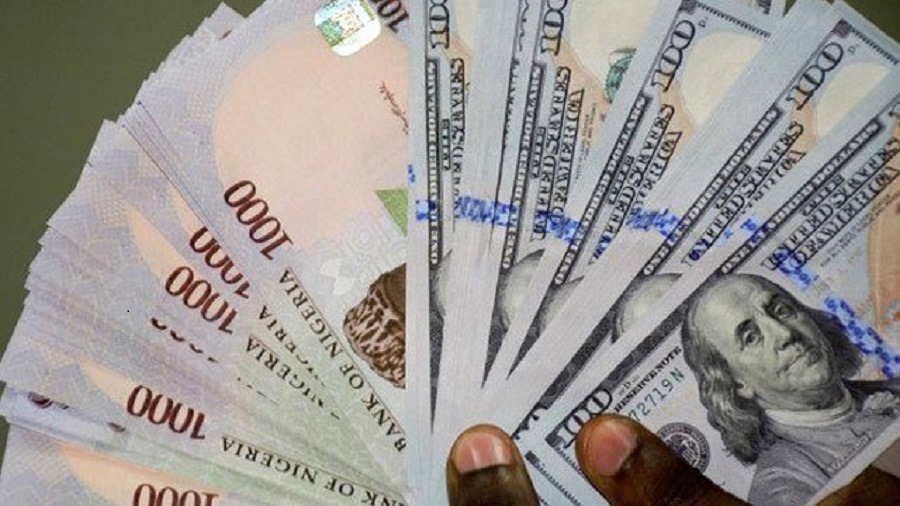
…Black market (Buying and selling rates): N1,385— N1,390
The Nigerian naira appreciated against the United States (US) dollar, trading at N1,331.2027 at the Central Bank of Nigeria (CBN) official foreign exchange (FX) window on Friday, September 18, 2026.
The data shared on the CBN’s official platform shows that the naira traded at the Nigerian Foreign Exchange Market (NFEM) rate of N1,331.2027 per dollar and closed at N1,329.9900 per dollar.
The currency, which traded at an NFEM rate of N1,331.2812 on September 17, 2026, appreciated by at least N0.08 after trading activities on Friday.
READ ALSO: Naira To Dollar Exchange Rate At Official FX Market
At the parallel market, both the buying and selling rate decreased by N5, when compared to the previous trading rate on Thursday, September 17, 2026.
According to Aboki FX , the Naira-to-dollar exchange rate at the black market on Friday, September 18, 2026, was N1,385 and N1,390 per dollar for buying and selling rates, respectively.
Business
Again, Naira Depreciates Against Dollar At Official FX Market
…Black market (Buying and selling rates): N1,380— N1,385
The Nigerian naira depreciated against the United States (US) dollar, trading at N1,329.8568 at the Central Bank of Nigeria (CBN) official foreign exchange (FX) window on Wednesday, September 16, 2026.
The data shared on the CBN’s official platform shows that the naira traded at the Nigerian Foreign Exchange Market (NFEM) rate of N1,329.8568 per dollar and closed at N1,329.5600 per dollar.
The currency, which traded at an NFEM rate of N1,329.1485 on September 15, 2026, depreciated by at least N0.71 after trading activities on Wednesday.
READ ALSO: Naira To Dollar Exchange Rate At Official FX Market
At the parallel market, both the buying and selling rate remained the same, when compared to the previous trading rate on Tuesday, September 15, 2026.
According to Aboki FX , the Naira-to-dollar exchange rate at the black market on Wednesday, September 16, 2026, was N1,380 and N1,385 per dollar for buying and selling rates, respectively.
Business
How To Buy Dangote Refinery Shares As IPO Opens September 14

Investors seeking to own a stake in the Dangote Petroleum Refinery and Petrochemicals FZE will be able to subscribe to its initial public offering (IPO) from September 14, 2026.
The ₦2.15 trillion offer by Dangote, valued at about $1.6 billion, involves 4.1 billion ordinary shares priced at an indicative ₦525 per share.
The offer, which is expected to become Nigeria’s largest-ever public share sale, will remain open until October 13, 2026.
The development gives Nigerians and other eligible investors an opportunity to acquire shares in the refinery as the Dangote Group moves to broaden ownership of the business.
At the signing of the IPO documents in Lagos on September 7, President of Dangote Group, Aliko Dangote, said the offer was designed to enable ordinary Nigerians to become shareholders in the refinery.
“What we are trying to achieve is to make sure our drivers, cooks, servants, and everybody have the opportunity of having stakes in the refinery,” Dangote said.
READ ALSO: BREAKING: Dangote Refinery Reduces Petrol, Diesel Prices
How to subscribe
According to the Managing Director, Investment Banking, Chapel Hill Denham, Mr Lanre Buluro, prospective investors can subscribe digitally using a bank account, Bank Verification Number (BVN) and a mobile phone or laptop.
He said an investor can complete the process within two to three minutes, with the minimum subscription set at 10 shares.
At ₦525 per share, the minimum subscription of 10 shares will cost ₦5,250.
Buluro said investors could access the offer through platforms including Moniepoint, MTN MoMo, Airtel, Payaza, Piggyvest, Paga, Bamboo and Chapel Hill Denham’s Invest Naija platform.
Do I need a CSCS account?
Buluro said prospective investors do not necessarily need an existing Central Securities Clearing System (CSCS) identity number before subscribing.
READ ALSO: Dangote Refinery Reduces Petrol Gantry Price
According to him, a CSCS account can be created for a new investor during the subscription process after the investor’s BVN and bank account details have been verified.
He explained that stockbrokers are behind the participating platforms and would contact subscribers after the transaction to provide their CSCS and Clearing House Number (CHN).
The allotted shares will subsequently be domiciled in the investor’s CSCS account.
What happens after subscription?
Investors can subscribe throughout the offer period, which runs from September 14 to October 13.
At the close of the offer, the advisers and the Securities and Exchange Commission (SEC) will assess the total subscriptions and determine the final allotment.
This means investors may not necessarily receive all the shares they apply for if the offer is oversubscribed.
READ ALSO: Dangote Unveils 10-day Credit Facility For Petrol Station Owners
Buluro disclosed that the offer has a provision to accommodate additional subscriptions in the event of oversubscription.
He said up to about 30 per cent additional shares could be issued under the oversubscription provision, potentially increasing the number of shares available from 4.1 billion to about 5.3 billion.
Before you invest
Buluro advised prospective investors, particularly first-time investors, to read the IPO prospectus carefully and seek guidance from a qualified financial adviser before committing their funds.
Investors should also understand that subscribing to an IPO does not guarantee a profit. The value of shares can rise or fall after allotment, depending on the company’s performance and market conditions.
The Dangote Refinery IPO is expected to significantly deepen public participation in the Nigerian capital market by allowing more individuals to take direct equity positions in one of the country’s largest industrial projects.
(TRIBUNE)

 News2 days ago
BREAKING: Tinubu Extends Working Vacation
- News3 days ago
Six Hidden Health Benefits Of Unsweetened Zobo
- News5 days ago
Edo: Council Chairman Under Fire For Threatening Commercial Drivers Who Refuse To Wear APC Insignia
- News5 days ago
Edo: Ekpeson Redeems N20m Pledge To Family Of Fallen Soldier
- News3 days ago
Jehovah’s Witnesses Announce New Position On Blood Transfusion Policy
- News3 days ago
2027: Step-by-step Guide To Applying For INEC Ad Hoc Staff Recruitment
- News5 days ago
OPINION: Nigerian Pastors, Imams And Their Sex Sermon Obsession
- News3 days ago
How 36 Nigerian States Got Their Names
- Headline3 days ago
Nigerian Man Jailed After Masturbating In Front Of Woman On UK Train
- Headline2 days ago
How To Format An Academic CV For US Master’s, PhD Applications


