
Headline
Facebook Sued For $150B Over Alleged Role In Violence
Rohingya refugees sued social network powerhouse Facebook for more than $150 billion, accusing it of failing to stop hate speech that incited violence against the Muslim ethnic group by military rulers and their supporters in Myanmar.
Years after coming under scrutiny for contributing to ethnic and religious violence in Myanmar, recently revealed internal Facebook documents show the company still has problems defining and moderating hate speech and misinformation on its platform in the country.
The breaches have even been exploited by hostile actors since the Feb. 1 military takeover this year that resulted in human rights abuses across the country.
The Rohingyas’ claims were fortified by the revelations in internal company documents that former Facebook employee and whistleblower Frances Haugen provided this fall to Congress and U.S. securities regulators.
The documents could also serve to buttress potential legal action by other groups around the world harmed by hate speech and misinformation on Facebook’s platform.
READ ALSO; Facebook To Ban Contents That Sexually Harasses Public Figures
Lawyers filed a class-action lawsuit Monday in California against Facebook parent Meta Platforms, saying Facebook’s arrival in Myanmar helped spread hate speech, misinformation and incitement to violence that “amounted to a substantial cause, and eventual perpetuation of, the Rohingya genocide.”
Lawyers in the United Kingdom have issued notice of their intention to file a similar legal action. Facebook, which was recently renamed Meta, said in a statement Tuesday that it is “appalled by the crimes committed against the Rohingya people in Myanmar” and has built a team of Burmese speakers and invested in technology to take action against harmful misinformation there.
The Rohingya are a Muslim ethnic group forced to flee persecution and violence in Myanmar starting in 2017, with an estimated 1 million living in refugee camps in neighboring Bangladesh. Some 10,000 have ended up in the United States.
In 2018, United Nations human rights experts investigating attacks against the Rohingya said Facebook had played a role in spreading hate speech.
More than 10,000 Rohingya have been killed and more than 150,000 were subject to physical violence, according to the law firms organizing the cases.
The lawsuits say Facebook’s algorithms amplified hate speech against the Rohingya people and the company didn’t spend enough money to hire moderators and fact checkers who spoke the local languages or understood the political situation.
They also say Facebook failed to shut accounts and pages or remove posts inciting violence or using hate speech directed at the ethnic group.
Facebook arrived in Myanmar in 2011, arranging for millions of residents to access the internet for the first time, according to the lawsuit filed in California Superior Court for San Mateo County. But the lawsuit says the company did little to warn people about the dangers of online misinformation and fake accounts — tactics employed by the military in its campaign against the Rohingya.
Facebook noted in its statement Tuesday that it has banned the military, known as the Tatmadaw, from its platform while also working to disrupt networks trying to manipulate public behavior in the country.
The lawsuit says Facebook knew that rewarding users for posting dangerous content and allowing fake accounts created by autocrats to flourish would radicalize users.
“The resulting Facebook-fueled anti-Rohingya sentiment motivated and enabled the military government of Myanmar to engage in a campaign of ethnic cleansing against the Rohingya,” the lawsuit says.
Myanmar was among several places mentioned in documents brought to light by Haugen, and reviewed by The AP, that also detailed content-monitoring lapses in Afghanistan, the Gaza Strip, India, and Dubai and the United Arab Emirates.
READ ALSO: Facebook To End Rule Exemptions For Politicians
In the U.S., extremist misinformation and inflammatory content on Facebook egged on supporters of then-President Donald Trump in the days and weeks leading up to the Jan. 6 assault on the Capitol, raising the question of whether injured Capitol and District of Columbia police officers might seek to hold the company responsible. The documents open a window into how Facebook’s conflicting impulses — to nurture its business and protect democracy — clashed in the run-up to the insurrection.
“Across the board, the Facebook papers give civil rights advocates and others a lot of ammunition for their advocacy work,” Washington attorney Peter Romer-Friedman said. He is a lead attorney for a lawsuit filed by the civil rights organization Muslim Advocates in April against Mark Zuckerberg and other top Facebook executives, accusing them of falsely claiming that the company removes anti-Muslim rhetoric and other hate speech from the platform. The suit has garnered support from consumer groups and the District of Columbia’s attorney general.
Romer-Friedman said their case was bolstered “100%” by the internal documents shared by Haugen. “The world has changed a lot since early September,” he said. The Wall Street Journal published a series of articles based on the documents obtained by Haugen in September, and she went public in early October in a television interview and testimony to a Senate panel.
Another youth-led group of Rohingya based at a refugee camp in Bangladesh says it is planning to file a separate complaint against Meta in Ireland on Thursday. It’s not a lawsuit but a formal complaint with the watchdog Organization for Economic Cooperation and Development calling for the company to provide some remediation programs in the camps.
AP



Headline
Indian Court Denies Bail To Nigerian Man Over Drug Charges
A court in India has denied bail to a 44-year-old Nigerian national, Cristian Soporuchukwu, who is currently facing drug trafficking charges in the country.
Cristian Soporuchukwu initially entered India on a business visa but was later arrested over allegations of involvement in the sale of hard drugs.
Reports indicated that after arriving in India, Soporuchukwu travelled through Goa, Delhi, and Mumbai, where he allegedly established links with suspected drug traffickers.
READ ALSO:Indian National Arraigned In Lagos Over Alleged N22m Supermarket Fraud
He was accused of purchasing MDMA crystals and distributing them to college students and information technology workers.
According to reports, operatives of the Beguru Police arrested Cristian Soporuchukwu in April 2025 for allegedly selling MDMA crystals around Begur Lake and the AECS Layout Road area.
The New Indian Express reported that the High Court of Karnataka subsequently dismissed the Nigerian’s bail application.
READ ALSO:NDLEA Intercepts Indian Lady With 72 Parcels Of Heroin ON n Chocolate Wraps
“The anti-narcotics wing seized about 1 kg of MDMA crystals, a pocket weighing machine, 10 zip-lock covers, a mobile phone and a scooter from him,” the report stated.
Justice V. Srishananda, while ruling on the bail application, reportedly held that errors relating to the grounds of arrest could not automatically justify bail in serious narcotics-related offences under the Narcotic Drugs and Psychotropic Substances, NDPS, Act.
The court further noted that Cristian Soporuchukwu had allegedly overstayed his visa in India, according to the report.
Headline
Strait Of Hormuz: US Announces Sanctions Against Iran
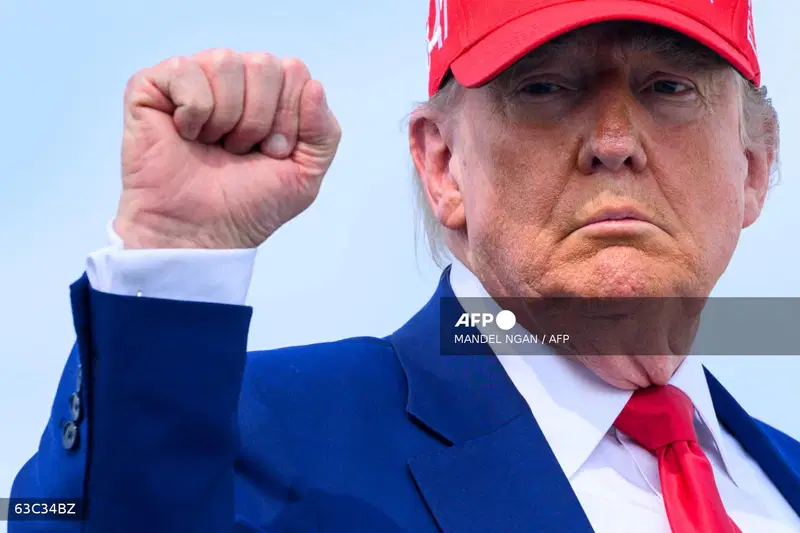
The United States Treasury has announced sanctions against Iran’s Persian Gulf Strait Authority.
Treasury Secretary, Scott Bessent, said this in a statement on Wednesday.
The statement extended the threat of sanctions to anyone paying the fees, saying they may be providing support to and receiving services from Iran’s Revolutionary Guards, and therefore may be exposed to sanctions risk.
READ ALSO:Strait Of Hormuz: Pakistan Thanks Trump For Pausing ‘Project Freedom’
“The Iranian military’s latest attempt to extort global maritime trade is proof that Economic Fury has left the regime desperate for cash.
“Treasury has deprived the Iranian regime of revenue for their weapons programs, terrorist proxies, and nuclear ambitions,” Bessent said.
Bessent added that the US has succeeded in disrupting tens of billions of dollars’ worth of revenue from being accessible to Tehran.
Headline
US Launches New Airstrikes On Iran
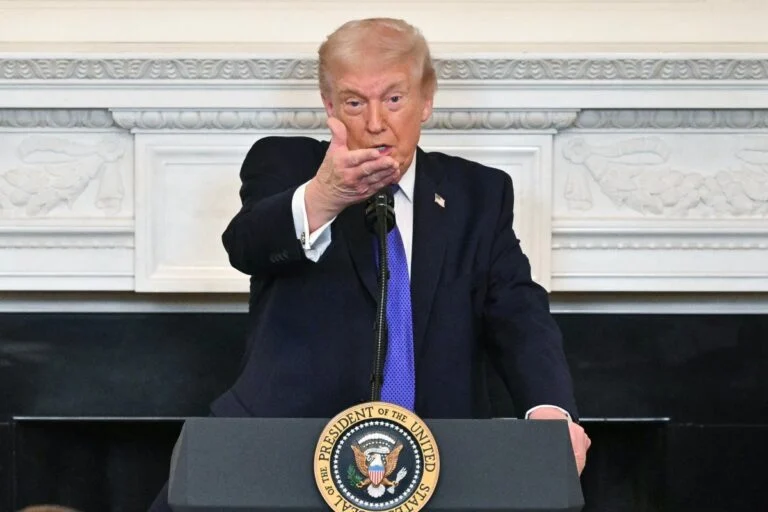
The United States has launched new airstrikes in southern Iran.
The strike shot down four one-way attack drones that posed a threat around the Strait of Hormuz and then a ground control site.
A US official revealed that American forces struck an Iranian ground control station in Bandar Abbas that was about to launch a fifth drone.
READ ALSO:US Restricts Entry Routes For Travellers From DRC, Uganda, South Sudan Over Ebola Outbreak
The official described the strikes as purely defensive, saying the US intended to maintain the ceasefire.
Report says this is the second time in three days that the US has carried out self-defense strikes against Iranian military targets in southern Iran.
Recall that on Monday the US carried out airstrikes against Iranian missile locations and boats that US Central Command said were preparing to launch mines in the Strait of Hormuz.

 Headline4 days ago
Woman Passes Out After Receiving 100 Strokes Of Cane
- Headline4 days ago
JUST IN: White House Locked Down Briefly As Gunman Opens Fire At Security Checkpoint
- News3 days ago
More Pain For Nigerians As Cooking Gas Price Increases Nationwide
- Politics3 days ago
Two Masked Men Gun Down Politician In His Rivers State Hotel
- Metro4 days ago
Police Reject N500m Bribe, Recover N7.8bn Illicit Drugs In Lagos
- News3 days ago
FG Declares Two Days Public Holiday For Eid-el Kabir Celebration
- Politics3 days ago
‘Tinubu’s Borrowing In 24 Months Surpasses 55 Years’ Debt Record’
- Politics2 days ago
Court Clears Goodluck Jonathan To Contest 2027 Presidential Election
- News3 days ago
OPINION: Boko Haram Comes South
- News4 days ago
OPINION: Boko Haram’s Slaughter Of Mathematics In Oyo


