

Business
FG Announces Correction Underway For Nigeria’s New Tax Law, Admits Errors




Nigeria’s minister of state for finance, Taiwo Oyedele, has finally admitted that Nigeria’s new tax reform laws contain errors.
He, however, assured that corrective measures are already underway to address the identified issues.
Oyedele made the known while speaking recently at the 2026 annual conference of the Nigerian Bar Association (NBA).
According to a statement from the Presidential Fiscal and Tax Reforms Committee on Friday, he admitted that inconsistencies emerged during the law-making process due to procedural lapses.
READ ALSO:Firm Unveils Platform To Ease Tax Compliance For Businesses
Oyedele urged Nigerians to await the outcome of the legislative probe into the alleged discrepancies.
Oyedele admitted, “That errors occurred due to manual processes and multiple stages of review” in the drafting and legislative process.
He, however, assured that the issues would be addressed through a proposed finance bill aimed at making corrections.
“What we need is a more transparent and reliable legislative process where every version of a law is publicly available,” he said.
READ ALSO:EXPLAINER: What Lagos Residents Need To Know Before March 31 Tax Return Deadline
Oyedele stressed that enforcement of the tax reforms would not be arbitrary, noting that the policy was anchored on transparency, fairness, and clear intent.
“If policies can change overnight, it sends the wrong signal to investors. Consistency is critical,” he said.
Recall that on December 17, 2025, Abdussamad Dasuki, a member of the House of Representatives from Sokoto State, had alleged that the versions of the tax laws in circulation differed from what lawmakers passed.
His revelation has sparked confusion; thereafter, the national assembly set up a committee to address the discrepancies.
The new tax laws took effect on January 1, 2026, after signing the tax bills on June 26, 2025.




Business
Naira Depreciates At Official FX Market

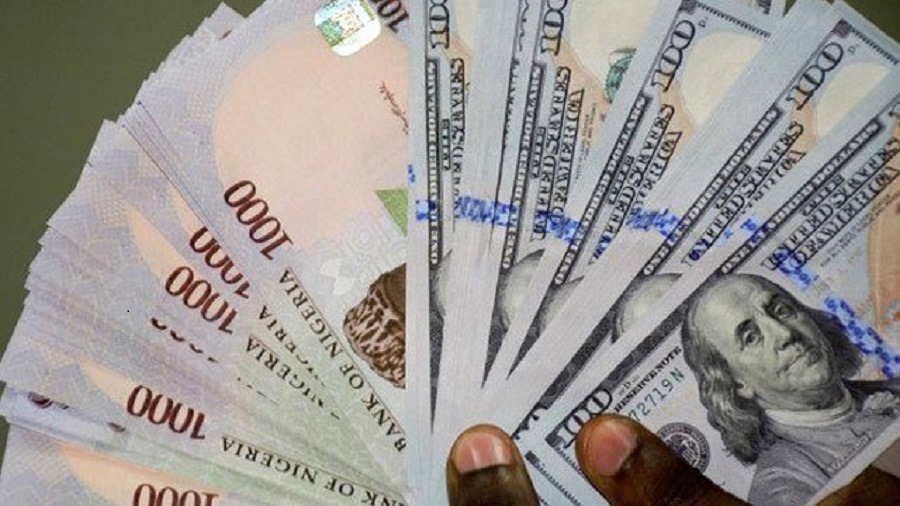
The Nigerian naira depreciated slightly against the United States (US) dollar, trading at N1,343.6398 per dollar at the Central Bank of Nigeria (CBN) official foreign exchange window on Friday, 17th April, 2026.
According to the data on the CBN’s official platform, the naira traded at the Nigerian Foreign Exchange Market (NFEM) rate of N1,343.6398/$per dollar and closed at N1,342.5000 per dollar.
When compared with the previous trading rate, the Nigerian currency traded at N1342.3037 on 16th April, 2026. With this, the Nigerian currency depreciated slightly by a minimum of N1.3.
READ ALSO:Naira Records Appreciation Against US Dollar
At the parallel market, the naira-to-dollar exchange rate for the buying rate didn’t change while the selling rate increased by N3 when compared to that of the previous trading rate.
According to Aboki FX , the Naira-to-dollar exchange rate at the black market on Friday, 17th April, 2026, was N1,395 and N1,405 per dollar for buying and selling rate respectively.
Business
Crude Oil Prices Jump As Fear Mounts On Fresh Domestic Petrol Hike In Nigeria

Crude oil prices surged by 7 percent on Monday amid United States President Donald Trump’s planned blockade of the Strait of Hormuz.
Checks by DAILY POST on Monday showed that West Texas Intermediate and Brent rose to $103 per barrel and $101 per barrel, respectively.
The latest crude price rally comes as US-Iran peace talks, reportedly orchestrated by Pakistan, collapsed.
READ ALSO:Jesus Names Arsenal’s Best Player
Recall that President Trump, at the weekend, said via his Truth Social account that the US Navy will begin “BLOCKADING any and all ships trying to enter or leave the Strait of Hormuz.”
In response, Iran warned the US of the dangers of a Strait of Hormuz blockade.
The tension in the Strait of Hormuz has pushed crude oil prices higher.
The development has reignited concerns over a fresh domestic fuel price hike in Nigeria.
Petrol is currently being dispensed in Nigeria between N1,290 and N1,350 per litre across filling stations
Business
Nigerian Govt Announces New Tariffs, Cuts Duty On Rice, Cars, Drugs, Sugar
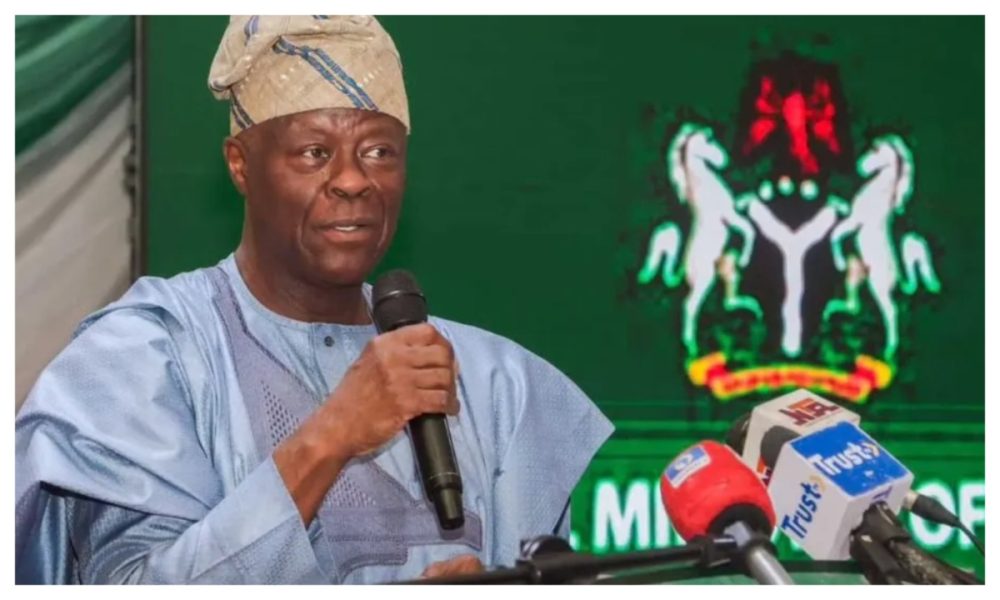
The Federal Government has approved the implementation of the 2026 Fiscal Policy Measures, FPM, introducing sweeping changes to import tariffs aimed at stimulating growth across key sectors of the economy.
The approval was conveyed in a document dated April 1, 2026, and signed by the Minister of Finance, Wale Edun. The new policy replaces the 2023 FPM.
A major highlight of the policy is the review of import duties across 127 tariff lines, covering items such as rice, sugar, vehicles, and industrial inputs. The government said the reductions are designed to “promote and stimulate growth in critical sectors of the economy”.
Under the revised regime, the Import Adjustment Tax, IAT, on products like crude palm oil has been set at a total effective rate of 28.75 percent, down from higher rates under previous tariff structures.
In the automotive sector, tariffs on fully built passenger vehicles, including four-wheel drives and station wagons, have been reduced to 40 percent from 70 percent as stipulated in the 2015 FPM.
READ ALSO:FG Announces Correction Underway For Nigeria’s New Tax Law, Admits Errors
To ease the transition, the government granted a 90-day grace period for importers who opened Form ‘M’ before April 1, allowing them to clear goods at the old rates.
However, the policy also introduces a new excise duty regime alongside a green tax surcharge, both scheduled to take effect from July 1, 2026.
Key Tariff Adjustments:
Here is a summary of details of the gazetted list outlining revised duties on several goods:
Antimalarial medicaments: 20%
Rice (bulk or >5kg): 47.5% (from 70%)
Broken rice: 30% (from 70%)
Wheat or meslin flour: 70%
Crude palm oil: 28.75% (from 35%)
READ ALSO:EXPLAINER: What Lagos Residents Need To Know Before March 31 Tax Return Deadline
Raw cane sugar: 55% (from 70%)
Cane/beet sugar (powder/granule): 57.5% (from 70%)
Margarine (excluding liquid): 40%
Refined salt: 55% (from 70%)
Envelopes: 40% (from 50%)
Diaries/notebooks: 30% (from 40%)
Unglazed ceramic tiles: 35% (from 40%)
Glazed ceramic tiles: 46.25% (from 55%)
Ceramic cubes (<7 cm): 35% (from 40%)
Steel and Industrial Inputs
Zinc-coated steel sheets: 35% (from 45%)
Aluminum-coated steel coils: 35% (from 45%)
Electroplated steel: 35% (from 45%)
READ ALSO:KPMG Flags Five Major ‘Errors’ In Nigerian Tax Laws
Cold-rolled steel (<0.25% carbon): 15% Hot-rolled deformed steel bars: 35% (from 45%) Steel rods (5.5mm–14mm): 35% (from 45%) Other Key Adjustments: Electrical apparatus (e.g., fuses): 10% (from 20%) Railway/tramway locomotives (SKD/CKD): 0% (from 5%) Cargo ships (>500 tonnes): 0% (from 5%)
Breathing appliances and gas masks: 0% (from 5%)
Agricultural and manufacturing machinery: 0% (from 5%)
Modular surgical operating theaters: 5% (from 20%)
Air/vacuum pumps and compressors: 5% (from 10%)
Automatic circuit breakers: 10% (from 20%)
Lamp holders: 10% (from 20%)
Green Tax Exemptions:
The policy also outlines categories exempted from the planned green tax surcharge. These include –
Vehicles below 2000cc
Mass transit buses (heading 87.02)
Electric vehicles
Locally manufactured vehicles under specified headings (87.06–87.13)
The government said the overall reforms are part of efforts to balance revenue generation with economic stimulation, while supporting local industries and easing the cost of critical imports.
-

 News5 days ago
BREAKING: JAMB To Release First Batch Of 2026 UTME Results Midnight
-

 News4 days ago
World Bank Flags ‘Hidden Spending System’ Diverting Over N34.53tn Of Nigeria’s Revenue
-

 News5 days ago
Popular Nigerian Broadcast Journalist Is Dead
-

 News5 days ago
FG Bans Unauthorized Use Of Ambassador Title
-

 News4 days ago
VIDEO: I Took Over Leadership From Myself; The Late Buhari Is Me — Tinubu
-

 Metro5 days ago
Police Inspector Arrested For Armed Robbery Dies From Bullet Wounds
-
News3 days ago
FG Slams Import Ban On 17 Items In New Fiscal Policy
-

 News5 days ago
OPINION: Nigerian Military: Death On Battlefield, Crumbs On Payroll
-

 Politics5 days ago
2027: Why Tinubu Should Be Scared – ADC
-

 Headline5 days ago
Oil Prices Drop After Iran Reopens Strait Of Hormuz
