

News
FG Promises 20-hour Daily Power Supply

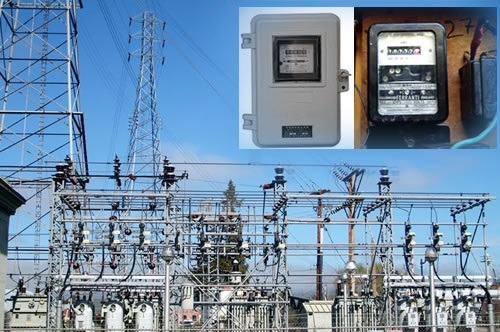


The Federal Government has revealed plans to provide Nigerians with at least 20 hours of daily electricity by 2027.
However, it has conditioned this target on sufficient investment in Nigeria’s oil and gas sector, which it has said is currently far below expectations.
The Special Adviser to the President on Energy, Olu Verheijen, made this statement at the Energy Week in Cape Town, South Africa, in a release by the State House Director of Information and Publicity, Abiodun Oladunjoye, on Thursday.
“By 2027, Nigeria aims to ensure 20 hours of electricity daily for consumers in urban areas and industrial hubs,” Verheijen said.
The statement is titled, ‘At African Energy Week in Cape Town, Olu Verheijen Invites Global Players to Invest in Nigeria’s Energy Sector.’
Verheijen’s comments come amid the frequent collapse of Nigeria’s national power grid, which has led to widespread blackouts across the country.
The grid collapsed on Tuesday, marking the 10th such incident since January 2024. The Federal Government has attributed these recurring collapses to ageing infrastructure, inadequate maintenance, and insufficient investment in the power sector.
Despite having an installed capacity of approximately 12,500 megawatts, Nigeria often generates only a fraction of this, leaving many areas without reliable electricity.
At the Energy Week, Verheijen told participants about efforts by the Tinubu administration to revitalise the nation’s power sector, with plans to provide more reliable electricity access for the 86 million Nigerians currently underserved.
She said the scheme aims to improve revenue assurance and collection.
Other key measures include tackling legacy debt, deploying seven million smart meters to reduce losses, and expanding off-grid solutions for remote communities.
READ ALSO: Sex Tape: Equatorial Guinea To Install Surveillance Cameras In Offices
Highlighting recent macroeconomic reforms, such as the removal of the petrol subsidy and foreign exchange liberalisation, she expressed confidence that Nigeria is poised for unprecedented growth.
“Under President Tinubu’s leadership, Nigeria is championing reforms to unlock its vast economic potential and create jobs,” she said, inviting foreign partners to participate in Nigeria’s next chapter of growth.
While discussing the recent reforms implemented by President Bola
Tinubu’s administration to attract investment, Verheijen noted that the country has historically underperformed in oil and gas production despite its wealth in the sector.
She referenced how countries like Brazil, which have only 30 per cent of Nigeria’s oil reserves, have outperformed Nigeria by producing 131 per cent more than the country’s current output.
“Despite our abundant resources, we have underperformed against our potential. For example, Brazil holds only 30 per cent of Nigeria’s oil reserves but produces 131 per cent more. This is largely due to under-investment,” she said.
She lamented that since 2016, Nigeria has attracted only 4 per cent of African oil and gas investments, while investment has surged in other, less resource-rich nations.
“Since 2016, Nigeria has managed to attract only 4 per cent of total investments in oil and gas, while less-resourced countries in Africa have enjoyed a larger share.
READ ALSO: National Grid Collapses Second Time In Three Days
“When we analysed investment data, we also found that, between 2013, when Nigeria’s last deepwater project reached FID, and now, International Oil Companies (IOCs) operating in Nigeria have committed more than $82bn in deepwater investments in other countries they deemed to be more attractive destinations for their capital,” she told the audience.
Recognising this trend, the presidential aide highlighted efforts by President Tinubu’s administration to enact reforms aimed at reshaping Nigeria’s investment landscape.
She cited the government’s introduction of fiscal incentives targeting deep offshore and non-associated gas projects, marking the first time Nigeria has outlined a fiscal framework specifically for deepwater gas.
In efforts to enhance the upstream oil and gas sector, she said her office has collaborated closely with the office of the National Security Adviser to create and distribute focused Security Directives, leveraging insights gathered from on-the-ground operators.
Furthermore, Verheijen revealed steps to streamline approval processes by clearly defining the regulatory scopes involved.
This initiative, she said, aims to significantly reduce the extended project timelines that have historically plagued the industry, as well as the high-cost premiums associated with operating in Nigeria.
READ ALSO: JUST IN: National Power Grid Collapses Again
“Our target is to shorten the contracting timelines from an extensive 38 months to just 135 days, while also working to eliminate the 40 per cent cost premium that currently exists within the Nigerian petroleum industry,” she added.
The presidential aide also revealed efforts by the current President Tinubu administration to further open up the oil and gas sector for larger investments with a set of clear fiscal incentives for non-associated gas and deep offshore oil and gas exploration and production.
“This is the first time that Nigeria is outlining a fiscal framework for deepwater gas since exploration in the basin commenced in 1991,” she said.
According to her, amongst other initiatives, there has been a focus on midstream and downstream investments in compressed natural gas, liquefied petroleum gas, and electric vehicles as part of the Presidential Gas for Growth Initiative.
She added that the administration has also worked to streamline regulatory processes, shorten project timelines, and reduce the high-cost premium of operating in Nigeria.
“We have also introduced fiscal incentives to catalyse investments in the midstream and downstream sectors, including compressed natural gas, liquefied petroleum gas, and mini-liquefied natural gas.
READ ALSO: JUST IN: Blackout As National Grid Collapses Again
“These align with the broader Presidential Gas for Growth Initiative, which seeks to enable the displacement of PMS and diesel in three key sectors: heavy transport, decentralised power generation, and cooking. These incentives are also stimulating demand for electric vehicles.
“Our goal is to eliminate the 40 per cent cost premium within the Nigerian petroleum industry and cut down contracting timelines from 38 months to 135 days,” Verheijen stated.
She said the government has unlocked over $1bn across the energy value chain, with two more major investment projects expected by mid-2025.
“We are also facilitating the transfer of onshore and shallow water assets to local companies with the capacity to grow production while supporting the transition of International Oil Companies with resilient capital into deep offshore and integrated gas.
“We have unlocked over $1 billion in investments across the value chain and by the middle of 2025, we expect to see FID on two more projects, including a multibillion-dollar deepwater exploration project, which will be the first of its kind in Nigeria in over a decade – one of many to come,” Verheijen explained.




News
N5m, N10m Zero-interest Loans: SheVentures Opens Applications For Women Entrepreneurs


First City Monument Bank (FCMB) has opened a new round of applications for its SheVentures proposition, offering zero-interest loans of up to ₦10 million to women entrepreneurs to ease access to working capital and support business growth.
The facility provides loans ranging from ₦500,000 to ₦5 million under a general category, and ₦5 million to ₦10 million for sector-specific businesses, with funding capped at up to 50% of an applicant’s average monthly turnover.
At the centre of the offering is a 0% interest rate, with all charges embedded in a transparent structure.
Repayment is structured over four or six months, allowing businesses to match obligations with their cash flow cycles.
READ ALSO:I’ve Been Blacklisted In Music Industry For 13 Years – Seun Kuti
Yemisi Edun, Managing Director and Chief Executive of First City Monument Bank (FCMB), said the initiative reflects a deliberate approach to inclusive growth.
“Inclusive growth requires access to capital and the right conditions for businesses to deploy that capital effectively.
“Women-led enterprises are critical to economic activity, yet they face structural barriers.
This intervention aims to help close that gap by providing financing that supports job creation, business expansion, and long-term sustainability for women entrepreneurs.”
“Access to affordable finance remains a major constraint for women entrepreneurs,” said Nnenna Jacob-Ogogo, Group Head, SheVentures and Impact Segments at First City Monument Bank (FCMB).
READ ALSO:My Beef With Wizkid Is For Life – Seun Kuti
“By removing the cost barrier and offering quick, flexible funding, this zero-interest loan is designed to safeguard existing jobs, enable businesses to invest in growth initiatives, and foster resilience in challenging economic conditions.”
Women-owned businesses account for a significant share of Nigeria’s small and medium-sized enterprises but continue to face high borrowing costs and limited access to credit.
Through these efforts, SheVentures tackles persistent financing gaps facing women-led businesses, combining targeted funding with broader support to empower women entrepreneurs, encourage business innovation, and enhance their ability to compete on a national scale.
Applications for the zero-interest loan are now open.Apply now.
News
Xenophobic Attacks: Oshiomhole Tells FG To Retaliate Against South African Companies In Nigeria

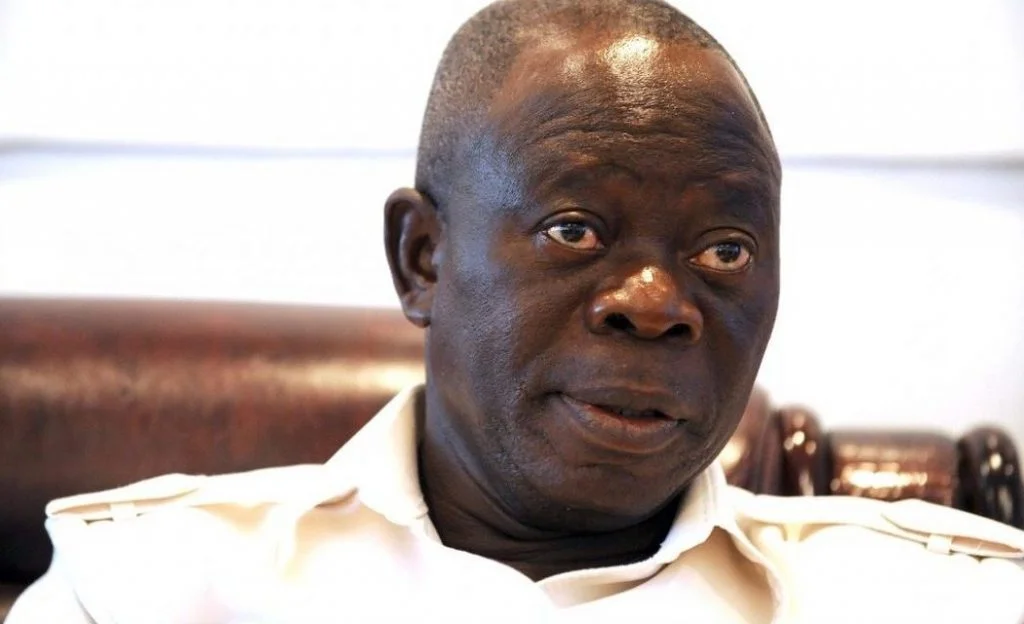
Senator Adams Oshiomhole has called on the Federal Government to retaliate against South African businesses operating in Nigeria following the recent attacks on Nigerians in South Africa.
Speaking during plenary on Tuesday, Oshiomhole said the Federal Government should consider revoking the working license of South African owned companies such as MTN and DSTV.
He argued that Nigeria must respond firmly to what he described as persistent hostility against its citizens.
READ ALSO:South Africa To Investigate ‘Mystery’ Of Planeload Of Palestinians
“I am not going to shed tears. If you hit me, I hit you. I think it is appropriate in diplomacy. It is an economic struggle,” Oshiomhole said.
He argued that while some South Africans accuse Nigerians of taking their jobs, Nigerians should return home and take over employment opportunities created by major South African companies operating in the country, including MTN and DSTV.
“When we hit back, the President of South Africa will not only talk but will also go on his knees to recognise that Nigeria cannot be intimidated.
READ ALSO:South African Ambassador Found Dead Outside Paris Hotel
“We will not condone any life being lost. If a crime has been committed under the South African law they have the right to bring any such person to justice, but to kill our people as if we are helpless, we will not allow that,” Oshiomhole added.
DAILY POST reports that several Nigerians in South Africa have reportedly been attacked, and their businesses destroyed, in ongoing xenophobic attacks in the country.
News
IGP Orders Officers Display Name Tag On Uniform, Gives Update On State Police

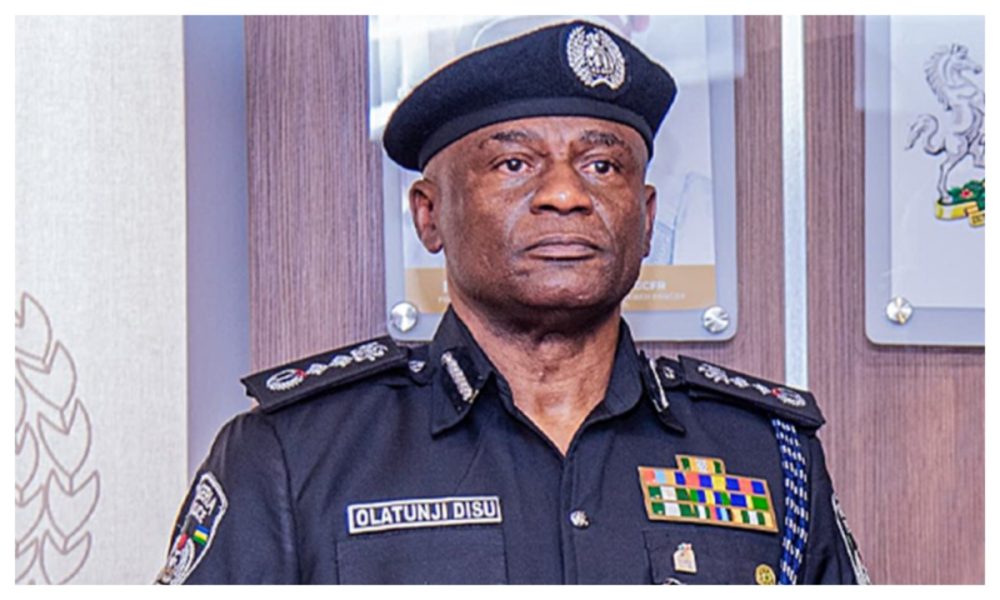
The Inspector General of Police, IGP, Tunji Disu, has ordered all police personnel to always have their name tags on their uniforms for easy identification.
Disu disclosed that only police personnel who are undercover are exempted from displaying their name tags.
Speaking on Tuesday, Disu said: “All police officers should have their name tags. All of us on the high table have our names apart from the undercover among us so if you look at all the Commissioners of Police we have our name tags, so it’s not our standard.
READ ALSO:
“All the Commissioners of Police are here and that is why we called this meeting, we have list of things like this that we will want to discuss with the Commissioners of Police, we have told them earlier and we will still let them know that every that happens within their area of jurisdiction falls under their control.”
On the issue of state police, the IGP said: “Since we got the signal that the Federal Government of Nigeria intend to establish State Police and since we are the federal police, we decided to take the bull by the horn and put down our own side of what we believe on how the state police should be run.
“A lot of things were taken into consideration, a lot of comparative analysis was done and it has been transmitted to the National Assembly.”
-

 Politics4 days ago
2027: Tinubu’s Re-election May Put An End To Nigeria — Baba Ahmed Warns
-

 Politics5 days ago
BREAKING: 2027: Former Adamawa APC Guber Candidate, Aishatu Binani Defects To NDC
-

 Business4 days ago
JUST IN: Nigerian Filling Stations Reduce Fuel Price After Hike
-

 Politics5 days ago
Senatorial Seat: Ogbakha-Edo Warns Against Imposition Of Candidates In Edo South
-

 Entertainment5 days ago
Actress Eniola Badmus Gets New Federal Appointment
-

 News2 days ago
BREAKING: Wike Picks Alabo George For Rivers Governorship
-

 News3 days ago
OPINION: Why South Africans Murder Nigerians In Cold Blood
-

 Politics4 days ago
NDC Speaks On Peter Obi, Kwankwaso Joining Party
-

 News4 days ago
2027: Pastor Adeboye Speaks On Nigeria’s Next President
-

 Politics5 days ago
2027: Pondi, Otuaro, Other Delta South Stakeholders, Endorse Senator Joel-Onowakpo For Second Term
