

News
Nigeria, Seven Others Begin African-led HIV Vaccine Development



Nigeria, South Africa, Zambia, Zimbabwe, Tanzania, Uganda, Kenya, and Mozambique have begun locally-led HIV vaccine research and development.
This was disclosed at a press briefing in Abuja on Thursday, themed “HIV Vaccine, Innovation, Science, and Technology Acceleration in Africa Project.”
The initiative aims to harness and catalyse African scientists to contribute to the development of an African-led, effective HIV vaccine under the ‘Bringing Innovation to Clinical and Laboratory Research to End HIV in Africa through New Vaccine Technology’ (BRILLIANT) Consortium, led by the Chief Executive Officer and President of the South African Medical Research Council, Cape Town, South Africa, Prof. Glenda Gray.
The World Health Organisation, on Tuesday, named HIV, malaria, tuberculosis, and 14 other pathogens as top priorities for new vaccine development.
According to UNAIDS, an estimated 39.9 million people were living with HIV globally in 2023, with an estimated 1.3 million new infections.
Africa has about 25.9 million (65 per cent) of the global burden, with Nigeria contributing about 1.9 million, making it the fourth-largest HIV burden country globally.
READ ALSO: JUST IN: Queen Camilla Suspends Public Engagements Due To Chest Infection
However, to end the HIV epidemic, an effective HIV vaccine is required to be added to the known prevention tools to stop transmission.
The U.S. Agency for International Development awarded more than $45 million to the BRILLIANT consortium through a competitive process to implement a cooperative agreement under the HIV-VISTA project.
The Executive Director of the International Research Centre of Excellence at the Institute of Human Virology Nigeria and Principal Investigator in Nigeria, Prof. Alash’le Abimiku, noted that the objective of the consortium is to evaluate HIV vaccine candidates emerging from the continent.
She said, “Activities supported under the HIV-VISTA project will be implemented exclusively in Sub-Saharan Africa, which is the geographical area in the world with the highest burden of HIV.
“These new project funds will be directly applied in Africa, and substantial in-kind resources are being leveraged. This more powerful collaboration with a greater number of partners and considerable goodwill promises to deliver results while preventing the diversion of funds back to the United States.
READ ALSO: Court Jails ‘Professor’ For Attempting To Write UTME For Daughter
“Through these efforts, African institutions will be encouraged to become more autonomous, generate domestic resource support, form partnerships with the private sector, and possibly create a more sustainable system for HIV vaccine R&D, which has, to date, been excessively dependent on the U.S. government.”
Expressing optimism about the project, she emphasised, “This is a true partnership that acknowledges the potential of great innovation and science from Africa to solve global health challenges, especially those that disproportionately devastate the continent.
“We are very thrilled to partner with the government of Nigeria and colleagues from South Africa, Uganda, Kenya, Tanzania, Zimbabwe, Zambia, and Mozambique in this endeavour.”
The Director General of the National Agency for the Control of AIDS, Dr Temitope Ilori, noted that the HIV-VISTA study offers hope for a vaccine tailored to the needs of the population.
Ilori said, “HIV remains a significant challenge in Nigeria. Despite our progress in reducing new infections and controlling the virus, the HIV epidemic persists, hence requiring new tools for prevention. NACA has continued to provide current prevention measures, but an effective vaccine is crucial to our efforts.
READ ALSO: Court Jails Man 15 Years For Defiling Five-year-old Girl
“The HIV-VISTA study offers hope for a vaccine tailored to the needs of our population, and Nigeria’s involvement in this global initiative is critical. Our participation supports both local and international efforts to end AIDS and brings us closer to a vaccine that could save countless lives across Africa and beyond.
“Our partnership within the BRILLIANT consortium, guided by inclusivity, ethical standards, and USAID’s Collaborate, Learn, and Adapt framework, aligns with NACA’s commitment to serving Nigerians and advancing public health. We are confident in the scientific integrity of this initiative and fully support its goals, provided they remain aligned with Nigeria’s national interests.”
The Deputy Director of the Office of HIV/TB from USAID, Dr. Ezekiel James, stated that the study offers the opportunity to collaborate with the government of Nigeria and stakeholders.
“USAID looks forward to the outcomes of this study and the combined efforts to achieve HIV epidemic control,” James said.
On his part, the UNAIDS Country Director, Dr. Leo Zekeng, encouraged engagement with the community to create awareness of HIV vaccines and similar research that continues to break HIV transmission rates.




News
Nigeria Army Alone Cannot Defeat Bandits — Sheikh Gumi


Islamic cleric Sheikh Ahmad Gumi has said the Nigerian military cannot defeat bandit groups through force, arguing that dialogue remains the only path to resolving insecurity in the northwest and other regions.
In an interview with the BBC, Gumi stated that modern armies worldwide struggle against guerrilla fighters, and Nigeria is no exception.
“But even the military says that in dealing with this civil unrest and criminality, only 25% is kinetic action; the rest depends on the government, politics, and local communities. The military cannot do everything,” he said. “Where have you ever seen the military defeat guerrilla fighters? Nowhere.”
His comments come as President Bola Tinubu’s administration introduces sweeping security reforms, including changes in military leadership and a nationwide security emergency aimed at tackling violent groups responsible for kidnappings, extortion and rural attacks.
READ ALSO:Gumi Reacts As Saudi Bars Him From Hajj
Addressing accusations of maintaining ties with bandit leaders, Gumi said he has had no contact with them since 2021, when the federal government formally designated the groups as terrorists. “I never went there alone,” he said.
“It was in 2021 when I was trying to see how we could bring them together. But unfortunately, the government at the time, the federal government, was not interested. They declared them terrorists, and since that time we have completely disengaged from all contact with them.”
Despite criticism that his advocacy emboldens armed groups, Gumi maintained that negotiation with non-state actors is a global practice. “When they say we don’t negotiate with terrorists, I don’t know where they got that from,” he said. “It is not in the Bible, it is not in the Quran. America had an office negotiating with the Taliban in Qatar. Everyone negotiates with outlaws if it will stop bloodshed.”
He described the armed groups as largely “Fulani herdsmen” engaged in what he called an “existential war” linked to threats to their traditional livelihoods of cattle rearing. “They want to exist. That is their life.
READ ALSO:Insecurity: What Sheikh Gumi Told Me After Visiting Bandits Hideouts — Obasanjo
They know where to graze and how to care for their cattle,” he said, adding that the crisis has grown from farmer–herder tensions into widespread criminality.
Gumi has long faced public backlash for his engagements with bandits and for remarks such as his earlier claim that kidnapping schoolchildren is a “lesser evil” than killing soldiers.
Meanwhile, Gumi, in the same interview, also restated his view that the abduction of schoolchildren by armed groups constitutes a “lesser evil” than attacks on Nigerian soldiers, while emphasising that both acts are unacceptable.
“I think part of what I said then is correct and part of it wrong,” Gumi said, referring to his controversial 2021 statement.
“Saying kidnapping children is a lesser evil than killing soldiers, definitely it is lesser. But all of them are evil. All evils are not the same.”
News
How France Helped Benin Foil Coup Detat

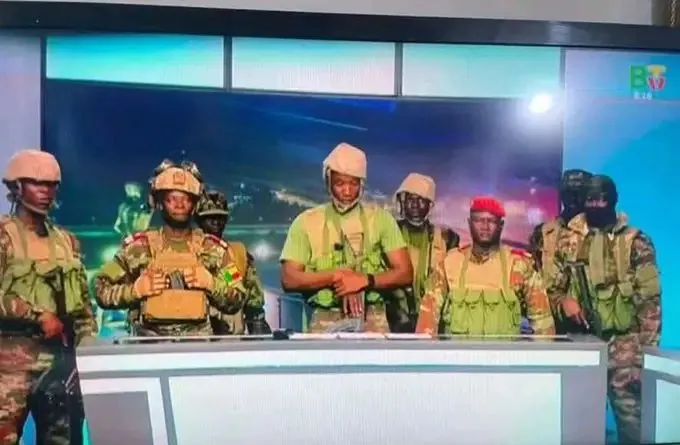
France helped the authorities in Benin thwart a coup attempt at the weekend, an aide to President Emmanuel Macron said Tuesday, revealing a French role in a regional effort that foiled the latest bid to stage a putsch in West Africa.
Macron led a “coordination effort” by speaking with key regional leaders, the aide, asking not to be named, told reporters, two days after Sunday’s failed coup bid.
France — at the request of the Beninese authorities — provided assistance “in terms of surveillance, observation and logistical support” to the Benin armed forces, the aide added.
Further details on the nature of the assistance were not immediately available.
A group of soldiers on Sunday took over Benin’s national television station and announced that President Patrice Talon had been deposed.
READ ALSO:
But loyalist army forces ultimately defeated the attempted putsch with the help of neighbouring Nigeria, which carried out military strikes on Cotonou and deployed troops.
West Africa has endured a sequence of coups in recent years that have severely eroded French influence and presence in what were French colonies until independence.
Mali saw coups in 2020 and 2021, followed by Burkina Faso in 2022 and then Niger in 2023. French forces that had been deployed in these countries for an anti-jihadist operation were consequently forced to withdraw.
A successful putsch in Benin, also a former French colony, would have been seen as a new blow to the standing of Paris and Macron in the region.
Guinea-Bissau, a former Portuguese colony, was meanwhile rocked by a coup in November after elections which led to military authorities taking over.
– ‘Caused serious concern’ –
READ ALSO:
On Sunday, Macron spoke with Talon as well as the leaders of top regional power Nigeria and Sierra Leone, which holds the presidency of West African regional bloc ECOWAS, the Elysee aide said.
The situation in Benin “caused serious concern for the president (Macron), who unequivocally condemned this attempt at destabilisation, which fortunately failed”, said the aide.
ECOWAS has said troops from Ghana, Ivory Coast, Nigeria and Sierra Leone were being deployed to Benin to help the government “preserve constitutional order”.
“Our community is in a state of emergency,” Omar Alieu Touray, president of the Economic Community of West African States (ECOWAS) said on Tuesday, highlighting the jihadist threat in the region as well as coups.
The bloc had threatened intervention during Niger’s 2023 coup that deposed president Mohamed Bazoum — an ally of Macron — but ultimately did not act.
France also did not carry out any intervention against the Niger coup.
“France has offered its full political support to ECOWAS, which made a very significant effort this weekend,” said the aide.
READ ALSO:
At least a dozen plotters had been arrested and all hostages, including high-ranking officers, had been released by Monday, according to loyalist military sources.
Talon made his own television appearance late Sunday, assuring the country that the situation was “completely under control”.
Talon, 67, is due to hand over the reins of power in April after the maximum-allowed two terms leading Benin, which in recent years has been hit by jihadist violence in the north.
On Tuesday, former Beninese president Thomas Boni Yayi, whose opposition Democrats party has been excluded from next year’s presidential elections, condemned the failed coup.
“I condemn most vigorously and strongly condemn this bloody and shameful attack on our country,” said Boni Yayi, a former chairman of the African Union who served as Benin’s president from 2006 to 2016.
The transfer of state power “responds to a single cardinal and unconditional principle: that of the ballot box, that of the people, that of free and transparent elections”, Boni Yayi added in a video posted on Facebook.
(AFP)
News
Reps Panel Grills TCN Officials Over Poor Grid Stability

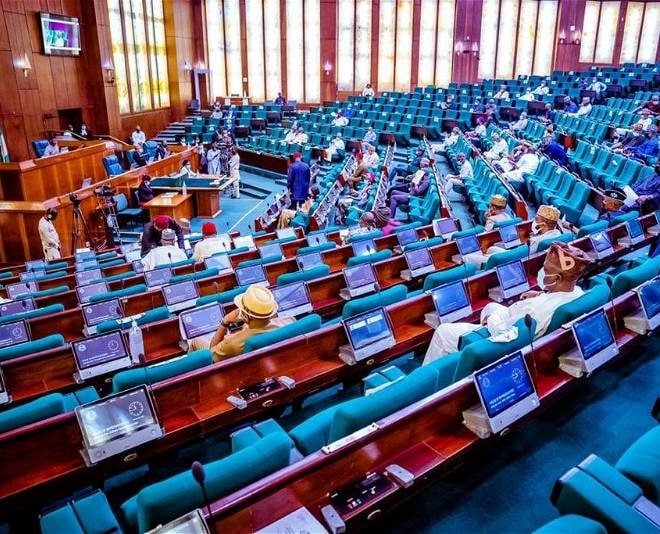
The House of Representatives Ad-Hoc Committee investigating multi-billion-naira power sector reforms on Tuesday interrogated officials of the Transmission Company of Nigeria (TCN), exposing fresh gaps between Nigeria’s installed power capacity and the electricity actually delivered to homes and industries.
Appearing before the committee chaired by Hon. Ibrahim Aliyu, TCN Managing Director, Dr. Sule Ahmad Abdulaziz, dismissed widely circulated claims that Nigeria currently generates 13,000 megawatts of electricity. He stressed that the figure reflects installed capacity—not what the national grid has ever produced.
“The highest ever generated this year was 5,801MW,” Abdulaziz said. “Nigeria has never produced 13,000MW on the national grid. That number is installed capacity, not generated capacity.”
He explained that until April 2024, the National Control Centre responsible for daily generation and dispatch records was under TCN’s direct supervision, giving the company access to “accurate and verifiable” data.
READ ALSO:Collapsed National Grid Restored – TCN
Responding to scrutiny from committee member Hon. Abubakar Fulata, who questioned why only about 6,000MW is typically wheeled despite supposedly higher available generation, Abdulaziz insisted TCN had never failed in transmission.
“Our transmission capacity today is 8,600MW,” he stated. “At no time has power been generated that TCN could not evacuate. Anyone claiming otherwise should produce the data.”
On the company’s financial health, TCN’s Executive Director of Finance told lawmakers the company is weighed down by massive debts owed by electricity distribution companies (DisCos), revealing: N217 billion in electricity subsidy debt (Jan 2015–Dec 2020) taken over by the Federal Government
N450 billion owed by DisCos from Jan 2021 to date.
Clarifying controversies around grid instability, a senior TCN system operations official said the company recorded 11 grid collapses, contrary to the 22–23 often quoted.
Giving a breakdown of causes, he explained that six collapses were caused by generation issues, including gas shortages, four linked to vandalism of transmission towers, leading to sudden loss of load, one triggered by distribution network failures, often due to rainfall-induced feeder trips.
READ ALSO:Blackout Looms As Vandals, Again, Attack Transmission Line – TCN
He emphasised that all three segments generation, transmission and distribution can trigger system collapse, adding that the Nigerian Electricity Regulatory Commission (NERC), with Central Bank support, had implemented Service Level Agreement (SLA) interventions to address systemic bottlenecks.
TCN officials further disclosed the company has over 100 ongoing transmission projects, many of which are 65%–90% complete but stalled for lack of funding.
“Power infrastructure cannot be energised at 99%. It must be 100% complete,” an official noted.
“If outstanding debts are paid, we can finish priority projects and strengthen the grid.”
He added that TCN aims to expand wheeling capacity to 10,000MW by March next year through network upgrades and simulation-based grid optimisation.
Committee chairman Hon. Ibrahim Aliyu said the presentations had clarified earlier misconceptions about TCN’s role in the sector’s failures but expressed concern over the slow expansion of critical infrastructure, pledging the parliament intervention to address the anomaly in due course.
-

 Metro4 days ago
Edo: How Pastor Hypnotised My Daughter, Made Her Abandoned NNPCL- Mother
-

 News5 days ago
Oba Of Benin Suspends Priest, Reaffirms Appointment Of Okao
-

 Metro4 days ago
My Husband Felt Insecure After I Got A Job, Accused Me Of Infidelity —Wife
-

 Headline3 days ago
JUST IN: Soldiers Announce Military Takeover Of Govt In Benin Republic
-

 News3 days ago
Rufai Oseni Breaks Silence On Alleged Suspension From Arise TV
-

 Sports4 days ago
JUST IN: Full Draw For 2026 World Cup Group Stages Confirmed
-

 News5 days ago
Okpebholo Declares Edo Business-friendly
-

 News4 days ago
Malami Breaks Silence On Alleged Terrorism Financing
-

 Politics2 days ago
JUST IN: Tinubu Holds Closed-door Meeting With Rivers, Ebonyi Govs
-

 News4 days ago
FULL TEXT: Gen Musa’s Inaugural Speech As Defence Minister