
Business
FG Spent N408.5bn On Debt Servicing In February – Report
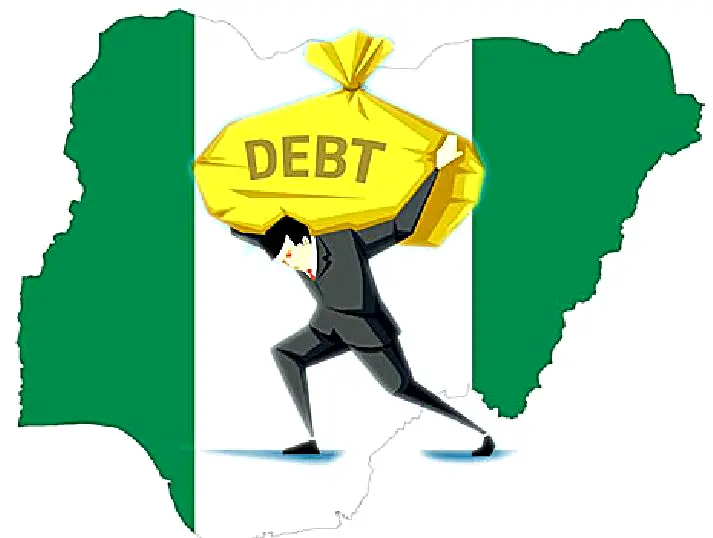
The Federal Government spent 85.37 per cent of its revenue servicing debt in February, according to The PUNCH.
The Central Bank of Nigeria, in its monthly economic report for February 2023, noted that the Federal Government had a retained revenue of N478.57bn in February.
The bank also stated that the Federal Government spent N408.5bn on debt servicing in the same month.
The report further showed that the country recorded a fiscal deficit of N513.05bn in February.
READ ALSO: Russian Court Detains US Citizen On Drug Trafficking Charges
The report read, “The estimated overall fiscal deficit of the FGN expanded in February, due to a drop in the retained revenue. At N513.05 billion, the provisional fiscal deficit of the FGN rose by 22.8 per cent relative to the preceding month. However, it was 16.2 per cent below the budget benchmark.”
The International Monetary Fund recently said the Federal Government projected to spend 82 per cent of its revenue on interest payments in 2023.
According to the IMF, external debt (including that of the private sector) will rise to $121.6bn, with external reserves climbing to $37.5bn.
It stated this in a table of projections in its ‘IMF Executive Board Concludes 2022 Article IV Consultation with Nigeria Summary.’
The projections showed an improvement in the share of the government’s revenue used as interest payment, with interest payment falling from 96.3 per cent in 2022 to 82 per cent in 2023.
READ ALSO: How Nigeria Can Repay Its Debts Within 90 Days – Jimoh Ibrahim
It added that interest payment was 86.1 per cent and 87.8 per cent of the Federal Government’s revenue in 2020 and 2021, respectively.
The World Bank also projected that debt servicing will gulp 123.4 per cent of the Federal Government’s revenue in 2023.
This was according to a presentation made by the new World Bank Lead Economist for Nigeria, Alex Sienaert, in November 2022, which was obtained by our correspondent.
In his presentation, the World Bank’s lead economist for Nigeria noted that borrowing more money was not the solution for Nigeria.
The document read, “Borrowing more is not the solution: debt costs are rising rapidly, squeezing non-interest spending.
“Debt servicing has surged over the past decade and is expected to continue increasing over the medium-term, crowding out productive spending.”



Business
CBN Revokes Licences Of Aso Savings, Union Homes As NDIC Begins Deposit Payments
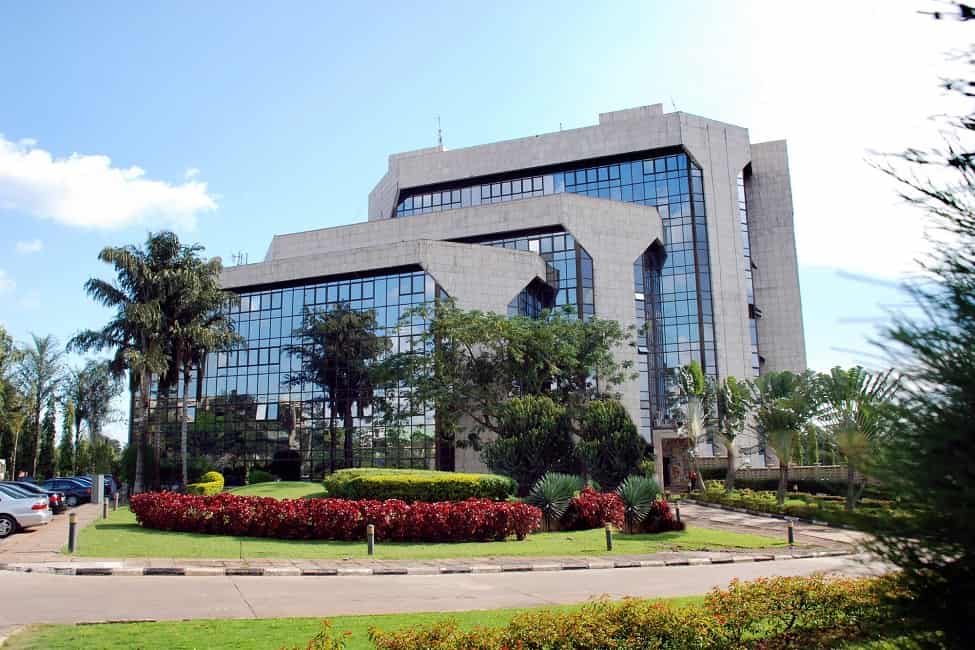
The Central Bank of Nigeria (CBN) has revoked the operating licences of Aso Savings and Loans Plc and Union Homes Savings and Loans Plc, citing persistent regulatory infractions and deepening financial distress in the two primary mortgage banks.
The revocation, which took effect on December 15, 2025, was carried out under Section 12 of the Banks and Other Financial Institutions Act (BOFIA) 2020 and Section 7.3 of the Revised Guidelines for Mortgage Banks in Nigeria, the CBN said in a statement issued on Tuesday.
According to the apex bank, the affected institutions failed to meet minimum paid-up share capital requirements, had insufficient assets to cover their liabilities, recorded capital adequacy ratios below prudential thresholds, and consistently breached regulatory directives.
“The CBN remains committed to its core mandate of ensuring financial system stability,” a statement, signed by the apex bank’s Acting Director, Corporate Communications, Mrs Hakama Sidi Ali said.
READ ALSO:CBN Directs Nigerian Banks To Withdraw Misleading Advertisement
Following the licence revocation, the Nigeria Deposit Insurance Corporation (NDIC) was appointed liquidator of the defunct banks in line with the law.
The Corporation said it has commenced the liquidation process and begun verification and payment of insured deposits to customers.
Under the deposit insurance framework, depositors are entitled to receive up to two million naira per depositor, with payments made through BVN-linked alternate bank accounts.
Depositors with balances above the insured limit will receive the initial two million naira while the remaining sums will be paid as liquidation dividends after the realisation of the banks’ assets and recovery of outstanding loans.
READ ALSO:CBN Issues Directive Clarifying Holding Companies’ Minimum Capital
The NDIC said depositors may submit claims either online or physically at designated branches of the closed banks, while creditors will be paid after all depositors have been fully settled, in accordance with statutory provisions.
The two mortgage banks have faced prolonged operational challenges, including depositor complaints, governance concerns, and delisting from the Nigerian Exchange (NGX) in 2024 for failure to submit audited financial statements for more than six years.
The CBN assured the public that the action was taken to strengthen the mortgage banking sub-sector and protect depositors, adding that banks whose licences have not been revoked remain safe and sound.
This means the two financial institutions can no longer operate as licensed financial institutions.
Business
9th FirstBank Digital Xperience Centre Launched In UNIBEN
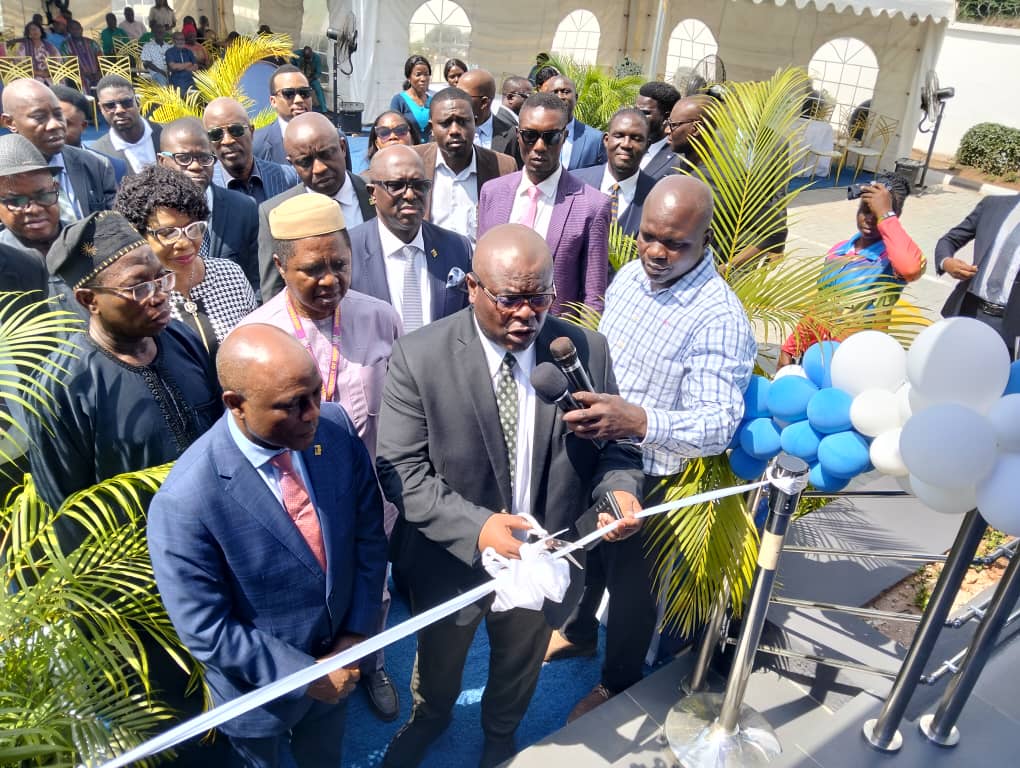
First Bank Nigeria Plc on Tuesday launched its Digital Xperience Centre (DXC) at the University of Benin Branch, Benin City.
In his remarks at the launching, Chief Executive Officer, First Bank Plc, Olusegun Alebiosu, described the digital xperience centre as “an exceptional feat in our shared commitment toward innovation,” adding that
“this is our 9th Centre, and it operates round-the-clock.”
Alebiosu, while stating that the “FirstBank’s DXC is more than a banking facility,” added that “it is a step toward redefining how banking connects with education, technology, and the whole community.”

He said: “In partnership with the University, we’ve created a hub where students, faculty and community members can access FirstBank’s digital world.
READ ALSO:Full List: FG Releases Names Of 68 ambassadorial Nominees Sent To Senate For Confirmation
“Our DXCs are more than just banking hubs – they are gateways to a smarter, faster, and more personalised financial journey. Equipped with cutting-edge technology, customers have access to state-of-the-art self-service terminals designed to simplify transactions while ensuring top-tier security and efficiency.
“Whether you need to deposit cash, request for debit card, or update your account details, the DXC’s provides an elevated banking experience with speed and ease, designed to put you in control.
“Our DXCs operate round-the-clock, including weekends, providing the convenience you need to bank anytime in just a few minutes.
READ ALSO: First Bank Releases Statement On Foiled Abuja Robbery Attack
“The DXC embodies our commitment to Environmental Social and Governance (ESG) principles as it promotes financial inclusion, fosters digital literacy, and uses sustainable technology to empower underserved communities.”

The CEO, while thanking the leadership of UNIBEN for “partnering with us to bring this vision to life, aligning academic excellence with cutting-edge technology,” urged the public to “embrace this DXC as a catalyst for learning, innovation, and development.”
In his remarks at the launching, the Vice-Chancellor, UNIBEN, Prof. Edoba Omoregie said: “We are very happy that First Bank is doing this in our institution,” describing UNIBEN as a “first generation university.”
Earlier, while playing host to the First Bank CEO and his team in his office, Prof. Edoba had sought support from the company in the revamp of the university Information Technology Centre (ICT).
Business
Full List: 82 Newly Approved, Fully Licensed BDC Operators
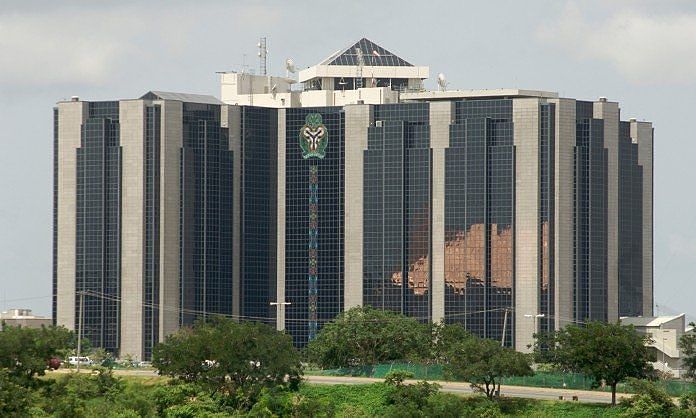
The Central Bank of Nigeria (CBN) has granted final operating licences to 82 Bureaux De Change (BDC) operators under its revised regulatory framework, reinforcing warnings against transactions with unlicensed foreign exchange dealers.
In a statement on Monday, the Acting Director of Corporate Communications, Hakama Sidi-Ali, confirmed that the licences took effect on November 27, 2025, in accordance with the 2024 Regulatory and Supervisory Guidelines for BDC Operations. The guidelines require all operators to meet specified capital thresholds and regulatory conditions to qualify for licensing.
“The Central Bank of Nigeria, in exercise of its powers under the Banks and Other Financial Institutions Act (BOFIA) 2020 and the 2024 Guidelines, has granted final licences to 82 Bureaux De Change to operate with effect from November 27, 2025,” the statement read.
The apex bank emphasised that only BDCs listed on its official website are considered fully licensed, urging the public to verify the status of any operator before engaging in foreign exchange transactions.
“While the CBN will continue to update the list of Bureaux De Change with valid operating licences for public verification on our website, the Bank advises the general public to avoid dealing with unlicensed Foreign Exchange Operators,” the statement warned.
READ ALSO:CBN Issues 82 New BDC Licences, Moves To Curb Unregistered FX Operators
The CBN noted that operating a BDC without a valid licence constitutes an offence under Section 57(1) of the BOFIA 2020, and confirmed that legal action would be taken against non-compliant operators.
TIER 1
1 DULA GLOBAL BDC LTD
2 TRURATE GLOBAL BDC LTD
TIER 2
1 ABBUFX BDC LTD
2 ACHA GLOBAL BDC LTD
3 ARCTANGENT SWIFT BDC LTD
4 ASCENDANT BDC LTD
5 BARACAI BDC LTD
6 BERGPOINT BDC LTD
7 BRAVO MODEL BDC LTD
8 BRIMESTONE BDC LTD
9 BROWNSTON BDC LTD
10 BUZZWALLET BDC LTD
11 CASHCODE BDC LTD
12 CHATTERED BDC LTD
13 CHRONICLES BDC LTD
14 COOL FOREX BDC LTD
15 CORPORATE EXCHANGE BDC LTD
16 COURTESY CURRENCY BDC LTD
17 DANYARO BDC LTD
18 DASHAD BDC LTD
READ ALSO:JUST IN: CBN Removes Cash Deposit Limits, Raises Weekly Withdrawal To N500,000
19 DEVAL BDC LTD
20 DFS BDC LTD
21 EASY CASH BDC LTD
22 ELELEM BDC LTD
23 E-LIOYDS BDC LTD
24 ELOGOZ BDC LTD
25 ENOUF BDC LTD
26 EVER JOJ GOLD BDC LTD
27 EXCEL RIJIYA FOREX BDC LTD
28 FABFOREX BDC LTD
29 FELLOM BDC LTD
30 FINE BDC LTD
31 FOMAT BDC LTD
32 GENELO BDC LTD
33 GENTLE BREEZE BDC LTD
34 GRACEFUL GLORY AND HUMILITY BDC LTD
35 GREENGATE BDC LTD
36 GREENVAULT BDC LTD
37 HAZON CAPITAL BDC LTD
38 HIGH-POINT BDC LTD
39 I & I EXCHANGE BDC LTD
40 IBN MARYAM BDC LTD
41 JOURNEY WELL BDC LTD
42 KEEPERS BDC LTD
43 KHADHOUSE SOLUTIONS BDC LTD
READ ALSO:CBN Directs Nigerian Banks To Withdraw Misleading Advertisement
44 KIMMELFX BDC LTD
45 KINGSOFT ATLANTIC BDC LTD
46 M.S. ALHERI BDC LTD
47 MASTERS BDC LTD
48 MCMENA BDC LTD
49 MKOO BDC LTD
50 MKS BDC LTD
51 MR J GOLF BDC LTD
52 MUSDIQ BDC LTD
53 MZ FOREX BDC LTD
54 NEJJ BDC LTD LTD
55 NETVALUE BDC LTD
56 NEW WAVE BDC LTD
57 NOTABLE AND KINGSTON BDC LTD
58 PILCROW BDC LTD
59 RAPID BDC LTD
60 RIGHTWAY BDC LTD
61 RWANDA BDC LTD
62 SABLES BDC LTD
63 SAFETRANZ BDC LTD
64 SAMFIK BDC LTD
65 SEVENLOCKS BDC LTD
66 SHAPEARL BDC LTD
67 SIMTEX BDC LTD
68 SOLID WHITE BDC LTD
69 ST. NICHOLAS GLOBAL BDC LTD
70 TOPFIRST UNIQUE MULTICHOICE BDC LTD
71 TOPGATE BDC LTD
72 TRAVELLER’S CHOICE BDC LTD
73 TUCA GLOBAL BDC LTD
74 TURBOVA BDC LTD
75 TURN-UP BDC LTD
76 UNIGO BDC LTD
77 VICTORY AHEAD BDC LTD
78 WHITEWAY WWW BDC LTD
79 YUND GLOBAL LINK BDC LTD
80 ZAMAD FOREX BDC LTD

 Metro4 days ago
Alleged Organ Harvesting: Bereaved Families Rush To Check Corpses
- News4 days ago
Forest Reserve: Okpebholo Broker Peace Between Host Communities, Investors
- News3 days ago
Police Confirm Edo Tanker Explosion, say No Casualty
- News2 days ago
Former Delta North senator Peter Nwaoboshi Dies
- News4 days ago
Edo SSG Calls On Media To Support Govt Policies, Assures Better Welfare
- Metro2 days ago
JUST IN: Former Edo Information Commissioner Is Dead
- News3 days ago
Grassroots To Global Podium: Edo Sports Commission Marks Enabulele’s First Year In Office
- News3 days ago
Otuaro Tasks Media On Objective Reportage
- News3 days ago
IPF Hosts Media Conference, Seeks Protection For N’Delta Environment
- News3 days ago
Okpebholo Sympathises With Otaru, People of Auchi Over Tragic Tanker Fire Incident


