
Headline
Former Pakistan President Is Dead
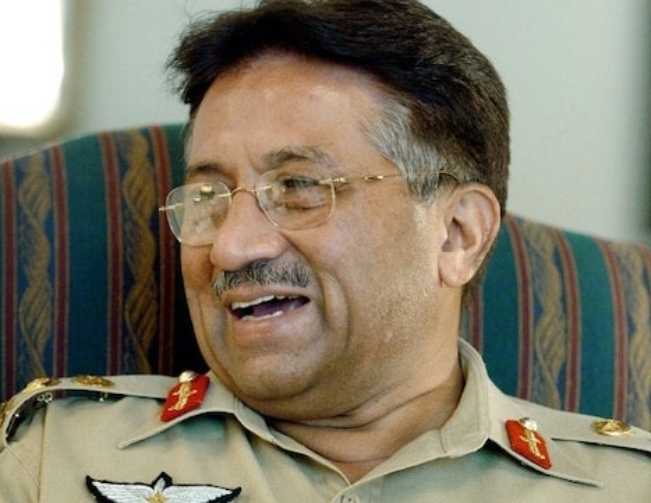
Pakistan’s former president General Pervez Musharraf, who took power in a bloodless coup in 1999 and launched a fight against Islamist extremism, has died at the age of 79, Daily Mail reports.
General Musharraf was a controversial military ruler who led a reluctant Pakistan into aiding the US war in Afghanistan against the same Taliban fighters his nation had previously backed, even as Islamic militants twice targeted him for assassination.
The former special forces commando became president through the last of a string of military coups that hit Pakistan after its founding amid the bloody 1947 partition of India.
He ruled the nuclear-armed state after his 1999 coup through turbulent times, including tensions with India, an atomic proliferation scandal and an Islamic extremist insurgency.
READ ALSO: INC Deplores Political Violence In Rivers, Urge Security Agencies To Stop Attacks
He stepped down in 2008 while facing possible impeachment.
During his time in office, he became an unlikely ally of the US and Nato, supporting them in the war against terror, and visited the UK during Tony Blair’s premiership.
After stepping down, Musharraf lived in self-imposed exile in Dubai to avoid criminal charges, despite attempting a political comeback in 2012.
His family announced last June that he had been in hospital for weeks while suffering from amyloidosis, an incurable condition that sees proteins build up in the body’s organs.
Shazia Siraj, a spokeswoman for the Pakistani consulate in Dubai, confirmed his death and said diplomats were providing support to his family.
“I have confronted death and defied it several times in the past because destiny and fate have always smiled on me,’ Gen Musharraf once wrote.
“I only pray that I have more than the proverbial nine lives of a cat.”
Pakistan, a nation which is now home to 220 million people, drew US attention a little under two years after it seized power due to its border with Afghanistan.
Al-Qaeda leader Osama bin Laden launched September 11, 2001, attacks 2001 from Afghanistan, sheltered by the country’s Taliban rulers, and General Musharraf knew what would come next.
“America was sure to react violently, like a wounded bear,” he wrote in his autobiography.
“If the perpetrator turned out to be al-Qaeda, then that wounded bear would come charging straight toward us.”
By September 12, then-US secretary of state Colin Powell told Musharraf that Pakistan would either be “with us or against us”.
He said another American official threatened to bomb Pakistan “back into the Stone Age” if it chose the latter.
Gen Musharraf chose the former. A month later, he stood by then-president George W Bush at the Waldorf Astoria in New York to declare Pakistan’s unwavering support to fight with the US against ‘terrorism in all its forms wherever it exists’.
Pakistan became a crucial transit point for Nato supplies heading to landlocked Afghanistan – even though Pakistan’s powerful Inter-Services Intelligence agency had backed the Taliban after they swept into power in Afghanistan in 1994.
Before that, the CIA and others funnelled money and arms through the ISI to Islamic fighters battling the 1980s Soviet occupation of Afghanistan.
The US-led invasion of Afghanistan saw Taliban fighters flee over the border into Pakistan, including bin Laden, whom the US killed in 2011 at a compound in Abbottabad.
READ ALSO: Wike Rejects ‘Interim Govt’, Says Plot To Scuttle Elections Will Fail
They regrouped and the offshoot Pakistani Taliban emerged, beginning a years-long insurgency in the mountainous border region between Afghanistan and Pakistan.
The CIA began flying armed drones from Pakistan with Musharraf’s blessing, using an airstrip built by the founding president of the United Arab Emirates for falconing in Pakistan’s Balochistan province.
The programme helped beat back the militants but saw more than 400 strikes in Pakistan alone kill at least 2,366 people, including 245 civilians, according to the Washington-based New America Foundation think tank.



Headline
Indian Court Denies Bail To Nigerian Man Over Drug Charges
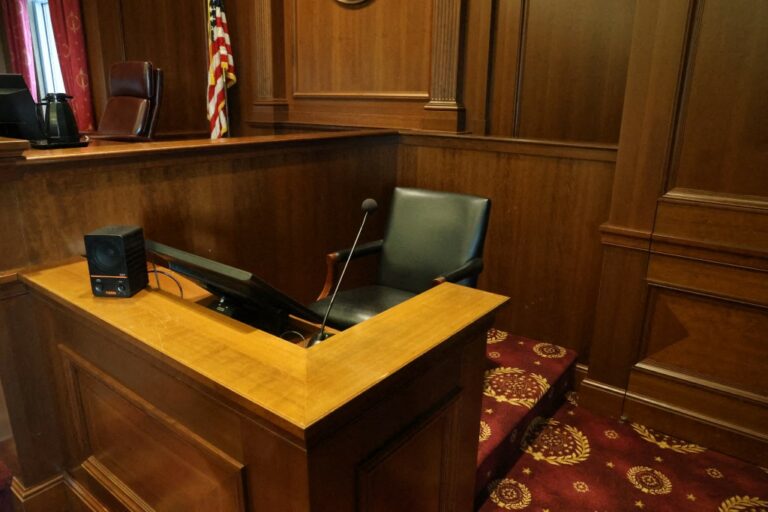
A court in India has denied bail to a 44-year-old Nigerian national, Cristian Soporuchukwu, who is currently facing drug trafficking charges in the country.
Cristian Soporuchukwu initially entered India on a business visa but was later arrested over allegations of involvement in the sale of hard drugs.
Reports indicated that after arriving in India, Soporuchukwu travelled through Goa, Delhi, and Mumbai, where he allegedly established links with suspected drug traffickers.
READ ALSO:Indian National Arraigned In Lagos Over Alleged N22m Supermarket Fraud
He was accused of purchasing MDMA crystals and distributing them to college students and information technology workers.
According to reports, operatives of the Beguru Police arrested Cristian Soporuchukwu in April 2025 for allegedly selling MDMA crystals around Begur Lake and the AECS Layout Road area.
The New Indian Express reported that the High Court of Karnataka subsequently dismissed the Nigerian’s bail application.
READ ALSO:NDLEA Intercepts Indian Lady With 72 Parcels Of Heroin ON n Chocolate Wraps
“The anti-narcotics wing seized about 1 kg of MDMA crystals, a pocket weighing machine, 10 zip-lock covers, a mobile phone and a scooter from him,” the report stated.
Justice V. Srishananda, while ruling on the bail application, reportedly held that errors relating to the grounds of arrest could not automatically justify bail in serious narcotics-related offences under the Narcotic Drugs and Psychotropic Substances, NDPS, Act.
The court further noted that Cristian Soporuchukwu had allegedly overstayed his visa in India, according to the report.
Headline
Strait Of Hormuz: US Announces Sanctions Against Iran

The United States Treasury has announced sanctions against Iran’s Persian Gulf Strait Authority.
Treasury Secretary, Scott Bessent, said this in a statement on Wednesday.
The statement extended the threat of sanctions to anyone paying the fees, saying they may be providing support to and receiving services from Iran’s Revolutionary Guards, and therefore may be exposed to sanctions risk.
READ ALSO:Strait Of Hormuz: Pakistan Thanks Trump For Pausing ‘Project Freedom’
“The Iranian military’s latest attempt to extort global maritime trade is proof that Economic Fury has left the regime desperate for cash.
“Treasury has deprived the Iranian regime of revenue for their weapons programs, terrorist proxies, and nuclear ambitions,” Bessent said.
Bessent added that the US has succeeded in disrupting tens of billions of dollars’ worth of revenue from being accessible to Tehran.
Headline
US Launches New Airstrikes On Iran
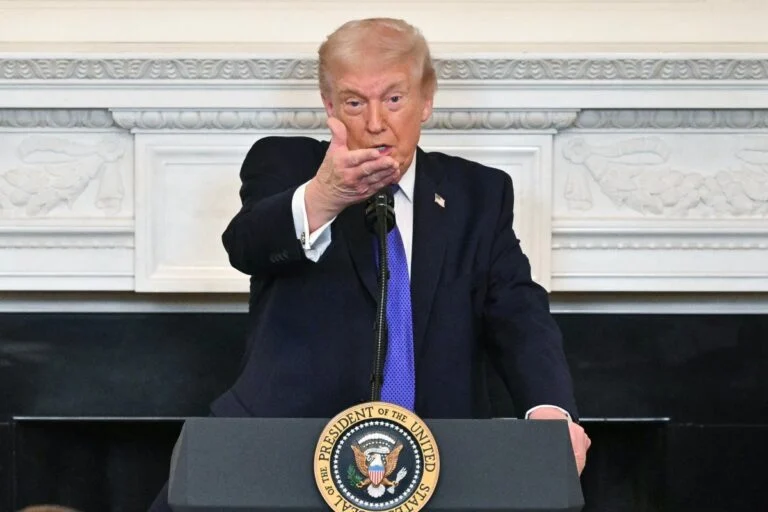
The United States has launched new airstrikes in southern Iran.
The strike shot down four one-way attack drones that posed a threat around the Strait of Hormuz and then a ground control site.
A US official revealed that American forces struck an Iranian ground control station in Bandar Abbas that was about to launch a fifth drone.
READ ALSO:US Restricts Entry Routes For Travellers From DRC, Uganda, South Sudan Over Ebola Outbreak
The official described the strikes as purely defensive, saying the US intended to maintain the ceasefire.
Report says this is the second time in three days that the US has carried out self-defense strikes against Iranian military targets in southern Iran.
Recall that on Monday the US carried out airstrikes against Iranian missile locations and boats that US Central Command said were preparing to launch mines in the Strait of Hormuz.

 Headline4 days ago
Woman Passes Out After Receiving 100 Strokes Of Cane
- Headline4 days ago
JUST IN: White House Locked Down Briefly As Gunman Opens Fire At Security Checkpoint
- News3 days ago
More Pain For Nigerians As Cooking Gas Price Increases Nationwide
- Politics3 days ago
Two Masked Men Gun Down Politician In His Rivers State Hotel
- Metro4 days ago
Police Reject N500m Bribe, Recover N7.8bn Illicit Drugs In Lagos
- News3 days ago
FG Declares Two Days Public Holiday For Eid-el Kabir Celebration
- Politics3 days ago
‘Tinubu’s Borrowing In 24 Months Surpasses 55 Years’ Debt Record’
- Politics2 days ago
Court Clears Goodluck Jonathan To Contest 2027 Presidential Election
- News3 days ago
OPINION: Boko Haram Comes South
 News2 days ago
OPINION: Like Oyedokun, We Are All Decapitated


