

News
Inside £3,500 Per day Elite London Clinic Where Buhari Died

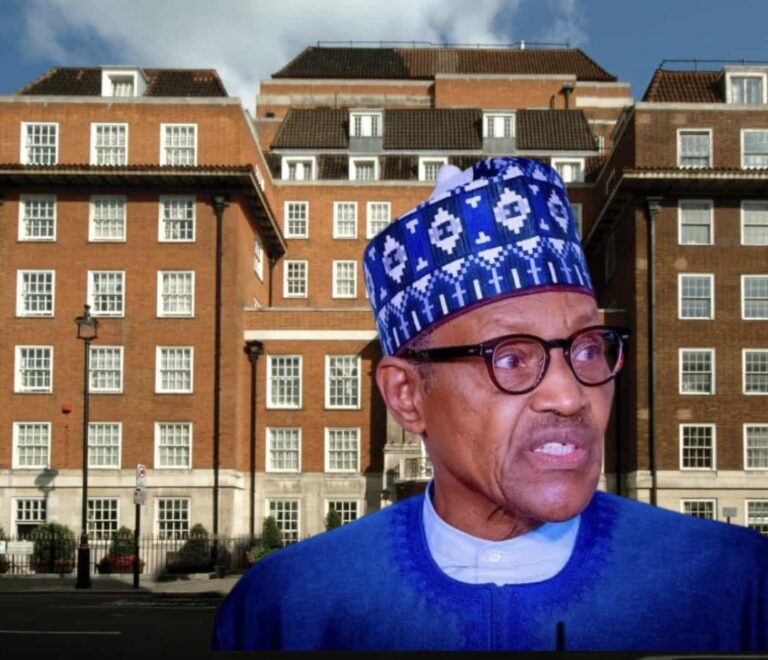


The London Clinic, one of the United Kingdom’s most exclusive private hospitals, has come under the spotlight following the death of Nigeria’s former President, Muhammadu Buhari, at the facility last Sunday.
Buhari and former Head of State, Gen. Abdulsalami Abubakar, were both admitted in the hospital. While Abubakar got well and was discharged, Buhari passed on Sunday, July 13, 2025.
According to his nephew, Mamman Daura, Buhari was in high spirits as of Saturday, July 12 and was getting ready for discharge before he suffered a relapse at midday on Sunday.
“I left him about 9 pm on Saturday in high spirits and promised to see him on Sunday afternoon. He was looking forward to his doctor’s visit on Sunday morning. But around midday, he started having breathing challenges and doctors rushed to his side to try and manage it. But unfortunately, around 4.30 pm, he gave up the ghost,” Daura said.
Buhari was reported to have travelled to the UK in April for a routine medical check-up, but subsequently fell ill.
The cause of death was not disclosed, but he had suffered from ill-health for many years.
According to family sources, Buhari, during his admission at The London Clinic, spent time at the Intensive Care Unit.
His death was announced by his former spokesperson, Mallam Garba Shehu, on Sunday afternoon.
Shehu said, “The family of the former president has announced the passing of the former President, Muhammadu Buhari, GCFR, this afternoon in a clinic in London. May Allah accept him in Aljannatul Firdaus.”
Shortly after news of his death broke, videos emerged online showing the former President’s children and other relatives visiting The London Clinic, situated in the heart of London’s medical district on Harley Street, where he was reportedly undergoing treatment before his passing.
While the exact duration of the former President’s stay at the hospital remains unknown, reports indicate that Buhari had been in London since April for a routine medical check-up.
The London Clinic
Founded in 1932, The London Clinic is one of the largest private hospitals in the UK, best known for its expertise in cancer care, digestive health, orthopaedics, and plastic and cosmetic surgeries.
From the information on its website, the facility boasts 13 intensive care beds, 10 operating theatres, five Macmillan Cancer Support Centres, approximately 900 surgeons and physicians and attends to over 120,000 patients across the world annually.
The hospital’s areas of speciality include: cancer care, haematology, orthopaedics with a focus on spinal surgery, as well as gastroenterology, general surgery, ophthalmology, ENT, neurosurgery, robotic surgery, minimally invasive surgery, and intensive care.
The London Clinic has treated thousands of patients from around the world, among them political leaders and members of the British royal family.
In the hospital’s 2021 annual financial report seen by The PUNCH, the Chairman of the Board of Trustees, Hamish Leslie Melville, said, “Our team of over 900 leading consultants, surgeons and physicians provide an extensive range of medical and surgical interventions. Our medical inpatient and outpatient treatments focus on three core areas: cancer therapies, general surgery with a focus on digestive diseases, and musculoskeletal conditions.”
Speaking with The PUNCH on condition of anonymity for personal reasons, a UK-based Nigerian doctor familiar with the hospital’s operations, described it as one with advanced facilities, a high-profile clientele, and world-class medical expertise.
According to him, patients pay between £100 and £750 for consultations, depending on the complexity of their case.
The Nigerian doctor, who said he knew two fellow Nigerian doctors who once worked at the hospital, said he is aware that a Computed Tomography scan (CT Scan) at the hospital costs around £500, while major surgeries range from £10,000 to £13,000.
“In terms of accommodation, the pricing structure is also tiered. A standard room goes for £1,000 to £1,800 per night. Luxury/VIP room is between £1,800 to £2,500 per night; while the Intensive Care Unit admission costs about £3,000 to £3,500 per night,” he said.
“The clinic is known for its advanced equipment, specialist services, and highly qualified professionals. It’s a facility designed for complex and high-risk cases,” he added.
READ ALSO:South-South Contributed Over 21% Nigeria’s GDP In 2024 – Banker’s institute
The doctor said the two respected Nigerian specialists who used to work at the hospital were an orthopaedic surgeon and a respiratory consultant.
Another UK-based Nigerian doctor told Saturday PUNCH that the hospital’s high standard of care comes at a premium.
According to the female doctor, the clinic caters mainly to the super-rich, adding that patients are charged thousands of pounds daily for specialised services, particularly in intensive care and private suites, where discretion, luxury, and top-tier medical attention are guaranteed.
“It is the best and largest private clinic in the United Kingdom. It deals with surgery, robotic surgery, ENT surgery, plastic surgery, and the best in specialised services,” she said.
She added that the hospital is equipped with advanced da Vinci Xi, ExcelsiusGPS, NAVIO robotic surgical technology, 3 T Siemens MRI, multiple CT scanners, PET-CT, ultrasound, digital mammography and other cutting-edge diagnostic systems.
In terms of staffing and expertise, the doctor said, “The clinic boasts an impressive roster of professionals with renowned specialist consultants, many of whom are Fellows of the Royal College of Surgeons and hold additional high-level certifications.”
However, according to a study by the National Institutes of Health seen by Saturday PUNCH, the cost of a bed space at the general ward is around £586.59 per bed day.
“These costs may not include other potential fees or charges associated with your specific treatment plan,” the report noted.
Speaking about its ICU, the clinic, on its website, said, “Our Standard Mortality Rate averages around 0.7 which the Critical care Peer Review states ‘would put the unit in the top 10% of the country’ and has consistently maintained low death rates all of which are reviewed at Mortality and Morbidity Meetings within the clinic.”
It added that, “Patient Experience feedback continues to demonstrate 95-100% satisfaction with their treatment across the MDT with numerous comments and compliments mentioning excellence in staff attitude, caring, compassionate, along with recognition of speciality surgical support and rehabilitation.”
Findings by ThePUNCH showed that The London Clinic has provisions for international patients whose treatment is sponsored by their governments, embassies, or companies.
While the Federal Government has not confirmed whether it covered the cost of Buhari’s treatment in London, the Remuneration of Former Presidents and Heads of State (and Other Ancillary Matters) Act requires the government to provide for the medical expenses of former presidents and their immediate families. This provision covers treatment both within Nigeria and, when necessary, abroad.
High-cost medical tourism
In 2021, President Buhari approved the construction and equipping of a 14-bed Presidential (VIP) Wing of the State House Clinic, in the Presidential Villa at the cost of N21bn.
READ ALSO:What Buhari Told Me During My Campaign — Peter Obi
As of March 2022, the government said it had disbursed N10.06bn for the construction of the N21bn of the clinic.
While briefing the Senate Committee on Federal Character and Intergovernmental Affairs, the Permanent Secretary, State House, Tijanni Umar, said the clinic was 80 per cent completed.
Umar added that the project would be delivered by the end of December 2022 or latest during the first quarter of 2023.
But despite this, Buhari’s successor, President Bola Tinubu, has continued to embark on foreign medical trips, mostly to France, gulping millions of naira in public funds.
Tinubu’s first known medical trip to France occurred shortly after his election in March 2023 when he was flown to the country for treatment following a period of strenuous campaigning.
However, findings by Saturday PUNCH revealed that he Federal Government may have spent at least N13.4bn on international medical trips and travels for former Presidents Muhammadu Buhari, Goodluck Jonathan, and Umaru Musa Yar’Adua over a 16-year period.
The bulk of the spending, drawn from annual State House allocations between 2007 and 2022, covered dozens of foreign hospital visits and diplomatic engagements across at least 40 countries.
Buhari, during his eight-year reign, spent at least 225 days outside the country on medical trips, visiting no fewer than 40 countries since 2015.
Eight months after assuming office, the former President embarked on his first medical trip to London, United Kingdom, on February 5, 2016, spending six days.
His second medical trip followed four months later, on June 6, 2016, during which he spent 10 days treating an undisclosed ear infection.
On January 19, 2017, Buhari embarked on his second longest medical trip to London, spending 50 days away.
In May of the same year, barely two months after his last trip, he returned to London for what became his longest medical stay, lasting 104 days.
He did not return to the UK for medical purposes again until May 2018, when he spent four days on a follow-up review.
In March 2021, Buhari once again departed for London on what the Presidency described as a “routine medical check-up,” which lasted 15 days.
His departure came amid a labour crisis in the health sector, during which members of the Nigerian Association of Resident Doctors commenced an indefinite strike over unpaid allowances.
Almost a year later, on March 6, 2022, the ex-President travelled to London again for medical reasons. This time, he spent 12 days.
On October 31, 2022, Buhari departed from Owerri, the Imo State capital, to London for another medical check-up that lasted about two weeks. He returned to the country on November 13, 2022.
Former presidential spokesman, Femi Adesina, consistently defended Buhari’s foreign medical trips, stating that he “has used the same medical team for about 40 years.”
In a recent interview following Buhari’s death, Adesina argued: “If he had said I’d do my medicals in Nigeria just for show off or something, he could have long been dead.”
In total, Buhari embarked on 84 trips to 40 countries during his time in office.
READ ALSO:Why UNIMAID Was Renamed After Buhari – Education Ministry
Between 2016 and 2022, the State House allocated a total of N6bn for his international travels, a good number of his foreign trips were for medical engagements.
However, Buhari was not the first Nigerian president to spend lengthy periods abroad for medical or diplomatic purposes.
The late President Umaru Musa Yar’Adua embarked on at least four foreign medical trips to Germany and Saudi Arabia, along with a major working visit to the United States.
Over his 32 months in office, he spent a total of 109 days overseas receiving treatment.
Between 2007 and 2009, the State House allocated N2.4bn to international travels under Yar’adua’s administration, part of which he spent on medical needs.
Goodluck Jonathan, who succeeded Yar’adua, also undertook numerous foreign trips between 2010 and 2015.
In 2012 alone, he spent at least 45 days outside Nigeria, travelling 18 times to various destinations across Europe, Asia, North America, and South America.
Over the five years, he spent in office, the Federal Government allocated a total of N4.9bn to fund his international travels and transport.
NMA, MDCAN, NARD kick
Meanwhile, the Nigerian Medical Association; the Medical and Dental Consultants’ Association of Nigeria, and the Nigerian Association of Resident Doctors have criticised political leaders for consistently seeking medical care abroad while neglecting the country’s healthcare system.
Speaking with Saturday PUNCH, the President of the Nigerian Association of Resident Doctors, Dr Tope Osundara, described the trend as not only disheartening but an indictment on Nigerian leaders’ investments in the sector they are expected to strengthen.
Osundara expressed disappointment that Nigerian leaders continue to patronise foreign hospitals despite annual budget allocations to domestic medical facilities like the State House Clinic.
“It’s more like building a company, investing resources in it, then refusing to use the product and telling others to trust it. It tells you that something is fundamentally wrong with the system, with the people entrusted with managing it.
“There was a time when the former president, Muhammad Buhari made some utterances that they should abolish this medical tourism. But unfortunately, before he died, he was even at the forefront of going abroad for treatment. Even a former Head of State, General Abdulsalami Abubakar, disclosed that he and Buhari were admitted to the same hospital in London shortly before Buhari passed away. This tells you that Nigeria’s healthcare system is in bad shape.”
The NARD President said it was ironical that Nigeria was advocating universal health coverage while the country’s leaders “are not patronising the facilities that you have.”
“You are telling people to come and buy something, and you are not taking those things that you are advertising to people. So, that means you are giving them poison; because if you are not giving them poison, you should be able to swallow those pills, and that is when people can trust you,” Osundara said.
The NARD President also criticised Buhari’s ex-spokesperson, Adesina, over his recent remarks.
“It’s unfortunate that such utterances came from someone who served as the media aide to the late President. When you say Buhari would have died if he used a Nigerian hospital, you are indirectly saying Nigerian doctors are incompetent. That’s a false and dangerous narrative,” Osundara said.
He recalled that during Buhari’s administration, Vice President Yemi Osinbajo once fell ill and was treated successfully in Nigeria.
“We have competent professionals who can provide adequate care, whether in the private sector or in public hospitals. If those in the corridors of power cannot trust the very system they are building, it raises serious questions about why medical tourism continues despite all the advocacy against it,” he added.
He said failure to trust and fund the health system in the country not only demoralises healthcare workers but also fuels brain drain, adding that “Nigeria is losing billions to foreign hospitals. Instead of building capacity here, we’re subsidising other nations’ healthcare systems with our taxpayers’ money.”
On his part, the President of the Nigerian Medical Association, Prof. Bala Audu, emphasised that while individuals are free to seek care wherever they choose, the consistent reliance of public office holders on foreign hospitals despite Nigeria’s budgetary allocations to domestic healthcare speaks volumes about misplaced priorities.
He said, “Healthcare is a personal matter, and people follow their doctors wherever they go, even across borders if they can afford it. But when public officials entrusted with strengthening our health sector consistently opt for foreign hospitals, it raises serious concerns. It shows a lack of faith in the very system they are supposed to be building and sustaining.
READ ALSO:JUST IN: FG Renames Nigerian University After Buhari
“We need to restructure our public hospitals to reflect three key issues. Firstly, personnel. There is a need that government concentrates on doctors and nurses. If these two categories of healthcare providers are in place, you don’t have a problem. Secondly, we need equipment and equipment maintenance. Number three, the entire workplace environment should be made conducive for doctors and nurses to work.
“Nigerian doctors and nurses are working tirelessly. There are doctors who work, and stay in the hospital for seven complete days, working 24 hours. The same thing with our nurses.”
Reacting to Adesina’s comment, Audu noted that his remarks inadvertently demean Nigerian healthcare professionals.
“If his (Adesina) implication is that you live longer just by going abroad, then that’s not just unscientific, it’s deeply offensive to the many competent Nigerian doctors and nurses saving lives every day under difficult conditions,” he said.
Audu noted that Nigerian healthcare professionals are globally celebrated for their expertise and work ethics, especially when given proper tools.
“The issue has never been about competence. Nigerian doctors and nurses are among the best in the world. The real problem is the lack of adequate infrastructure and equipment, particularly in public hospitals,” he added.
On his part, the President of the Medical and Dental Consultants’ Association of Nigeria, Prof. Muhammad Muhammad, has said that while leaders and citizens alike retain the right to seek treatment abroad if they choose to do so, it is ideal for Nigerian hospitals to be upgraded and equipped to handle all forms of medical care.
Muhammad emphasised the need for consistent government investment in local health infrastructure, nothing that every citizen should be able to access the full range of medical services required for their condition.
“What we are saying is that there should always be effort from the side of government to ensure that people who are citizens are made to be able to access all the levels of healthcare services their health would require.
“The government should provide the equipment and facilities we need here, and if they advocate against medical tourism, they should stay here to receive treatment,” he said.
He called on the Federal Government to not only strengthen public hospitals but also to support the growth of private super-speciality facilities within the country.
“The Federal Government should, in addition to developing government hospitals, create an enabling environment where super-speciality private hospitals can be encouraged to develop, so that the limitations of government hospitals can be overcome by private hospitals,” he said.
He also urged the government to adopt strategies used in countries like India and Egypt, where deliberate support, such as tax waivers, import duty exemptions, and accessible funding, has helped private hospitals grow into globally recognised centres of excellence.
According to him, such investments would reduce foreign exchange losses, boost employment, and enhance local healthcare delivery.
(PUNCH)




News
Court Orders SERAP To Pay DSS Operatives N100m For Defamation

The High Court of the Federal Capital Territory has ordered a non-governmental organization, the Socio-Economic Rights and Accountability Project, SERAP, to pay N100 million as damaged to two operatives of the Department of the State Services, DSS, for unjustly defaming them in some publications.
The court also ordered SERAP to tender public apologies to the defamed officers,
Sarah John and Gabriel Ogundele, in two national newspapers, two television stations and its website.
Besides, the organization was also ordered to pay the two operatives N1 million as cost of litigation and 10 percent post-judgment interest annually on the judgment sum until it’s fully liquidated.
Justice Yusuf Halilu of the High Court of the Federal Capital Territory gave the order on Tuesday while delivering judgment in a N5.5 billion defamation suit instituted against SERAP by the DSS operatives.
The judge found SERAP liable for unjustly defaming the two DSS operatives with allegations that they unlawfully invaded its Abuja office, harassed and intimidated its staff, in September 2024.
READ ALSO:How We Arrested Terror Suspect Who Threatened To Kill Students, Teachers In Abuja — DSS
In the offending publication on its website and Twitter handle, SERAP alleged that the two operatives unlawfully invaded and occupied its office with sinister motives.
The judge held that the publication was in bad taste especially from an organization established to promote transparency and accountability, as nothing in the publication was found to be truthful.
The DSS staff had listed SERAP as 1st defendant in the suit marked CV/4547/2024. SERAP’s Deputy Director, Kolawole Oluwadare, was listed as the 2nd defendant.
In the suit, the claimants – Sarah John and Gabriel Ogundele – accused the two defendants of making false claims that they invaded SERAP’s Abuja office on September 9, 2024..
Counsel to the DSS, Oluwagbemileke Samuel Kehinde, had while adopting his final address in the mater urged the judge to grant all the reliefs sought by his client in the interest of justice.
READ ALSO:DSS Arrests Suspected Gunrunner, Recovers 832 Rounds Of Ammunition
He admitted that although the names of the two claimants were not mentioned in the defamation materials, they had however established substantial circumstances that they are the ones referred to in the published defamation article by SERAP on its website.
The counsel submitted that all ingredients of defamation have been clearly established and the offending publication referred to the two officials of the secret police.
However, SERAP, through its counsel, Victoria Bassey from Tayo Oyetibo, SAN, law firm, asked the court to dismiss the suit on the ground that the two claimants did not establish that they were the ones referred to in the alleged defamation materials.
She said that SERAP used “DSS officials” in the alleged offending publication, adding that the two claimants must establish that they are the ones referred to before their case can succeed.
Similar arguments were canvassed by Oluwatosin Adefioye who stood for the second defendant, adding that there was no dispute in the September 9, 2024 operation of DSS in SERAP’s office.
READ ALSO:Alleged Cyberstalking: DSS Plays Video Evidence In Sowore’s Trial
He said that since SERAP in the publication did not name any particular person, the claimants must plead special circumstances that they were the ones referred to as the DSS officials.
Besides, he said that there is no organization by name Department of State Services in law, hence, DSS cannot claim being defamed adding that the only entity known to law is National Security Agency.
The claimants had in the suit stated that the alleged false claim by SERAP has negatively impacted on their reputation.
The DSS also stated, in the statement of claim, that, in line with the agency’s practice of engaging with officials of non-governmental organisations operating in the FCT to establish a relationship with their new leadership, it directed the two officials – John and Ogunleye – to visit SERAP’s office and invite them for a familiarization meeting.
The claimants added that in carrying out the directive, John and Ogunleye paid a friendly visit to SERAP’s office at 18 Bamako Street, Wuse Zone 1, Abuja on September 9 and met with one Ruth, who upon being informed about the purpose of the visit, claimed that none of SERAP’s management staff was in the country and advised that a formal letter of invitation be written by the DSS.
READ ALSO:DSS, Police Partner NCCSALW To End Terrorism, Mop Up Illegal Arms
John and Ogundele, who claimed that their interactions with Ruth were recorded, said before they immediately exited SERAP’s office, Ruth promised to inform her organisation’s management about the visit and volunteered a phone number – 08160537202.
They said it was surprising that, shortly after their visit, SERAP posted on its X (Twitter) handle – @SERAPNigeria – that officers of the DSS are presently unlawfully occupying its office.
The claimant added, “On the same day, the defendants also published a statement on SERAP’s website, which was widely reported by several media outfits, falsely alleging that some officers from the DSS, described as “a tall, large, dark-skinned woman” and “a slim, dark skinned man,” invaded their Abuja office and interrogated the staff of the first defendant (SERAP).
John and Ogundele stated that “due to the false statements published by the defendants, the DSS has been ridiculed and criticised by international agencies such as the Amnesty International and prominent members of the Nigerian society, such as Femi Falana (SAN)”.
“Due to the false statements published by the defendants, members of the public and the international community formed the opinion that the Federal Government is using the DSS to harass the defendants.”
READ ALSO:SERAP To Court: Stop CBN From ‘Implementing ‘Unlawful, Unjust ATM Fee Hike’
They added that the defendants’ statements caused harm to their reputation because the staff and management of the DSS have formed the opinion that the claimants did not follow orders and carried out an unsanctioned operation and are therefore, incompetent and unprofessional.
The claimants therefore prayed the court for the following reliefs: “An order directing the defendants to tender an apology to the claimants via the first defendant’s (SERAP’s) website, X (twitter) handle, two national daily newspapers (Punch and Vanguard) and two national news television stations (Arise Television and Channels Television) for falsely accusing the claimants of unlawfully invading the first defendant’s office and interrogating the first defendant’s staff.
“An order directing the defendants to pay the claimants the sum of N5 billion as damages for the libellous statements published about the claimants.
“Interest on the sum of N5b at the rate of 10 percent per annum from the date of judgment until the judgment sum is realised or liquidated.
“An order directing the defendants to pay the claimants the sum of N50 million as costs of this action.”
News
[OPINION] Tinubu: Borrowing Is Leprosy

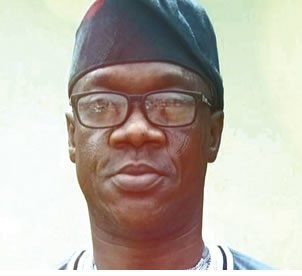
By Suyi Ayodele
“Neither a borrower nor a lender be; For loan oft loses both itself and friend, And borrowing dulls the edge of husbandry.” William Shakespeare, Hamlet (Act 1, Scene 3)
Nigeria has shifted from incurring debt as an instrument of policy to embracing it as a condition of survival. It is a dangerous evolution—made worse when President Bola Ahmed Tinubu appears to regard debt not as leprosy, but as ornament.
Greek philosopher, Plutarch (before AD50-after 120), wrote a piece titled: “That We Ought Not to Borrow.” What the old Greek philosopher said in the piece, published in Vol. X of the Loeb Classical Library edition of the Moralia, 1936 (Pg. 315-339), shows that borrowing is worse than leprosy in all ramifications. Plutarch’s piece summarises the Greeks’ attitude to borrowing.
Incidentally, every arguement he posted in the material aligns with the African’s philosophy of a borrower ending up a broke person. Our elders, right from the beginning of time, say: Àì l’ówó l’ówó kìí jé ká ní owó l’ówó (being broke makes one to be more broke).
They say this because the broke man goes a-borrowing and ends up using the little he has to service his debts thus ending up without money. A man without money is a sad man. That confirms the age-long axiom of he who goes a-borrowing goes a-sorrowing.
President Tinubu, on Tuesday last week, at an engagement with all the movers and shakers of events from Plateau State, said to those critical about the rate of borrowing by his administration that “borrowing is not leprosy.” He added that whenever the occasion arose for him to borrow, he would not hesitate to do so.
Maybe we should allow Tinubu to speak: “If we have to borrow money, we will, because borrowing is not leprosy; we just have to work hard to be able to repay it.” To the President, going by these uttered words, what matters is the ability to pay. And to pay back the countless debts incurred by his administration, Nigeria and Nigerians must work hard.
MORE FROM THE AUTHOR:OPINION: Wetie, Òsá Eleye And 2027 Warnings
It is not what Tinubu said that worries me. My concern is the metaphor he deployed – “leprosy”. That is the worst of all contagious diseases. Anyone who contracts leprosy is usually isolated. Leprosaria, in ancient days, were built in the deep forest. This is why it is said that: A kìí kó ilé adétè sí ìgboro; inú igbó ni adétè ńgbé (no one builds the house of a leper in the city; lepers live in the forest).
The idea of the forest in this ancient saying itself depicts graphic metaphors of a pariah, isolation, and of an individual who lives with ultimate shame. So, when our President deployed that metaphor, its meaning goes beyond the theatrical message his audience thought they heard and clapped for. What Tinubu told his audience is that Nigeria had not borrowed to that level when it would become an isolated nation, a leprous entity that nobody would dare touch with a 10-feet pole! We may soon get there, anyway! Back to ancient Greek.
Ancient Greek philosophy never supports borrowing. Rather, it considers borrowing, which usually comes with heavy interest, as another form of servitude. The borrower, in the Greek mindset, is not just a slave to the lender; he is equally considered a weakling and one with the base of all moral values. Plato, Aristotle, and other ancient philosophers believed that a borrower, especially a reckless one, is an ‘unnatural and socially corrosive” individual. Any borrowing that imposes heavy interest on the borrower, they said, is ‘predatory.’ (See: “Lending and Borrowing in Ancient Athens,” by Paul Millett, Cambridge University Press, Cambridge, 2022).
This is the summary of Plutarch’s work, where he argues that taking loans comes with its own degree of disgrace and leads to “a voluntary loss of freedom and a sign of folly.” A simple review of Plutarch’s essay says: “That We Ought Not to Borrow” (Greek: De vitando aere alieno) is a famous essay….that argues against debt, describing it as a form of slavery to lenders that causes stress and ruins financial freedom. Plutarch advises avoiding loans, whether rich or poor, arguing it is either unnecessary or impossible to repay.”
In an October 5, 2021, piece on this page with the title: “Buhari and the chronic debtor-wife of Osin”, I expressed worry at the rate at which the administration of General Muhammad Buhari was taking loans. I warned that Nigerians would be left in pain and sorrow at the end of the day. The introductory paragraph of the said article is worth repeating here:
“Permit me to call this Buhari regime Onígbèsè Aya Osin (The chronic debtor-wife of Osin). Osin is the Yoruba deity of royalty. According to the legend, Osin married a shameless woman who owed virtually everyone in the community. In our tradition, once a person’s behaviour is off the mark of our acceptable mores, norms and traditions, we give such a person a descriptive name. This wife’s reputation followed her everywhere she went. ‘Onigbese’ is the Yoruba word for chronic debtor; ‘Aya’ is wife. Her cognomen is an exercise in character portrayal. She is known as Onigbese Aya Osin, who buys pangolin without paying, and buys porcupine on credit. She sees the woman hawking a hedgehog; she runs after her empty-handed. She uses the money from antelope to pay for deer. Yet, she fries neither for her husband nor cooks for her concubine. Her first child is sold into slavery to service her debts; her lastborn is pawned off for her indebtedness. When she talks, she accuses her husband of not covering her shame whereas, she neither informs the husband nor takes permission from him before buying bush meat on credit.”
MORE FROM THE AUTHOR:OPINION: An Ekiti Ritual For 2027
Whatever we saw in the Buhari administration that informed the above has since paled into insignificance in the administration of Tinubu. This government borrows with reckless abandon! That is troubling. And unlike Buhari, who was decent about it, the current set of Onígbèsè in the Aso Rock Villa adds arrogance to the charade. This is why, when he had nothing more to tell us all, Tinubu said that our level of indebtedness had not reached the leprosy stage where no nation would want to touch us.
Whatever Tinubu said during the encounter, his spokesman, Bayo Onanuga, further amplified. In his criticism of the borrowing spree of this government, Peter Obi, the 2023 Labour Party (LP) presidential candidate, said that “Borrowing is not only leprosy, but a killer cancer when it is borrowed for consumption and not production as it is in Nigeria today.” He further lamented the nation’s “Debt that is not tied to measurable economic value; debt that does not translate into jobs, growth, or improved living standards for the Nigerian people.”
Onanuga, responding to Obi, said that the opposition politician was “bringing up the same old arguments again with your sensationalist approach.” Like his master, Onanuga stressed that “…Every sovereign nation borrows money, and as President Tinubu correctly pointed out, borrowing is not a disease. If you really want to know, the government has been taking loans to pay for important infrastructure projects, not to spend on everyday things. The fact that we are getting money and have lenders who are willing to lend shows that our country is trustworthy and able to pay back the money.”
I read Onanuga’s position, and I wondered if ‘silence is no longer golden’, as we were told, especially when one does not have something intelligent to say! How can borrowing become an ornament that a government should wear like a medal, the way Onanuga deodorised it? So, if every nation of the world wants to lend us money, we should take all the loans with reckless abandon, the way the government, the ‘old activist’, is defending does? And, if we may ask: what are the “important infrastructure projects” Onanuga is talking about?
Do they include the $2.7 billion borrowed from the World Bank by this administration in 2023, part of which is the $700 million loan taken for adolescent girls’ secondary education that we have nothing to show for except the daily kidnapping of our school boys and girls up North? Or the preposterous $750 million loan for power sector recovery, only for the Aso Rock Villa to detach itself from the National Grid?
Can we also ask Onanuga if his “important infrastructure projects” for which this government took a World Bank loan of $4.25 billion in 2024, include the $1.57 billion loan to strengthen human capital, improve health for women and children, and build climate resilience, without anything to show for it? What about the $357 million, $57 million, and $86 million loans for rural road access and agricultural marketing projects, in a country where bandits, herdsmen and terrorists don’t allow farmers to go to their farms?
Is the 2025 World Bank loan of $2.695 billion, part of which $500 million was said to have been for education under the HOPE Education loan, or the $253 million and $247 million for NG-CARES, also part of Onanuga’s “important infrastructure projects?” What sort of awkward reasoning governs this nation?
MORE FROM THE AUTHOR:OPINION: Count Your Sufferings: Tinubu’s Gospel Of Comparison
Can someone please help tell those in power and their defenders that figures don’t lie! According to the Debt Management Office (DMO), Nigeria’s total public debt in 2015 was approximately N12.12 trillion to N12.6 trillion ($63–$64 billion). Various independent reports confirmed that figure, which is said to include both domestic and external debt stocks, representing the total liability at the time the administration of President Goodluck Ebele Jonathan ended in May 2015.
But by December 31, 2023, according to the DMO, the nation’s total public debt was N97.34 trillion (US$108.23 billion). Again, the figure includes the external and domestic debt of the Federal Government, the 36 state governments, and the Federal Capital Territory.
Fast forward to the three-year-old administration of President Tinubu, Nigeria’s total public debt is projected to exceed N159 trillion (approx. $110 billion, “driven by a N68.32 trillion budget that relies heavily on borrowing. The government has allocated roughly ₦15.81 trillion for debt servicing (interest and fees) in 2026 alone, highlighting a severe debt service burden on the economy.”
Pray, what do you call a disease that makes a government spend over 80% of its revenue to service debt, if not ACUTE LEPROSY? What can be more cancerous than a government which borrows to satisfy the President’s fantasies at the expense of good living conditions for the citizenry? How do you describe a government which goes a-borrowing to finance its own budgets if not a leprous and cancerous government?
And since Onanuga has deliberately chosen not to understand why the government he defends has “lenders who are willing to lend” as he posted in response to Obi, I suggest, and very strongly too, that he takes a simple tutorial in Plutarch, who posits that “…the Persians regard lying as the second among wrong-doings and being in debt as the first; for lying is often practiced by debtors; but money-lenders lie more than debtors and cheat in their ledgers, when they write that they give so-and‑so much to so-and‑so, though they really give less…” This is why Onanuga and his ilk will be eternally wrong in their celebration of “lenders who are willing to lend.”
The Greek philosopher adds in the piece that, while he had “not declared war against the money-lenders”, he must point it out “to those who are ready to become borrowers how much disgrace and servility there is in the practice and that borrowing is an act of extreme folly and weakness.”
In concluding the piece, “That We Ought Not to Borrow”, Plutarch cautions thus: “Have you money? Do not borrow because you are not in need. Have you no money? Do not borrow, for you will not be able to pay….therefore in your own case do not heap up upon poverty, which has many attendant evils, the perplexities which arise from borrowing and owing, and do not deprive poverty of the only advantage which it possesses over wealth, namely freedom from care; since by doing so you will incur the derision of the proverb: I am unable to carry the goat, put the ox then upon me.” May the cosmos give us the grace to learn from ancient wisdom!
News
OPINION: APC’s Politics Of Consensus

By Lasisi Olagunju
In a democracy, victory won through real elections brings enduring legitimacy. ‘On Your Mandate We Shall Stand’ was composed and sung for Moshood Kashimawo Olawale Abiola because he submitted his ambition to a competitive process: he had a competent opponent, votes were cast, counted, and he won. The song, its defiance, and resilience followed that mandate because it was legitimate.
Those who chant similar slogans today may find themselves clutching empty matchboxes tomorrow if they continue to sidestep competitive elections. A democratic seat secured through elite manipulation and backroom agreement cannot command enduring popular support, especially when those same elites decide to take it back.
Nigeria today stands in the grip of what is called consensus politics; choosing candidates without the ‘trouble’ of voting. We are even scheming to elect a president next year without the inconvenience of election. Good luck to all of us.
At the Battle of Hastings on October 14, 1066, the Norman king, William the Conqueror, defeated King Harold II and went on to become King of England. Historians note that the victory set off sweeping changes across the British Isles. They say by force of arms, William took the crown and went on to remake the Church, the palace, and the culture of England. They say he did more than change the English crown; his victory remade the English language through a deep infusion of Norman/Latin forms. The consequence is that more than 60 percent of English words now carry Latin parentage.
One such word is ‘consensus’, from the Latin ‘consentīre’—“to feel together”,
“to agree,” “to be in harmony,” “to concur.”
The rains started beating that word a long time ago. Language historians note that words which experienced long migration often shed their original sense of shared feeling and acquire more instrumental meanings. So it is with ‘consensus’ in today’s political usage.
Somewhere along its long journey from Latin to modern political speech, ‘consensus’ lost its warmth. The distortion of the word and its meaning is no longer abstract. In our usage today, ‘consensus’ no longer suggests a meeting of minds; it often signals a decision already made; an outcome proclaimed from above and affirmed below. A word that once implied a genuine convergence of minds now describes an order from the throne, delivered through courtiers.
MORE FROM THE AUTHOR:OPINION: Ibadan, Makinde And Tinubu
The parties—especially the ruling APC—have stretched and inverted the meaning of the word. In APC’s political dictionary, “consensus” increasingly reads as the will of the president, not the outcome of deliberation.
As we had it in Sani Abacha’s transition programme, we think any of today’s living parties that make it limping to the ballot in January 2027 should reach an ‘agreement’ and adopt one person as the consensus presidential candidate. That is how rich our imaginative thoughts are and how limitless our capacity for distortion of values is.
Within both party and polity, the president now embodies what Aristide R. Zolberg calls “the chief executive who is also the supreme legislator (the chief elector), and the ultimate arbiter of conflict.” Because the president is what he has always been, photo ops are staged as proof of order, while his name, cast as the final authority in the APC’s doctrine of “consensus”, is invoked to sanctify outcomes.
The APC set its neighbour’s hut on fire and rejoiced; now the blaze has caught its own roof. Across the states, the refrain is the same: the abuse of ‘consensus,’ with the president inserted into the process as decider-in-chief.
Oyo State offers a very sharp illustration. Some APC leaders, on Friday, announced Senator Sharafadeen Alli as the party’s “consensus” governorship candidate, invoking the president’s name. Within hours, former minister, Adebayo Adelabu, pushed back, also invoking the same presidency, and declaring that he remained in the race as the president’s “son”. When two rival claims lean on the same authority, what is presented as consensus begins to look like a contest of endorsements, not agreement.
Our fathers say the medicine must match the disease. Bí àrùn búburú bá wòlú, oògùn búburú la fi ńwò ó (When the affliction is severe, the remedy cannot be gentle). That may explain why the rhetoric of resistance has turned harsh. One does not need a keen ear to catch the crudity in what now issues from Oyo APC bigwigs. It is a stream of curses and abuse, imprecations without restraint. And one must ask: why?
Beyond Oyo, across Nigeria, north to south, we hear cries of plots to impose “consensus” candidates. How do you use the words ‘imposition’ and ‘consensus’ in the same sentence? Imposition comes from above; the other grows from below. ‘Imposition’ is force without consent. ‘Consensus’ is agreement without force. The two opposites appearing as companions presents a contradiction, and politics is autological, a self-defining oxymoron. You will likely agree with my linguistic choice if you believe the popular (but etymologically false joke) that “politics” comes from ‘poly’ (many) and ‘tics’ (blood-sucking parasites).
MORE FROM THE AUTHOR:OPINION: ‘I Am Jagaban, They Can’t Scare Me’
In Nasarawa, former Inspector-General of Police and APC governorship aspirant, Mohammed Adamu Abubakar, rejected any move towards “consensus,” insisting that only a direct primary could confer legitimacy. To him and others in the race, what is being dressed up as consensus is little more than unilateralism in softer language.
In Ondo, there are subdued objections to what the party may decide on Ondo South senatorial ticket. Aspirants for the Ondo East/Ondo West federal constituency have raised similar alarms, accusing party leaders of plotting to impose a candidate under the convenient cover of consensus. Their warning is simple: once choice is managed from above, internal democracy is already compromised.
In Yobe State, Senator Ibrahim Mohammed Bomai, Kashim Musa Tumsah, and Usman Alkali Baba—three APC governorship aspirants—have rejected the party’s endorsement of former Secretary to the State Government, Alhaji Baba Malam Wali, as its “consensus” candidate for the 2027 election.
Bomai’s choice of words is telling. He described the “consensus” imposition as an affront to democratic principles. He warned against the steady replacement of popular choice with elite arrangement. No individual, he argued, regardless of past office or political influence, has the authority to determine the leadership of millions behind closed doors. Leadership, he insisted, must emerge through a process that is free, fair, and transparent—not one brokered in the name of “consensus.” Quoting him directly, he said: “We categorically reject this attempt to subvert due process. We reject the culture of imposition. We reject any scheme that undermines fairness, equity, and the democratic rights of our people.” Those words give voice to what dissatisfied but muted APC leaders and members in Kwara, Ogun and beyond are saying in uneasy, even fearful, silence.
Lagos, for now, appears to be the exception. The emergence of Dr Obafemi Hamzat as the APC governorship candidate quietly followed a process that bore the marks of consultation rather than imposition. Hamzat combines the fine qualities of a gentleman with humble erudition. In a field without a formidable opposition, his path to final victory looks smooth. Congratulations may therefore be in order.
Choice of candidates by consensus is good, cheap and safe if it comes with clean hands. Going far back into our beginning, we find that real consensus is not alien to the African political tradition. Ghanaian philosopher Kwasi Wiredu (1931 – 2022), in his reflections on ‘Democracy and Consensus in African Traditional Politics’, argues that decision-making in pre-colonial African societies was anchored in discussion and agreement rather than imposition.
He draws, for instance, on the words of Zambia’s founding father, Kenneth Kaunda, who observed that “in our original societies, we operated by consensus. An issue was talked out in solemn conclave until such time as agreement could be achieved.” Similarly, Julius Nyerere of Tanzania, in 1961, noted that “the African concept of democracy is similar to that of the ancient Greeks, from whose language the word ‘democracy’ originated. To the Greeks, democracy meant simply “government by discussion among equals.” The people discussed, and when they reached an agreement, the result was a “people’s decision.” In African society, he said, the traditional method of conducting affairs is “by free discussion… the elders sit under the big trees and talk until they agree.”
Our politics has refused to benefit from that past of refined due process. There is no “people” in today’s decisions. And we expect today’s “consensus” arrangement to yield good governance. No. It will not. It can only produce a system that answers to kings, kingmakers, and the capos who guard their power.
MORE FROM THE AUTHOR:[OPINION] Abuja: Why Are The Americans Running?
When a ruling party actively promotes “consensus” after weakening the opposition, it risks sliding toward a very bad form of authoritarianism. It also strips even its own members of the power to choose their candidates. As Kwasi Wiredu observed, both Kenneth Kaunda and Julius Nyerere defended systems that claimed consensus but, in practice, narrowed choice.
The Yoruba, watching what has become of this democracy in the hands of its custodians, would say: when a wise man cooks yams in a mad fashion, the discerning take theirs with sticks. That is àbọ̀ ọ̀rọ̀—half a word—and for the wise, it is enough.
What passes for consensus in Nigeria today therefore demands closer scrutiny. When outcomes are settled before conversations begin, when dissent is managed rather than engaged, and when unanimity is announced rather than negotiated, consensus ceases to be the product of dialogue; it becomes instead an instrument of control.
“Fair is foul, and foul is fair.” In politics, as William Shakespeare suggests, opposites often blur; good and evil do not always stand apart; they, in fact, reinforce each other. Bernard Crick, in ‘In Defence of Politics’ (1962), reminds us that politics thrives on contradiction, that it is “a creative compromise… a diverse unity.”
All dictionaries insist that “consensus” and ‘coercion’ are not the same. Our politicians, however, behave as though they are—indeed, as though one can be made to pass for the other. Once coercion learns to speak the language of consensus, it no longer needs to persuade; it only needs to declare. And declarations are fast, sweet and cheap.
But there are consequences.
Someone said “every cheap choice is a lost chance at joy.” The quest for easy victory is behind the current ‘consensus’ frenzy. But it may be the death of this democracy.
In Yoruba, some proverbs come as stories. Take this: “All the animals in the forest assembled and decided to make ìkokò (hyena) their asípa (secretary). Ikoko was happy to hear the news, but a short while later he burst into tears. Asked what the matter was, he replied that he was sad because he realised that perhaps they (his electors) might revisit the matter and reverse themselves.”
Professor Oyekan Owomoyela, from whom I got the proverb, explains what it says: “even in times of good fortune one should be mindful of the possibility of reversal.”
The moral is that those who donate victory cheaply through agreement can agree again to whimsically annul the victory without consequences.
-

 News5 days ago
BREAKING: Tinubu Nominates New Minister Of Power
-

 News5 days ago
Tinubu Swears In Four Permanent Secretaries, INEC Commissioner
-

 Politics3 days ago
2027: Tinubu’s Re-election May Put An End To Nigeria — Baba Ahmed Warns
-

 Metro4 days ago
I’m A Street Girl’ – Bimbo Ademoye Clashes With Area Boys [VIDEO]
-

 News5 days ago
VIDEO: Moment S’Court Recognises David Mark-led ADC Leadership
-

 Politics4 days ago
Senatorial Seat: Ogbakha-Edo Warns Against Imposition Of Candidates In Edo South
-

 Politics4 days ago
BREAKING: 2027: Former Adamawa APC Guber Candidate, Aishatu Binani Defects To NDC
-

 Business3 days ago
JUST IN: Nigerian Filling Stations Reduce Fuel Price After Hike
-

 Entertainment4 days ago
Actress Eniola Badmus Gets New Federal Appointment
-

 News4 days ago
10 African Countries With Highest Petrol Prices In Prices In April 2026
