
Headline
International Day To End Impunity For Crimes Against Journalists: EU Reveals 44 Journalists Killed In 2021
…150 Press Freedom Violations, Attacks Recorded In 4 Years – IPC Alleges
As Nigeria joins rest of the world to mark 2021 International Day to End the Impunity for Crimes Against Journalists, the European Union, EU, Tuesday, revealed 44 journalists killed in 2021.
This was made known by EU Delegation Representative, Wynyfred Egbuson, during a media roundtable with theme ‘Countering threats of violence against Journalists in Nigeria: The role of CSOs and other non-state actors’ to commemorate the Day in Abuja.
Egbuson said: “UNESCO has reported an increasing number of attacks and threats against journalists. 44 journalists have so far been killed in 2021, many more are attacked, unlawfully imprisoned, or missing leaving their families awaiting news of their faith, sometimes for years.
“We also see more attempts to cut the space for free media around the world by systemically undermining their credibility.”
She also said the media coming under attacks from state and non-state actors does not portray any nation in good light, and that EU will continue to stand for free press.
She pointed that such attacks are serious violation of human rights, and also perpetrators deprive citizens’ rights to information.
Earlier, in an his welcome address, Executive Director, International Press Centre, IPC, Lanre Arogundade, disclosed that through monitoring and advocacy activities in the last 4 years (2016-2020) on press freedom and safety of journalists, a total of 150 press freedom violations and attacks were recorded in Nigeria.
“And as we mark year 2021 IDEI, the whereabouts of Vanguard journalist and reporter in the House of Representatives, Tordue Salem, remains worrisomely unknown.
READ ALSO: NUJ Condemns EFCC Invasion Of Journalist’s Home
“This year alone, several acts of violence have been perpetrated on journalists and media professionals in the country with the most recent resulting from the #EndSARS one year anniversary protest in October”, he stated.
He also called for urgent collaborative intervention necessary between the media, the CSOs and other non-state actors to develop an Action Plan on defending press freedom and engaging state institutions.
“It is against this background that an urgent collaborative intervention is necessary between the media, the CSOs and other non-state actors to develop an Action Plan on defending press freedom and engaging state institutions including the security agencies to prevent further violence against journalists, other media professionals and media workers.
“Such collaboration is also necessary to ensure accountability by bringing to justice the perpetrators of crimes against journalists and media workers while ensuring that victims have access to appropriate remedies.
“The collaboration should also promote a safe and enabling environment for journalists to practice without threats.
“When the media profession is faced with threats including physical attacks, arrests, imprisonment, kidnapping, torture, murder, censorship online/offline, etc., a climate of fear envelopes the media landscape and the free flow of credible information is hindered”, he added.
Also speaking the National President, Nigerian Union of Journalists, NUJ, Chris Isiguzo, lamented the treatment journalists are given, especially by security agencies.
Isiguzo said: “Threats and violence against media practice is ion the increase, increase based on repression.
“As we speak for 20 days a journalist has gone missing and the government seems not worried. It is worrisome, and a responsible government must know that its primary responsibility of governance is to ensure security of lives and property.
“If the people that you are presiding over are no longer safe that means there is problem, and you must have to find a way of addressing them.
“The same time we take the security agents task because often times they seem to seeing journalists as competitors. We are not competitors, rather collaborators because when we collaborate, the nation benefits but when we compete, the nation suffers.
“I want to appeal to them let them begin to see journalists as partners in progress, especially at this critical time when insecurity has practically become the issue across the country, and rise to the occasion to deal with these competing issues so that we can map out a way forward for Nigeria and democracy.”
According to him, last year was 62, and between 2006 and 2020, 1,200, and Nigeria has an appreciable percentage of it, which also signpost the very harrowing terrible, unfriendly environment journalists operate.
“Somebody even said the present President of Nigeria as military leader was even much benevolent when you do a comparative analysis of then and now, and it simply means democracy itself is in danger if nothing is urgently done to check this rising wave.
READ ALSO: NUJ To Partner French Language Teachers In Nation Building
“By the time we bring these issues to the fore it will be an opportunity to challenge government because we cannot have democracy that thrives whose press is not guaranteed when journalists are every day being harassed, intimidated, kidnapped, killed, and incarcerated, there is no democracy.”
He also expressed concern over the current environment journalists work in as it is no more conducive and a threat to democracy in Nigeria.
“As we speak for 20 days a journalist has gone missing and the government seems not worried. It is worrisome, and a responsible government must know that its primary responsibility of governance is to ensure security of lives and property.
“If the people that you are presiding over are no longer safe that means there is problem, and you must have to find a way of addressing them”, he pointed.
He also called on security agencies to collaborate with journalists and see them as partners in progress.
“The same time we take the security agents task because often times they seem to seeing journalists as competitors. We are not competitors, rather collaborators because when we collaborate, the nation benefits but when we compete, the nation suffers.
“I want to appeal to them let them begin to see journalists as partners in progress, especially at this critical time when insecurity has practically become the issue across the country, and rise to the occasion to deal with these competing issues so that we can map out a way forward for Nigeria and democracy”, he said.
(VANGUARD)



Headline
How Our Airstrikes Stopped Christmas Attacks In Nigeria — US Lawmaker
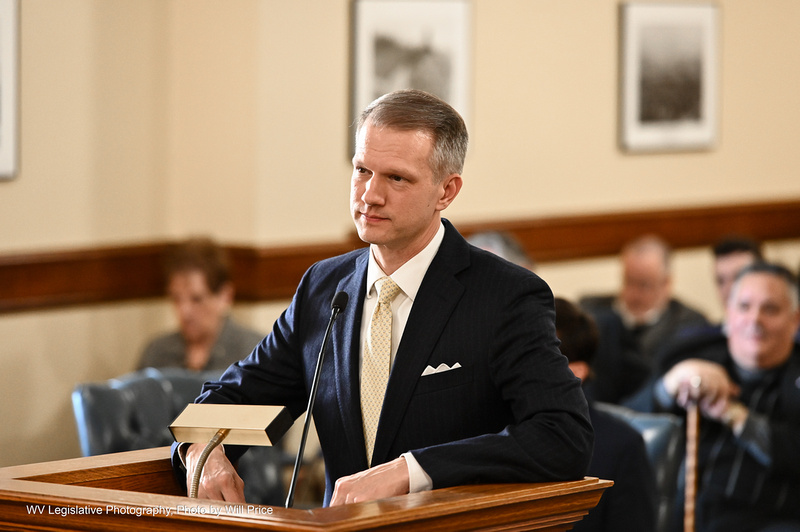
Riley Moore, a member of the United States House of Representatives from West Virginia’s 2nd District, has linked the absence of Christmas attacks in Nigeria this year to US military airstrikes carried out against Islamist militants on Christmas Day.
In a post on his official X account on Saturday, Moore contrasted the situation with the past two Christmas seasons, during which he claimed Christians were killed in attacks across parts of Nigeria.
The lawmaker noted that this year’s response targeted extremist groups instead of marking another period of violence.
READ ALSO:Rep Moore Confirms 12 Tomahawk Missiles Launched In Sokoto
He added that US forces acted decisively against militants in coordination with the Nigerian government.
“For the past two Christmases, Christians have been murdered in Nigeria. This year, thanks to @POTUS, Radical Islamic Terrorists were on the receiving end of 12 Tomahawk missiles as a present.
“The successful strikes on ISIS, in coordination with the Nigerian government, are just the first step to secure the country and end the slaughter of our brothers and sisters in Christ,” Moore wrote.
US President Donald Trump said on Thursday that American forces had conducted deadly strikes against Islamic State terrorists in north-western Nigeria.
Trump, who spoke via his Truth Social platform, warned that more attacks would follow if the militants continued killing Christians, adding that the Department of War executed numerous “perfect strikes.”
Headline
U.S. Lawmaker Reacts To Nigeria, U.S. Airstrikes
United States Congressman, Riley Moore, has stated that President Donald Trump is determined to put an end to the killing of Christians in Nigeria, warning that further action may follow if the violence persists.
Moore made the statement on Friday via his official X handle.
According to the lawmaker, the strike represents the first step in addressing what he described as the ongoing slaughter of Christians and the broader security crisis affecting Nigerians across religious and ethnic lines.
READ ALSO:US Dept Of War Shares Video Of Air Strikes In Nigeria
“President Trump has been clear that the killing of Christians in Nigeria must end,” he said.
He that the administration’s resolve on the matter should not be underestimated.
“As I stated at the outset: Do not test President Trump‘s resolved in this matter.
READ ALSO:JUST IN: US Forces Bomb Terrorists Camps In Nigeria
“Tonight’s strike in coordination with the Nigerian government is just the first step to ending the slaughter of Christians and the security crisis affecting all Nigerians,” he said.
He stressed that the operation signals a stronger stance by the United States in support of Nigeria’s efforts to tackle terrorism and violent extremism, noting that further measures could be taken if the situation does not improve.
Headline
US Dept Of War Shares Video Of Air Strikes In Nigeria

A video footage of the US military air strikes in Nigeria has emerged.
The video was released by the US Department of War following its air strikes against terrorists in Sokoto.
Earlier, the US secretary of War, Pete Hegseth had confirmed that military air strikes hit terrorists in Nigerians, saying it was deadly.
Later on, the US. African Command, confirmed that it conducted the attacks described as very deadly by President Donald Trump.
Trump said he was only keeping the promise he made earlier last month to strike the terrorists he believes are killing innocent Christians.
READ ALSO:JUST IN: US Forces Bomb Terrorists Camps In Nigeria
Although described as powerful and deadly, the casualty caused by the attack is yet to be released.
Explaining further, security expert, Brant Philip, said the strikes may have been launched “from the USS Paul Ignatius, using a Tomahawk missile.”
The Nigerian government through its ministry of foreign affairs has also confirmed that the strikes were successful.
Watch video here

 News5 days ago
JUST IN: Kano Lawmaker, Sarki Aliyu Daneji, Dies Hours After Colleague’s Passing
- News5 days ago
FULL LIST: Churches That Don’t Celebrate Christmas
- Headline3 days ago
JUST IN: US Forces Bomb Terrorists Camps In Nigeria
- News4 days ago
Okpebholo Slams ₦25bn Libel Suit On Edo PDP Chairman
- Headline3 days ago
US Dept Of War Shares Video Of Air Strikes In Nigeria
- Entertainment5 days ago
AFCON 2025: Davido Wins $96,000 After Super Eagles Beat Tanzania
- News5 days ago
7 Health Risks Of Owning A Cat
- News5 days ago
Sheikh Gummi Sues Two Over Alleged False Facebook Publication
- Headline5 days ago
Coup: Guinea-Bissau Junta Releases Six Held Opposition Politicians
- News5 days ago
Top 11 Friendliest Countries To Visit


