
Headline
Overcrowding, Security Lapses Plague Nigerian Prisons —EU

A report by the European Union Agency for Asylum has revealed that Nigeria’s custodial centres are battling “escalating security challenges.”
The report, sighted by Sunday PUNCH, was published in November 2025. It documented a decade-long pattern of prison escapes in the country, explaining why the custodial centres are confronting rising jailbreaks, citing persistent security lapses.
“Over the past decade, Nigeria has experienced a pattern of prison jailbreaks, resulting in thousands of inmates escaping correctional facilities nationwide,” the report noted.
Highlighting systemic weaknesses, the report cited overcrowding, structural deficiencies, and chronic underfunding as major contributors to the problem.
“One incident occurred in March 2025, when 12 inmates escaped from the Koton Karfe Medium Security Custodial Centre in Kogi State. Only five were recaptured.
“This marked the fourth jailbreak at this facility in 13 years, where nearly 700 inmates have fled, including about 100 freed during a 2012 Boko Haram attack,” it stated.
READ ALSO:Anambra: EU Deploys 687 Observers Ahead Of Saturday Gov Election
Observers attribute the recurring breakouts to “security gaps, together with possible insider complicity, which exacerbate the prisons’ vulnerabilities, especially amid attacks by armed groups like Boko Haram.”
Beyond security concerns, the report said overcrowding and poor infrastructure continued to strain the country’s correctional system.
“The country’s more than 240 prisons currently house over 80,000 inmates, with two-thirds awaiting trial.
“The observers also point to systemic issues such as overcrowding, outdated infrastructure, poor inmate conditions, slow judicial processes, and widespread corruption,” the report said.
“International bodies have also criticised the state of Nigeria’s detention system,” it stated.
Following a September 2024 visit, the United Nations Subcommittee on Prevention of Torture described conditions in detention centres as “abysmal,” citing inadequate food, healthcare, and sanitation.
READ ALSO:Anambra: EU Deploys 687 Observers Ahead Of Saturday Gov Election
“Their assessment described conditions in most detention facilities as ‘abysmal.’ Additionally, Nigeria had not yet established a National Preventive Mechanism as required under the Optional Protocol to the Convention against Torture, which Nigeria ratified in 2009.
“The Subcommittee called on Nigeria to urgently implement measures to prevent torture and ill-treatment, improve detention conditions—particularly in police stations and similar facilities—and enforce legal safeguards to end impunity for perpetrators of torture,” the report read.
The report also raised concerns over the continued use of the death penalty.
It added, “In Nigeria, the death penalty is a ‘lawful punishment’ imposed nationwide, including for offences that do not meet the threshold of ‘most serious crimes’ under international law.
“Although no executions have been carried out since 2016, courts across the country still regularly issue death sentences. In 2023, Nigerian courts issued over 246 new death sentences, raising the total number of individuals on death row to more than 3,413.”
In May 2024, the Senate proposed a bill to increase the maximum penalty for drug trafficking from life imprisonment to death, a move that has faced opposition from various stakeholders, including legislators, the United Nations Office on Drugs and Crime country representative, as well as activists and legal professionals.
READ ALSO:FG, EU Unveil $220m Youth Employment Initiative
“Such a proposal has reignited debate over the continued use of the death penalty in the country, with some authorities questioning the sustainability of retaining capital punishment.
“Further, although legal provisions allow for commutation of sentences by governors or chief judges after extended incarceration, inconsistencies in application have left many inmates in legal limbo,” said the report.
The Nigerian Correctional Service revealed in July 2025 that the country had 3,833 inmates on death row.
The report further stated that the African Commission on Human and Peoples’ Rights has urged Nigeria to “impose a moratorium on executions, a stance supported by the European Union and United Nations.”
It added that the detention conditions remained “harsh,” falling short of United Nations minimum standards for prisoner treatment.
Media reports and information from the Nigerian Correctional Service website indicated that thousands of inmates have escaped from 13 custodial facilities between 2019 and 2025, including many awaiting trial for serious offences such as terrorism and armed robbery.
In response to the ongoing wave of jailbreaks that has plagued custodial centres nationwide over the past years, the Controller General of the Nigerian Correctional Service, Sylvester Nwakuche, recently vowed to enforce strict disciplinary action against any officers found to have been negligent.



Headline
‘Pioneer Of Cable TV News’: Key Facts About CNN Founder, Ted Turner
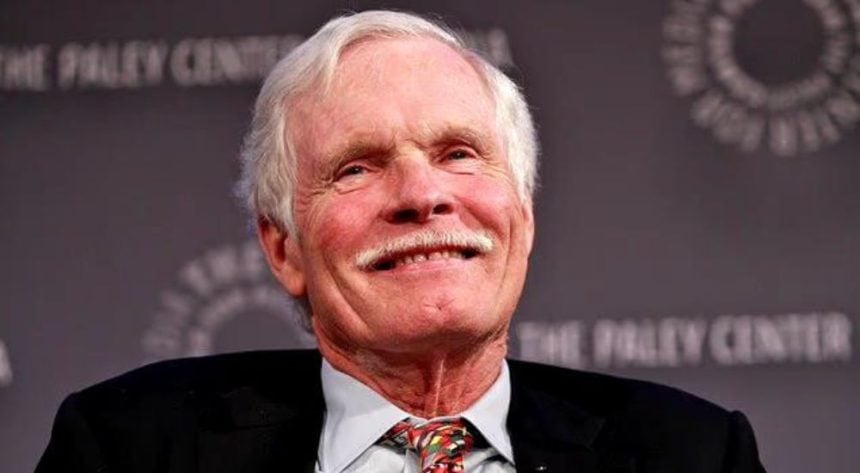
Ted Turner, the media businessman who founded CNN died at the age of 87. He died peacefully on Wednesday, surrounded by family, according to Turner Enterprises.
Contents
Launched 24-hour news television
Built a media network
Expanded through sports
Recognition and influence
Philanthropy and global causes
Environmental efforts
Health and later years
Early career path
Leadership and legacy
Personal life
Exit from business
Family
Below are key facts about his life and impact:
Launched 24-hour news television
Turner founded CNN on June 1, 1980, introducing the first 24-hour news channel and changing how audiences follow global events.
READ ALSO:CNN To Layoff 200 Staff Amid Attempts To Modernise Business
Built a media network
He moved from billboards into broadcasting, turning an Atlanta TV station into a national superstation in 1976. His business later grew to include CNN International, TNT, Turner Classic Movies and Cartoon Network.
Expanded through sports
Turner invested in sports broadcasting and owned teams including the Atlanta Braves and the Atlanta Hawks, using television to reach wider audiences.
Recognition and influence
In 1991, he was named Time magazine’s Man of the Year for his role in shaping modern news coverage.
Philanthropy and global causes
He founded the United Nations Foundation and supported campaigns against nuclear weapons. In 1997, he pledged $1 billion to the United Nations.
READ ALSO:CNN President, Jeff Zucker Resigns After Failing To Disclose Secret Affair With Colleague
Turner supported conservation work, including reintroducing bison in the United States, and backed environmental education through the “Captain Planet” cartoon.
Health and later years
In 2018, Turner revealed he had Lewy body dementia. He also recovered from a mild case of pneumonia in early 2025.
Early career path
He took over his father’s billboard company at 24 after his father’s death and later expanded into radio and television, despite limited experience in journalism.
“I worked until 7 o’clock, and when I got home the news was over,” he once said. “So I missed television news completely. And I figured there were lots of people like me.”
Leadership and legacy
READ ALSO:CNN Reporter Protests Nigeria’s $215 Single Entry Visa Fee
“Ted was an intensely involved and committed leader, intrepid, fearless and always willing to back a hunch and trust his own judgement,” Mark Thompson, Chairman and CEO of CNN Worldwide, said in a statement. “He was and always will be the presiding spirit of CNN. Ted is the giant on whose shoulders we stand, and we will all take a moment today to recognize him and his impact on our lives and the world.”
Personal life
Turner married actress Jane Fonda in 1991, and they later divorced after 10 years, though they remained close.
“I would never love anyone like I love him,” she said. “But I just couldn’t keep moving in his world, along the surface for the rest of my life. I knew that I would get to the end of my life and regret not doing the things that I also needed to do for me.”
Exit from business
He sold his company to Time Warner in 1996 and later stepped away following its merger with AOL.
Reflecting on his life, Turner once said: “I lost Jane. I lost my job here. I lost my fortune, most of it. Got a billion or two left. You can get by on that if you economize.”
Family
He is survived by his five children, 14 grandchildren and two great-grandchildren.
Headline
Iran’s Nationwide Internet Shutdown Hits 70 Days

NetBlocks, a monitoring group, has disclosed that an internet shutdown enforced by the Iranian regime has entered its 70th day, severing key access from swathes of the population under the shadow of war.
NetBlocks reported on Friday that the blackout has now surpassed 1,656 hours, marking more than two months since US-Israeli strikes pounded Tehran and escalated across the Middle East.
“Digital connectivity is vital in times of crisis,” NetBlocks said in a post on X. “Limiting service harms those most in need – people with disabilities, students, small businesses and the general public.”
READ ALSO:US Underestimated Iran Before War – France’s Bardella
According to CNN, Iran imposed a separate internet shutdown on the country’s 92 million people earlier this year, when it launched the most lethal crackdown on anti-government protesters since the Islamic Republic’s founding 47 years ago.
CNN further reports that the latest blackout has cut off another potential lifeline for Iranian residents faced with high unemployment and economic pressure exacerbated by the US-Israeli campaign.
(CNN)
Headline
Gas Prices In US Edge Down After Two Weeks Of Increases

The cost of a gallon of regular gas in the United States (US) has edged down a little more than a penny to $4.55.
According to AAA’s readings, this marks the first decline in the average gas price after 15 straight days of increases.
The decline is minuscule compared to the large increases in gas prices over the last two weeks.
According to CNN, gasoline costs rose an average of nearly 4 cents a day during that period and had several daily increases of between 7 and 9 cents.
READ ALSO:Gas Station Explosion Rocks Calabar, Scores Injured, Property Destroyed
Also Read: Trump insists US-Iran ceasefire intact despite recent exchange of fire
CNN also reports that based on past gas spikes, it will likely take weeks for gas prices to get down below $4 a gallon.
The report, however, states that a previous two-week stretch of gas price declines only shaved 14 cents off the average price, taking the average price to $4.02, before the recent 15-day run of increases.
READ ALSO:Tinubu Signs Executive Order To Protect Nigeria’s Oil & Gas Revenue
According to CNN, it could take months for the average price to fall below $3 per gallon, as it did before the war in Iran.
CNN further reports that only one state – Oklahoma – now has an average price of less than $4 a gallon, and its average stands at $3.98. California has the highest average price at $6.16.
(CNN)

 Politics4 days ago
BREAKING: NDC Zones Presidency
- Politics5 days ago
BREAKING: APC Governors Forum Splits As Uzodimma, Abiodun Lead Rival Factions
- Politics4 days ago
Crisis Hits APC Govs Forum As 18 Rejects Uzodinma’s Removal
- Headline5 days ago
Six-year-old Nigerian Girl Dies After Fall From Apartment In Canada
- Entertainment5 days ago
Portable In Lone Car Accident Night To Child’s Naming Ceremony [VIDEO]
- Headline5 days ago
US Govt Finally Releases Files On UFOs, Alien Life
- News5 days ago
NiMet Warns Of Flash Flooding In 19 States
- Sports5 days ago
WAFCON 2026: Super Falcons Suffer Blow As Forward Faces Six-week Layoff
- Sports5 days ago
EPL: Cole Palmer Told To Leave Chelsea
- Sports5 days ago
EPL: They May Not Win All Remaining Matches – Paul Merson Predicts Title Winners


