
Metro
ISWAP Makes $191m Annually Taxing Locals In Lake Chad Region — Report
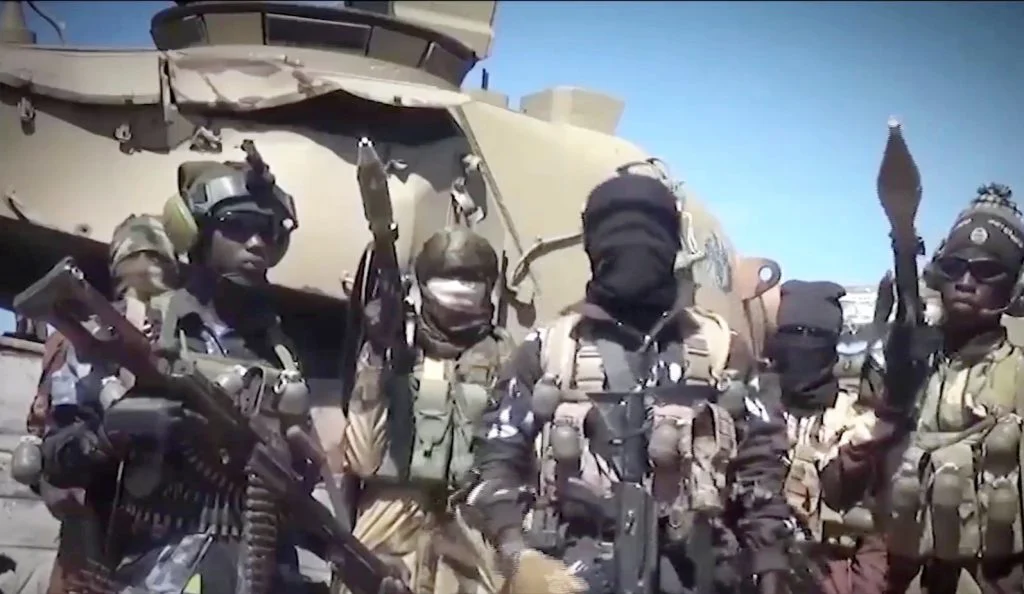
The Islamic State West Africa Province (ISWAP) has quietly built a functioning state-like economy across the Lake Chad region, controlling farms and cattle business through a complex taxation and governance regime that rivals Somalia-style jihadi fiefdoms.
According to a report by The New Humanitarian news agency, ISWAP collects an estimated $191 million annually through a formalised system of levies on fishers, farmers, traders and migrant workers.
Originally a project of the United Nations Office for the Coordination of Humanitarian Affairs (OCHA), The New Humanitarian (formerly IRIN News) operated under the UN until January 1, 2015. On March 21, 2019, IRIN relaunched independently as The New Humanitarian.
The news agency, which said its report was based on painstaking investigations, stated that what the extremists make per year vastly outstrips the official tax intake of the Borno State government, which it said took in only about $18.4 million in 2024.
“This investigation explores the system of rule and revenue streams that ISWAP has built in what it refers to as the dawla — the so-called caliphate it has established in parts of northeastern Nigeria and the Lake Chad region.
READ ALSO:Military, DSS Arrest ISWAP Leader
“The report is based on in-depth interviews with fishers and traders that regularly visit ISWAP territory on a string of islands in Lake Chad, as well as former ISWAP officials and clerics who have left the group and quietly resettled in northern Nigeria,” the agency said.
The New Humanitarian report identified three primary types of revenue for ISWAP.
They are:JUST IN: 60 Boko Haram, ISWAP Fighters Killed In Renewed Clashes
Zakat: a faith-based levy on livestock, netting around $3.7 million yearly.
Haraji: a tax for outsiders engaging in economic activity within ISWAP territory, often fishers and seasonal workers, collected through entry permits of roughly $13 each.
Darayib: a broader category including fees on trade, cattle, charcoal, and agriculture, imposed at checkpoints and markets.
“These payments,” the report said, “are enforced systematically with receipts, designated inspectors, and severe penalties for non-payment, allowing ISWAP to finance military campaigns, pay fighters and bills, and even offer rudimentary public services.
READ ALSO:ISWAP, Boko Haram: Why Tinubu Govt, Govs Can’t Dialogue With Bandits – Shehu Sani
“ISWAP administers three broad categories of taxation: zakat, haraji and darayib. Each tax has a separate receipt that is issued after payment.
“ISWAP collects zakat from cattle-owning farmers worth roughly $3.7 million a year. The tax ranges from 3.3 per cent to 1 per cent, depending on herd size — the lowest rate levied on herds of more than 60 to 80 animals.
“ISWAP does not physically take the cattle but instead collects the cash equivalent — based on a pre-determined market value, eliminating the possibility of herders undervaluing their livestock.
“It also imposes a similar tax structure on sheep and goats but does collect the animals, reportedly for festive occasions and other internal uses within the group,” the report said.
READ ALSO:Gaza Civil Defence Says Israeli Strikes Kill 30
While violent and ideologically driven, ISWAP has adopted pragmatic governance models. In many of its controlled areas, locals report being taxed for perceived “protection.”
“Before entry into ISWAP’s territory, every individual is required to pay a $13 fee. Those with cash pay immediately at the first checkpoint before being allowed to proceed. Those without the money are permitted to enter after making a pledge to pay following their business activities.
“In such cases, the group leader is held accountable for ensuring that all deferred payments are settled. Each person receives a permit or receipt, which serves as proof of payment and protects them from harassment by ISWAP’s inspection task force operating on the islands. With this permit, individuals are not disturbed.
READ ALSO:ISWAP Kills 8 Boko Haram Members, Seizes Large Quantities Of Ammunition
“Once inside, fishers are required to pay additional fees to be in allocated fishing areas. The amount depends on the size of the area requested and the fishing method they intend to use,” the report said.
Quoting fishers it interviewed, The New Humanitarian said: “These fees range from $13 to $196 and cover an entire fishing season, usually from February to June.
“Before exiting the territory with their goods, each fisher or fish trader is charged a fishing tax of around $2.60 per 100-kilogram carton of fish. During a normal fishing season, ISWAP can generate around $156,000 from entry permits alone.”
The Nigerian military has been unrelenting in tackling extremist groups in the entire North East area, which includes the Lake Chad region.
(TRIBUNE)



Metro
Edo Police Arrest Two Suspected Cultists
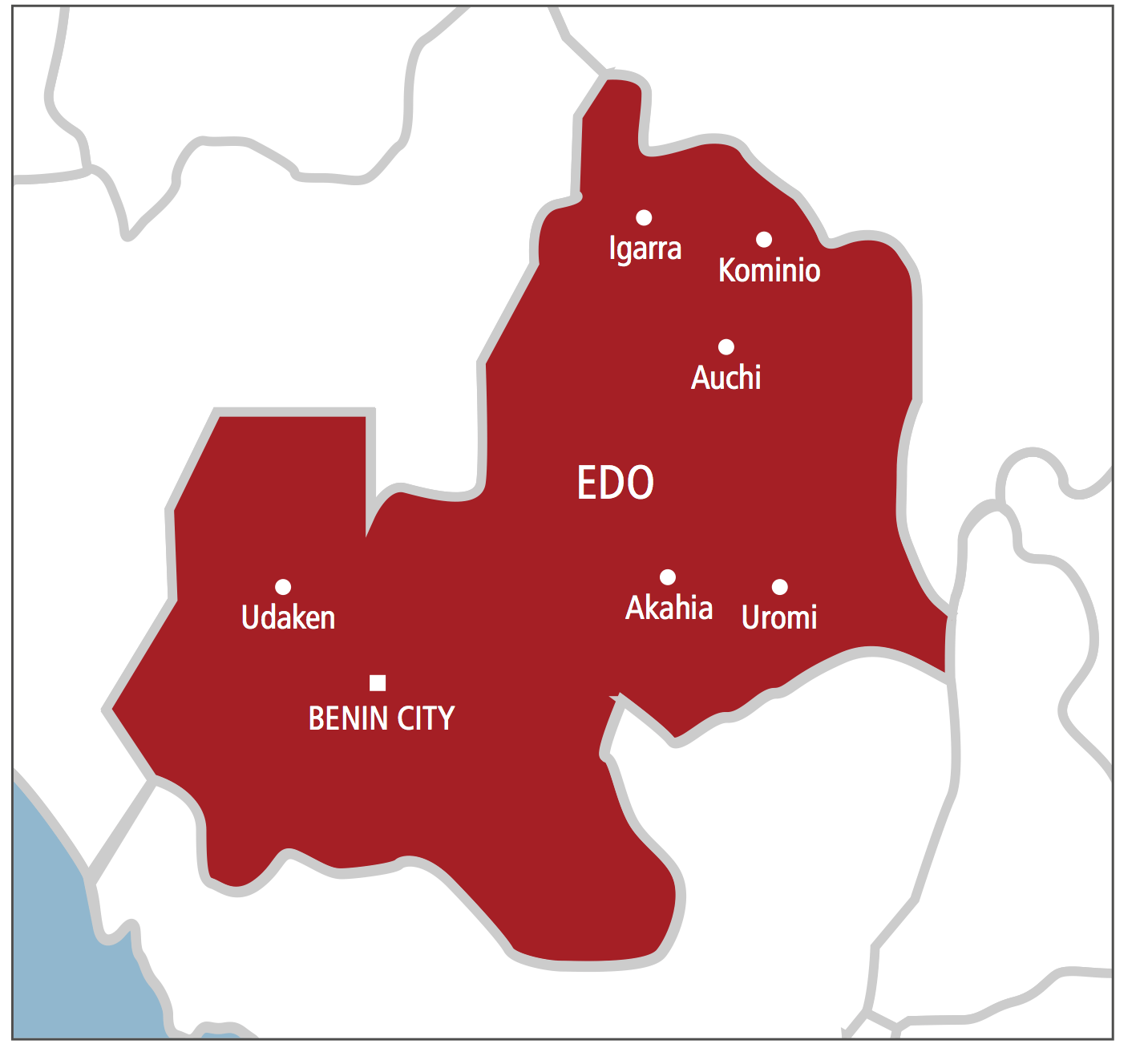
The Edo State Police Command on Wednesday said two suspected cultists were arrested in Ohonre community, off Adolor College Road, Benin.
This was disclosed in a statement by the command Public Relations Officer, Eno Ikoedem, and made available to newsmen electrically.
Ikoedem said the arrest was possible due to operatives response to a distress report concerning the movement and gathering of some suspected cult members within the community.
READ ALSO:Edo Police Arrest Four Suspected Cultists, Recover Firearms
The statement reads: “The Edo State Police Command has recorded another operational breakthrough following the swift disruption of a suspected cultists’ gathering in Ohonre Community, off Adolor College Road, Benin City.
“On 21st May, 2026, at about 19:00hrs, operatives attached to Ugbowo Division who were on surveillance patrol responded to a distress report concerning the movement and gathering of some suspected cult members within the community.
“Acting promptly on the information, the police team mobilized to the location. On sighting the operatives, the suspects fled in an attempt to evade arrest. The operatives immediately gave them a hot chase, leading to the arrest of two suspects identified as Victor Peter ‘M’, 21 years and Iyemoma Ogbewe ‘M’, 35 years.
READ ALSO: Idahosa Expresses Gratitude To Okpebholo, Oshiomhole, Others For Support At mother’s Demise
“A search conducted on the suspects led to the recovery of one cut-to-size gun believed to have been in their possession for unlawful purposes.
“Upon investigation, the suspects confessed to being members of the notorious Maphite cult group. Efforts are ongoing to identify and apprehend other fleeing gang members.”
She said the Commissioner of Police, Monday Agbonika, commended the swift response of the operatives and reiterated the Command’s resolve to deny criminal elements any opportunity within Edo State.
He further urged residents to continue providing timely and credible information to the Police, assuring that all reports would receive prompt attention.
Metro
Troops Eliminate Two Terrorists, Foil Pipeline Attack
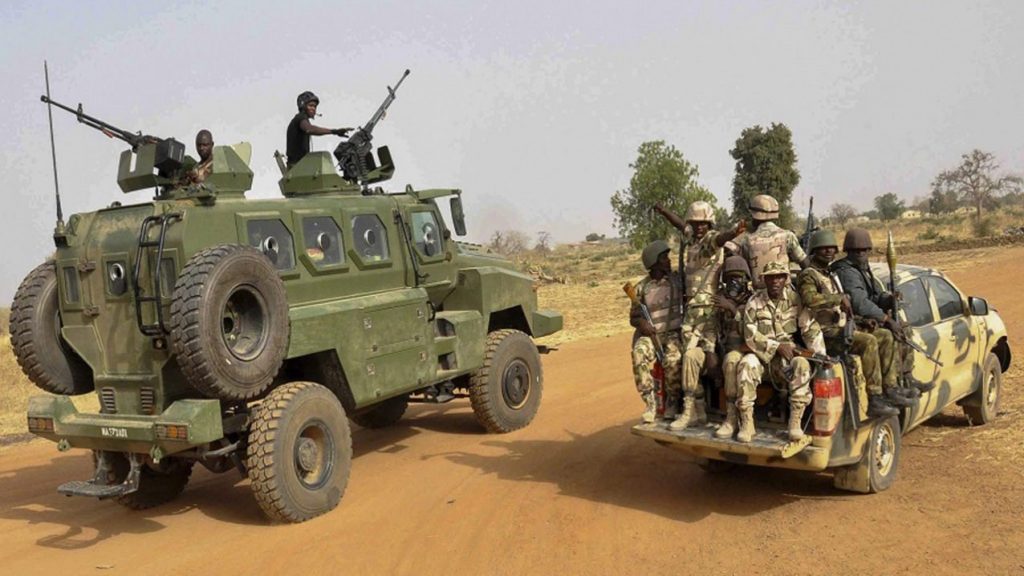
The Nigerian Army says troops have, in the last 24 hours, eliminated two terrorists, rescued four kidnapped victims and foiled pipeline attacks in a series of coordinated military operations across Taraba, Kogi and Rivers.
This is contained in operational updates issued to reporters on Tuesday in Abuja.
According to the reports, troops of 93 Battalion deployed at Akate in the Donga Local Government Area of Taraba engaged suspected terrorists in a forested area, killing two of them.
READ ALSO:UN Troops Restore Crucifix After Damage By Israeli Military
According to the report, items recovered from the scene include an AK-47 rifle, ammunition, magazines, mobile phones and other personal effects.
In Kogi, it said the troops of 21 Battalion, in collaboration with vigilantes, rescued four kidnapped passengers along the Anyigba–Itobe road in Ofu Local Government Area.
It added that the victims were reportedly abandoned by their captors while attempting to cross a seasonal stream due to sustained pressure from advancing troops.
According to the military, efforts are ongoing to rescue other victims still in captivity.
READ ALSO:Troops Arrest TikTok Bandits Promoter
The report said that troops of 12 Brigade successfully repelled an ambush along Kabba–Okene road while withdrawing from an earlier operation, forcing the assailants to flee with gunshot wounds.
“Meanwhile, in Rivers, troops of 5 Battalion acting on credible intelligence, foiled an attempt by suspected vandals to detonate a crude oil pipeline in Ahoada West Local Government Area.
“The swift response of the troops disrupted the operation before it could be executed, with the suspects fleeing the scene,” it said.
Metro
Police Arrest Private Chef Over Alleged N150m Theft, Drugging Of Employer, Burglary
The Nigeria Police Force has arrested a chef, John Cosmos Govi, over his alleged involvement in a burglary operation at a residence in Abuja, where luxury items and valuables worth about N150 million were reportedly stolen.
The arrest was announced on Monday, May 25, 2026, by the Force Public Relations Officer, DCP Anthony Placid, who said the suspect was apprehended by operatives of the Force Intelligence Department Intelligence Response Team (FID-IRT) after investigations into allegations of criminal conspiracy, housebreaking, theft, malicious damage and administering harmful substances.
According to police findings, Govi, who allegedly gained employment as a chef at the residence, was said to have studied the movement of occupants, internal routine and security setup before allegedly carrying out the operation on April 23, 2026.
READ ALSO:Police Reject N500m Bribe, Recover N7.8bn Illicit Drugs In Lagos
Investigators said he reportedly worked with two accomplices identified as Peter and Moses, who are currently on the run.
Police alleged that food prepared in the house was laced with a suspected sedative substance to weaken the occupants and security personnel.
After they reportedly became unconscious, the suspects allegedly broke into the property, damaged CCTV installations and stole 20 luxury wristwatches valued at about N150 million, alongside other valuables.
READ ALSO:Court Orders Police To Unseal Disputed Lekki Property
Speaking on the development, DCP Anthony Placid said the suspect was intercepted around the Gwagwalada axis of the Federal Capital Territory while attempting to flee to Lagos. He added that an iPhone 17 Pro Max, believed to belong to the victim, and a suspected chemical substance were recovered.
“We remain committed to dismantling organised criminal networks and ensuring that all fleeing accomplices are brought to justice,” Placid said.
Police said efforts are ongoing to arrest the fleeing suspects and conclude investigations into the case.

 Metro5 days ago
My Husband Abandoned Me On Our Wedding Night To Attend Political Meeting, I Want Our Marriage Dissolved
- Headline4 days ago
Woman Passes Out After Receiving 100 Strokes Of Cane
- Headline4 days ago
JUST IN: White House Locked Down Briefly As Gunman Opens Fire At Security Checkpoint
- Politics5 days ago
Warri Ijaw Hail INEC Delineation Report, Call For Additional Electoral Wards, Others
- Politics3 days ago
Two Masked Men Gun Down Politician In His Rivers State Hotel
- News5 days ago
Alleged Terrorism: Court Rejects Defendant’s Bid To Travel Abroad
- News3 days ago
More Pain For Nigerians As Cooking Gas Price Increases Nationwide
- Metro5 days ago
My Wife Stop Cooking My Food, Beats Me Black And Blue All the Time, Man Tells Court
- Politics5 days ago
What I’ll Do As President Of Nigeria — Amaechi
- Politics3 days ago
‘Tinubu’s Borrowing In 24 Months Surpasses 55 Years’ Debt Record’


