
Headline
King Charles To Pray With Pope Leo In Historic Vatican Visit
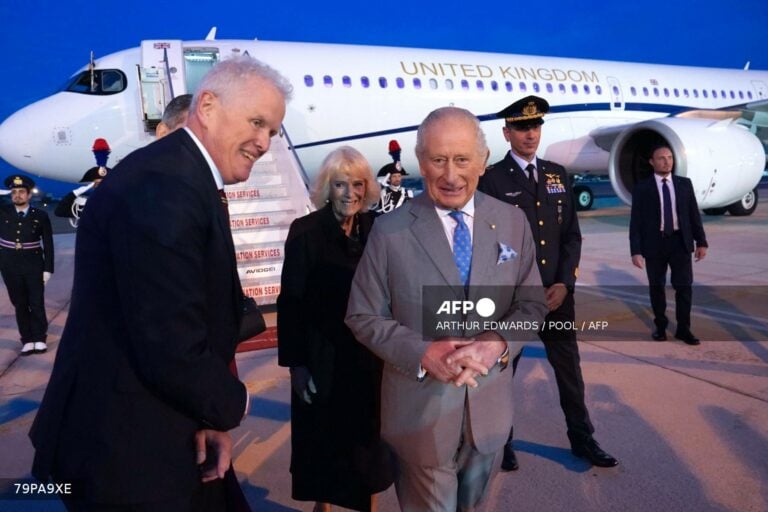
King Charles III will on Thursday meet Pope Leo XIV at the Vatican and make history as the first head of the Church of England to pray publicly with the pontiff for five centuries.
The 76-year-old monarch, who is the supreme governor of the Church of England, arrived in Rome on Wednesday evening with his wife, Queen Camilla, for what Buckingham Palace described as a “historic” state visit.
It will be Charles’s first meeting with Leo since the US-born pope took over as head of the world’s 1.4 billion Catholics in May, following the death of Pope Francis.
The royals will arrive at the Apostolic Palace at 10.45am (0845 GMT) for private talks with the pope.
READ ALSO:King Charles III To Visit Vatican Next Week
The king and queen will then join an ecumenical service at midday (1000 GMT) in the Sistine Chapel led by Pope Leo and the archbishop of York, Stephen Cottrell, currently the senior cleric of the Church of England.
Broadcast live by Vatican media, it will be the first time a reigning English or British monarch has prayed publicly with a pope since English king Henry VIII broke with Rome in 1534.
Triggered by the pope’s refusal to annul the king’s marriage so he could marry another woman, the schism made the monarch head of the separate Church of England.
Thursday’s service, held beneath Michelangelo’s spectacular ceiling frescoes, will be centred on conservation and protecting the environment, a cause championed by Charles.
READ ALSO:King Charles To Knight David Beckham For Football, Charity Work
It will bring together Catholic and Anglican traditions, with the choir from the Sistine Chapel joined by that from Saint George’s Chapel, Windsor Castle, one of the king’s residences.
– Schism –
The religious break between London and Rome remains, even if there has been a significant rapprochement in recent decades.
In 1961, the late Queen Elizabeth II, Charles’s mother, became the first British monarch to visit the Holy See since the split.
The law was changed in 2013 so that marrying a Catholic would no longer disqualify someone from becoming monarch — although they still have to be a Protestant themselves.
The rapprochement is important because “Anglicanism was born in reaction to the Catholic Church, and therefore in opposition,” said Hyacinthe Destivelle, a French priest and member of the Vatican’s dicastery (department) for promoting Christian unity.
READ ALSO:King Charles III To Visit Vatican Next Week
This is no longer the case, despite “theological differences in recent decades”, he told AFP.
Unlike the Roman Catholic Church, the Church of England — the mother church of the world’s 85-million-strong Anglican community — ordains women and allows priests to marry.
Sarah Mullally was recently named the first female archbishop of Canterbury, the Church’s top cleric, although she has yet to officially take up her post.
– Royal Confrater –
Charles and Queen Camilla are also set to take part in a service at the Basilica of Saint Paul Outside the Walls in Rome, one of four major papal basilicas, which has historic links with the English crown.
READ ALSO:Police Bust Child Trafficking Syndicate In Rivers, Rescue Babies
The king will be made a “Royal Confrater” of the basilica and presented with a specially designed seat for use by him and future British monarchs.
Charles has visited the Vatican several times and met privately with Pope Francis on April 9, just days before the pontiff’s death.
The king sent his son and heir, William, to the funeral and his brother, Prince Edward, the Duke of Edinburgh, to Leo’s inauguration mass.
The visit comes as the Catholic Church celebrates the Jubilee, a year-long event held every 25 years, which has drawn millions of pilgrims to the Vatican.
It also comes at a delicate time for Charles, following new revelations about his brother Prince Andrew, who is mired in a scandal surrounding late US sex offender Jeffrey Epstein.
Andrew announced on Friday that he would relinquish his title as Duke of York, reportedly under pressure from Charles. He had already stepped back from royal duties in 2019.
AFP



Headline
‘Pioneer Of Cable TV News’: Key Facts About CNN Founder, Ted Turner
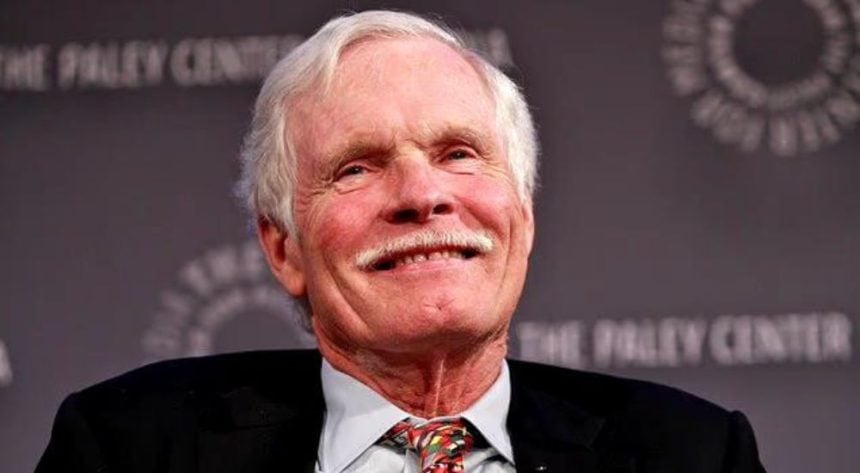
Ted Turner, the media businessman who founded CNN died at the age of 87. He died peacefully on Wednesday, surrounded by family, according to Turner Enterprises.
Contents
Launched 24-hour news television
Built a media network
Expanded through sports
Recognition and influence
Philanthropy and global causes
Environmental efforts
Health and later years
Early career path
Leadership and legacy
Personal life
Exit from business
Family
Below are key facts about his life and impact:
Launched 24-hour news television
Turner founded CNN on June 1, 1980, introducing the first 24-hour news channel and changing how audiences follow global events.
READ ALSO:CNN To Layoff 200 Staff Amid Attempts To Modernise Business
Built a media network
He moved from billboards into broadcasting, turning an Atlanta TV station into a national superstation in 1976. His business later grew to include CNN International, TNT, Turner Classic Movies and Cartoon Network.
Expanded through sports
Turner invested in sports broadcasting and owned teams including the Atlanta Braves and the Atlanta Hawks, using television to reach wider audiences.
Recognition and influence
In 1991, he was named Time magazine’s Man of the Year for his role in shaping modern news coverage.
Philanthropy and global causes
He founded the United Nations Foundation and supported campaigns against nuclear weapons. In 1997, he pledged $1 billion to the United Nations.
READ ALSO:CNN President, Jeff Zucker Resigns After Failing To Disclose Secret Affair With Colleague
Turner supported conservation work, including reintroducing bison in the United States, and backed environmental education through the “Captain Planet” cartoon.
Health and later years
In 2018, Turner revealed he had Lewy body dementia. He also recovered from a mild case of pneumonia in early 2025.
Early career path
He took over his father’s billboard company at 24 after his father’s death and later expanded into radio and television, despite limited experience in journalism.
“I worked until 7 o’clock, and when I got home the news was over,” he once said. “So I missed television news completely. And I figured there were lots of people like me.”
Leadership and legacy
READ ALSO:CNN Reporter Protests Nigeria’s $215 Single Entry Visa Fee
“Ted was an intensely involved and committed leader, intrepid, fearless and always willing to back a hunch and trust his own judgement,” Mark Thompson, Chairman and CEO of CNN Worldwide, said in a statement. “He was and always will be the presiding spirit of CNN. Ted is the giant on whose shoulders we stand, and we will all take a moment today to recognize him and his impact on our lives and the world.”
Personal life
Turner married actress Jane Fonda in 1991, and they later divorced after 10 years, though they remained close.
“I would never love anyone like I love him,” she said. “But I just couldn’t keep moving in his world, along the surface for the rest of my life. I knew that I would get to the end of my life and regret not doing the things that I also needed to do for me.”
Exit from business
He sold his company to Time Warner in 1996 and later stepped away following its merger with AOL.
Reflecting on his life, Turner once said: “I lost Jane. I lost my job here. I lost my fortune, most of it. Got a billion or two left. You can get by on that if you economize.”
Family
He is survived by his five children, 14 grandchildren and two great-grandchildren.
Headline
Iran’s Nationwide Internet Shutdown Hits 70 Days

NetBlocks, a monitoring group, has disclosed that an internet shutdown enforced by the Iranian regime has entered its 70th day, severing key access from swathes of the population under the shadow of war.
NetBlocks reported on Friday that the blackout has now surpassed 1,656 hours, marking more than two months since US-Israeli strikes pounded Tehran and escalated across the Middle East.
“Digital connectivity is vital in times of crisis,” NetBlocks said in a post on X. “Limiting service harms those most in need – people with disabilities, students, small businesses and the general public.”
READ ALSO:US Underestimated Iran Before War – France’s Bardella
According to CNN, Iran imposed a separate internet shutdown on the country’s 92 million people earlier this year, when it launched the most lethal crackdown on anti-government protesters since the Islamic Republic’s founding 47 years ago.
CNN further reports that the latest blackout has cut off another potential lifeline for Iranian residents faced with high unemployment and economic pressure exacerbated by the US-Israeli campaign.
(CNN)
Headline
Gas Prices In US Edge Down After Two Weeks Of Increases

The cost of a gallon of regular gas in the United States (US) has edged down a little more than a penny to $4.55.
According to AAA’s readings, this marks the first decline in the average gas price after 15 straight days of increases.
The decline is minuscule compared to the large increases in gas prices over the last two weeks.
According to CNN, gasoline costs rose an average of nearly 4 cents a day during that period and had several daily increases of between 7 and 9 cents.
READ ALSO:Gas Station Explosion Rocks Calabar, Scores Injured, Property Destroyed
Also Read: Trump insists US-Iran ceasefire intact despite recent exchange of fire
CNN also reports that based on past gas spikes, it will likely take weeks for gas prices to get down below $4 a gallon.
The report, however, states that a previous two-week stretch of gas price declines only shaved 14 cents off the average price, taking the average price to $4.02, before the recent 15-day run of increases.
READ ALSO:Tinubu Signs Executive Order To Protect Nigeria’s Oil & Gas Revenue
According to CNN, it could take months for the average price to fall below $3 per gallon, as it did before the war in Iran.
CNN further reports that only one state – Oklahoma – now has an average price of less than $4 a gallon, and its average stands at $3.98. California has the highest average price at $6.16.
(CNN)

 Politics4 days ago
Fubara Clears Air On ‘Defection’ To NDC [VIDEO]
- Politics2 days ago
Four Fubara Loyalists Disqualified As APC Clears 21 For Rivers Reps Primaries
- News3 days ago
Gun Battle In Oyo Forest As Police Disrupt ₦10m Ransom Collection Plot
- News4 days ago
Ex-power Minister Jailed 75 Years Over Fraud
- Politics2 days ago
2027: Court Rebukes Plaintiff, Lawyer In Suit Against Jonathan, Awards N1m Fine
- News2 days ago
Lagos Sanctions 15 Money Lending Companies For Sharp Practices
 Metro3 days ago
Drama As Teenagers Stage Secret Wedding With N3,000 Bride Price
- Politics4 days ago
2027: Daniel-Abiodun Feud Deepens Over Senatorial Ticket For Ogun East
- Entertainment4 days ago
Grammy Announces Date For 2027 Awards Nominations
- Politics4 days ago
2027: APC Clears Delta Speaker, Disqualifies 36 Aspirants


