
Headline
Pope Leo Creates Seven New Saints In Historic Vatican Ceremony
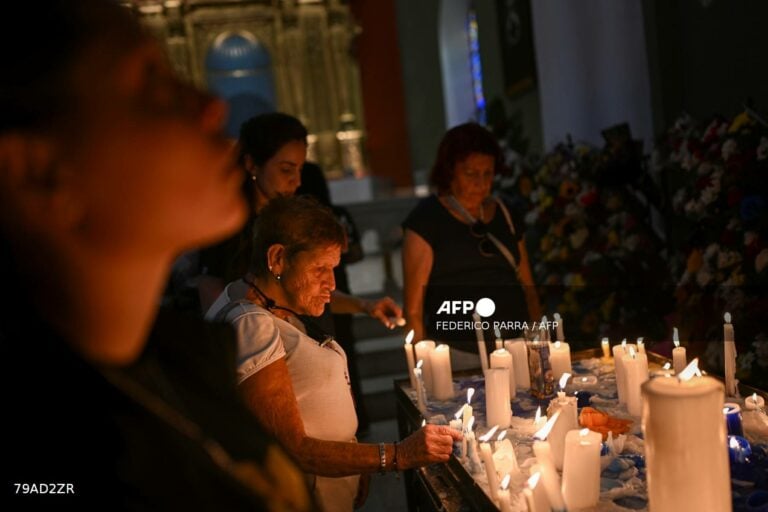
Bells rang out Sunday over St Peter’s Square as Pope Leo XIV created seven new saints, including the first from Papua New Guinea, an archbishop killed in the Armenian genocide, and a Venezuelan “doctor of the poor.”
Also canonised during the solemn ceremony, under sunny skies in the vast plaza on World Mission Day, were three nuns who dedicated their lives to the poor and sick and former Satanic priest Bartolo Longo.
The Italian lawyer born in 1841 subsequently rejoined the Catholic faith and went on to found the Pontifical Shrine of the Blessed Virgin of the Rosary of Pompeii.
“Today we have before us seven witnesses, the new Saints, who, with God’s grace, kept the lamp of faith burning,” Leo told an audience the Vatican estimated at some 55,000 people.
READ ALSO:Pope Leo XIV Urges End To Exploitation And Hatred In First Address As Pontiff
“May their intercession assist us in our trials and their example inspire us in our shared vocation to holiness,” he said during his homily.
Huge portraits of the seven were unfurled from windows over the square as Leo, the first US pope, exited St Peter’s Basilica dressed in a ceremonial white cassock with a white mitre on his head, preceded by white-clad bishops and cardinals.
Cardinal Marcello Semeraro, prefect of the Dicastery for the Causes of Saints—the Vatican department charged with beatification and canonisation—read aloud profiles of the seven to applause from the crowd.
With Leo’s reading of the canonisation formula, they were officially declared saints.
In his homily, Leo described the new saints as either “martyrs for their faith,” “evangelisers and missionaries,” “charismatic founders” of congregations, or “benefactors of humanity.”
READ ALSO:Pope Leo XIV Declares Friday Global Prayer, Fasting Day For Peace
The rite of canonisation was the second for the former Robert Prevost since he was made leader of the Catholic Church on May 8.
Last month, he proclaimed as saints Italians Carlo Acutis—a teenager dubbed “God’s Influencer” who spread the faith online before his death at age 15 in 2006—and Pier Giorgio Frassati, considered a model of charity who died in 1925, aged 24.
Canonisation is the final step towards sainthood in the Catholic Church, following beatification.
Three conditions are required—most crucially that the individual has performed at least two miracles. He or she must be deceased for at least five years and have led an exemplary Christian life.
Martyrs, humanitarians
Along with Longo, those made saints Sunday were Peter To Rot, a lay catechist from Papua New Guinea killed during the Japanese occupation during World War II, Armenian bishop Ignazio Choukrallah Maloyan, killed by Turkish forces in 1915, and Venezuela’s Jose Gregorio Hernandez Cisneros, a layman who died in 1919, whom the late Pope Francis called a “doctor close to the weakest.”
Also from Venezuela was Maria Carmen Elena Rendiles Martinez, a nun born without a left arm who overcame her disability to found the Congregation of the Servants of Jesus before her death in 1977. She becomes the South American country’s first female saint.
The Italian nuns canonised are Vincenza Maria Poloni, the 19th-century founder of Verona’s Institute of the Sisters of Mercy, which cares primarily for the sick in hospitals, and Maria Troncatti of the Daughters of Mary Help of Christians.
In the 1920s, Troncatti arrived in Ecuador to devote her life to helping its indigenous population.
AFP



Headline
Woman Passes Out After Receiving 100 Strokes Of Cane
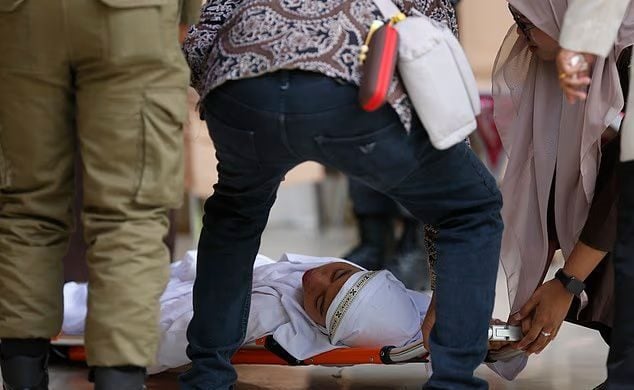
A woman has passed out after she and her partner were each flogged 100 times in public for engaging in sex outside marriage under strict Sharia laws in Indonesia’s Aceh province.
The woman, whose identity was not disclosed, was later carried away after the punishment was carried out in Banda Aceh, located at the northern tip of Sumatra island on Thursday.
A masked official dressed in brown robes administered the caning before members of the public who gathered to witness the punishment.
Her partner was also seen wincing in pain while receiving the lashes.
READ ALSO:Ex-INEC REC Reveals 2026 Electoral Act Provisions That Could Undermine 2027 Election
The pair were among several individuals punished for violating Sharia regulations in the province.
Authorities from the Banda Aceh Sharia Court and the Prosecutor’s Office handed down punishments ranging from 25 to 100 lashes for offences including extramarital sex allegedly arranged through online applications.
Aceh remains the only province in Muslim-majority Indonesia operating under Sharia law, where unmarried couples are prohibited from having sexual relations.
Caning is commonly used in the province as punishment for offences such as gambling, alcohol consumption, same-sex relations and sex outside marriage.
READ ALSO:UN Facing ‘Imminent Financial Collapse’ — Secretary General Lamenets
Under Aceh’s Sharia regulations, child rape offenders face some of the harshest penalties, including up to 200 strokes of the cane, a prison sentence of as long as 200 months or fines equivalent to two kilograms of gold.
The punishments are usually carried out publicly as a way of shaming offenders in addition to inflicting physical pain.
Such canings are often conducted outside mosques or in open public spaces, with residents watching and taking photographs during the exercise.
Human rights organisations have continued to condemn the practice, arguing that it causes emotional trauma and violates international human rights standards.
READ ALSO:18-year-old OAU Medical Student Dies While Sleeping
Amnesty International and Human Rights Watch have repeatedly criticised the punishments, saying they conflict with Indonesia’s constitution and global legal obligations.
Amnesty said in a statement: “Caning contravenes Indonesia’s constitution and is in clear violation of international human rights law and standards.
‘It constitutes a cruel, inhuman and degrading punishment and can amount to torture in violation of the UN Convention against Torture and other international covenants, to which Indonesia is a State Party.’”
Despite the criticism, local authorities have defended the punishments as part of Aceh’s religious and cultural identity, insisting they serve as a deterrent against immoral behaviour.
Earlier in January, another couple in the province reportedly received 140 lashes each after being found guilty of drinking alcohol and engaging in sex outside marriage.
(Daily Mail)
Headline
Senegal’s President Sacks Prime Minister After Months-long Feud
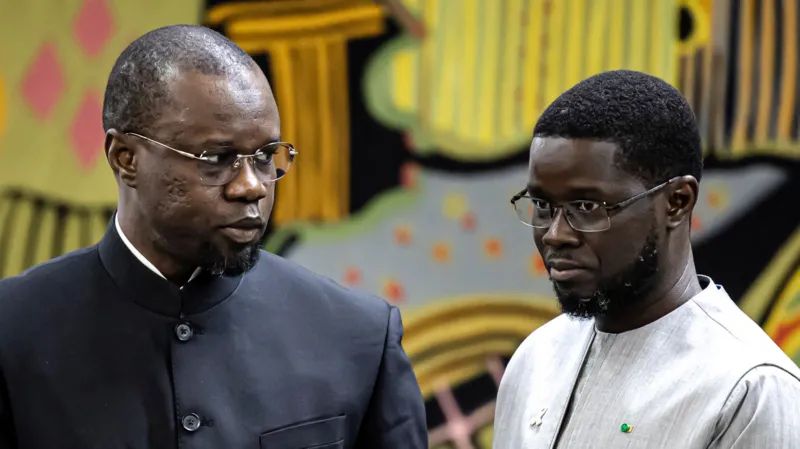
Senegal’s President Bassirou Diomaye Faye has sacked Prime Minister Ousmane Sonko and dissolved the government following months of rising political tension between the two former allies.
The decision was announced in a surprise decree read on national television by a presidential aide, stating that Faye had “ended the duties” of Sonko and “consequently those of the ministers and secretaries of state who are members of the government”.
Sonko, who remains a highly influential figure among Senegal’s youth, responded on social media, saying he would “sleep with a light heart”.
READ ALSO:Senegal Lawmakers To Debate Same-sex Relations Bill
The political fallout comes at a time of growing economic strain in the country, with the International Monetary Fund (IMF) putting Senegal’s public debt at 132% of its GDP.
His removal followed a tense parliamentary session on Tuesday, where Sonko openly criticised President Faye’s handling of the debt situation.
The development is striking given that Faye’s rise to power was largely tied to Sonko’s popularity and political backing.
READ ALSO:French Army To Leave Senegal Amid Africa Downsizing
Sonko would almost certainly have contested the presidency himself in 2024, but was barred from the race due to a defamation conviction. Instead, he threw his support behind Faye, rallying voters with the slogan “Diomaye is Sonko, Sonko is Diomaye”.
The alliance helped unseat former President Macky Sall in a dramatic electoral victory, despite both men having been released from prison only days before the vote.
Tensions between the two leaders had been building for months, with Faye reportedly accusing Sonko of excessive dominance within the ruling Pastef party, while Sonko accused the president of weak leadership and failing to defend him against critics.
(BBC News)
Headline
Six Nigerians Arrested In Thailand Over AI-Powered Romance Scam

Six Nigerian nationals have been arrested by the Thailand Police Force for allegedly operating an AI-powered deepfake romance scam syndicate from a luxury condominium along the Chao Phraya River in Nonthaburi Province, following a cocaine trafficking investigation that exposed their activities.
Thai authorities said the operation began after police arrested a Nigerian suspect identified as Patrick and three associates in April over alleged drug trafficking offences. During the raid, officers reportedly seized assets valued at about 2.5 million baht.
Investigators said financial transactions linked to the suspects led them to several foreign nationals living in a high-end riverside condominium near Phra Nangklao Bridge in Nonthaburi. Police discovered that many of the occupants were staying in groups of five or six per apartment under student visas despite not being enrolled in any educational institution or engaged in lawful employment.
According to Thai police, officers executed search warrants on three condominium units on May 22. The suspects allegedly refused to open their doors, forcing authorities to break into the apartments.
READ ALSO:Libya Journey: Cobbler Arrested For Stealing Motorcycle In Edo
Videos circulating on X captured the moment police officers forcefully gained entry into one of the apartments before arresting the suspects.
During the operation, one suspect reportedly attempted to escape by climbing over a balcony, while another was found hiding on the bathroom floor while allegedly sending warning messages to occupants in neighbouring units.
Police recovered 18 mobile phones, three laptop computers and three bank passbooks from the apartments. Authorities said some of the phones were still logged into active conversations with victims at the time of the raid.
Investigators alleged that the syndicate specialised in romance scams targeting older Thai women by using AI-generated faces and manipulated video calls to create fake online identities.
READ ALSO:Police Inspector Arrested For Armed Robbery Dies From Bullet Wounds
The suspects allegedly posed as pilots, United States military officers, doctors and engineers to gain the trust of victims before requesting money under false pretences.
Police said the fraudsters typically claimed that valuable packages or gifts sent to victims had been withheld by customs officials and required payment of clearance fees before release.
Authorities also said they recovered scripts for sexually explicit conversations allegedly used to emotionally manipulate victims into transferring funds. Investigators claimed the group relied heavily on artificial intelligence technology to generate realistic Western faces for fake video interactions.
Thai police said all six suspects are currently facing preliminary charges bordering on illegal association and immigration overstay, while additional fraud and romance scam charges are expected to follow as investigations continue.

 Metro5 days ago
My Husband Abandoned Me On Our Wedding Night To Attend Political Meeting, I Want Our Marriage Dissolved
- Headline4 days ago
Woman Passes Out After Receiving 100 Strokes Of Cane
- Headline4 days ago
JUST IN: White House Locked Down Briefly As Gunman Opens Fire At Security Checkpoint
- Politics3 days ago
Two Masked Men Gun Down Politician In His Rivers State Hotel
- Politics5 days ago
Warri Ijaw Hail INEC Delineation Report, Call For Additional Electoral Wards, Others
- News3 days ago
More Pain For Nigerians As Cooking Gas Price Increases Nationwide
- News5 days ago
Alleged Terrorism: Court Rejects Defendant’s Bid To Travel Abroad
- Metro5 days ago
My Wife Stop Cooking My Food, Beats Me Black And Blue All the Time, Man Tells Court
- Politics5 days ago
What I’ll Do As President Of Nigeria — Amaechi
- Politics3 days ago
‘Tinubu’s Borrowing In 24 Months Surpasses 55 Years’ Debt Record’


