
News
LG Autonomy: S-Court Gives Governors 7 Days To Respond To FG’s Suit

The Supreme Court, on Thursday, ordered the Governors of the 36 States of the Federation, to within seven days, enter their defence to the suit the Federal Government filed to secure full autonomy for the 774 Local Government Areas, LGAs.
The order followed an application that FG, through the Attorney General of the Federation and Minister of Justice, Prince Lateef Fagbemi, SAN, for accelerated hearing of the matter and for the abridgment of the time allowed for all state governors to file their response to the suit.
In its ruling, a seven-man panel of the apex court led by Justice Garba Lawal, said the AGF should upon receipt of the processes containing defence of the governors, respond to it within two days.
The panel fixed June 13 to commence full-blown hearing of the matter.
READ ALSO: Flood Wreaks Havoc On Edo INEC Headquarters, Destroys Valuable Equipment
Meanwhile, the Chairman of the body of Attorneys General of the States, Mr. Ben Odoh, who is the Attorney General of Ebonyi State, was present during the proceeding.
Mr. Odoh told the apex court that he was not opposed to the request for the abridgment of the hearing date.
However, he requested for the respondents to be allowed to file their defence to the matter, within 15 days.
While declining to extend the time for the respondents, Justice Lawal said the decision of the apex court was hinged on the fact that the matter is of utmost national importance as well as the urgency of the case.
READ ALSO: ‘Misplaced Priority,’ Nigerians Slam Govt For Reinstating Old National Anthem
The court directed that filing of all processes and exchanging of same must be completed before the next adjourned date.
Those that had no legal representation even though they were served with the hearing notice, were the Attorneys General of Borno, Kano, Kogi, Niger, Ogun, Osun , Oyo and Sokoto states.
The Justice Lawal-led panel orders that they should be served with a fresh hearing notice to enable them to attend the next sitting.
FG had in the suit marked SC/CV/343/2024, prayed the Supreme Court to okay full autonomy for all the LGAs in the country as the third tier of government.
READ ALSO: Nigerian Arrested For Cocaine Possession In Malawi
It prayed the court to issue an order, prohibiting state governors from embarking on unilateral, arbitrary and unlawful dissolution of democratically elected local government leaders.
As well as for an order permitting the funds standing in the credits of local governments to be directly channeled to them from the Federation Account in line with the provisions of the Constitution as against the alleged unlawful joint accounts created by governors.
Besides, FG, prayed the Supreme Court for an order, stopping governors from further constituting Caretaker Committees to run the affairs of local governments as against the Constitutionally recognized and guaranteed democratic system.
It equally applied for an order of injunction, restraining the governors, their agents and privies, from receiving, spending or tampering with funds released from the Federation Account for the benefits of local governments when no democratically elected local government system is put in place in the states.
Governors of the 36 States were sued through their respective Attorneys General.



News
OPINION: Aláàfin Ọ̀yọ́ Cuddling A Dead Empire (1)

Tunde Odesola
The (Ọmọ) child (tó) is (bá) the (ma jẹ́) father (Àṣàmú) to (kékeré) the (ló ti ń jẹnu) man (ṣámú-ṣámú). Ehn, yes! Deal with it! The mishmash opening sentence is intentional because it is confusion I have on offer today, not peace or order. Not prostration or placation. My esteemed readers can’t be eating Christmas rice and chicken while I wrack my brain to produce an article, which will be digested within 20 minutes, amid mutterings of ‘uhm!’, “na wa o” and “you said it all.” No, I won’t have all that.
Dear readers, where’s my Christmas rice and chicken? At all, at all, na im bad. It’s not only your mouths that can describe the road to Ọ̀yọ́: Ẹnu yín nìkan kọ́ ni wọ́n ń bá dé Ọ̀yọ́. My own mouth too can also describe the road to Ọ̀yọ́ if I sight a plateful of chicken and jollof rice.
Even if my cheeks bulge with a mouthful of rice and my eyes ogle with foodie greed while I clutch chicken thighs in both hands, I still can describe with my mouth 100 roads leading to Ọ̀yọ́. Right now, I’m journeying to the palace of Aláàfin Abimbola Akeem Ọwọade, the Iku Baba Yeye, to celebrate Christmas with him. If you are interested, you can come along; Aláàfin has more than enough food and palm wine to go round.
Now, let’s get a bit more serious. If you run the jargony first sentence of this article through a literary sieve, you will get two intertwined proverbs: one English, the other Yoruba. The English proverb is “The child is the father of the man”, and its Yoruba counterpart is “Ọmọ tó bá ma jé Àṣàmú, kékeré ló ti ń jẹnu ṣámú-ṣámú”. Neither plagiarised the other. Only that the same stream of thought flowed through two different social milieux in different languages, at different eras, before congealing in wisdom. The English proverb was coined by William Wordsworth, an English poet, in his 1802 poem, “My Heart Leaps Up.” Its Yoruba equivalent, “Ọmọ tó bá ma jé Àṣàmú,” is a fruit of logic dangling on a communal tree at the village square.
Since the two proverbs mean the same thing, I’m taking both with me to the Ọlọ́yọ in Ọ̀yọ́. “The child is the father of the man” implies that the gamut of a person’s childhood experiences, character, and values fundamentally shape who they become as an adult, stressing that the innocent, formative years of childhood lay the groundwork for the entire adult life. The proverb has a couple of other meanings, but the meaning I deploy here suffices for this engagement. The Yoruba proverb, “Ọmọ tó bá ma jé Àṣàmú, kékeré ló ti ń jẹnu ṣámú-ṣámú,” means “A child that would grow to become Àṣàmú (an adult), would possess from childhood, Àṣàmú’s sharp oratory skill.”
MORE FROM THE AUTHOR:[OPINION] Tinubu: Ade Ori Okin Befits KWAM 1, Not Awujale Crown
Let me bore you with the story a deputy governor told me many, many years ago. “Tunde, I was a rascally child. There was no mischief beyond me. One day, I rummaged through my father’s alcohol cabinet, which had all sorts of choice drinks. Normally, I drink from any bottle that tickles my fancy. But, one particular day, I took a swig from a dark bottle, it was so sweet, nice and creamy. I took another swig and fell asleep, right by the cabinet.
“I jerked awake to my father’s car horn. Quickly, I locked the bar, bolted to my room, grabbed a book and sat like a saint. Ha, that was a close shave! Hot air zipped down my nostrils. That night, I slept soundly. I looked forward to another drink from the dark bottle. On subsequent occasions, I drank from the bottle. Each time I drank, I topped it up with a little water.”
“One day, my daddy had some of his fellow top civil servants visiting. He was happy to receive them. He went to his mahogany bar, opened it and brought out various drinks. Clutching ‘my’ bottle, my father proudly announced to his friends that he bought the creamy drink and some others from France. One of his friends took the ‘my’ bottle from him, noticed it was already opened, but he didn’t say anything. As he opened and poured the drink, my heart relocated. The drink that was once chocolate had turned snow-white. When he tasted it, his face crumpled like a deflated balloon. He called my father by his first name and showed him the content in his cup, saying, ‘Lagbaja, this is not from France.’
“My father was no-nonsense. His instrument of chastisement was an entwined six-wire whip. After seeing off his friends, he stormed back in. He called all of us to the sitting room and announced the crime. He didn’t ask who the culprit was. He just said, “I’ll begin with the youngest! Hey, you, come here!”
“My youngest sibling screamed, “Èmi kọ́ o ! It’s not me o! It’s aunty Tamedo. I saw her when she opened your cabinet and drank your drinks! It’s not me o!!”
Unknown to him that the soul of his Irish Cream had been killed by his daughter, the deputy governor’s father lived on false hope, believing that his bar was still as warm as a furnace, not knowing that it was as cold as a refrigerator. He was living in the past, like Aláàfin Ọwọade is doing today.
MORE FROM THE AUTHOR:[OPINION] Siyan Oyeweso: Lessons In Virtue And Vanity
Enthroned in the first quarter of 2025, Ọwọade has yet to clock one year on the àpèrè of his forefathers. But it appears the Ọlọ́yọ has been reigning for over a decade. The gbas-gbos sound of the pestle pounding the mortar in Ọ̀yọ́ is not a dinner invitation. The sound is the drumbeat of an unnecessary war. On April 11, 2025, exactly six days after his inauguration on April 5, 2025, I wrote an article, “Letter to Alaafin Abimbola Owoade,” in honour of the new king, congratulating him and charging him to rule in peace, love and harmony. In the article, I prayed, “May the land not be angry with your majesty. May Ọ̀yọ́ live in harmony during your reign…Aláàfin, so far, your feet appear set on the path of honour, I beseech thee not to depart from it.”
Upon noticing the unmelodious bata sound emanating from Ọ̀yọ́ palace thereafter, I wrote another piece on May 9, 2025, titled, “Aláàfin Ọwọade: Thy bata drum is sounding too loudly.” In the article, I called on Ọwọade to tread with caution, warning that royalty road is strewn with banana skins. Specifically, I recalled the controversial death of Chief Lookman Arounfale, the Baba Ọjà of Ọ̀yọ́tùnjì, a US community, after he was reportedly attacked in Aláàfin’s palace. However, the palace issued a statement denying involvement in the death of Arounfale.
In the article, I also recalled how the Ọ̀ràngún of Ìlá, Ọba Abdulwahab Oyedotun, and his entourage were allegedly treated shoddily during a congratulatory visit to the Aláàfin.
From day one, I mean, right on Aláàfin’s coronation day, controversy erupted over what many Yoruba sons and daughters perceived as shabby treatment of the Ooni of Ife, Ọba Adeyeye Enitan Ogunwusi, whose name was not mentioned at all during the programme. As the culturally recognised head of all Yoruba traditional rulers, the Ọọni was not given the honour to speak at the occasion. This action presupposes that the Alaafin, even before his coronation, nursed a complex against the Ọọni. My personal findings showed that when it was the turn of an oba to speak on behalf of all traditional rulers present at Ọwọade’s coronation, it was the Oloro of Oro in Kwara State, Ọba Oyatoye Titiloye, a couple-of-months-old king, who was called to speak. When it was time for the Alaafin to talk, he failed to recognise the Ọọni or kings from Osun State. I don’t think that’s a good way to treat visitors who left their ‘ile ati ona’ to come and felicitate with you.
In his eight-month reign so far, Ọwọade has visited the Aseyin of Iseyin (Oyo State), Okere of Sak (Oyo State)i, Alake of Egba (Ogun State), Sultan of Sokoto (Sokoto State), Onitede of Tede (Oyo State), Olofa of Ofa (Kwara State), Oluwo of Iwo (Osun State), Emir of Ilorin (Kwara State), and the Olowu Kuta of Owu Kuta (Osun State), on a thank you and familiarisation visit. But he has yet to visit the ancestral and cultural head of the Yoruba nation, the Ooni of Ife, Ọọni Adeyeye Ogunwusi. I suspect Aláàfin Ọwọade is saving the biggest for the last. Iku Baba Yeye is at liberty to choose who and when to visit.
MORE FROM THE AUTHOR:OPINION: Fayose-Obasanjo: Two Eboras Dragging Same Pair Of Trousers (1)
Ọwọade’s attitude became a matter of particular concern for me because the heatmap of his relationship with the Ooni indicates red, while that of the Arole Oduduwa is green. At this juncture, it is good to ask the Aláàfin a pertinent question. How has the Ooni wronged you? As I said earlier, it behoves the Aláàfin to associate with whosoever he desires, but it doesn’t lie in his right to exhibit an attitude that casts the Yoruba in discourteous, arrogant and unroyal light.
I ask again, what has the Ọọni done to deserve disdain from the Aláàfin – when the Ọọni has not publicly disrespected him? Before the Aláàfin thinks I’m doing a paid job for Ogunwusi, he should grab a copy of last Friday’s PUNCH and read how acerbic I was of the Ọọni for installing Senator Oluremi, the wife of President Bola Tinubu, as Yeye Asiwaju Gbogbo Ile Oduduwa, without using the symbolic ‘akoko’ leaves. The title of that my critique is “Tinubu: Ade Ori Okin befits KWAM 1, not Awujale crown”. Aláàfin, nobody send me o; I am just in the queue of Nigerians who demand responsible leadership for our society to grow.
The long queue of Nigerians demanding decorum from their leaders was shocked a few months ago when Ọwọade announced that he was the only traditional authority that could honour anyone with a title that covers the whole of Yorubaland. Ọwọade’s announcement came after the Ọọni honoured an Ibadan businessman, Dotun Sanusi, as the Okanlomo Oodua. Hehehe. The King of Oyo also gave Ogunwusi 48 hours to rescind the title given to Sanusi or face a consequence. The Ọọni has not rescinded the title. And thunder from the Ṣango of Ọyọ has failed to strike Ogunwusi. Abi, does the Aláàfin mean 48 years?
Or was the Iku Baba Yeye ‘catching cruise’ – as the youth of today would say? When confronted with an unserious or funny matter, the youth of today would also say ‘dey play’ or ‘ọ̀rọ̀ àpárá. Is the Alaafin plying?
A foremost traditionalist and Araba of Osogbo, Ifayemi Elebuibon, shared his opinion on the ongoing issue, saying the Old Oyo Empire, which Ọwọade is using as a basis for his preeminent claim, was long dead and buried. He said, “Ọyọ should pay reparation to other parts of Yorubaland that they despoiled. Ọyọ wreaked havoc on fellow Yoruba towns, lording it over towns and villages, and forcing them to pay tributes. When they argue that they rescued Yorubaland, did they fight wars as much as Ibadan? Where were they when Ibadan warriors repelled and defeated the Fulani? The Old Ọyọ empire had collapsed then. So, should Ibadan also get up and say they are superior to Ile-Ife? No. How can a child be older than his father? Did Ọranyan, who founded Ọyọ, not leave from Ile-Ife? So, what are they saying? Is supremacy fight what our kings should be engaged in now?
“Look at how many people Basorun Gaa killed. Look at how many Alaafins he killed? Is that the type of history that we should be proud of? Is that the type of history that a king should derive his present-day authority from, and try to lord it over others as if we are still in the past? The Alaafin should learn patience. Many of our traditional rulers are bringing shame to us. Was it Ifa or a royal election that made Alaafin superior? But the Ọọni derives his superiority from Ifa.”
I reminded Elebuibon that Ifa chose the new Alaafin. He said, “Yes, Ifa chooses kings, but the chosen king must also reinvent himself…”
To be continued.
Email: tundeodes2003@yahoo.com
Facebook: @Tunde Odesola
X: @Tunde_Odeso
News
Makinde Increases Gratuity Payment Of Retirees From N1.5b To N3b
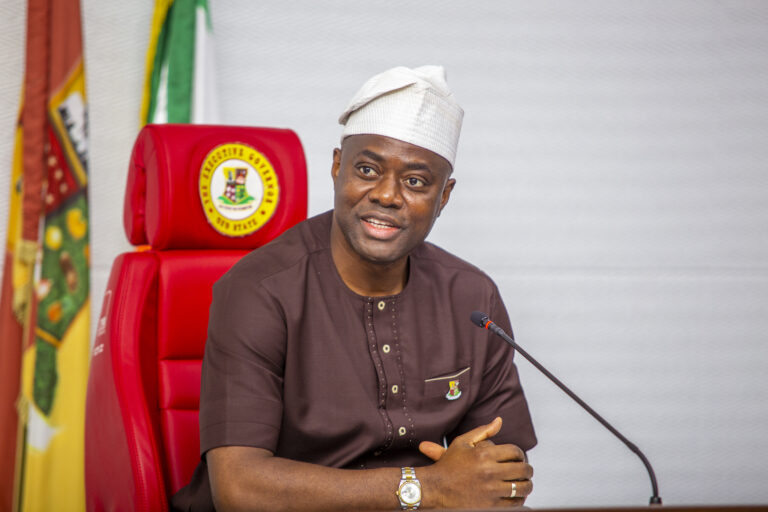
Oyo State Governor, Engr. Seyi Makinde, has approved a 100 per cent increase in gratuity payments for retirees in the state.
The Secretary of the Nigeria Labour Congress (NLC), Aribatise Adebayo, confirmed the development in a statement made available to journalists in Ibadan on Friday.
Adebayo noted that gratuity payments have increased significantly from ₦1.5 billion to ₦3 billion.
He said the development further confirms the governor’s worker-friendly disposition towards labour unions in the state.
Adebayo added that the governor has not reneged on his promise to continue paying the 13th-month salary at the end of every calendar year.
READ ALSO:JUST IN: Wike, Govs Makinde, Bala Mohammed Clash At PDP Secretariat
The statement read, “The leadership of the Nigeria Labour Congress (NLC), Trade Union Congress (TUC), and Joint Negotiating Council (JNC) in Oyo State sincerely appreciates the Governor of Oyo State, His Excellency, Engr. Seyi Makinde, for his commendable and worker-friendly gestures.
“We particularly commend the Governor for increasing the proposed gratuity payment from ₦1.5 billion to ₦3 billion, a decision that demonstrates his deep commitment to the welfare of retirees.
“We also applaud the consistent payment of the 13th-month salary, which has now been paid for the seventh time, as well as the prompt release of subventions.
“These actions further reaffirm the governor’s dedication to the well-being of workers and retirees in Oyo State and his unwavering support for industrial harmony.”
READ ALSO:Okpebholo Slams ₦25bn Libel Suit On Edo PDP Chairman
Makinde has felicitated Christians in the state and across the country on the occasion of this year’s Christmas, urging them to continue to live in love and harmony with one another and with their neighbours.
The governor made the call in a Christmas message released on Thursday and made available to journalists by his Special Adviser on Media, Dr Sulaimon Olanrewaju.
According to Makinde, Christmas is a season of love, with the birth of Christ as the essence of the celebration, stressing that Christians must reflect this message by showing love to others and living in peace in line with the teachings of Jesus Christ.
He also counselled residents of the state to remain vigilant during the Yuletide, noting that security is a shared responsibility between the government and the people.
READ ALSO:Makinde, Wife Installed As Aare Omoluabi, Yeye Aare Omoluabi Of Akure Kingdom
The governor urged citizens to report suspicious movements and activities to security agencies through the Oyo State Citizen Emergency Number, 615, reiterating that the principle of “if you see something, say something” remains in force.
He said: “This is to wish our Christian brethren and, indeed, all residents of Oyo State and Nigeria a Merry Christmas.
“Christmas, as we all know, symbolises love as exemplified by the miraculous but humble birth of the Lord Jesus Christ. Thus, we must live the message and the essence of the festival.
“Let me also use the opportunity to charge residents of the state to be vigilant and observant as they go about merrying. As a government, we have been up to the task in terms of securing the state, but there is still a role for residents to play. This is why we always say that if you see something, say something, and your government will do something.
“The Oyo State Citizen Emergency Number 615 is active. Please call to report any emergency or suspicion of criminality, and our rapid response system will be activated to bring the situation under check.
“Once again, Merry Christmas!”
News
PHOTOS: SGF George Akume Weds Ooni’s Ex-Queen
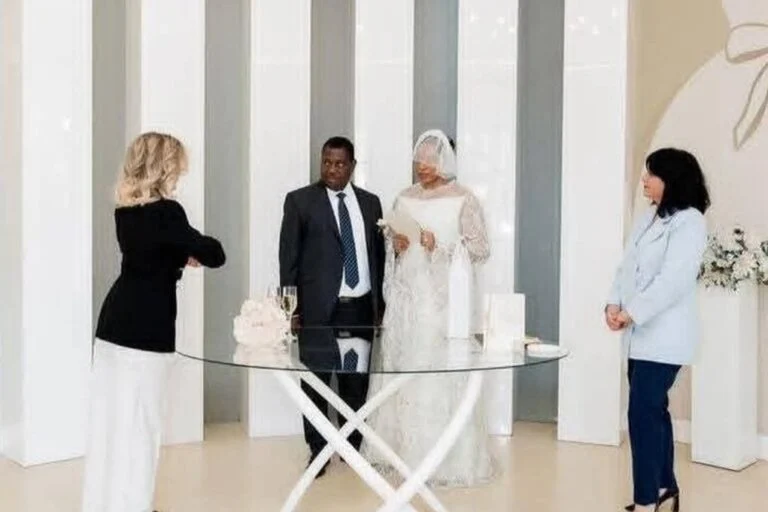
The Secretary to the Government of the Federation, Senator George Akume, has officially wed Queen Zaynab Ngohemba, the former wife of the Ooni of Ife, Oba Adeyeye Enitan Ogunwusi.
The announcement was made public on Friday by a facebook user and member of the Dajoh family, Abraham Double-d Dajoh, via a celebratory social media post.
He confirmed the union between the high-ranking government official and the former Olori of the Ife Kingdom.

The Dajoh family described the union as “beautiful” and “uncommon,” as they formally welcomed her into their fold in Benue State.
READ ALSO:JUST IN: Ooni Visits Olubadan-designate Ladoja In Ibadan
In a statement that quickly went viral, the Dajoh family expressed their collective joy, signalling a significant chapter for the SGF’s household.
“We, the entire Dajoh Family, happily join our daddy, uncle and brother, His Excellency, The Secretary To The Government Of The Federation, Sen. George Akume Jugu Dajoh in welcoming his new and uncommon wife, Queen Zaynab Ngohemba-George Akume Dajoh, into the Dajoh family,” the post read.

The family further extended their appreciation to the political associates and supporters of the SGF, urging them to remain steadfast in their loyalty to him as he embarks on this personal journey.
“We appreciate and thank the fans and supporters of Sen. Akume for always standing by him. We enjoin every one of you to continue to support his Excellency even in this beautiful union with Queen Zaynab,” the post further read.
READ ALSO:Ooni-Alaafin Feud: Ooni’s Palace Reacts To Viral Video
Queen Zaynab, who was previously known as Olori Wuraola during her 17-month marriage to the Ooni of Ife (which ended in 2017), was ushered into her new home with deep cultural reverence.

The Dajoh family emphasised the importance of their ancestral roots in Mbakor and the wider Benue State.
“Welcome to Benue State, the Food Basket of the Nation, welcome to Mbakor, the seat of leadership of the Tiv nation and welcome to the Dajoh family, the home of your darling husband. Welcome home, Queen Zaynab,” the statement concluded.
The announcement coincided with the festive period, as the family used the opportunity to wish Nigerians a happy holiday season.
READ ALSO:Why Cameroonian Authorities Detained Five Nigerian Pastors – Sources
“We wish you all a happy Christmas Celebration and a Prosperous New Year,” the post read.

Akume, a former Governor of Benue State and a politician, currently serves as a key figure in the President Bola Tinubu administration.
The news of his marriage to Queen Zaynab—a prominent humanitarian and former royal—has become a major talking point across the country’s social and political circles.
Contacted on the telephone on Friday, Akume’s spokesman, Yomi Odunuga, confirmed the marriage.
He, however, said contrary to reports that the wedding was held on December 24, the marriage is over a year old.
“I can confirm the marriage. However, contrary to the rumour that the marriage was concretised in Gboko on Christmas eve when the couple appeared together at an event to celebrate Christmas, it was actually a marriage that is over a year old,” Odunuga said.

 News4 days ago
PHOTOS: New Era In Furupagha-Ebijaw As Okpururu 1 Receives Staff Of Office
- News4 days ago
UBTH CMD Marks 120 Days In Office, Expresses Commitment To Providing Conducive Working Environment
- News4 days ago
OPINION: Gumi And His Terrorists
- News4 days ago
FIRS Confirms NIN As Tax ID
- News4 days ago
FG Declares Public Holidays For Christmas, New Year Celebrations
- Metro3 days ago
Fintiri Pardons Man Sentenced To Death For ‘Killing Herdsman In Self-defence’, Others
- News4 days ago
OPINION: Christmas And A Motherless Child
- News3 days ago
JUST IN: Kano Lawmaker, Sarki Aliyu Daneji, Dies Hours After Colleague’s Passing
 News4 days ago
OPINION: My Man Of The Season
- News4 days ago
KWAM 1 Withdraws From Awujale Race, Ends Court Challenge


