
Headline
Looted Benin Artifacts: No Controversy Over Ownership, Oba Of Benin Declares
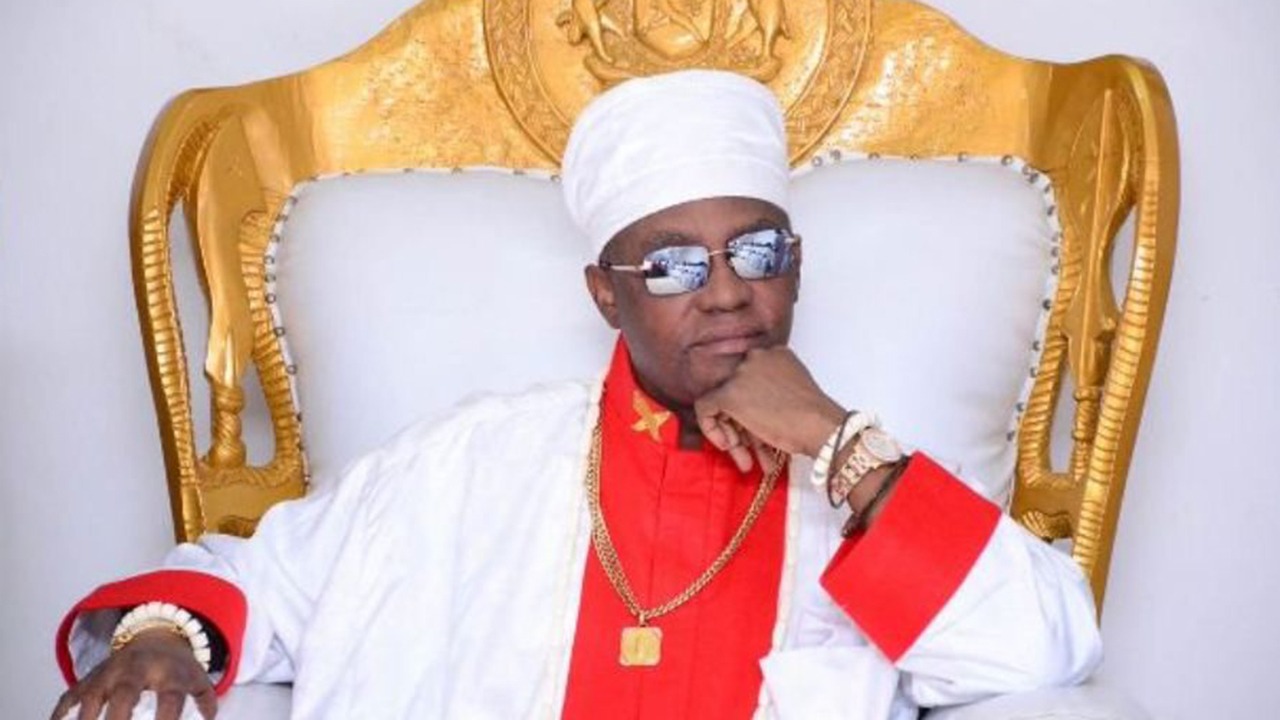
The Oba of Benin, Oba Ewuare II has declared that there was no dispute over the ownership of thousands of Benin artefacts taken from the palace Benin in 1897 during the British invasion of the kingdom.
The monarch made this known when the Chairman, DAAR Communications, High Chief Raymond Dokpesi, paid him a courtesy visit on the palace to celebrate with him on his birthday and his fifth coronation anniversary, wherein Dopkpesi commended the efforts of the Oba to bringing back the artworks.
The stolen artifacts from the Benin palace are said to scattered across Europe, United States and other parts of the world.
He said “the good are behind you in all your efforts to ensure that all the artefacts that were taken away from here are bright back and restored.”
The Oba who also dispelled speculation that some of the works were not taken from the palace but elsewhere, commended the Federal Government and the Director General, National Commission for Museums and Monuments (NCMM) for the support.
While commending Dokpesi for taking the lead in private broadcasting in Nigeria despite unfriendly environments, Oba Ewuare II revealed that Cambridge University in the United Kingdom which his father, Oba Erediauwa attended would soon return some artefacts from Benin in its custody.
READ ALSO: Looted Benin Artifacts: Review Your Approach Of Private Custodian, Oba Of Benin Advises Obaseki
He said: “We hear that some researchers in Germany have said that some of them were produced here, some were produced there and so on, and so forth, but this here and there, where are these here and there?
“Were they outside the Benin Empire, were they outside the Benin kingdom, were any of the artefacts produced outside the Benin Kingdom? If they were all produced in the Benin kingdom, why would any researcher try to say some were taken out of Benin Palace and some were taken from elsewhere? All elsewhere or wherever they are talking about, are they not all under the authority of the Oba of Benin? Are they not all under the Benin Empire?”
He said the planned museum to house the artefacts would be domiciled in a museum planned to be built opposite the palace.

Headline
Why Europe Is Blocking More Nigerian Goods At Its Borders

Nigeria’s exports continue to face repeated rejection in European Union markets, a challenge caused by consistent quality failures, weak regulatory enforcement, and heavy dependence on raw commodities.
New trade figures further show that while export values expressed in naira have risen sharply, dollar earnings have continued to decline, undermining Nigeria’s competitiveness abroad.
Meanwhile, South Africa remains one of the African countries with the highest rate of export acceptance in Nigeria and the EU, highlighting the gaps between both economies’ standards and certification systems.
According to data from International Trade Centre (ITC) , Nigeria’s export earnings fell for a second consecutive year in 2024, dropping by 8.5% to $57.9 billion.
The figure had already declined from $63.3 billion in 2022 to $60.65 billion in 2023. In naira terms, however, total exports rose from ₦26.8 trillion in 2022 to ₦36 trillion in 2023 and surged to ₦77.4 trillion in 2024.
These increases reflect the naira’s steep depreciation, not an improvement in the volume or acceptance of Nigerian goods overseas.
Intelpoint data show that the naira weakened from ₦645.2 to the dollar at the end of 2023 to ₦1,478.9 in 2024, marking the sharpest yearly decline in a decade.
READ ALSO:US To Cut Military Aid To European Countries Near Russia — Official
EU border agencies have repeatedly rejected Nigerian agricultural and manufactured goods for failing to meet essential sanitary and phytosanitary requirements.
Frequent violations include excessive pesticide residue, poor traceability, contamination detected during inspection, and inconsistencies in certification documentation issued in Nigeria.
These failures stem largely from fragmented supply chains, weak monitoring capacity and a lack of internationally accredited laboratories.
South Africa, Morocco and Kenya maintain far stronger conformity systems, and South Africa in particular consistently delivers some of the highest acceptance rates across EU ports.
The ITC figures show that oil remains the backbone of Nigeria’s exports, contributing nearly 90 per cent of total earnings between 2022 and 2024. Over that period, the country earned $163.2 billion from crude oil out of total export revenues of $181.8 billion.
Despite this dominance, oil earnings have continued to fall, declining from $57.4 billion in 2022 to $55.6 billion in 2023 and then to $50.3 billion in 2024.
Because crude prices are determined externally and the product is exported with limited value addition, Nigeria gains little competitive advantage from currency depreciation.
READ ALSO:US To Cut Military Aid To European Countries Near Russia — Official
Non-oil exports recorded mixed fortunes. Cocoa earnings rose from $679 million in 2022 to $759 million in 2023 and climbed sharply to $2.6 billion in 2024.
Fertiliser exports fell from $1.9 billion in 2022 to $935.4 million in 2024. Ores and residues, however, increased from $158.6 million in 2023 to $824.4 million in 2024.
Despite positive growth in some sectors, quality problems have continued to undermine acceptance in Europe, particularly for foods such as beans, palm oil and processed crops.
Nigeria recorded stronger performance in African markets in 2024 due to the relative strength of the West African CFA franc.
Companies such as Unilever Nigeria, Cadbury Nigeria and Guinness Nigeria reported export sales of ₦22.8 billion in 2024, up from ₦9.92 billion in the preceding year. EU markets, however, maintain stricter inspection standards, and Nigeria’s structural weaknesses continue to limit penetration.
The country’s export structure remains heavily constrained by outdated processing technology, weak inspection capacity, irregular regulatory monitoring, and an overreliance on raw commodities.
READ ALSO:Putin Says Russia Ready For War, Blames Europe For Sabotaging Peace
Also, pipeline vandalism and crude theft also prevent Nigeria from meeting its production benchmark of 1.7 million barrels per day, despite a rise to 1.5 million barrels per day in 2024.
In December 2023, the Federal Government introduced the Trade Policy of Nigeria (2023–2027), aimed at aligning export regulations with World Trade Organisation rules and boosting global competitiveness.
The policy forms part of a wider reform agenda tied to the Medium-Term National Development Plan (2021–2025) and Agenda 2050.
Despite these initiatives, limited investment in quality assurance, industrial processing and standards enforcement continues to weaken Nigeria’s acceptance in high-value markets such as the EU.
Headline
US Imposes Visa Restrictions On Nigerians Linked To Religious Freedom Violations
The United States government on Wednesday announced visa restrictions targeting individuals involved in violations of religious freedom in Nigeria. The measures may also extend to immediate family members of the affected persons.
In a statement titled “Combating Egregious Anti-Christian Violence in Nigeria and Globally”, the Department of State said the restrictions were being implemented in response to mass killings and attacks on Christians by radical Islamic terrorists, Fulani militias, and other violent actors in Nigeria and elsewhere.
The statement explained that under Section 212(a)(3)(C) of the Immigration and Nationality Act, the State Department would now have the authority to deny visas to those who have “directed, authorised, significantly supported, participated in, or carried out violations of religious freedom,” with the policy potentially extending to their immediate family members.
READ ALSO:US Visa Adjudication Sparks Concerns Over Diplomatic Relations
It further cited former President Donald Trump’s remarks, noting that the United States “cannot stand by while such atrocities are happening in Nigeria, and numerous other countries.” The policy will apply to Nigeria and other governments or individuals implicated in violations of religious freedom.
The announcement follows growing international concern over attacks on religious communities in Nigeria, including targeted killings, abductions, and destruction of property attributed to armed groups.
Headline
Putin Says Russia Ready For War, Blames Europe For Sabotaging Peace
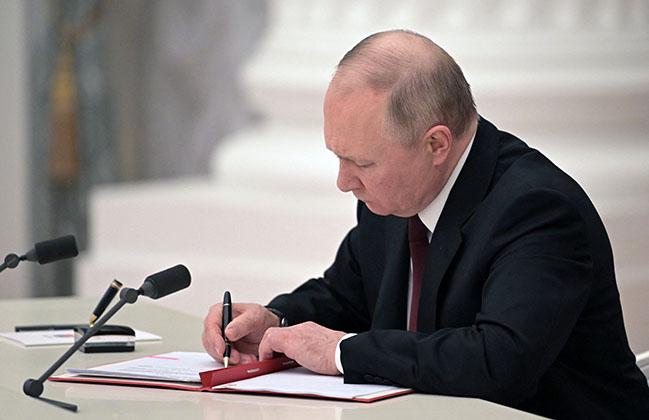
Russian President Vladimir Putin said on Tuesday that Russia was “ready” for war if Europe seeks one, accusing the continent’s leaders of trying to sabotage a deal on the Ukraine conflict before he met with US envoys.
The comments came as US envoy Steve Witkoff and President Donald Trump’s son-in-law Jared Kushner were in Moscow for high-stakes talks on ending the nearly four-year war, which were preceded by days of intense diplomacy.
“We are not planning to go to war with Europe, but if Europe wants to and starts, we are ready right now,” Putin told reporters in Moscow.
READ ALSO:Trump Blasts Ukraine For ‘Zero Gratitude’ Amid Talks To Halt War
“They have no peaceful agenda, they are on the side of war,” he added, repeating his claim that European leaders were hindering US attempts to broker peace in Ukraine.
He added that European changes to Trump’s latest plan to end the war “aimed solely at one thing — to completely block the entire peace process and put forward demands that are absolutely unacceptable for Russia”.
Washington has presented a 28-point draft to end the conflict, later amended after criticism from Kyiv and Europe, which viewed it as heeding to many of Russia’s maximalist demands.
READ ALSO:Trump Urged Ukraine To Give Up Land In Peace Deal Talks — Official
The plan to end the war is championed by Trump, but European countries fear it risks forcing Kyiv to cave in to Russian demands, notably on territory.
Fearing further Russian aggression, Europe has repeatedly said an unfair peace should not be imposed on Ukraine.
The Trump envoys are now seeking to finalise the plan with the approval of Moscow and Kyiv.
AFP

 News5 days ago
(VIDEO) Obasanjo To Tinubu: Why Are We Negotiating With Bandits?
- News2 days ago
BREAKING: Ex-CDS Musa meets Tinubu At Aso Villa
- News4 days ago
Insecurity: What Sheikh Gumi Told Me After Visiting Bandits Hideouts — Obasanjo
- Politics4 days ago
Tinubu Sends Ex-INEC Chair, Former Oyo First Lady, 30 Additional Ambassadorial Nominees To Senate
- News5 days ago
VIDEO: Jonathan Breaks Silence On Guinea-Bissau’s Military Takeover
- Entertainment4 days ago
Organizers Cancel Burna Boy’s US Shows After Fans Refused To Buy Tickets
- News4 days ago
FULL LIST: Wike revokes land belonging to Ilorin Emir, Lamido, Fayose, Iyabo Obasanjo, Others In Abuja
- News2 days ago
MOWAA: Why I Will Not Appear Before Edo Assembly Panel — Obaseki
- Headline4 days ago
US: Four Killed, 10 Others Wounded In California Shooting
- Metro4 days ago
Army, Air Force Crush ISWAP Fighters After Failed Chibok Attack


