
News
NAFDAC Raises Alarm Over Illegal Importation Of Unregistered Medical Syringes
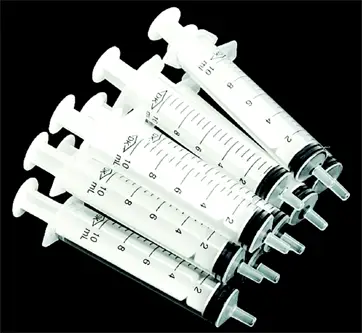
The National Agency for Food and Drug Administration and Control, NAFDAC, weekend expressed worry over the influx of unregistered medical syringes into the country, alleging that intelligence reports showed that some compromises are being made at the port of entry.
The Director-General, of NAFDAC, Prof. Mojisola Adeyeye also admonished members of the Association of Nigerian Licensed Customs Agents, ANLCA, to think more of the interest of the country over and above personal gains in their activities as clearing agents at the nation’s ports.
Adeyeye noted with regret that due to a compromise at the port of entry, illegal importation of unregistered containers of syringes is being allowed into the country.
Speaking during a familiarisation visit by the newly inaugurated executives of the ANLCA, led by its National President, Mr. Emenike Nwokochi, Adeyeye narrated to them how she marvelled at the stupendous investments committed to local production of syringes in Nigeria by a local pharmaceutical company during a recent facility tour.
She said that the standard of the facilities she met on the ground was comparable to whatever facility could be found in the US or any country in Europe. Adeyeye added that after the facility tour and being led into the warehouse, she was highly disturbed at the sight of huge unsold products.
READ ALSO: NAFDAC Seals Pharmaceutical Company Over Alleged Breaches
She said: “Over 1.5 billion units of the product were lying untouched in the warehouse due to low sales, exacerbated by the influx of imported syringes into the country, despite the high import duty slammed on the product to protect the local market.”
Adeyeye revealed that a publication by the USFDA stated that some syringes that come from Southeast Asia are of bad quality, adding that those products didn’t fly by night and land in different
“I understand the challenges of not making sales, especially after investing a significant amount of money. That’s why I am particularly meticulous when it comes to overseeing our export processes.”
As licensed customs agents, she emphasized their pivotal role in facilitating the legal and safe import and export of goods, ensuring compliance with required standards.
Eight killed in fresh armed herders attacks on Benue communities
She said the familiarisation visit was to establish effective collaboration and cooperation.
READ ALSO: NDLEA Intercepts 7.5m Tramadol Pills, 95,400 Codeine Bottles
“The aim is to enhance the positioning and promotion of trade in regulated products, both domestically and in the international market”.
‘’Nigeria has lost billions of naira in trade that could have benefitted our people. About 70 per cent of our exports are rejected, food products especially. All these rejected products did not go through NAFDAC regulatory assessment. It disgraces us as a country.’’
She said further, that it has also become a great issue of concern the number of substandard products coming into the country. “That’s why I attach significant importance to this association because the goods that are either imported or exported often play a crucial role in determining the strength of our economy.”
In the area of Exports, she said the international market is competitive and only welcomes products of high quality with relevant certifications and quality packaging that is environmentally friendly and beneficial to trade globally, noting with dismay that the problem of quality, standard, certification and appropriate packaging for made-in-Nigeria products destined for export has been an issue in the international market.
She, however, emphasized the need to address the issue of rejections, adding that some exporters obtain the wrong documentation, especially fake lab results, instead of bringing their products to NAFDAC’s ISO 17025:2015 accredited labs for analysis,
READ ALSO: NDLEA Arrests Three Blind Men Over Drug Trafficking, Seizes Narcotics Worth N13bn
“NAFDAC is the competent authority in Nigeria charged with the responsibility to regulate and control the manufacture, importation, exportation, distribution advertisement, sale and consumption of drugs, food and other regulated products in Nigeria.
‘’NAFDAC having attained the ISO 9001:2015 Quality Management Systems that covers all her regulatory processes and procedures and certified WHO GBT maturity level 3, places great premium on deepening use of science in its regulatory processes and self-developments.’’
She, however, pointed out that the Agency believes in collaborative efforts with both local and international organizations to complement her robust regulatory policies geared toward protecting consumers and promoting public health by ensuring that regulated products and the systems for their production are safe for the public.
The DG further disclosed that the Agency had analysed the Rapid Alert System for Food and Feed (RASFF) alert from the EU and observed that most rejected products by the EU having failed the relevant tests, were not having the appropriate documentation/certifications. ‘’This calls for proper collaboration and synergy between all stakeholders to curb the negative behaviour of some of these exporters and ensure only quality and certified products are exported.’’
READ ALSO: Drug War: NDLEA Intercepts UK-bound Meth Worth N.5Billion
Adeyeye said they are responsible for ensuring that their members know the importance of the assessment of accompanying shipping documents and that goods are cleared through customs and all necessary regulations, stressing that by following the rules and regulations that govern the import and export of goods, they are helping to protect society, the environment, and consumers.
Speaking in the same vein, the National President of ANLCA, Mr. Emenike Nwokochi lamented that ‘’it’s shameful that when you buy yam abroad they tell you it is from Ghana, or any other country in West Africa when Nigeria is the highest producer of yam’’.
As the Naira continues to fall to the dollar, he said ‘’We can’t do anything to help the Naira other than to increase the level of exports in the country to provide an alternative source of raising foreign exchange.’’
He, however, pledged his association’s resolve to work in collaboration with the Agency to achieve the common goal of developing the nation’s economy.



News
Togo, Niger, Benin Owe Nigeria Over $17.8m For Supplied Electricity – NERC

Nigeria’s electricity regulator has disclosed that three neighbouring countries, Togo, Niger and Benin, are indebted to Nigeria to the tune of $17.8 million, equivalent to more than N25 billion at prevailing exchange rates, for power supplied under bilateral electricity agreements.
The Nigerian Electricity Regulatory Commission, NERC, made this known in its Third Quarter 2025 report, which reviewed market performance within the Nigerian Electricity Supply Industry, NESI.
According to the report, the international customers were billed a total of $18.69 million by the Market Operator for electricity supplied during the third quarter of 2025. However, only $7.125 million was paid, leaving an unpaid balance of $11.56 million for the period under review.
NERC also revealed that the same international offtakers had outstanding legacy debts amounting to $14.7 million from previous quarters. Of this amount, $7.84 million was settled, leaving a residual balance of $6.23 million.
READ ALSO:Expert Identify Foods That Increase Hypertension Medication’s Effectiveness
When combined with the Q3 2025 shortfall, the total outstanding debt stood at $17.8 million, which translates to about N25.36 billion at an exchange rate of N1,425 to one US dollar.
The regulator identified the international electricity customers as Compagnie Énergie Électrique du Togo, Société Béninoise d’Énergie Électrique of Benin Republic, and Société Nigérienne d’Électricité of Niger Republic.
NERC stated that the three utilities collectively paid just $7.125 million against the $18.69 million invoice issued for electricity supplied in the third quarter, resulting in a remittance performance of 38.09 per cent.
This meant that more than half of the billed amount remained unpaid at the close of the quarter.
READ ALSO:Electricity Workers Threatens Shutdown Over Staff Brutality
The commission explained that the electricity exported to the three countries was generated by grid-connected Nigerian generation companies and delivered through cross-border bilateral power supply arrangements.
By contrast, NERC reported a stronger payment performance among domestic bilateral customers. According to the report, local customers paid N3.19 billion out of the N3.64 billion invoiced for the same quarter, representing a remittance rate of 87.61 per cent.
The regulator further noted that some bilateral customers, both international and domestic, made additional payments to offset outstanding invoices from earlier quarters.
READ ALSO:Reps Ask NERC, DISCOs To Reverse Band A Tariff Hike
Specifically, the Market Operator received $7.84 million from international customers and N1.3 billion from domestic customers in settlement of previous obligations.
Beyond bilateral transactions, NERC disclosed that Nigeria’s 11 electricity distribution companies remitted a total of N381.29 billion to the Nigerian Bulk Electricity Trading Plc and the Market Operator in the third quarter of 2025. This was out of a cumulative invoice of N400.48 billion, translating to an overall remittance performance of 95.21 per cent.
The commission said the figures were derived from reconciled market settlement data submitted as of December 18, 2025, as part of its statutory evaluation of the commercial health and performance of the electricity market.
News
Expert Identify Foods That Increase Hypertension Medication’s Effectiveness

Hypertension remains one of the leading causes of premature death worldwide, contributing significantly to heart disease, stroke, and kidney failure. Despite the availability of effective antihypertensive drugs, long-term control of high blood pressure is often challenging because of drug resistance, side effects, and poor adherence.
This has fueled growing scientific interest in complementary strategies that can enhance drug efficacy while minimising toxicity. One promising approach is the combination of conventional antihypertensive medications with herbs and spices in many kitchens.
Recent evidence suggests that augmenting modern antihypertensive drugs with foods rich in p-coumaric acid, a naturally occurring phenolic acid, may offer a novel and effective strategy for blood pressure control.
Phenolic compounds, commonly found in fruits, vegetables, whole grains, and legumes, are known for their antioxidant, anti-inflammatory, and blood vessel–protective properties.
READ ALSO:Russia, China Afraid Of US Under My Administration — Trump
In a study, researchers investigated the combined effects of lisinopril, a widely used antihypertensive drugs and p-coumaric acid on hypertension.
They reported in the Comparative Clinical Pathology that p-coumaric acid enhance the antihypertensive action of lisinopril, potentially allowing for improved blood pressure control without increasing drug dosage.
The study used an established animal model in which hypertension was induced in rats through oral administration of L-NAME, a compound known to suppress nitric oxide production and raise blood pressure.
Following the induction of hypertension, the animals were treated for 14 days with p-coumaric acid (at two different doses), lisinopril alone, or a combination of both.
READ ALSO:Man Suffers Hypertension As Daughter, Grand-daughter Disappear For 10 Years
Untreated hypertensive rats showed significantly elevated activities of key enzymes linked to high blood pressure such as ACE, arginase, acetylcholinesterase, and phosphodiesterase-5 along with increased lipid peroxidation, an indicator of oxidative stress. At the same time, levels of nitric oxide, a critical molecule for blood vessel relaxation, were markedly reduced.
By contrast, rats treated with a combination of lisinopril and p-coumaric acid experienced notable improvements. Blood pressure was better controlled; harmful enzyme activities were reduced, oxidative stress declined, and nitric oxide levels increased. These improvements were mirrored in the tissues the heart compared with untreated hypertensive animals.
They said that the findings suggest that p-coumaric acid may enhance the antihypertensive action of lisinopril, potentially allowing for improved blood pressure control without increasing drug dosage.
This drug–food interaction model is particularly important in the circumstance of long-term hypertension management. Many patients rely on lifelong medication, and strategies that can improve treatment outcomes while reducing side effects are highly desirable.
READ ALSO:Delta Unveils Free Hypertension, Diabetes Screening
The study also reinforces the growing recognition that diet is not merely supportive but can be biologically active in disease control.
The use of medicinal plants and plant-based therapies in the management of hypertension is deeply rooted in traditional medicine across many cultures. While such practices have often existed outside conventional healthcare systems, modern scientific research is now providing evidence-based explanations for their effectiveness.
While these findings are based on animal studies and cannot yet be directly translated into clinical recommendations for humans, they open the door to future research on dietary strategies that can safely complement antihypertensive drugs.
READ ALSO:Why West African Troops Overturned Benin’s Coup But Watched Others Pass
Further clinical studies are needed to determine appropriate dosages, safety profiles, and real-world effectiveness.
In the fight against hypertension, the future may lie not only in new drugs, but also in smarter combinations, where medicine and nutrition work together to deliver better, safer outcomes for patients.
Such nutrition to help maintain healthy blood pressure includes garlic, potatoes, walnuts,tomato and tomato products, legumes and citrus fruits (grapefruits and oranges).
(TRIBUNE)
News
Researchers Develop Treatment For Advanced Prostate Cancer

Researchers at Case Western Reserve University have developed a treatment for advanced prostate cancer that could eliminate a side effect so debilitating that patients often refuse the life-saving therapy.
The innovative approach, according to the researchers, targets prostate cancer cells just as successfully as existing treatments while causing significantly less harm to salivary glands.
For many people with prostate cancer, it relieves the extreme dry mouth that makes speaking, chewing, and swallowing nearly impossible.
According to the findings published in Molecular Imaging and Biology, the treatment targets PSMA (Prostate-Specific Membrane Antigen), a protein present in high numbers on prostate cancer cells.
READ ALSO:Edo Deputy Gov Tasks Lab Scientists On Research, Vaccine Production
Radioligand therapy (RTL) attaches radioactive material to a targeting molecule that acts like a GPS system, guiding the radiation directly to cancer cells while avoiding healthy tissue.
Current PSMA-targeted radioligand therapy is one of the most promising precision cancer treatments for end-stage prostate cancer because it acts as a “smart bomb” that locates and destroys cancer cells.
The downside, however, is that this therapy often causes severe salivary gland damage, resulting in extreme dry mouth that can be so debilitating that patients choose to stop treatment that might save their lives.
James P. Basilion, professor in the Department of Biomedical Engineering at Case Western Reserve and co-leader of the Cancer Imaging Program at the Case Comprehensive Cancer Centre (Case CCC), explained that various strategies to mitigate this side effect have been attempted before, with limited success.
READ ALSO:Nigerian Researcher Develops Wireless Charging Tech For Electric Vehicles
According to the study, PSMA-1-DOTA has a four-fold greater affinity for prostate cancer cells than current therapies.
In addition to having the same tumour-fighting effectiveness as the current standard radioligand therapy, it also significantly reduced damage to the tear and salivary glands, almost eliminating the risk of dry mouth.
This discovery has the potential to significantly alter the treatment of prostate cancer by making PSMA-targeted therapy an earlier intervention rather than a “last resort.”
READ ALSO:Research: Experts Seek Improved Funding Of Monotechnic, Polytechnic Libraries
The research included comprehensive testing on mouse models and in a human patient with metastatic prostate cancer at the Technical University of Munich in Germany.
The patient study confirmed the lab findings, showing the new treatment avoided the salivary glands (potentially preventing dry mouth) while still finding and attacking prostate cancer cells.
The researchers, from now on, are preparing for clinical trials late this year on about 12 prostate patients to validate the promising results and establish the most effective dosing procedures.
(TRIBUNE)

 News4 days ago
What I Saw After A Lady Undressed Herself — Pastor Adeboye
- Headline4 days ago
PROPHECY: Primate Ayodele Reveals Trump’s Plot Against Tinubu
- Metro4 days ago
Armed Robbers Shot PoS Operator To Death In Edo
- Metro3 days ago
AAU Disowns Students Over Protest
- Metro4 days ago
Joint Task Force Kills 23 Bandits Fleeing Kano After Attacks
- Politics4 days ago
2027: Rivers APC Pledges To Follow Wike’s Instructions
- Business3 days ago
NNPCL Reduces Fuel Price Again
- Metro3 days ago
Edo: Suspected Kidnappers Kill Victim, Hold On To Elder Brother
- Metro3 days ago
Nine Soldiers Feared Dead In Borno IED Explosion
- Metro4 days ago
Gunmen Demand N200m Ransom For Kidnapped Brothers In Edo


