
Headline
NCC Alerts Nigerians On New Ways Hackers Unlock, Steal Vehicle, Android Apps

The Nigerian Communications Commission (NCC) says it wishes to alert telecom consumers and members of the public on an ongoing cyber-vulnerability that allows a nearby hacker to unlock vehicles, start their engines wirelessly and make away with the cars.
It said that the fact that car remotes are categorized short range devices that make use of radio frequency (RF) to lock and unlock cars informed the need for the Commission to alert the general public on this danger, where hackers take advantage to unlock and start a compromised car.
According to the latest advisory released by the Computer Security Incident Response Team (CSIRT), the Cybersecurity Centre for the telecom sector established by the NCC, the vulnerability is a Man-in-the-Middle (MitM) attack or, more specifically, a replay attack, in which an attacker intercepts the RF signals normally sent from a remote key fob to the car, manipulates these signals, and re-sends them later to unlock the car at will.
READ ALSO: 5G: Exciting Opportunities Await Firms, Digitally-inclined Nigerians – NCC
The Commission said that with this latest type of cyber-attack, it is also possible to manipulate the captured commands and re-transmit them to achieve a different outcome altogether.
“Multiple researchers disclosed a vulnerability, which is said to be used by a nearby attacker to unlock some Honda and Acura car models and start their engines wirelessly.
“The attack consists of a threat actor capturing the radio frequency (RF) signals sent from your key fob to the car and resending these signals to take control of your car’s remote keyless entry system,” the advisory stated emphatically.
However, the NCC-CSIRT, in the advisory, has offered some precautionary measures that could be adopted by car owners to prevent falling victim to the attack.
According to the cyber-alert unit of the Commission, “When affected, the only mitigation is to reset your key fob at the dealership. Besides, the affected car manufacturer may provide a security mechanism that generate fresh codes for each authentication request, this makes it difficult for an attacker to ‘replay’ the codes thereafter.”
It said that vulnerable car users should store their key fobs in signal-blocking ’Faraday pouches’ when not in use.
Importantly, the Commission said that car owners in the stated categories are advised to choose Passive Keyless Entry (PKE) as opposed to Remote Keyless Entry (RKE), which would make it harder for an attacker to read the signal due to the fact that criminals would need to be at close proximity to carry out their nefarious acts.
READ ALSO: NCC Discovers New Ways Hackers Steal Banking Details From Phone, Warns Nigerians
It explained that the PKE is an automotive security system that operates automatically when the user is in proximity to the vehicle, unlocking the door on approach or when the door handle is pulled, and also locking it when the user walks away or touches the car on exit.
The RKE system, according to the Commission, on the other hand, represents the standard solution for conveniently locking and unlocking a vehicle’s doors and luggage compartment by remote control.
Additionally, in a related advisory, the NCC, based on another detection by CSIRT, informed the general public about the resurgence of Joker Trojan-Infected Android Apps on Google Play Store.
This arose due to the activities of criminals who intentionally download legitimate apps from the Play Store, modify them by embedding the Trojan malware and then uploading the app back to the Play Store with a new name.
It said that the malicious payload is only activated once the apps goes live on the Play Store, which enables the apps to scale through Google’s strict evaluation process.
Once installed, these apps request for permissions that once granted, enable the apps to have access to critical functions such as text messages and notifications.
As a consequence, it explained further that a compromised device will subscribe unwitting users to premium services, billing them for services that do not exist. A device like this can also be used to commit Short Messaging Service (SMS) fraud while the owner is unaware.
“It can click on online ads automatically and even use SMS One Time password (OTPs) to secretly approve payments. Without checking bank statements, the user will be unaware that he or she has subscribed to an online service. Other actions, such as stealing text messages, contacts, and other device data, are also possible,” the Commission said.
It warned that to avoid falling victim to the manipulation of hackers deploying Joker Trojan-Infected Android Apps, Android users must avoid downloading unnecessary apps or installing apps from unofficial sources.
READ ALSO: NCC Alerts Nigerians On Flubot Malware, Lists Measures To Guard Against Attack
The NCC also said it wishes to advise telecom consumers to ensure that apps installed from the Google Play Store are heavily scrutinized by reading reviews, assessing the developers, perusing the terms of use and only granting the necessary permissions.
The NCC recommended that unauthorised transactions be checked against any installed app, DAILY POST reports.
“Indeed, any apps not in use should be deleted while users are also advised to ensure that a device is always patched and updated to the latest software,” the Commission said in a statement signed by Dr. Ikechukwu Adinde, its Director of Public Affairs.



Headline
Indian Court Denies Bail To Nigerian Man Over Drug Charges
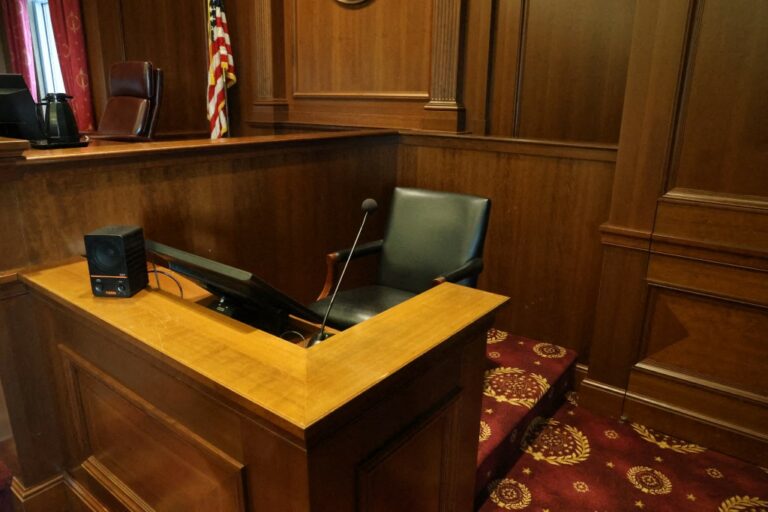
A court in India has denied bail to a 44-year-old Nigerian national, Cristian Soporuchukwu, who is currently facing drug trafficking charges in the country.
Cristian Soporuchukwu initially entered India on a business visa but was later arrested over allegations of involvement in the sale of hard drugs.
Reports indicated that after arriving in India, Soporuchukwu travelled through Goa, Delhi, and Mumbai, where he allegedly established links with suspected drug traffickers.
READ ALSO:Indian National Arraigned In Lagos Over Alleged N22m Supermarket Fraud
He was accused of purchasing MDMA crystals and distributing them to college students and information technology workers.
According to reports, operatives of the Beguru Police arrested Cristian Soporuchukwu in April 2025 for allegedly selling MDMA crystals around Begur Lake and the AECS Layout Road area.
The New Indian Express reported that the High Court of Karnataka subsequently dismissed the Nigerian’s bail application.
READ ALSO:NDLEA Intercepts Indian Lady With 72 Parcels Of Heroin ON n Chocolate Wraps
“The anti-narcotics wing seized about 1 kg of MDMA crystals, a pocket weighing machine, 10 zip-lock covers, a mobile phone and a scooter from him,” the report stated.
Justice V. Srishananda, while ruling on the bail application, reportedly held that errors relating to the grounds of arrest could not automatically justify bail in serious narcotics-related offences under the Narcotic Drugs and Psychotropic Substances, NDPS, Act.
The court further noted that Cristian Soporuchukwu had allegedly overstayed his visa in India, according to the report.
Headline
Strait Of Hormuz: US Announces Sanctions Against Iran

The United States Treasury has announced sanctions against Iran’s Persian Gulf Strait Authority.
Treasury Secretary, Scott Bessent, said this in a statement on Wednesday.
The statement extended the threat of sanctions to anyone paying the fees, saying they may be providing support to and receiving services from Iran’s Revolutionary Guards, and therefore may be exposed to sanctions risk.
READ ALSO:Strait Of Hormuz: Pakistan Thanks Trump For Pausing ‘Project Freedom’
“The Iranian military’s latest attempt to extort global maritime trade is proof that Economic Fury has left the regime desperate for cash.
“Treasury has deprived the Iranian regime of revenue for their weapons programs, terrorist proxies, and nuclear ambitions,” Bessent said.
Bessent added that the US has succeeded in disrupting tens of billions of dollars’ worth of revenue from being accessible to Tehran.
Headline
US Launches New Airstrikes On Iran
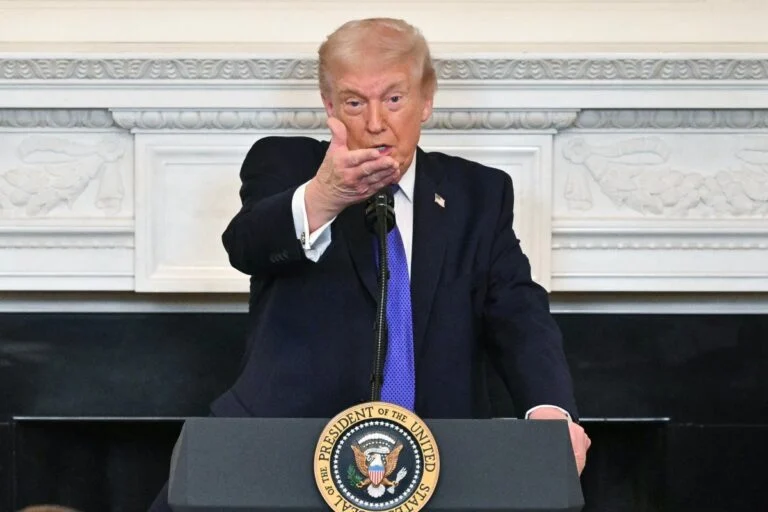
The United States has launched new airstrikes in southern Iran.
The strike shot down four one-way attack drones that posed a threat around the Strait of Hormuz and then a ground control site.
A US official revealed that American forces struck an Iranian ground control station in Bandar Abbas that was about to launch a fifth drone.
READ ALSO:US Restricts Entry Routes For Travellers From DRC, Uganda, South Sudan Over Ebola Outbreak
The official described the strikes as purely defensive, saying the US intended to maintain the ceasefire.
Report says this is the second time in three days that the US has carried out self-defense strikes against Iranian military targets in southern Iran.
Recall that on Monday the US carried out airstrikes against Iranian missile locations and boats that US Central Command said were preparing to launch mines in the Strait of Hormuz.

 Headline4 days ago
Woman Passes Out After Receiving 100 Strokes Of Cane
- Headline4 days ago
JUST IN: White House Locked Down Briefly As Gunman Opens Fire At Security Checkpoint
- News3 days ago
More Pain For Nigerians As Cooking Gas Price Increases Nationwide
- Politics3 days ago
Two Masked Men Gun Down Politician In His Rivers State Hotel
- Metro4 days ago
Police Reject N500m Bribe, Recover N7.8bn Illicit Drugs In Lagos
- News3 days ago
FG Declares Two Days Public Holiday For Eid-el Kabir Celebration
- Politics3 days ago
‘Tinubu’s Borrowing In 24 Months Surpasses 55 Years’ Debt Record’
- Politics2 days ago
Court Clears Goodluck Jonathan To Contest 2027 Presidential Election
- News3 days ago
OPINION: Boko Haram Comes South
 News2 days ago
OPINION: Like Oyedokun, We Are All Decapitated


