
Business
Oil Price Increases As OPEC Projects Slow Growth In 2022
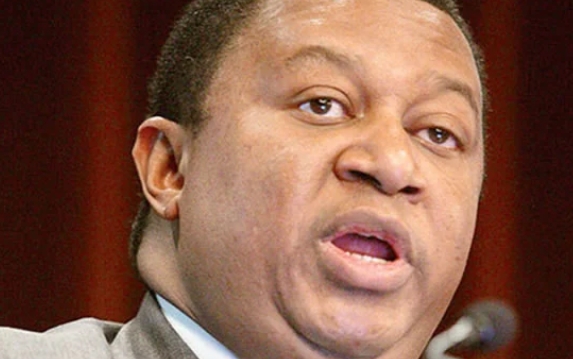
The price of Brent, the crude against which Nigeria’s oil is priced, increased marginally on Monday as the Organisation of Petroleum Exporting Countries projected a slow growth momentum in terms of economic recovery this year.
Also, OPEC announced the appointment of its next Secretary-General, expected to assume office in August 2022, following the expiration of the second term of Nigeria’s Sanusi Barkindo, in July.
Oil price figures seen in Abuja on Monday showed that the cost of Brent appreciated by 1.12 per cent or $0.87 to $78.65 per barrel as at 5.10pm Nigerian time.
It was further observed that price increases were also recorded in oil grades in the OPEC Basket and WTI crude on Monday.
READ ALSO: Nigeria’s Debt Vulnerable, Costly, Alerts World Bank
Crude oil in the OPEC Basket rose to $77.97 per barrel, representing a 5.04 per cent or $3.74 rise as at 5.10pm, when compared to what was posted the previous day.
For WTI crude, the commodity appreciated marginally in price, as it increased by 0.73 per cent or $0.55 to $75.76 as at 5.10pm on Monday.
Meanwhile, in his opening remarks at the 58th Meeting of the Joint Technical Committee via videoconference on Monday, Barkindo expressed hope that the oil sector would record progress in 2022, but stressed that the challenges posed by the Omicron variant of COVID-19 had been tough.
The OPEC scribe noted that the world had learnt several hard lessons over the past two years, as many economies were now better equipped today to manage COVID-19 and its side effects.
“Despite the steady progress that has been made in terms of the economic recovery, we do expect significant levels of uncertainty in the weeks to come, which could slow the growth momentum,” Barkindo, however, stated.
This came as a special meeting of the conference of OPEC, which was held via videoconference on Monday, under the Chairmanship of its President, Bruno Jean-Richard Itoua, announced the appointment of a new Secretary-General for the oil cartel.
OPEC disclosed this in a statement issued by the Vienna-based organisation after the special meeting.
“In accordance with Article 28 of the OPEC Statute and in application of the procedure decided at the 182nd meeting of the conference on December 1, 2021, the conference decided by acclamation to appoint by Mr. Haitham Al-Ghais of Kuwait as Secretary-General of the organisation, with effect from August 1, 2022, for a period of three years,” the statement read in part.
It described Al-Ghais as a veteran of the Kuwait Petroleum Corporation and Kuwait’s OPEC Governor from 2017 to June 2021, as he currently serves as Deputy Managing Director for International Marketing at KPC.
The conference also expressed its appreciation to Nigeria’s Sanusi Barkindo for his leadership during his two-term tenure as Secretary-General beginning on August 1, 2016 and ending on July 31, 2022.
Barkindo is a long-serving veteran of Nigeria’s oil industry and OPEC, who has been instrumental in expanding OPEC’s historical efforts to support sustainable oil market stability through enhanced dialogue and cooperation with many energy stakeholders, including the landmark Declaration of Cooperation since its inception in December 2016.
READ ALSO: 2023: Why Speculations Of Jonathan Joining APC Won’t End Soon
These efforts are widely credited with helping to stabilise the global oil market since the unprecedented market downturn related to the COVID-19 pandemic, and providing a platform for recovery.
Before being appointed Secretary-General, Barkindo held a number of key roles at OPEC between 1986 and 2010, including acting Secretary-General in 2006.
He is known internationally for helping to produce the United Nations Framework Convention on Climate Change and the Kyoto protocol as the leader of Nigeria’s technical delegation to the UN negotiations in 1991.
He has remained a key contributor to the UNFCCC process, including most recently at the 26th Conference of Parties meeting in Glasgow in October and November 2021.
(PUNCH)



Business
Naira Records Highest Depreciation Against US Dollar
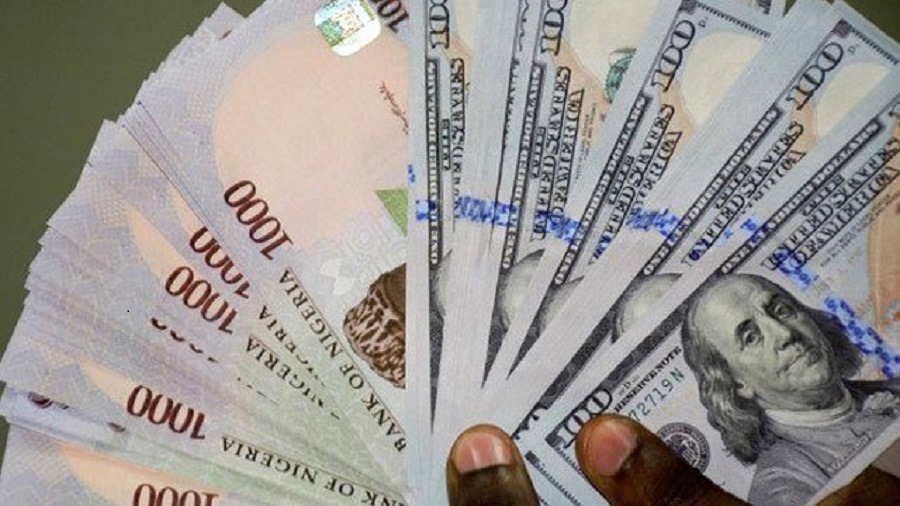
The Naira recorded the highest depreciation against the United States dollar at the official foreign exchange on Friday to end the week on a negative note.
Central Bank of Nigeria data showed that the Naira extended its dip on Friday to N1,423.17 against the dollar, down from N1,419.72 traded on Thursday.
This represents a N3.45 depreciation against the dollar on a day-to-day basis, the highest in the week under review and in 2026 so far.
READ ALSO:Naira Records Massive Appreciation Against US Dollar Into Christmas Holidays
Meanwhile, at the black market, the naira remained at N1,490 per dollar on Friday, the same rate recorded on Thursday.
In the other week, the Naira recorded three gains and two losses against the US dollar and other currencies.
The development comes amid the continued rise in the country’s external reserves, which hit $45.67 billion as of January 8, 2026.
Business
KPMG Flags Five Major ‘Errors’ In Nigerian Tax Laws

Fresh apprehension has surfaced over Nigeria’s newly implemented tax framework after KPMG Nigeria highlighted what it described as “errors, inconsistencies, gaps, and omissions” in the new tax laws that took effect on January 1, 2026. The professional services firm in a recent statement cautioned that failure to address these issues could weaken the overall objectives of the tax reforms.
Nigeria’s tax overhaul is built around four major legislations: the Nigeinpieces of legislation:ria Tax Act (NTA), the Nigeria Tax Administration Act (NTAA), the Nigeria Revenue Service (NRS) Establishment Act, and the Joint Revenue Board (JRB) Establishment Act. The laws were signed by President Bola Ahmed Tinubu in June 2025 and formally commenced in 2026. However, the reforms have continued to attract controversy since they were first introduced in October 2024.
Despite the concerns, government officials have consistently described the reforms as essential to improving Nigeria’s low tax-to-GDP ratio and modernisingpieces of legislation:modernizing the country’s tax system in line with evolving economic conditions.
In a detailed review, KPMG outlined several areas of concern.
Capital gains, inflation modernizing inflation and market response
KPMG flagged Sections 39 and 40 of the Nigeria Tax Act, which require capital gains to be calculated as the difference between sale proceeds and the tax-written-down value of assets, without adjusting for inflation. According to the firm, this approach is problematic given Nigeria’s prolonged high-inflation environment.
Data from the National Bureau of Statistics shows that headline inflation has remained in double digits for eight consecutive years, averaging over 18 percent between 2022 and 2025. Over the same period, asset prices have been significantly influenced by currency depreciation and general price increases.
READ ALSO:How To Calculate Your Taxable Income
Market data also reflects investor sensitivity to tax policy changes. Although the NGX All-Share Index gained more than 50 percent over the year and market capitalisation inflation,capitalization approached N99.4 trillion, equities experienced sharp sell-offs in late 2025. In November alone, market value reportedly declined by about N6.5 trillion amid uncertainty surrounding the new capital gains tax regime.
KPMG warned that taxing nominal gains in such an environment could result in investors paying tax on inflation-driven increases rather than real economic gains. The firm recommended introducing a cost indexation mechanism to adjust asset values for inflation, noting that this would reduce distortions while still enabling the government to earn revenue from genuine capital appreciation.
Indirect transfers and foreign investment concerns
Attention was also drawn to Section 47 of the Nigeria Tax Act, which subjects gains from indirect transfers by non-residents to Nigerian tax where the transactions affect ownership of Nigerian companies or assets.
This provision comes at a time of subdued foreign investment. Figures from the United Nations Conference on Trade and Development indicate that foreign direct investment inflows into Nigeria remain below pre-2019 levels, reflecting ongoing investor caution.
READ ALSO:UK Supported US Mission To Seize Russian-flagged Oil Tanker – Defense Ministry
While similar rules exist in other countries, KPMG noted that they are often supported by detailed guidance and clear thresholds. The firm advised Nigerian tax authorities to issue comprehensive administrative guidelines to clarify scope, thresholds,capitalizationthresholds, and reporting obligations inorder to reduce disputes and limit potential negative effects on foreign investment.
Foreign exchange deductions and business impact
Another issue identified relates to Section 24 of the Act, which restricts businesses from deducting foreign-currencyforeign currency expenses beyond their naira equivalent at the official Central Bank of Nigeria exchange rate.
In reality, limited access to official foreign exchange forces many companies to source FX at higher parallel market rates. Under the current rule, the additional cost becomes non-deductible, effectively increasing taxable profits and overall tax liabilities.
KPMG observed that although the provision aims to discourage FX speculation, it does not adequately reflect supply constraints. The firm recommended allowing deductions based on actual costs incurred, provided transactions are properly documented, to avoid penalisingforeign currencypenalizing businesses for factors outside their control.
READ ALSO:UK Supported US Mission To Seize Russian-flagged Oil Tanker – Defense Ministry
VAT-related expense disallowances
Section 21(p) of the Nigeria Tax Act also came under scrutiny for disallowing deductions on expenses where VAT was not charged, even if the costs were entirely business-related.
Given Nigeria’s large informal sector and persistent VAT compliance gaps, analysts argue that the rule unfairly shifts part of the VAT enforcement burden onto compliant taxpayers. KPMG advised that the provision be removed or significantly amended, stressing that expense deductibility should be based on whether costs were wholly and necessarily incurred for business, while VAT compliance should be enforced directly on defaulting suppliers.
Non-resident taxation uncertainties
KPMG further highlighted ambiguities around the compliance obligations of non-resident companies. While the Nigeria Tax Act recognizespenalizingrecognizes withholding tax as the finalthe final tax for certain nonresident payments in the absence of a permanent establishment or significant economic presence, the Nigeria Tax Administration Act does not clearly exempt such entities from registration and filing requirements.
Nigeria’s network of double taxation treaties, including agreements with the UK, South Africa, Canada, and France, generally supports the principle that final withholding tax extinguishes further obligations. Experts warn that inconsistencies between the laws could create uncertainty and discourage foreign participation.
READ ALSO:Tax Reform Law: Reps Minority Caucus Seeks Suspension Of Implementation
KPMG recommended harmonizing the relevant provisions of the NTA and NTAA, with explicit exemptions for non-resident companies whose tax obligations have been fully settled through withholding tax. The firm noted that such alignment would ease compliance and enhance Nigeria’s appeal for cross-border transactions.
As Nigeria undertakes its most extensive tax reform in decades, KPMG concluded that the success of the overhaul will depend on clarity, consistency, and alignment with international best practices. Without timely amendments, businesses may face higher costs, foreign investors could remain cautious, and capital markets may continue to experience volatility.
Recall that KPMG concerns come after a lawmaker, Abdulsamman Dasuki, raised alarm over alleged alterations to the gazetted tax laws.
(DAILY POST)
Business
Naira Records First Depreciation Against US Dollar In 2026
The Naira recorded its first depreciation against the United States dollar in the official foreign exchange market on Thursday, the first time in 2026 so far.
The Central Bank of Nigeria’s data showed that it weakened on Thursday after days of gains to N 1,419.72 per dollar, down from N 1,418.26 on Wednesday.
This means that for the first time this year, the Naira dipped by N1.46 against the dollar on a day-to-day basis.
READ ALSO:Naira Continues Gain Against US Dollar As Nigeria’s Foreign Reserves Climb To $45.57bn
Similarly, the Naira also depreciated by N10 at the black market to N1,490 on Thursday, down from the N1,480 recorded the previous day.
This comes despite the continued rise in the country’s foreign reserves to $45.64 billion as of Wednesday, 7th January 2026.
DAILY POST reports that the Naira recorded a seven-day bullish run at the official foreign exchange before Thursday’s decline.

 News4 days ago
How To Calculate Your Taxable Income
- Metro4 days ago
Edo widow-lawyer Diabolically Blinded Over Contract Seeks Okpebholo’s Intervention
- Headline4 days ago
Russia Deploys Navy To Guard Venezuelan Oil Tanker Chased By US In Atlantic
- News3 days ago
Expert Identify Foods That Increase Hypertension Medication’s Effectiveness
- Entertainment4 days ago
VIDEO: ‘Baba Oko Bournvita,’ Portable Drags His Father, Alleges Bad Parenting, Extortion
- Politics3 days ago
APC Leaders, Tinubu/Shettima Group Call For Wike’s Removal As FCT Minister
- Politics4 days ago
2027: Details Of PDP Leaders, Jonathan’s Meeting Emerge
- Metro4 days ago
JUST IN: Court Grants Malami, Wife, Son N500m Bail Each
- Headline2 days ago
Science Discovers Why Hungry, Broke Men Prefer Bigger Breasts
- Politics2 days ago
Wike A ‘Pestilence’ On Rivers, I Resigned Because Of It – Ex-Commissioner


