
Business
OPEC+ Countries To Hike Oil Production In June
Eight OPEC+ member countries on Saturday announced a sharp increase in oil production for the month of June at the risk of driving down already very low prices.
Saudi Arabia, along with Russia and six other members of the oil cartel, will implement a production adjustment of 411,000 barrels a day out of the ground, as in May, according to a OPEC+ statement, whereas the initial plan called for an increase of just 137,000 barrels.
Numbering a total of 22 countries, most of which are highly dependent on oil, the group had until recently been exploiting supply scarcity to boost prices, holding millions of barrels in reserve.
READ ALSO: Nigeria’s Oil Production Drops Again, Now 1.23mbpd – OPEC
“OPEC+ has just thrown a bombshell to the oil market,” Jorge Leon, analyst with Rystad Energy, told AFP.
“Last month’s decision was a wake up call. Today’s decision is a definitive message that the Saudi led group is changing strategy and pursuing market share after years of cutting production,” he added.
That about-face will also provide an opportunity to build good relations with Donald Trump’s United States, he went on.
READ ALSO: Crude Prices Drop After Angola Quits OPEC
Shortly after taking office in January Trump called on Saudi Arabia, which heads the cartel, to up production in order to bring prices down.
Last month the group slightly lowered its forecast for oil demand growth, citing the impact of US tariffs on the world economy.
The Organization of the Petroleum Exporting Countries in 2016 came up with OPEC+ to strengthen their weight on the global market.
The eight who have agreed additional increases are Saudi Arabia, Russia, Iraq, the United Arab Emirates, Kuwait, Kazakhstan, Algeria and Oman.



Business
Report Any MRS Filling Stations Selling Fuel Above N739 Per Liter — Dangote Refinery To Nigerians

Dangote Refinery has urged Nigerians to report any MRS filling station outlets nationwide selling fuel above the N739 per liter announced price.
The company disclosed this in a statement on Sunday.
The refinery insisted that its petrol being at retail outlets remain N739 per liter while the gantry price is N699.
It further called on other filling station owners to patronize its refined petroleum products at the N699 rate.
“We also call on other petrol station operators to patronize our products so that the benefits of this price reduction can be passed on to Nigerians across all outlets, ensuring broad-based relief and a more stable downstream market.”
READ ALSO:Dangote Sugar Announces South New CEO
Recall that Aliko Dangote, the president of Dangote Refinery, had pegged the retail price of his petrol at a maximum of N740.
DAILY POST reports that MRS filling and other filling stations had reduced fuel prices to between N739 and N912 per liter in Abuja.
However, reports emerged that some MRS filling stations were selling above the N739 per liter announced price benchmark.
Business
Naira Records Significant Appreciation Against US Dollar
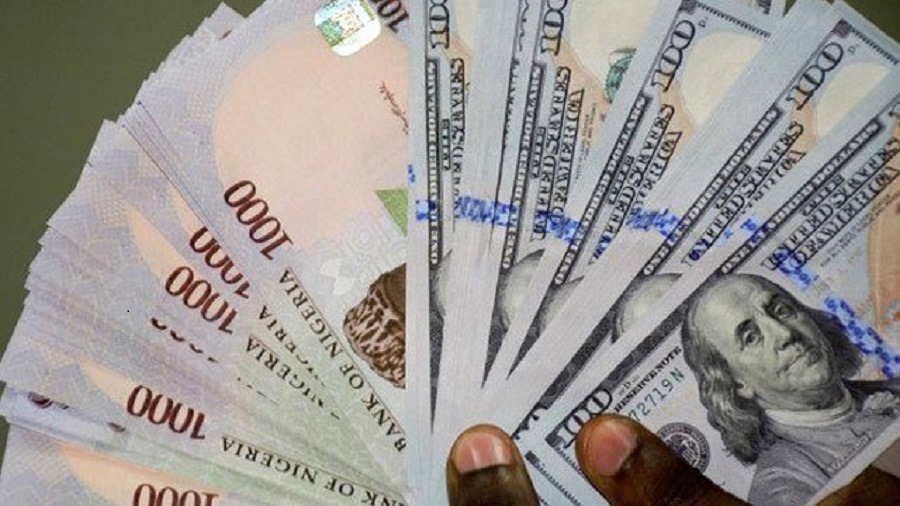
The Naira recorded significant appreciation against the United States dollar on Monday at the official foreign exchange market to begin the week ahead of Yuletide on a good note.
The Central Bank of Nigeria’s data showed that the Naira strengthened to N1,456.56 per dollar on Monday, up from N1,464.49 traded on Friday last week, 19th December 2025.
This means that the Naira gained N7.93 against the dollar when compared with the N1,464.49 was exchanged as of Friday, December 19, 2025. DAILY POST reports that Monday’s gain at the official FX market is the first since December 15th.
READ ALSO:
Meanwhile, at the black market, the Naira remained stable at N1500 per dollar on Monday, according to multiple Bureau De Change operators in Wuse Zone 4, Abuja.
The development comes as the country’s external reserves stood at $44.66 billion as of last week Friday.
Business
CBN Revokes Licences Of Aso Savings, Union Homes As NDIC Begins Deposit Payments
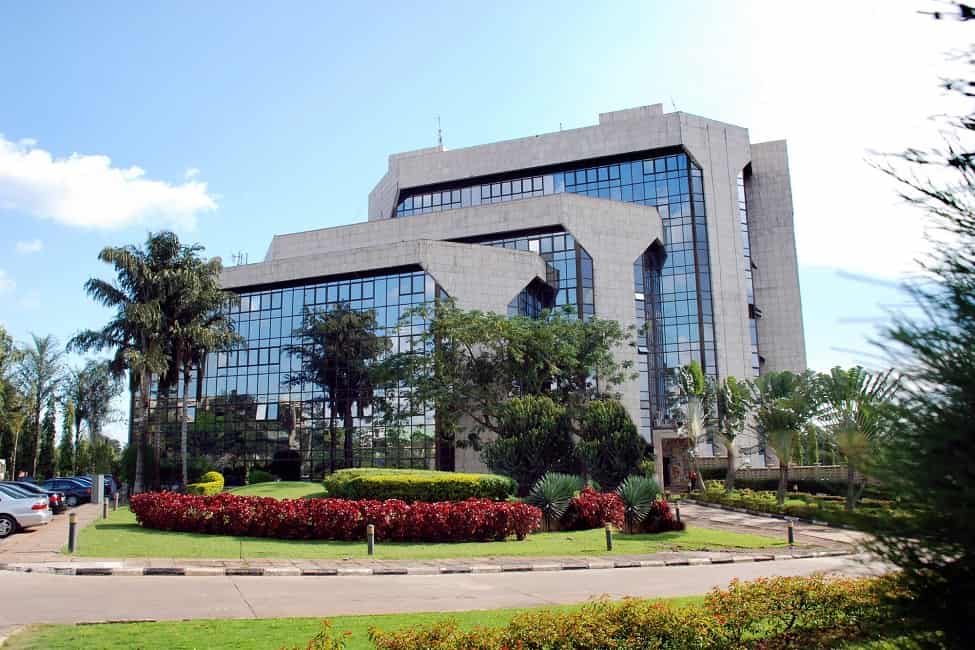
The Central Bank of Nigeria (CBN) has revoked the operating licences of Aso Savings and Loans Plc and Union Homes Savings and Loans Plc, citing persistent regulatory infractions and deepening financial distress in the two primary mortgage banks.
The revocation, which took effect on December 15, 2025, was carried out under Section 12 of the Banks and Other Financial Institutions Act (BOFIA) 2020 and Section 7.3 of the Revised Guidelines for Mortgage Banks in Nigeria, the CBN said in a statement issued on Tuesday.
According to the apex bank, the affected institutions failed to meet minimum paid-up share capital requirements, had insufficient assets to cover their liabilities, recorded capital adequacy ratios below prudential thresholds, and consistently breached regulatory directives.
“The CBN remains committed to its core mandate of ensuring financial system stability,” a statement, signed by the apex bank’s Acting Director, Corporate Communications, Mrs Hakama Sidi Ali said.
READ ALSO:CBN Directs Nigerian Banks To Withdraw Misleading Advertisement
Following the licence revocation, the Nigeria Deposit Insurance Corporation (NDIC) was appointed liquidator of the defunct banks in line with the law.
The Corporation said it has commenced the liquidation process and begun verification and payment of insured deposits to customers.
Under the deposit insurance framework, depositors are entitled to receive up to two million naira per depositor, with payments made through BVN-linked alternate bank accounts.
Depositors with balances above the insured limit will receive the initial two million naira while the remaining sums will be paid as liquidation dividends after the realisation of the banks’ assets and recovery of outstanding loans.
READ ALSO:CBN Issues Directive Clarifying Holding Companies’ Minimum Capital
The NDIC said depositors may submit claims either online or physically at designated branches of the closed banks, while creditors will be paid after all depositors have been fully settled, in accordance with statutory provisions.
The two mortgage banks have faced prolonged operational challenges, including depositor complaints, governance concerns, and delisting from the Nigerian Exchange (NGX) in 2024 for failure to submit audited financial statements for more than six years.
The CBN assured the public that the action was taken to strengthen the mortgage banking sub-sector and protect depositors, adding that banks whose licences have not been revoked remain safe and sound.
This means the two financial institutions can no longer operate as licensed financial institutions.

 News4 days ago
PHOTOS: New Era In Furupagha-Ebijaw As Okpururu 1 Receives Staff Of Office
- News3 days ago
UBTH CMD Marks 120 Days In Office, Expresses Commitment To Providing Conducive Working Environment
- News4 days ago
OPINION: Gumi And His Terrorists
- News3 days ago
FIRS Confirms NIN As Tax ID
- News4 days ago
FG Declares Public Holidays For Christmas, New Year Celebrations
- Metro3 days ago
Fintiri Pardons Man Sentenced To Death For ‘Killing Herdsman In Self-defence’, Others
- News4 days ago
OPINION: Christmas And A Motherless Child
- News2 days ago
JUST IN: Kano Lawmaker, Sarki Aliyu Daneji, Dies Hours After Colleague’s Passing
 News4 days ago
OPINION: My Man Of The Season
- News4 days ago
KWAM 1 Withdraws From Awujale Race, Ends Court Challenge


