
News
OPINION: A President And Nigeria’s Ancient Hunger
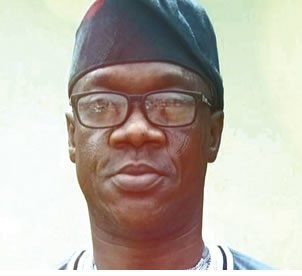
By Suyi Ayodele
“History, it appears, cannot escape hunger. In the time it takes you to read this sentence, someone will have died of it. On a daily basis twenty-four thousand people die of hunger or diseases associated with it; that is a death every 3.6 seconds. As on every other day, on September 11, 2001, when terrorists murdered 2,973 people in the United States, almost twelve times that number, an estimated 35,000, were killed by hunger around the world.” – (Hunger: A Modern History by James Vernon).
Hunger may be as ancient as the Garden of Eden, but no president is elected to chronicle its history; our president was elected to kill it.
One of the world’s most pressing humanitarian challenges is hunger. The phenomenon cuts across the globe. The difference lies in how each leader tackles the problem without dismissing it as one of the existential maladies that the human race must simply live with as its fate.
Rather than brushing the problem aside, many world leaders have demonstrated that through the right policies and political will-power, hunger can be significantly reduced if not totally eradicated.
Examples of nations that have tackled the problem of hunger frontally abound. The United States of America, Canada, Japan, Germany, Australia and many other Scandinavian nations have shown enough experiences that through well-articulated strategies, citizens can have access to adequate nutritional food chains. It must be stated however, that their wonderful strategies notwithstanding, these nations have not been able to completely eliminate hunger. Their efforts, however, provide valuable lessons for the rest of the world.
In the case of the United States, the government tackles the problem of hunger through a combination of food assistance programmes, agricultural support and partnership with charity organisations. The old Food Stamps project now known as the Supplemental Nutrition Assistance Program (SNAP), is one example of such programmes, which assist low income earners to purchase food each month.
Also, the school breakfast and lunch programmes make nutritious food available to children of school age, while the Women, Infants and Children (WIC) programme gives nutritional support to expectant mothers, new mothers and young children. The programme is designed purely to cater to the nutritional needs of the vulnerable groups in American society.
The God’s Own country complements the above with robust investments in agricultural support through research, subsidies, crop insurance, training and access to modern-day farming technologies. The immediate results include increased food production, stable food prices and a sustainable food supply and distribution system that ensures that nutritious food gets to the needy.
The Canadian Government, on its own part, combines social welfare programmes with strong agricultural policies of food banks, nutrition programmes and income support initiatives to assist families facing financial difficulties. This is just as the government encourages sustainable farming policies to ensure food security with minimal effects on the environment.
Other European countries like Germany, Sweden, Norway and Denmark are also not lagging behind. They initiate and maintain robust safety nets that reduce poverty, drastically, having identified it as the genesis of hunger. These countries put in place programmes that support their unemployed population, child welfare benefits, good healthcare delivery systems and housing projects to meet the needs of the vulnerable members of their different countries. In addition, they lay emphasis on policies that reduce food waste by encouraging supermarkets and other manufacturers to donate their surpluses to charities instead of discarding them.
The stories from Japan and Australia in ensuring stable food supplies through technological innovations, effective agricultural systems and adequate preparation for natural disasters, are not different. Their investments in irrigation, research, climate-resistant crops, and modern farming implements have gone a long way in ensuring that their farmers keep producing food even under the most inclement environmental conditions.
Apart from the above national efforts, it is on record that many countries collaborate, through international bodies, to improve world food security. These countries support humanitarian food assistance, agricultural development and emergency relief in countries hit by natural disasters, war and other economic crises. The collaboration recognises that hunger is a global challenge that requires a collective action.
READ MORE FROM THE AUTHOR: OPINION: Oríire Pupils, Makinde And The Children Of Ọ̀rúnmìlà
In all this, hunger, we dare say, has not been completely eradicated. Even the wealthiest nations of the world still experience the phenomenon. The rising cost of living, economic inequality, global unemployment and climate change have all combined to ensure that hunger remains a threat to humanity. The reality notwithstanding, consistent efforts of sane governments of the world and the private individuals and organisations, farmers and communities alike, have ensured that millions do not go to bed hungry.
The lesson from the experiences of America and other developed nations of the world, is that ending hunger goes beyond producing enough food. The task, more than anything else, demands deliberate effective government policies, strong and sustainable social welfare programmes, and an enduring partnership between the government and the private sectors.
By sustaining these efforts and adapting to emerging challenges, nations can continue moving closer to the goal of ensuring that every citizen has access to sufficient, safe, and nutritious food.
Coming home to the African continent, many countries such as Ethiopia, Rwanda, Kenya, Ghana and Morocco, are making huge investments in agriculture through the provision of improved seeds, fertilizer, irrigation facilities, farm machinery and extension services. They have also introduced programmes that encourage modern farming techniques with the aim of increasing food production.
Several other African nations are also promoting climate-smart agriculture to assist farmers to cope with droughts, unpredictable rainfall and floods. They have also introduced drought-resistant crops, established efficient and cost-effective irrigation systems to enable farmers to maintain production irrespective of the climate conditions.
Realising that social protection programmes are key in the fight against hunger, African countries such as South Africa, Ethiopia, Kenya, and Ghana, provide cash transfers, school feeding programmes, food and nutritional support to vulnerable families. The initiatives have helped in keeping their children in schools with adequate security networks to guarantee their safety.
I have elected to embark on this long homily of sorts to drive home my consternation with the recent utterances of President Ahmed Bola Tinubu on the gnawing hunger issue ravaging the land. But, while worrying sick of his rather rash comments at a recent meeting with some Bishops, I remembered four professors under whomever tutelage I was privileged to have been under in my long forage for knowledge.
I met the first three during my undergraduate days at the Obafemi Awolowo University (OAU), Ile-Ife. The last was my Head of Department at the University of Ibadan (UI) when I ran a post-graduate degree at the premier university.
Professors Oyin Ogunba, Wole Ogundele, B.M. Ibitokun and Ademola Dasylva were unanimous in their chracterisation in Oral Literature. The four intellectuals agreed in their teachings that what a character says tells more about the character than what people say about him.
Again, they also submitted that closely related to that identikit profiling is what the character does. Thus, in their scholarship, the four egg heads were of the view that a person’s real identity is summarised in the tripod of: what the person says, what he does, and what people say about him.
Professors are more than philosophers. The Yoruba Language makes a distinction between a doctoral degree (Ph.D.) holder, a philosopher (Amòye) and a professor (Òjògbón or Alámòdájú). The tripod characterisation template these academics taught decades ago finds its relevance in our today’s leaders. Could those men of letters and those before them have had our President in mind when they submitted that what a man says speaks more to his personality?
I don’t know how much of our traditional philosophy President Tinubu knows. I am also in a dilemma here not to contradict the dictates of the Yoruba ethos of Omolúàbí by teaching an elder the basic rudiments of the worldview of his people.
READ MORE FROM THE AUTHOR: OPINION: Minister Umahi And The Woman From òkè òhún
I say this because of the huge temptation to say here that President Tinubu’s recent utterances about hunger in Nigeria purely negates Yoruba’s view about hunger and poverty. In my place, we don’t say that the mouth of an elder smells. You would merely inhale the odious smell grim faced and move on. You can see my dilemma!
President Tinubu hosted some senior clerics from the Catholic Church last week. The Bishops, in their characteristic ways of telling truth to power, told the President that the streets are not smiling. In accordance with their callings as true servants of God, the Catholic Bishops told the president that there is hunger in the land. They talked about the failing economy, the non-existent security and the fact that life in Nigeria under Tinubu is becoming brutish. They were firm, direct and almost acerbic!
The Bishops stopped, exchanged glances and gave one another thumbs up for delivering their message in its raw form. They waited for a sympathetic and remorseful President to react. They were sure that Mr. President would be humane enough to appreciate the fact that what they delivered was the true picture of things in Nigeria under his presidency. They were fatally wrong!
You must give it to President Tinubu: diplomacy is not one of his strong points. And he did not disappoint. Looking directly into the eyes of the cassock-clad Bishops, he declared: “Before I was born there was hunger…” He did not stop there. The President went ahead to lecture the Catholic Bishops, and any other person(s) contemplating using hunger as ‘blackmail’, the essence of the Church. Tinubu directed the Bishops to go back to their parishes and feed their parishioners. That, Mr. President reasoned, was why the Church was established!
What does the above statement by President Tinubu tell us about the man who is in charge of our affairs? Again, my old teachers mentioned above gave the answer decades ago: what a man says tells more about his character!
Then you may wish to ask: who is President Tinubu? Or, what sort of man is President Tinubu?
Call it the Stylistics Avoidance Strategy, Yoruba upbringing forbids me to say that President Tinubu is completely detached from his roots. Kò gba enu mi (my mouth is not wide enough to say that – pardon the transliteration).
In my place, when a ‘child’ finds himself at this kind of crossroads, he is advised to resort to the tradition of his people, by seeking the consent of the elders to speak in parables and allegories. This is what I will do here to present the character portfolio of President Tinubu without being accused of impudence. Ìbà èyin tó ní ogbón (respect to those who are wise).
Yoruba tradition (I hate to do this – teaching an elder the ways of his people), philosophy and worldview regard hunger as a bad phenomenon. One of the strongest indications of that stance is embedded in the legend of Orunmila, who, before the creation of humanity, fasted for 400 years, so that his offspring would never experience hunger.
This act is one of the reasons why Orunmila is called Eleri ipin (the one who witnesses destiny). And that also is why Orunmila, when provoked by his child, Olowo, and decided to go back to heaven, he gave the Ifa Corpus, Ogbe-Sa, specifically as the Odu for Orisa Oko, the deity in charge of land fertility and bountiful harvests, to his children so that humanity will not experience hunger
A man’s religion is his life. The entire Osa-Meji or Osa-Eleye Corpus in Ifa is dedicated to the relationship between man and Our Mothers (Witches), whom Orunmila enjoined humanity to respect, worship, and adore so that they would ensure abundance of rain to water what the farmers planted and banish hunger in the land. Most Yoruba folktales on hunger and drought are woven round the intervention of the women folks at proffering solutions.
Yes, it is true that before President Tinubu was born, there had been hunger. Even after he completes his assignment here on earth, there will still be hunger. But it is equally true that the one, that is if it is given that President Tinubu is a pure Yoruba in flesh and blood, who knew humanity (Eleri ipin) before creation, sacrificed his first four hundred years to ensure that hunger is never a scourge on humanity. The President’s insensitivity to the problem as well as his attitude to those who called his attention to the problem has left much to be desired.
Every man must be attuned to his background. Hunger is never a phenomenon anybody should use to play politics. The Yoruba worldview does not support that. President Tinubu cannot hide under the fact that hunger is not a new thing to continue to shift his responsibility to the abstract, – time immemorial!
READ MORE FROM THE AUTHOR: OPINION: Osoba’s Short Spoon Dinner With Obasanjo
The President should be encouraged to study the philosophy of his people. It is not for fun that the elders of our land posit that: “Ebi ńpa mí ò ṣe é fi ìfẹ́ sọ” (nobody whistles to announce hunger). Those before us sang about hunger as an inimitable deity which kills a man (Kò sí ìmàle bí ebi; ebi leè pa ènìyàn kú). They did not stop there. They added that when a man is hungry, nothing makes sense to him (Ebi kìí wo’nú kí òrò miran tún wo’nú). Philosophers, they were, our forebears.
They knew from the time of creation, as seconded in Ifá verses, that for a man to have a clear mind to address his problems, hunger should not be part of his worries. That is why they declared that the greatest sacrifice a man can make is Ebo Olúbòbòtiribò (sacrifice of the mouth). The owners of the land say: Òrìsà bí òfun kò sí, Ojoojúmó níí gba ebo l’ówó eni (there is no deity like the oesophagus, it takes sacrifice daily from man). President Tinubu should be familiar with that; he is one of the elders of the land.
But what if the President does not subscribe to the dictates of the African Indigenous Religion (AIR), Ifa, or the embedded principles of the Yoruba proverbs? What happens if President Tinubu, a devout Muslim, believes only what the Islamic religion teaches?
I dare say here that the Islamic religion is not an alibi for the President to shift the failures of his rudderless leadership to his philosophy of pre-birth hunger scourge in Nigeria. There are two Hadiths of the Holy Prophet Mohammed (PBUH), which teach that hunger, even of the most despicable, should not be excused under whatever guise.
In The One Who Gave Water to a Thirsty Dog and was Pardoned by Allah, as recorded in ‘Umar Sulayman al-Ashqar’s (Jan 1, 1940- August 10, 2012) book: “Authentic Stories by Prophet Muhammad (ﷺ),” the Salafi scholar narrates two teachings of The Prophet (PBUH) as recorded in Hadith 126 thus:
“A man suffered from intense thirst while on a journey until he found a well. He climbed down into the well and drank until his thirst was quenched. After he climbed out of the well, he saw a dog lolling out its tongue and eating the moistened earth out of thirst. The man said, ‘This dog has suffered from thirst as I had.’ So he climbed back down into the well, filled his shoe with water, then clenched it between his teeth while he climbed out of the well and let the dog drink. Allah appreciated this act of kindness and pardoned him. Then the Companions around the Prophet (ﷺ) said, ‘Allah’s Messenger, is there a reward for us, even for (serving) such animals?’ He (ﷺ) said, ‘Yes, there is a reward for service to any animate.’”
The second story is also similar: “A prostitute saw a dog circling around a well on a hot day with his tongue hanging out, due to thirst. She drew water for it in her shoe and she was pardoned (for her sins because of this act of hers).”
The morals of the two narratives above should not be lost in discourse. In the Islamic religion, we all know that the animal, dog, is forbidden, just as it frowns on prostitution when proven beyond all reasonable doubt. But to show that humanity comes first before any other consideration, The Prophet (PBUH), used the two most forbidden symbols (dog and prostitution) in Islam to illustrate that human kindness to any object in distress can earn one Aljannah.
The lesson here, if I may be Mr. President’s Imam for today, is that if Allah could forgive a prostitute who gave water to a thirsty dog, how much more a President who ensures that the citizenry does not go to bed in hunger? This is why the elders of our land intone that Ìwà l’èsìn (a man’s character is his religion)!
This is the morality of African proverbs and hermeneutics. President’s Tinubu’s response to the hunger-cry of the Catholic Bishops smacks of leadership insensitivity; very unfeeling. The abundance in the Presidential Villa or at Bourdillon does not translate to abundance in the land. Hunger walks on all fours on our streets. President Tinubu is too distant from the masses; his utterances and arrogance-in-power show that!
Only a synthetic leader will dismiss the threatening problem of mass hunger as an antediluvian phenomenon the way President Tinubu did. That is sad for him; that is sad for his Presidency and more importantly, that is sad for humanity.
Leaders emerge to solve problems, including problems that predate their ascendancy. Nobody expects President Tinubu to solve all the problems of Nigeria in one day. Nobody thinks he should or must solve all the problems. As a matter of fact, many of us believe that he does not even have the basic understanding of what the problems are in the first instance before talking about solutions.
It is therefore a confirmation of his archetypal trait of a leader who is completely disconnected from the reality of the time he rules, for president Tinubu to submit that hunger predates his birth, and as such, he has no solution to it!
If after two and half years as a senator, eight years as a governor, sixteen years as opposition leader; eight years as a National Leader of a ruling party, and ‘eleven’ years in the saddle as the President (he told us unequivocally that he was Buhari…), Tinubu still does not have the control over the trajectory of Nigeria’s population development, then on what basis is he seeking a second term? Is it to continue to perpetuate ignorance? Or to continue to shift his responsibility?
Methinks the best approach would have been to take a cue from other world leaders who have successfully ameliorated the hunger problem in their land with sincerely smart policies beyond the prebendal act of sharing a few bags of poor quality rice at random.
In addition to this, I think the Tinubu presidency should become more stringent in its approach to tackling the problem of terrorism which has driven farmers farther from the land, thereby worsening the hunger crisis. Enough of the kids’ glove treatment of rehabilitating and reintegrating children of the fallen archangel who, regardless of how well they are treated, will never toe the path of peace.
A man must know the limits of his strength. Tinubu’s response to the hunger in the land and the uneven tract in the political scene shows a man at the end of his tether. If he has no more tricks in his bag to address the problems his inefficiency has created, he owes us one obligation: QUIT the race!



News
Six Corps Members Receive N10m Grants To Boost Agribusiness

Six members of the National Youth Service Corps (NYSC) have received a total of N10 million in grants to expand their agribusiness ventures under the Farmers for the Future Programme.
The programme was organised on Monday by the British American Tobacco Nigeria Foundation (BATNF) in collaboration with the NYSC to encourage young Nigerians to embrace agriculture and develop sustainable businesses.
Presenting the cheques to the beneficiaries in Abuja, the NYSC Director-General, Brigadier General Olakunle Nafiu, urged Corps members to maximise the opportunities provided by the service year by venturing into commodity marketing and other viable businesses.
Nafiu said agribusiness remained a viable avenue for young people to build sustainable enterprises, create employment and generate wealth.
READ ALSO: NYSC Swears In 1,600 Corps Members In Bauchi
He also stressed the importance of value addition to the success and sustainability of business ventures, while commending BATNF for placing Nigerian youths at the centre of its entrepreneurship initiatives through value-chain development, employment creation and its partnership with the NYSC.
“I charge you to spread the news around. We have seen the outcome, and it is a good idea,” he said.
The beneficiaries are Dominic Olufemi (FC/25C/1143), who received N3 million; Temitope Adewole (ED/26A/2251), N2 million; Abdulwaheed Bala (ED/25B/1402), N2 million; Olanike Mayungbe (OG/26B/1037), N1 million; Kingsley Udoeyen (KG/26A/1735), N1 million; and Lorember Lorsue (JG/25B/1742), N1 million.
Speaking on the selection process, the Acting Director, Skills Acquisition and Entrepreneurship Development (SAED), Mrs Winifred Shopeka, said the programme began with an online registration portal through which Corps Members engaged in agribusiness submitted their business plans.
READ ALSO: NCCSALW Deploys NYSC Members In Fight Against Illegal Arms In Northeast
She said nearly 3,000 Corps members applied and underwent a rigorous selection process that produced 20 finalists.
According to her, the finalists participated in a boot camp and a final pitching session, which produced the 10 best presenters before the six ultimate winners were selected.
Shopeka said the beneficiaries had also been mentored and attached to established market operators to assist them in marketing their products.
She added that Corps Members who did not make the final stage of the competition were also trained by BATNF.
The BATNF Team Lead, Mr Oludare Odusanya, congratulated the beneficiaries and urged Corps Members engaged in agribusiness to master the fundamentals and acquire the knowledge and skills necessary to succeed.
“We are happy with our collaboration with the NYSC, and it will continue,” he said.
READ ALSO: NYSC Lauds Gov. Mohammed’s Intervention In Fence Collapse
Odusanya explained that BATNF was an independent organisation established to contribute to poverty reduction in Nigeria through sustainable agricultural practices and other interventions.
He said the Farmers for the Future Programme was instituted in collaboration with the NYSC to encourage Corps Members to venture into agribusiness and become job creators.
He added that the beneficiaries would be attached to mentors who would guide them towards achieving success in their respective businesses.
According to him, the programme has, since its inception, continued to enhance the entrepreneurial capacity of Corps Members.
News
CBN Reduces Interest Rate To 23%

The Central Bank of Nigeria (CBN) on Tuesday announced the reduction of the interest rate, also known as Monetary Policy Rate (MPR) to 23 percent.
Briefing the media in Abuja, the Governor of the CBN, Mr. Olayemi Cardoso, said at the 307th MPC meeting held on September 22, 2026 agreed the resetting of the MPR and recaliberation of the monetary policy market.
According to Cardoso, the committe is satisfied with the disinflation progress, adding that members noted stable banking sector following successful recapitalisation.
READ ALSO: CBN Monetary Tightening Worsening Nigeria’s N50tn Development Finance Gap – Group
Meanwhile, according to Nigerian Tribune, reports that that the MPC, at its 306th meeting in July 2026, disclosed its resolution to retain the interets at 26.5 percent.
According to the Governor of the CBN, Olayemi Cardoso, “the Committee’s decision to maintain the current policy stance followed a thorough assessment of the balance of risks. Although headline inflation moderated marginally in June 2026, global uncertainties have heightened, due mainly to the renewed hostilities in the Middle East.
“In view of the evolving developments, maintaining a cautious monetary policy stance remains appropriate. In arriving at its decision, the Committee noted the recent resurgence of hostilities in the Middle East, with particular attention to its spillover effects on global energy prices and the potential pass-through to domestic inflation.”
News
NURTW: KWAM1 Settles Long-time Rift Between MC Oluomo, Tafa Sego

Nigerian Fuji musician, Wasiu Ayinde Marshal, popularly known as KWAM1, has brokered a peace deal between the National Union of Road Transport Workers (NURTW) National President, Musiliu Akinsanya, popularly known as MC Oluomo, and the Lagos State Chairman of the union, Mustapha Adekunle, aka Tafa Sego.
The reconciliation took place at Ojusagbola in Ijebu, Ogun State, where several NURTW chieftains gathered for the meeting.
The development was announced on Tuesday on KWAM1’s digital media page on Instagram, alongside photographs from the meeting.
According to the post, the two union leaders have resolved their differences after years of strained relations.
READ ALSO: Why FG Named KWAM 1 Aviation Security Ambassador — Keyamo
“After years of an age-long rift, MC Oluomo and Tafa Sego have finally settled their differences. And from what we know now, this is final,” the post said.
The musician was said to have intervened as the Mayegun of Yorubaland, with the aim of bringing an end to the longstanding disagreement between the two NURTW figures.
“K1 acted in his role as the Mayegun of Yorubaland by seeking an end to the long-standing rift, once and for all,” it said.
The post also described the meeting as a significant step beyond previous public displays of reconciliation.
READ ALSO: FG Gives KWAM 1 Aviation Appointment, After Airport Incident
“This time, it was not just another handshake for the cameras. The two old friends and colleagues came together at Ojusagbola, with King Wasiu Ayinde Marshal (K1) playing the peacemaker.”
Both MC Oluomo and Tafa Sego were reported to be pleased with the outcome of the intervention.
“Both parties are delighted about the new development,” the post said.
The two men had previously been allies and prominent figures within the Lagos NURTW before their relationship became strained amid disagreements linked to leadership of the union in the state.

 News2 days ago
BREAKING: Tinubu Extends Working Vacation
- News4 days ago
Six Hidden Health Benefits Of Unsweetened Zobo
- News4 days ago
Jehovah’s Witnesses Announce New Position On Blood Transfusion Policy
- News4 days ago
2027: Step-by-step Guide To Applying For INEC Ad Hoc Staff Recruitment
- News4 days ago
How 36 Nigerian States Got Their Names
- Headline4 days ago
Nigerian Man Jailed After Masturbating In Front Of Woman On UK Train
- Headline2 days ago
How To Format An Academic CV For US Master’s, PhD Applications
- News4 days ago
Stop Acid Reflux Pain: Foods You Must Ban From Your Kitchen
- Headline4 days ago
Nigerian Woman Arrested, Charged Over Illegal Voting In US
- News3 days ago
[OPINION] Wike-APC: Fights Always End Adultery


