

News
OPINION: A Review Of IBB’s Book Of Billions [Monday Lines]



By Lasisi Olagunju
In five parts, thirteen chapters, six appendices, including an interview; a prologue and an epilogue, he sought to give a definite definition of himself. But, for me, the deepest insight into the person of General Ibrahim Babangida is not in his expensive book (it fetched him billions; I bought a copy for N40,000). The greatest revelation was at the launch of the book in Abuja. His comrade-in-arms and childhood friend, General Abdulsalami Abubakar, revealed that a cleric told them about 80 years ago that Babangida would one day be president of his country.
Now, when you, a seer, tell a child that he would be king one day, the palace cannot be safe until the child becomes man and he becomes king – or he dies. We read exactly that in Shakespeare’s story of the Scottish General, Macbeth. Three witches tell Macbeth that he will be King of Scotland. Macbeth becomes impatient; he kills the reigning king and takes the throne. Because of the security of his throne, paranoia pushes King Macbeth to take other desperate measures. People die; civil war erupts, more people die. Darkness falls. Please, go back and read again your Macbeth.
My people have several proverbs and sayings on royalty and fate. They say one’s destiny makes one a king but one’s character dethrones one (Orí ẹni ni í fini j’ọba, ìwà èyàn ni í yọ èyàn l’óyè). Like Macbeth, IBB joined the army and rose to become a General. Again, like Macbeth, the Thane of Cawdor prophecy came true for Babangida and he became Chief of Army Staff. Finally, like Macbeth, he became king and pronounced himself president and proceeded to do as Macbeth did until he left almost the Macbeth way. If you had been wondering why the amiable General from Minna chose ‘president’ as his official title, now you know it was in fulfillment of a prophecy.
Babangida once named his heroes: Zulu’s Emperor Chaka and General Hannibal of Carthage. Read again about those Generals, their careers and their exploits, their end. Read page 121 of IBB’s book and decide if you are convinced by his reasons for not answering what all his predecessors answered: Head of State. He says in the book that he chose to be different not because he wanted to copy Turkey’s General Kemal Ataturk or Emperor Chaka the Great. He says he chose to be ‘president’ as a demonstration of his commitment to “our suspended constitution.”
Babangida’s feet walked corridors of power; he befriended, and ‘charmed’ power even before he installed Buhari as Head of State in December 1983. His feet took him, or he took his feet everywhere his inner head (his Ori Inu) could be found. He was intrepid, smooth and daring. I read Shehu Shagari’s autobiography, ‘Beckoned to Serve’ published in 2001: “In late October or early November 1983, Major General Babangida and Colonel Aliyu Mohammed came to the State House to see me and we had a long discussion. They did pay me such visits usually at night long before I became President.” Shagari had that recorded on page 497 of his own autobiography. You are likely to ask what IBB was looking for in Shagari’s home at night. The way Babangida walked hallways of power was the way persons kept awake by destiny walked, restlessly.
MORE FROM THE AUTHOR: [OPINION] Pa Adebanjo: A Celebration Of Death
In the Foreword to Babangida’s book written by his boss, General Yakubu Gowon, we gain better discernment on the labyrinth called IBB. The older General describes Babangida as “a natural leader but also a devoted follower.” Sun Tzu, in ‘The Art of War’ tells Generals: “Appear weak when you are strong, and strong when you are weak.” Is that why President Babangida is read in the book bossing and, at the same time, bowing to his army chief, General Sani Abacha, in double-quick manner? Many commentators have said that his June 12 account is a mesh of courage and cowardice. ‘Abacha did this, Abacha did that but I regrettably take full responsibility for everything that happened’! Here, before you abuse IBB as a General without biceps, know that he did not walk alone. Apart from Murtala Muhammed who came fast and left fast, every military regime we had had its internal tormentor. For Gowon, it was Murtala Muhammed who was both boy and boss to the boss. All accounts say Gowon ruled under Murtala’s shadows until the kingmaker said enough and took the crown from Gowon alias Jack. Read the Gowon/Murtala story in Theophilus Akindele’s ‘Memoir of Mixed Blessings’ – especially the contract controversies. In his own book, Babangida says Murtala Muhammed, in Gowon’s government, “was quite a handful in matters pertaining to control” (page 85). IBB himself played the Murtala role to Muhammadu Buhari, 1984-85. He made the lanky General from Daura sit on the throne then shoved him off the seat because of his “excesses.” It should, therefore, not shock the reader that Abacha was the captain of the ship who allowed IBB to be there until the groom was ready for the bride. Babangida’s ‘A Journey in Service’ tears the mask.
Somewhere in that book, like a river nearing its sea, for whatever reasons, IBB reproduced (introduced) a 1995 interview he granted TELL magazine, and it reads like a summary of the entire IBB story. At a point in the interview, TELL magazine editors remind him of how he dealt ruthlessly with them and their magazine, IBB asks “What happened to TELL? TELL? Seriously, what happened?” He is told that over half a million copies of TELL were seized, and some of the editors speaking with him there were arrested. His response: “You see, when I sat up there, I didn’t know most of these things that happened…At times, the information only reached me later.” If what he said here is true, for a man who boasted that he was trained to dominate his environment, the fact that big things happened in his government without his knowledge could only tell how hopelessly imprisoned people of power could be.
Some people’s luck or escape route is in dying young. One loud example is General Murtala Muhammed. Would he be the hero he is if he had ruled for three, four years? Nigeria would definitively have happened to him. Unlike Murtala, some other people are very lucky to live hard and live long. Babangida is one of such. He is 83 years old. Imagine if he had died when his enemy, Muhammadu Buhari, was president. He would not have made the loud statement he made in Abuja last week! Or worse, if he had died during the June 12 crisis. He lived those bloody moments and validated Musician Odolaye Aremu’s theory that “if we don’t die young, enemies of fifteen years will become our friends.” At his book launch last week, his enemies and friends dropped offerings at his altar. NADECO man, Bola Tinubu, described him as “visionary Babangida.” Gowon in the Foreword declares that “in the post-Civil War period, his (IBB’s) tenure in office is easily the most remarkable.” That is an interesting verdict. Almost five of those post-Civil War years belong to Gowon himself. Some people are very good at scoring own goals.
In language and structure, I find this book by IBB to be very solid and uncomplicated. But, certainly, the most contentious of the content of the book is the June 12 story. And, the author’s treatment of the matter is the most extensive – almost 40 pages. Very unlike IBB, he named his friend, Sani Abacha, as the head of the forces that cancelled the election. But the annulment was just a culmination of a long, dark, bad process triggered by IBB himself long before the election was held. He said he was away in Katsina when Abacha and his boys annulled the election. But IBB came back from Katsina; why didn’t he undo what Abacha did? If he did anything at all, it is not in the book. Instead, what we see are hand-wringing cliches on the annulment and its consequences. The Abacha family is angry, furious; Abiola’s people are not impressed; they wondered why he waited for ‘all’ his witnesses to die before coming out. But what he wrote is no news. What is news is that those facts are directly from IBB himself. Snippets of what he said were in the media of that period. And we heard all sorts of weird things in newsrooms, the scrambling for and partitioning of power. For instance, we heard (or read) that Abacha, one heated meeting day, followed General Joshua Dogonyaro to the toilet and told him: “Let IBB go and we remain.” And Dogonyaro’s reply was “Who are the we?” Soldiers are great followers of Sun Tzu: “in the midst of chaos, there is opportunity.”
MORE FROM THE AUTHOR: OPINION: El-Rufai, Obasa And Other Godfather Stories [Monday Lines]
Professor Omo Omoruyi was one of the key architects of IBB’s transition programme and, perhaps, the closest to IBB in the dark days of the annulment. In 1999, Omoruyi published ‘The Tale of June 12: The Betrayal of the Democratic Rights of Nigerians’. It is his account of the June 12 tragedy. More than twenty five-years after it was published, I have not read anyone that is mentioned in the book coming out to say the professor lied. So, I take Omoruyi’s account of the pre and post-annulment events as reliable. He claims in his book (page 37) that the June 12 election “was aborted by forces external to its design.” He is more direct on page 257: “General Abacha felt humiliated when General Babangida yielded to the US pressure to order on June 11, 1993 that the June 12 election must go on. From that June 11, General Abacha showed no interest in the matter and waited for when it would crash…It was Lt.-General Alani Akinrinade, a former Chief of Defence Staff and an experienced professional officer, who read the situation right in the interview he granted to reporters in October 1993 when he said that ‘Shonekan is a mask…the masquerade itself is the armed forces and Abacha is the personification of that masquerade.’ See TELL, November 1, 1993. p.25.”
Omoruyi accuses IBB of betraying his country and its people with his disruptive handling of the last leg of the transition programme. He says IBB lost control of the military and the government soon after the election held. He said Babangida was in a fix as of 9.30pm on 21 June, 1993 when he met him. His book (page 162 – 164) quotes the General copiously: “I see disaster for myself and my family. Where do I go from here?” Omoruyi quotes IBB as confirming that Abiola won the election but that “they” would kill him if he allowed the results to stay. Omoruyi wrote further that at the end of that outburst, Babangida made a telling remark. He quotes him as saying “I told you that I am a prisoner. What do I do? I think I need a psychiatrist” (page 171). Two days after all these, the annulment announcement was made via an unsigned, undated paper circulated to the media through the Vice President’s office.
Can we, at this point, ask journalist Nduka Irabor to come out and tell the world who gave him the unsigned annulment statement that he released to the world on 23 June 1993? He can no longer be quiet.
Now, if Abacha emitted such negative vibrations in his government, why did Babangida leave him behind after retiring himself and all service chiefs? IBB offers no cogent reason for this in his ‘A Journey in Service’. Instead, what we read is his admission of “a grave mistake” in retaining Abacha as chairman of the joint Chief of Staff and “as enforcer-in-chief for the new government” of Ernest Shonekan. Omoruyi addresses the same issue better in his own book (page 257): “In response to my question as to who would guard the guards after August 26, 1993, he (Babangida) said he would remove the operational control from him (Abacha) and assign it to Lt.-General Joshua Dogonyaro.” It is interesting that IBB thought that running into Dogonyaro’s fire was a better option to staying in Abacha’s fire. In any case, Abacha sacked Dogonyaro and all other “guards” soon after Babangida stepped aside. The other arms of the IBB boys, he used them to get rid of Shonekan and his Interim National Government (ING). He then cavalierly gave them the tissue-paper treatment – he used, dumped and flushed them down the drain.
We saw a convergence of all the forces in Abuja last week. NADECO and the military factions swam in open adultery. They wined and partied and gave the General of Generals a generous pat on the back. One of my university classmates described the Abuja event as “not funny.” Her post to me dripped with so much pain. She told tales of death and dying and suffering. She gave accounts of personal experiences and sacrifices. She felt betrayed.
MORE FROM THE AUTHOR: [OPINION] Islam: Beyond terrorism and Boko Haram [Monday Lines 1]
I begged her to let me include her tears here without mentioning her name: “I watched the launch of the book written by IBB and took a cursory look at the parade of eminent personalities in attendance. I listened to the speeches one after the other and saw them laughing. I was stunned that people therein, one after the other, eulogized IBB. I thought for a moment that I was in another planet or that I had mental issues by asking myself if these people were describing the same events that I witnessed as a 26-year old spinster living in Lagos and trying to chart a course for the future. Significantly, I remember how I walked from Aguda in company of a friend to queue up and vote at Adebola Street, off Bode Thomas in Surulere, Lagos and walked back home. I remember sitting at the reception of the school of nursing on Awolowo Road waiting to collect my sister’s transcript when an elderly woman fainted on hearing the news of the annulment. I recall her colleagues trying to revive her and crying at the same time that their hope for a better Nigeria had just been dashed. I remember having woken up early one morning to go to work and arriving in Norman Williams in Ikoyi only to realize that Lagos was on lockdown and going back home became an arduous task. I remember getting a ride through the Third Mainland Bridge to Obanikoro and walking back home in Aguda, dodging bullets and escaping area boys who took advantage of the situation. I survived but some did not. What I saw in that hall last week was a mockery of those who died and of those of us who did not die but are yet to recover from the trauma of that period. It is not funny!”
My friend spoke for millions seething helplessly in the dimly-lit parlours of their lives. But, there must be a closure, and I think that was what that Abuja gathering thought it was doing. For those who are angry and crying betrayal, I give what I gave my friend – a quote: “Whatever happens, stay alive. Don’t die before you’re dead.” Some say the quote is from English writer, Virginia Woolf; some others credit Polish writer and Nobel Laureate, Olga Tokarczuk. Whoever the writer is between those two ladies gave a valuable advice. “Whatever happens, stay alive.”
Daedalus was a mythical sculptor who lived in Athens. In one desperate moment, the man threw a stone at a bird and killed it; the stone ricocheted and killed a second bird. With the feathers, he and his son created wings with which they escaped from detention in a high tower which they had helped their tormentor to design. That appears to be the objective of General Ibrahim Babangida’s autobiography. To kill many birds with one lone stone. Still all storms; settle all scores; explain all controversies; and they are many: OIC membership, Dele Giwa’s death, Mamman Vatsa’s coup, the C-130 Plane Crash, the Gideon Orkar Coup, June 12; the SAP riots, Gulf Oil Windfall. The author thoroughly explains and analyses these as “challenges of leadership” all across the 420 pages, some from page 203 to 220. But, has he succeeded in getting these cases closed? Dirty water may quench fire but if you want to fight fire, you don’t wear clothes made of dry grass. Has Babangida’s book helped him to calm or further enrage the sea? Well, in Chinua Achebe’s words, it is “morning yet on creation day.”




News
Xenophobic Attacks: Oshiomhole Tells FG To Retaliate Against South African Companies In Nigeria

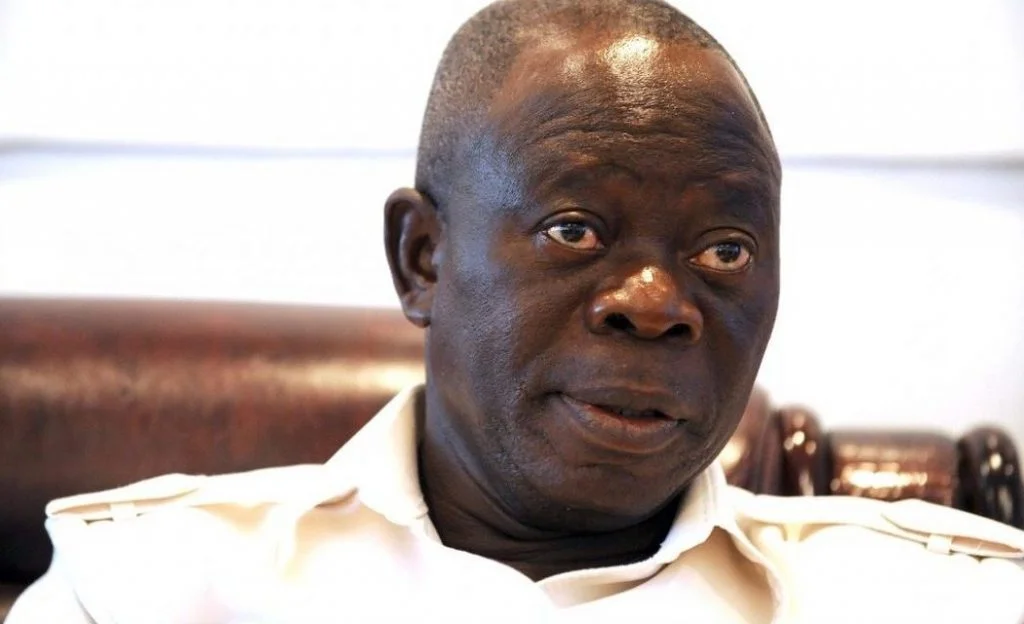
Senator Adams Oshiomhole has called on the Federal Government to retaliate against South African businesses operating in Nigeria following the recent attacks on Nigerians in South Africa.
Speaking during plenary on Tuesday, Oshiomhole said the Federal Government should consider revoking the working license of South African owned companies such as MTN and DSTV.
He argued that Nigeria must respond firmly to what he described as persistent hostility against its citizens.
READ ALSO:South Africa To Investigate ‘Mystery’ Of Planeload Of Palestinians
“I am not going to shed tears. If you hit me, I hit you. I think it is appropriate in diplomacy. It is an economic struggle,” Oshiomhole said.
He argued that while some South Africans accuse Nigerians of taking their jobs, Nigerians should return home and take over employment opportunities created by major South African companies operating in the country, including MTN and DSTV.
“When we hit back, the President of South Africa will not only talk but will also go on his knees to recognise that Nigeria cannot be intimidated.
READ ALSO:South African Ambassador Found Dead Outside Paris Hotel
“We will not condone any life being lost. If a crime has been committed under the South African law they have the right to bring any such person to justice, but to kill our people as if we are helpless, we will not allow that,” Oshiomhole added.
DAILY POST reports that several Nigerians in South Africa have reportedly been attacked, and their businesses destroyed, in ongoing xenophobic attacks in the country.
News
IGP Orders Officers Display Name Tag On Uniform, Gives Update On State Police

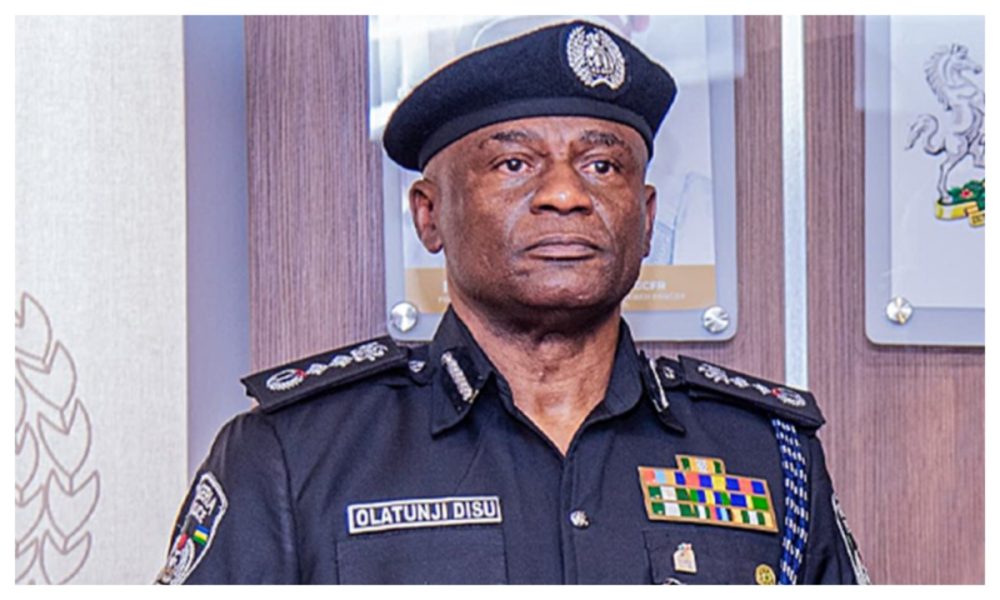
The Inspector General of Police, IGP, Tunji Disu, has ordered all police personnel to always have their name tags on their uniforms for easy identification.
Disu disclosed that only police personnel who are undercover are exempted from displaying their name tags.
Speaking on Tuesday, Disu said: “All police officers should have their name tags. All of us on the high table have our names apart from the undercover among us so if you look at all the Commissioners of Police we have our name tags, so it’s not our standard.
READ ALSO:
“All the Commissioners of Police are here and that is why we called this meeting, we have list of things like this that we will want to discuss with the Commissioners of Police, we have told them earlier and we will still let them know that every that happens within their area of jurisdiction falls under their control.”
On the issue of state police, the IGP said: “Since we got the signal that the Federal Government of Nigeria intend to establish State Police and since we are the federal police, we decided to take the bull by the horn and put down our own side of what we believe on how the state police should be run.
“A lot of things were taken into consideration, a lot of comparative analysis was done and it has been transmitted to the National Assembly.”
News
Court Orders SERAP To Pay DSS Operatives N100m For Defamation
The High Court of the Federal Capital Territory has ordered a non-governmental organization, the Socio-Economic Rights and Accountability Project, SERAP, to pay N100 million as damaged to two operatives of the Department of the State Services, DSS, for unjustly defaming them in some publications.
The court also ordered SERAP to tender public apologies to the defamed officers,
Sarah John and Gabriel Ogundele, in two national newspapers, two television stations and its website.
Besides, the organization was also ordered to pay the two operatives N1 million as cost of litigation and 10 percent post-judgment interest annually on the judgment sum until it’s fully liquidated.
Justice Yusuf Halilu of the High Court of the Federal Capital Territory gave the order on Tuesday while delivering judgment in a N5.5 billion defamation suit instituted against SERAP by the DSS operatives.
The judge found SERAP liable for unjustly defaming the two DSS operatives with allegations that they unlawfully invaded its Abuja office, harassed and intimidated its staff, in September 2024.
READ ALSO:How We Arrested Terror Suspect Who Threatened To Kill Students, Teachers In Abuja — DSS
In the offending publication on its website and Twitter handle, SERAP alleged that the two operatives unlawfully invaded and occupied its office with sinister motives.
The judge held that the publication was in bad taste especially from an organization established to promote transparency and accountability, as nothing in the publication was found to be truthful.
The DSS staff had listed SERAP as 1st defendant in the suit marked CV/4547/2024. SERAP’s Deputy Director, Kolawole Oluwadare, was listed as the 2nd defendant.
In the suit, the claimants – Sarah John and Gabriel Ogundele – accused the two defendants of making false claims that they invaded SERAP’s Abuja office on September 9, 2024..
Counsel to the DSS, Oluwagbemileke Samuel Kehinde, had while adopting his final address in the mater urged the judge to grant all the reliefs sought by his client in the interest of justice.
READ ALSO:DSS Arrests Suspected Gunrunner, Recovers 832 Rounds Of Ammunition
He admitted that although the names of the two claimants were not mentioned in the defamation materials, they had however established substantial circumstances that they are the ones referred to in the published defamation article by SERAP on its website.
The counsel submitted that all ingredients of defamation have been clearly established and the offending publication referred to the two officials of the secret police.
However, SERAP, through its counsel, Victoria Bassey from Tayo Oyetibo, SAN, law firm, asked the court to dismiss the suit on the ground that the two claimants did not establish that they were the ones referred to in the alleged defamation materials.
She said that SERAP used “DSS officials” in the alleged offending publication, adding that the two claimants must establish that they are the ones referred to before their case can succeed.
Similar arguments were canvassed by Oluwatosin Adefioye who stood for the second defendant, adding that there was no dispute in the September 9, 2024 operation of DSS in SERAP’s office.
READ ALSO:Alleged Cyberstalking: DSS Plays Video Evidence In Sowore’s Trial
He said that since SERAP in the publication did not name any particular person, the claimants must plead special circumstances that they were the ones referred to as the DSS officials.
Besides, he said that there is no organization by name Department of State Services in law, hence, DSS cannot claim being defamed adding that the only entity known to law is National Security Agency.
The claimants had in the suit stated that the alleged false claim by SERAP has negatively impacted on their reputation.
The DSS also stated, in the statement of claim, that, in line with the agency’s practice of engaging with officials of non-governmental organisations operating in the FCT to establish a relationship with their new leadership, it directed the two officials – John and Ogunleye – to visit SERAP’s office and invite them for a familiarization meeting.
The claimants added that in carrying out the directive, John and Ogunleye paid a friendly visit to SERAP’s office at 18 Bamako Street, Wuse Zone 1, Abuja on September 9 and met with one Ruth, who upon being informed about the purpose of the visit, claimed that none of SERAP’s management staff was in the country and advised that a formal letter of invitation be written by the DSS.
READ ALSO:DSS, Police Partner NCCSALW To End Terrorism, Mop Up Illegal Arms
John and Ogundele, who claimed that their interactions with Ruth were recorded, said before they immediately exited SERAP’s office, Ruth promised to inform her organisation’s management about the visit and volunteered a phone number – 08160537202.
They said it was surprising that, shortly after their visit, SERAP posted on its X (Twitter) handle – @SERAPNigeria – that officers of the DSS are presently unlawfully occupying its office.
The claimant added, “On the same day, the defendants also published a statement on SERAP’s website, which was widely reported by several media outfits, falsely alleging that some officers from the DSS, described as “a tall, large, dark-skinned woman” and “a slim, dark skinned man,” invaded their Abuja office and interrogated the staff of the first defendant (SERAP).
John and Ogundele stated that “due to the false statements published by the defendants, the DSS has been ridiculed and criticised by international agencies such as the Amnesty International and prominent members of the Nigerian society, such as Femi Falana (SAN)”.
“Due to the false statements published by the defendants, members of the public and the international community formed the opinion that the Federal Government is using the DSS to harass the defendants.”
READ ALSO:SERAP To Court: Stop CBN From ‘Implementing ‘Unlawful, Unjust ATM Fee Hike’
They added that the defendants’ statements caused harm to their reputation because the staff and management of the DSS have formed the opinion that the claimants did not follow orders and carried out an unsanctioned operation and are therefore, incompetent and unprofessional.
The claimants therefore prayed the court for the following reliefs: “An order directing the defendants to tender an apology to the claimants via the first defendant’s (SERAP’s) website, X (twitter) handle, two national daily newspapers (Punch and Vanguard) and two national news television stations (Arise Television and Channels Television) for falsely accusing the claimants of unlawfully invading the first defendant’s office and interrogating the first defendant’s staff.
“An order directing the defendants to pay the claimants the sum of N5 billion as damages for the libellous statements published about the claimants.
“Interest on the sum of N5b at the rate of 10 percent per annum from the date of judgment until the judgment sum is realised or liquidated.
“An order directing the defendants to pay the claimants the sum of N50 million as costs of this action.”
-

 Politics4 days ago
2027: Tinubu’s Re-election May Put An End To Nigeria — Baba Ahmed Warns
-

 Metro5 days ago
I’m A Street Girl’ – Bimbo Ademoye Clashes With Area Boys [VIDEO]
-

 Politics4 days ago
Senatorial Seat: Ogbakha-Edo Warns Against Imposition Of Candidates In Edo South
-

 Politics4 days ago
BREAKING: 2027: Former Adamawa APC Guber Candidate, Aishatu Binani Defects To NDC
-

 Business3 days ago
JUST IN: Nigerian Filling Stations Reduce Fuel Price After Hike
-

 Entertainment4 days ago
Actress Eniola Badmus Gets New Federal Appointment
-

 News5 days ago
10 African Countries With Highest Petrol Prices In Prices In April 2026
-

 News1 day ago
BREAKING: Wike Picks Alabo George For Rivers Governorship
-

 News3 days ago
2027: Pastor Adeboye Speaks On Nigeria’s Next President
-

 Politics4 days ago
2027: Pondi, Otuaro, Other Delta South Stakeholders, Endorse Senator Joel-Onowakpo For Second Term
