
News
OPINION: Bíòbákú’s Party And Tinubu’s Other Malapropisms

The way things are panning out, by the time President Bola Tinubu finishes his course, he will be competing with Mrs Malaprop in serial gaffes. Last week, again, he relapsed into his usual malapropism. At the breaking of fast with members of the House of Representatives at the Villa, he admitted that the “heat was high voltage from the critics” but he and his political party, the APC, eventually weathered the storm. While promising the parliamentarians a second term, subject to an agreement between the APC and the political parties the legislators belonged, he was emphatic that it would be to the exclusion of “the Biobaku party.” Everybody laughed. Someone at the gathering, in the final of grovelling laughter, could be heard wondering what the president meant again by this. What is the “Biobaku party”?
Mrs. Malaprop was a character in Richard Brinsley Sheridan’s 1775 play, The Rivals. Her name was derived from the French phrase mal à propos, which translates to “inappropriate”. In the play, Mrs. Malaprop was notorious for her frequent misspeaks which gave comic effect to the play.
My childhood friend, Osasere Adagbonyin, gave me my first encounter with malapropism. In Ilesa, Osun State in 1984, shortly after we left high school, he recounted to me the story of a man whose wife was barren but who, in a bombast, and a total deflection from what he meant, upon meeting the doctor, said, “Dr., my wife is un-bear-able; she is in-conceive-able; she is impregnable!”
In the run-up to the 2023 elections, presidential candidate Bola Tinubu was embroiled in a dozen of such speech blunders. It was so bad that opposition political parties cheekily claimed his recurring faux pas indicated he was not mentally fit to administer Africa’s most populous nation. For a finicky people, unpretentious about their choices of sanity in leadership, Nigerians are consensus ad idem with the Òkò-Ìrèsé tribe. They would not want an embarrassment in the Aso Rock Villa.
Òkò-Ìrèsé are a sub-Yoruba group who can be found in Kwara and Oyo States. Oral history, as well as traditional accounts, attribute Òkò’s founding to a hunter prince who was in search of a fertile land. Late Ilorin bard, Odolaye Aremu, popularized Òkò-Ìrèsé people’s carefulness in choices, especially in their historical commercial activities of buying and selling of slaves. Their Oríkì, praise poetry, speaks to those finicky choices made by their forebears, especially their historically recognized meticulous nature in commercial slave sale and purchase transactions. At slave markets for human purchase, their forebears were picky, lest they purchase slovenly slaves who periodically decorated their cheeks with whitish, early morning caked saliva called lala. In chanting the Òkò-Ìrèsé’s Oríkì, Odolaye articulated those finicky and careful choices. They were “Oko Irese ọmọ wòyírà, kò má ba r’ẹrú k’ẹrú, ẹrú k’ẹrú abilala l’ẹnu…”
MORE FROM THE AUTHOR:OPINION: Igboho, Kanu And The Heroic Igwe Before Tinubu
In January 2022, while addressing some market women who came visiting him, Tinubu announced to them that their Permanent Voter Card (PVC) had expired. “In case they do not announce to you on time, the PVC you have has expired,” he said. INEC had to promptly counter him, resulting in an apology by one of his aides. Again, in March of that year, during his 69th birthday colloquium celebrated in Kano, Tinubu urged Muhammadu Buhari’s Federal Government to recruit 50 million soldiers as booster for the security forces. The suggested recruits, he pontificated, “will eat cassava, àgbàda (real word in Yoruba for corn being àgbàdo) in the morning, yam in the afternoon…”
As if it was one month, one gaffe, in April of same year, the then presidential aspirant then asked, “Do you know how many of you are tweeting on WhatsApp right now?” Then, on October 15, he said his ally-now-turned-political-foe, then Kaduna State governor, Nasir El Rufai, had “turned a rotten situation into a bad one.” By November 17, he had turned the confetti of gaffe into a way of life. On that day, at a town hall meeting he had in Imo State, Tinubu uttered the infamous doggerel, “Bala Blu, Blu, Bulaba”. Till today, no one can tell what it meant.
On November 25 of the year, eight days after the Imo indecipherable words, the blunder that came thereafter was utterly embarrassing. At Oporoza, Gbaramatu Kingdom, the presidential candidate said then Deputy Senate President, Ovie Omo-Agege, would be the next governor of the “Niger Delta” State. Tinubu then crowned his blistering gaffes at the October 17, 2022 Arewa Stakeholders meeting in Kaduna. Asked of his take on the global climate change by reporters, he said it “is a question of how do you prevent a church rat from eating a poisoned holy communion?”
Many of his supporters were worried. What could be the catalyst for these blunders? While some say it was a calculated attempt to paint himself as an underdog to be pitied and dissemble the ranks of the opposition. Tinubu’s erstwhile estranged deputy as Lagos governor, Femi Pedro, attributed the malaprops to “slips of tongue” which he said were buoyed by fatigue and high campaign pressure. Some also said that as a human being, Tinubu was prone to gaffes. On their face value, the gaffes are potentially fatal.
My initial comparison of Nigerian finicky choice of leadership with the Òkò-Ìrèsé sounds contradictory nevertheless. If they were finicky in their choices of leaders and abhorrent of a leader who constantly descended into malaprops, why did they choose Tinubu?
At the time when, as presidential candidate, Tinubu offered Nigerians gaffes a la carte, the people were just emerging from similar malapropism afflictions under Buhari. The Daura-born ex-soldier sometimes waffled into nothingness, far away from the content of his engagements. You will recall that in October, 2016, on a visit to Germany, while he stood beside the world’s most powerful woman, Chancellor Angela Merkel, Buhari was asked by journalists to react to his wife, Aisha’s consistent harangue of his government. He had replied: “I don’t know which party my wife belongs to, but she belongs to my kitchen and my living room and za oza room.” If you watched the telecast of that event, fix your gaze at Merkel: She seemed to glare at this inappropriateness from a fellow world leader.
MORE FROM THE AUTHOR:OPINION: Uproar About Tinubu’s Subú-seré
Many people have subjected President Tinubu’s “Biobaku” ad-lib statement to rigorous scrutiny. Their submission, parodying Ola Rotimi’s famous play, is that our president has gone Malapropos again. Three words appeared within the radar that Tinubu could probably be referencing. One is the name of famous pre-independence and post-independence scholar of history, Professor Saburi Oladeni Biobaku. The second he might have meant was “Àbíkú” and the third, “Abóbakú”. The three are Yoruba words. Whichever he meant, it was in bad light and as such, in searching for peripheral linkages to his mind construct among the three, our choice word must not convey positivity.
Professor Biobaku, known for his rhythmic initials, SOB, the most famous bearer of that name the president referenced, evokes nostalgic, positive historical memory. A Nigerian scholar, historian, and politician who lived between 1918 and 2001, an ex-boy of Government College, Ibadan, was taught by Chief Obafemi Awolowo in his primary school days at the Ogbe Methodist Primary School, Abeokuta. He later became Awolowo’s Secretary of the Premier Executive Council (SPEC) in the Western Region. He was also the first African Registrar of the University of Ibadan. In fact, when Chief Obafemi Awolowo was to actualize his dream of bringing together the then fractious Yoruba people, Biobaku was one of the historians he consulted to establish the Yoruba language society.
The most famous story associated with Biobaku is the jostling for the Vice Chancellor position of the University of Lagos in 1965. Having earlier been appointed VC of the University of Zambia, he was dissuaded from accepting the offer by Nigeria’s Prime Minister Abubakar Tafawa Balewa and was instead offered the University of Lagos. It became a huge cauldron of inter-ethnic animosity between the Yoruba and Igbo. At this time, the animosity had reached feverish height.
Apart from campaign ground statements which he made that became instant headlines in the Sketch, Akintola’s visceral campaign against the Igbo involved pun-twisting the name of Ikejiani into a sarcastic Yoruba adaptation, so as to suit his pillory of the race. Akintola, reputed orator and very deep in Yoruba morphology, in this “ìkejì á ní” (second will have) punning, was wont to ask his audience, “The first (Igboman) would have, the second (Igboman) would have; what have you got?” This was used by him to underscore the nepotist character of not only Dr. Ikejiani, but the Igbo man.
This inter-ethnic battle and allegations of tribal patronage in early Nigerian higher education was notorious in the 1965 battle for the Vice-Chancellorship of the University of Lagos. Playing on both professors’ names, Akintola was said to have told the university academic audience that “we said we would give you a man who would not die (Yoruba translation of Bíòbákú), yet you insisted that it is the man who eats the dead (Yoruba literal translation of Eni Ńjòkú) that you want!”
MORE FROM THE AUTHOR:OPINION: Akpabio’s Gaddafi And Mrs Tinubu’s Trump Honour
On June 8, 1965, Biobaku, then newly appointed VC, was stabbed by a student, Kayode Adams. Adams was an old boy of Ibadan Grammar School. His appointment came at the cusp of non-renewal of the VC tenure of professor of Botany and first vice chancellor of the university, Eni Njoku. Not only was Njoku loved by the entire university, the school felt that Biobaku’s appointment was aimed at feathering Yoruba ethnic nest. The decision led to demonstration by students and request to the then Minister of Education, Chief Richard Akinjide, to rescind the decision. With the help of Chair of Council, Prof Horatio Oritsejolomi Thomas, Biobaku sneaked into the school.
As narrated by Biobaku himself in his autobiography, When we were no longer young (1999), he was stabbed after his address to the students at Idi-Araba. Biobaku had earlier penned When we were young (1992). Though he later pleaded not guilty, citing insanity, Adams only suffered judicial retribution. This was because of the attempt to life he was charged with, in accordance with sections 229 and 230 of Criminal Procedure Act (CPA). None of his rioting colleagues was touched. The court confined him to the Yaba psychiatry but in October, 1969, Adams was found dead at the Bar Beach.
So, was it Saburi Biobaku, that highly-placed scholar, one of Yoruba’s most highly placed icons, that Tinubu was referencing in that bad light? It was not likely.
Could the president have meant the “Àbíkú party”? In poems written by two Nigerian literary prodigies, Wole Soyinka and John Pepper Clark, in their 1967 and 1965 poems, respectively, they explored the Yoruba concept of belief in a spirit child called Abiku. In Yoruba cosmological belief, that child is destined to die and get reborn repeatedly, as a plague to its mother. Was this what the president meant? Have the “Àbíkú ” political parties become such a pest on the president? Was he interceding with them to retreat from haranguing him like J.P. Clark’s or daring them like Soyinka’s Abiku?
The third of what Tinubu could have meant was “Abóbakú,” also referred to as the Olókùn esin. Meaning, “he who dies with the king,” it is the relic of a practice in the old Oyo Empire. In it, an individual, most times the Aremo, the king’s eldest son, at his demise, was traditionally designated to accompany the monarch on a journey of no return by being buried alive with the Alaafin. The Abóbakú practice was formally halted around 1946, at the death of Alaafin Siyanbola Ladigbolu 1, who reigned from 1911 to 1944. As the Olókùn esin was about to be interred with Oba Siyanbola, the British Colonial Resident, Captain William Ross, intervened, forbidding the reluctant Abóbakú from being buried alive with him. A cow substitute was immediately and subsequently used for the rites. So, did Tinubu mean that the opposition were Abóbakús? Not likely.
Many have read the Tinubu “Bíòbákú party” comment to mean that he was mocking the coalition-backed ADC due to what he regards as its multiple personal interests. But this still does not answer to this particular “ç” word usage. I personally think something is wrong somewhere. It could be a throwback to an ancient Yoruba saying. When a plantain is ripening, it is doing one of two things. Transiting from its unalluring greenery into a beautiful, yellowish colour, the plantain is, at the same time, in preparation for a decay. When you then clap excitedly that the plantain is ripening, you are looking at it with myopia. My people then say, “Ógèdè ńbàjé, è l’ó ńpón”. It is the message of the Agidigbo drum. Only the wise dance to it and the scholarly understand it.



News
Xenophobic Attacks: Oshiomhole Tells FG To Retaliate Against South African Companies In Nigeria
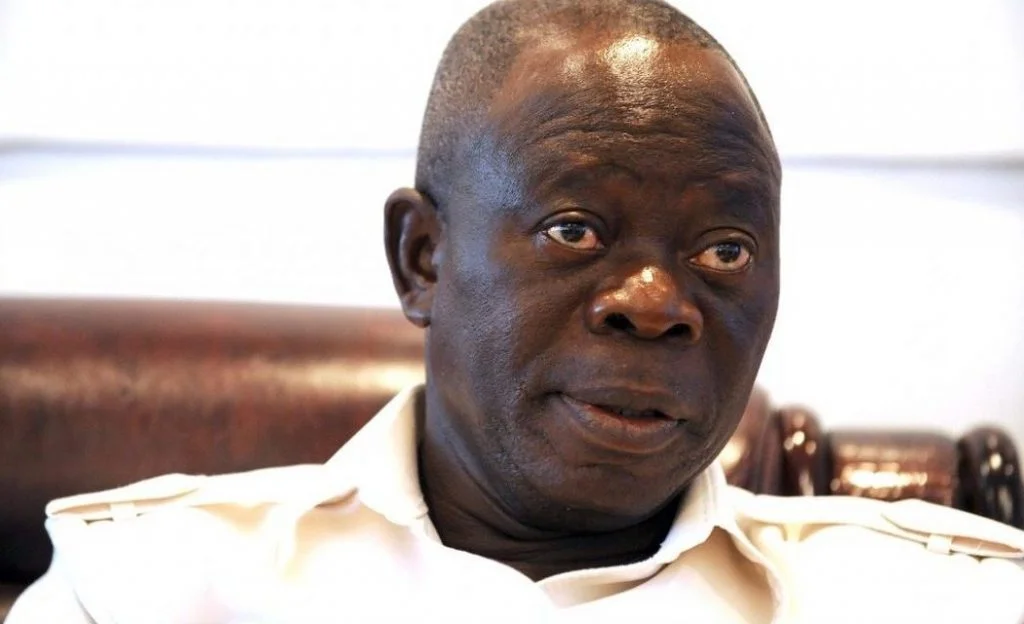
Senator Adams Oshiomhole has called on the Federal Government to retaliate against South African businesses operating in Nigeria following the recent attacks on Nigerians in South Africa.
Speaking during plenary on Tuesday, Oshiomhole said the Federal Government should consider revoking the working license of South African owned companies such as MTN and DSTV.
He argued that Nigeria must respond firmly to what he described as persistent hostility against its citizens.
READ ALSO:South Africa To Investigate ‘Mystery’ Of Planeload Of Palestinians
“I am not going to shed tears. If you hit me, I hit you. I think it is appropriate in diplomacy. It is an economic struggle,” Oshiomhole said.
He argued that while some South Africans accuse Nigerians of taking their jobs, Nigerians should return home and take over employment opportunities created by major South African companies operating in the country, including MTN and DSTV.
“When we hit back, the President of South Africa will not only talk but will also go on his knees to recognise that Nigeria cannot be intimidated.
READ ALSO:South African Ambassador Found Dead Outside Paris Hotel
“We will not condone any life being lost. If a crime has been committed under the South African law they have the right to bring any such person to justice, but to kill our people as if we are helpless, we will not allow that,” Oshiomhole added.
DAILY POST reports that several Nigerians in South Africa have reportedly been attacked, and their businesses destroyed, in ongoing xenophobic attacks in the country.
News
IGP Orders Officers Display Name Tag On Uniform, Gives Update On State Police
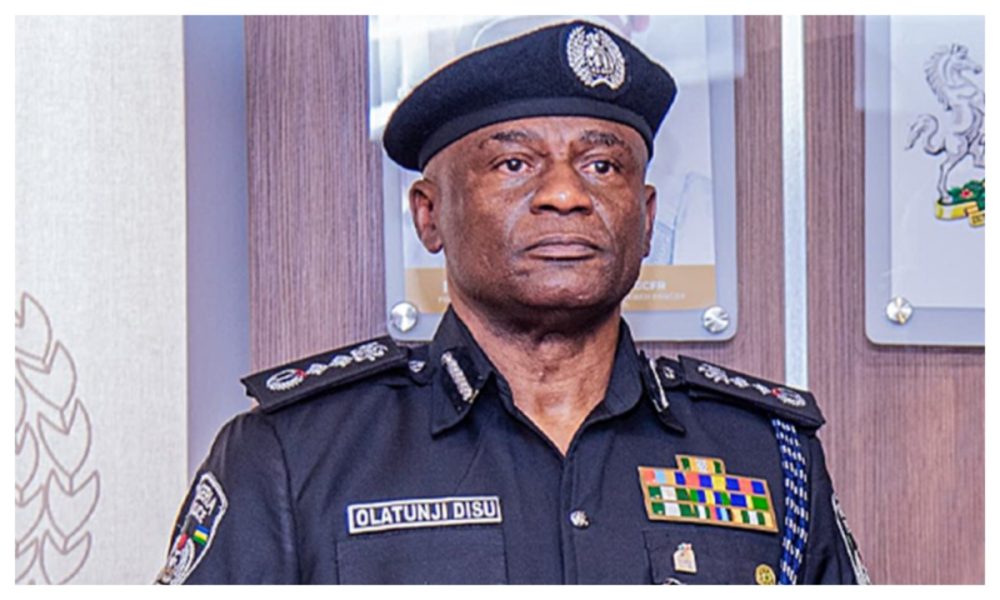
The Inspector General of Police, IGP, Tunji Disu, has ordered all police personnel to always have their name tags on their uniforms for easy identification.
Disu disclosed that only police personnel who are undercover are exempted from displaying their name tags.
Speaking on Tuesday, Disu said: “All police officers should have their name tags. All of us on the high table have our names apart from the undercover among us so if you look at all the Commissioners of Police we have our name tags, so it’s not our standard.
READ ALSO:
“All the Commissioners of Police are here and that is why we called this meeting, we have list of things like this that we will want to discuss with the Commissioners of Police, we have told them earlier and we will still let them know that every that happens within their area of jurisdiction falls under their control.”
On the issue of state police, the IGP said: “Since we got the signal that the Federal Government of Nigeria intend to establish State Police and since we are the federal police, we decided to take the bull by the horn and put down our own side of what we believe on how the state police should be run.
“A lot of things were taken into consideration, a lot of comparative analysis was done and it has been transmitted to the National Assembly.”
News
Court Orders SERAP To Pay DSS Operatives N100m For Defamation
The High Court of the Federal Capital Territory has ordered a non-governmental organization, the Socio-Economic Rights and Accountability Project, SERAP, to pay N100 million as damaged to two operatives of the Department of the State Services, DSS, for unjustly defaming them in some publications.
The court also ordered SERAP to tender public apologies to the defamed officers,
Sarah John and Gabriel Ogundele, in two national newspapers, two television stations and its website.
Besides, the organization was also ordered to pay the two operatives N1 million as cost of litigation and 10 percent post-judgment interest annually on the judgment sum until it’s fully liquidated.
Justice Yusuf Halilu of the High Court of the Federal Capital Territory gave the order on Tuesday while delivering judgment in a N5.5 billion defamation suit instituted against SERAP by the DSS operatives.
The judge found SERAP liable for unjustly defaming the two DSS operatives with allegations that they unlawfully invaded its Abuja office, harassed and intimidated its staff, in September 2024.
READ ALSO:How We Arrested Terror Suspect Who Threatened To Kill Students, Teachers In Abuja — DSS
In the offending publication on its website and Twitter handle, SERAP alleged that the two operatives unlawfully invaded and occupied its office with sinister motives.
The judge held that the publication was in bad taste especially from an organization established to promote transparency and accountability, as nothing in the publication was found to be truthful.
The DSS staff had listed SERAP as 1st defendant in the suit marked CV/4547/2024. SERAP’s Deputy Director, Kolawole Oluwadare, was listed as the 2nd defendant.
In the suit, the claimants – Sarah John and Gabriel Ogundele – accused the two defendants of making false claims that they invaded SERAP’s Abuja office on September 9, 2024..
Counsel to the DSS, Oluwagbemileke Samuel Kehinde, had while adopting his final address in the mater urged the judge to grant all the reliefs sought by his client in the interest of justice.
READ ALSO:DSS Arrests Suspected Gunrunner, Recovers 832 Rounds Of Ammunition
He admitted that although the names of the two claimants were not mentioned in the defamation materials, they had however established substantial circumstances that they are the ones referred to in the published defamation article by SERAP on its website.
The counsel submitted that all ingredients of defamation have been clearly established and the offending publication referred to the two officials of the secret police.
However, SERAP, through its counsel, Victoria Bassey from Tayo Oyetibo, SAN, law firm, asked the court to dismiss the suit on the ground that the two claimants did not establish that they were the ones referred to in the alleged defamation materials.
She said that SERAP used “DSS officials” in the alleged offending publication, adding that the two claimants must establish that they are the ones referred to before their case can succeed.
Similar arguments were canvassed by Oluwatosin Adefioye who stood for the second defendant, adding that there was no dispute in the September 9, 2024 operation of DSS in SERAP’s office.
READ ALSO:Alleged Cyberstalking: DSS Plays Video Evidence In Sowore’s Trial
He said that since SERAP in the publication did not name any particular person, the claimants must plead special circumstances that they were the ones referred to as the DSS officials.
Besides, he said that there is no organization by name Department of State Services in law, hence, DSS cannot claim being defamed adding that the only entity known to law is National Security Agency.
The claimants had in the suit stated that the alleged false claim by SERAP has negatively impacted on their reputation.
The DSS also stated, in the statement of claim, that, in line with the agency’s practice of engaging with officials of non-governmental organisations operating in the FCT to establish a relationship with their new leadership, it directed the two officials – John and Ogunleye – to visit SERAP’s office and invite them for a familiarization meeting.
The claimants added that in carrying out the directive, John and Ogunleye paid a friendly visit to SERAP’s office at 18 Bamako Street, Wuse Zone 1, Abuja on September 9 and met with one Ruth, who upon being informed about the purpose of the visit, claimed that none of SERAP’s management staff was in the country and advised that a formal letter of invitation be written by the DSS.
READ ALSO:DSS, Police Partner NCCSALW To End Terrorism, Mop Up Illegal Arms
John and Ogundele, who claimed that their interactions with Ruth were recorded, said before they immediately exited SERAP’s office, Ruth promised to inform her organisation’s management about the visit and volunteered a phone number – 08160537202.
They said it was surprising that, shortly after their visit, SERAP posted on its X (Twitter) handle – @SERAPNigeria – that officers of the DSS are presently unlawfully occupying its office.
The claimant added, “On the same day, the defendants also published a statement on SERAP’s website, which was widely reported by several media outfits, falsely alleging that some officers from the DSS, described as “a tall, large, dark-skinned woman” and “a slim, dark skinned man,” invaded their Abuja office and interrogated the staff of the first defendant (SERAP).
John and Ogundele stated that “due to the false statements published by the defendants, the DSS has been ridiculed and criticised by international agencies such as the Amnesty International and prominent members of the Nigerian society, such as Femi Falana (SAN)”.
“Due to the false statements published by the defendants, members of the public and the international community formed the opinion that the Federal Government is using the DSS to harass the defendants.”
READ ALSO:SERAP To Court: Stop CBN From ‘Implementing ‘Unlawful, Unjust ATM Fee Hike’
They added that the defendants’ statements caused harm to their reputation because the staff and management of the DSS have formed the opinion that the claimants did not follow orders and carried out an unsanctioned operation and are therefore, incompetent and unprofessional.
The claimants therefore prayed the court for the following reliefs: “An order directing the defendants to tender an apology to the claimants via the first defendant’s (SERAP’s) website, X (twitter) handle, two national daily newspapers (Punch and Vanguard) and two national news television stations (Arise Television and Channels Television) for falsely accusing the claimants of unlawfully invading the first defendant’s office and interrogating the first defendant’s staff.
“An order directing the defendants to pay the claimants the sum of N5 billion as damages for the libellous statements published about the claimants.
“Interest on the sum of N5b at the rate of 10 percent per annum from the date of judgment until the judgment sum is realised or liquidated.
“An order directing the defendants to pay the claimants the sum of N50 million as costs of this action.”

 Politics3 days ago
2027: Tinubu’s Re-election May Put An End To Nigeria — Baba Ahmed Warns
- Metro4 days ago
I’m A Street Girl’ – Bimbo Ademoye Clashes With Area Boys [VIDEO]
- Politics4 days ago
Senatorial Seat: Ogbakha-Edo Warns Against Imposition Of Candidates In Edo South
- Politics4 days ago
BREAKING: 2027: Former Adamawa APC Guber Candidate, Aishatu Binani Defects To NDC
 Business3 days ago
JUST IN: Nigerian Filling Stations Reduce Fuel Price After Hike
- Entertainment4 days ago
Actress Eniola Badmus Gets New Federal Appointment
- Metro5 days ago
Robbers Raid Imo Catholic Church, Steal Holy Communion Materials
- News4 days ago
10 African Countries With Highest Petrol Prices In Prices In April 2026
- Headline5 days ago
UK-based Nigerian Jailed 17 Years For Raping 19-year-old
- News5 days ago
NASU, SSANU Begin Indefinite Strike Friday


