

News
OPINION: Destiny And Enemies Of The State [Monday Lines]




By Lasisi Olagunju
Nothing we do or say now will change Nigeria unless it turns back from its present plunge. Nothing. “No spring changes the desert. The desert remains; the spring runs dry. Not one spring, not thirty, not a thousand springs will change the desert…” That quote is from ‘Two Thousand Seasons’, a tumultuous novel by Ayi Kwei Armah. Remember he also wrote ‘The Beautyful Ones Are Not Yet Born.’
We won’t stop asking that this country be rebuilt on the foundation of its beginning. Nothing will shoo away the present birds of hunger and thirst. Not this government; not the next. You don’t turn your back on your destiny and be well.
Grandfather of Nigerian theatre, Hubert Ogunde, sang a prayer which must be the prayer point of those in power today: “If I have a good head, may I also have good legs (Bí mo l’órí ire, Elédàá jé n l’ésè ire).” Orí (head) is destiny; Esè (legs) are the tyres that propel destiny to its realisation. Right there in the mix is ìwà (character) which helps man do what Karin Barber describes as “picking his way, aided by his Orí, between a variety of forces, some benign, some hostile, some ambivalent…” If your head gives you a throne, rule well; do not let your character open the door to forces that blow off roofs.
We become what we choose to become. I have two destiny stories to tell. They are from the earliest times’ tray of knowledge. The first is about a serially failing young man who asked questions and was told by the oracle that he wouldn’t amount to anything in life unless he became a thief. The second story is about another who was told that he wouldn’t ever be rich unless he was cruel and bloodthirsty.
The young man who must sell cruelty to be rich thought fate was not fair to him. A precondition of wickedness before wealth would sound alarming to whoever had that (mis)fortune. But this man did not have to wait long before an accident of fate created a trade for him. He became the pioneer maker of tribal marks. In the palace in Oyo, he got royal contracts to beautify princes and princesses with eyo marks. To the noble of Oyo, he slashed horizontal marks on each cheek and called it àbàjà. He went to Owu where he etched six incisions on each of the cheeks. In Ogbomoso, he gave straight and curved lines and called it kéké. He dashed down to the courtyard of the Osemawe in Ondo and, with generous thanks, inflicted one pronounced stroke below each eye. To the Ijebu, Ife and Ijesa he made the marks perpendicular and called what he offered pélé with variants of his offering dropped across other clans and towns of Yoruba land.
The man took his trade to the Tapa (Nupe) where he gashed the young there with the beauty of below-the-temple cruelty. He was called and invited to virtually all kingdoms around to come and sell the pretty pain he was hawking. They all looked at the work of his hand, pronounced it beautiful and paid him handsome sums. The ‘wicked’ grew rich and famous. His descendants today answer a praise name that valourizes his trade in brutality. Adebayo Faleti, in one seminal piece, said this man’s offspring are children of “he who stabs people and gets paid for doing so/ The one for whom it was divined that he must be brutal for him to be wealthy (Omo A-sá-mo-l’ógbé gb’owó/ Tí wón ní ìkà ni yí ó se là).”
MORE FROM THE AUTHOR: OPINION: For Sanwo-Olu’s Lagos Tenants And Landlords [Monday Lines (2)]
The one who was to become a thief rejected the prophecy the way Pentecostal Christians reject bad portions. But nothing the man tried his hands on prospered until one day hunger pushed him to go dig his neighbour’s yam. At the very point of his being caught by the farm owner, his cutlass fortuitously killed a big snake coiled up by the yam heap. To the thief’s horror, the farm owner leapt out of a thicket. Among the Yoruba, death is always preferable to shame. If the ground would open its mouth and swallow the yam thief, he would kneel in eternal thankfulness to his Creator. But, there was neither a place to hide nor a wand to transport him out of the mess. This was, however, the point at which destiny took over. To the thief’s shock, the farm owner shouted for joy on seeing the big snake’s death. The farmer did not see a thief in the trespassing gentleman; what he saw was a benefactor who had delivered him from a dreadful reptile that had almost sacked him from his farm and barn. The yam farmer thought he owed the killer of his nemesis some token of appreciation. Fate pushed him to give the thief enough field and yam seeds that forever weaned the wretched of his poverty. The ‘thief’ was to become rich and famous. That is fate’s cultural explanation for the prosperity of the ‘unworthy.’
In both stories, the two gentlemen enjoyed their good fortune till the end of time because they had character (ìwà). Early this year, I told the mythical story of one poor, old prince in Ofa who owned neither calabash nor plate (kò ní’gbá, kò l’áwo) yet he became king because he had a good head. Then his enemies said “this one will not be long before he dies and another will take his place.” But the old man became king and refused to die. Because he had character in addition to his good head, he ruled well; his people enjoyed him and prayed for his reign to last forever. He reigned long and died well. Why do you think Baba Opalaba in the Mainframe master play, Saworoide, asks the long dead Alaafin Abiodun to come back? You remember that solemn request? It is because the living oba has failed.
Thomas Hardy, in his novel, ‘The Mayor of Casterbridge’, says “character is fate.” He adds that “fate and character are names for a single idea.” It was as if Hardy was born a Yoruba with their very elaborate concept of destiny. My people put destiny at the mercy of character. They say if you have good destiny, pray also to have a character that is desirable because a bad character will most certainly destroy your good head. We see in ‘The Mayor of Casterbridge’ how fate propels someone from the gutters of life to wealth and to the position of mayor; we watch as the man loses his good character and consequently declines progressively in public estimation and respect. We see how he finally loses his authority and wealth and life – all to his bad character, his awkward ways.
MORE FROM THE AUTHOR: OPINION: Yoruba’s Spirit Of Resistance [Monday Lines (1)]
A person’s calling is their destiny. It is my job to write what I feel. The right to hold opinion is a fundamental one which neither state nor its operatives can alienate. I am neither an enemy of the state nor hater of those in government. One funny coward who lives abroad is sending notes, with names, across WhatsApp groups suggesting exactly that about some of us – newspaper columnists. The idler may not be the only one with that pastime. Were they sent that errand of slaves? I am not sure. They just think they are inciting power against the bard. They forget that no matter how early a child gets to the farm, he will always meet Kùkùté there. Fishers of attention from corridors of power do what they are doing to please their palate. They tie the forehead to the occiput; they sit back and laugh. They are Esu, the one whose eyes cry blood while the bereaved sheds mere tears.
We warn because we notice not just the beak of the fowl; we see the whole bird. The seed we offer our soil is of the day; we offer none that is of the night. That is a line of invocation from the Bakongo. If you want more of the words, read J. Van Wing’s ‘Bakongo Incantations and Prayers’ (1930). It tells how trauma invokes the elements, seen and unseen.
The world is sick; even the sky weeps. Anyone who tells this government that things are alright is an enemy of the state and a hater of the president. It is probably the abroad fellow’s destiny to live away from the hassles of home. But, we live here. And, I do not know how to thank or ignore the ones to whom we are victims. We gave some people chickens to rear for us; we turned and they started peeling yam and washing their soup pot. And you think we should be deaf and dumb. To their own teeth, they feed the softest of meat; for the teeth of others, they give the toughest of tendons. Eyín eléyín ni wón fi nj’eran tó l’éegun. We write so that the prowling wolf shall see our sheep and goats and cows and have its teeth on edge. Van Wing again.
MORE FROM THE AUTHOR: OPINION: Protesters Of The North [Monday Lines]
Businesses are bleeding; the rich are crying. Weevils have taken the barn; weasels have overwhelmed the pen. Right on the road to the stream are wolves of thirstiness. We can join the Alleluyah chorus and feed from the gatehouse of power. But if we do and everyone keeps quiet, and this desert completes its encroachment, the hill will lose its trees and leafy glade; the valley will be shorn of its verdancy; the abroad will have no home to return to. We keep talking and warning because it is almost midnight. Nothing works – except mindless gluttony. Nothing is available – except long queues at petrol stations. In places that have sanity, electricity is called power; here, it has same value as the shit of the masquerade – very unavailable. On special nights when grace brings light, it is quickly switched off because its price is dagger to the heart of homes. So, shall we not talk in the midst of all these bad news? We get abused for putting our mouth into that which ‘friends’ of power think should concern us not. It is Fatwa they have not pronounced. We are fighting for Oja’s sake; Oja is asking who is fighting at his backyard.
Arise News founder, Nduka Obaigbena some days ago received Tinubu’s media/public relations managers in his office. They were there to seek his understanding and support. I watched them; they looked sober. Then, with acrid calmness, Obaigbena told them the truth: “People say you’re not communicating – you are communicating, you are here. But the communication you are not doing is communication by example.” Obaigbena said the way people in government live, “the way they conduct themselves, does not show that we are in trouble.” Candid words.
There is always a problem anywhere the palace feasts while the people yawn. Filthy, festy ostentation and mindless show-of-force degrade authority. Freedom curtailing, extra-legal actions shame democracy; they put a lie to all its lofty claims. They drag democracy back to be at par with where we were before May 1999. Copying what the military did that made it lose the people will post a tag of regret on our struggles that birthed this era. Perhaps, everything takes us back to the need for a restructuring of this cracked structure.
When Obaigbena said his words, I would have loved to see how his guests took the shot. The visiting ones are not the problem. They have a difficult job to do which is increasingly made more difficult by the real culprits, the cats in opulent offices. Those ones are too big to care about what image they etch in the psyche of the city. They don’t go out to seek help; they are too big to crawl out of the vault. You can’t be feasting and telling the people to fast. I am fasting for your sake, you are flaunting mid-day meals (A ngbààwè nítorí won, àwón nj’òsán). That is what this government and its big men do. They feast and fart; the people fast and faint. They say it is patriotism. The government is wise; the people are stupid.
Starving workhouse inmates of Charles Dickens’ ‘Oliver Twist’ never prayed for the housekeepers. Friends of this government in the media are daily embarrassed by its aberrant ways. One of my old university teachers wrote a warning in a Lagos newspaper some weekends ago. The professor told the government that “creating a zone of affluence in circumstances of bewitching poverty or a new breed of billionaires in a condition of appalling deprivation will produce a toxic effluence which can overwhelm the entire society.”
I hope ‘they’ listen to the advice from the prophets and tell the big boss to clean up his government. A government that won’t go with the winds will do what the eyes do. The eyes, in utter humility, lower their gaze, and because they are humble, they are allowed to see the nose. Hubris is a government speaking the words of Archibald MacLeish’s poet persona: “We have learnt the answers, all the answers. It is the question that we do not know.”


News
Coordinator, Edo First Lady Office, Majority Leader, Rights Lawyer, Others Bag 2025 Leadership Award

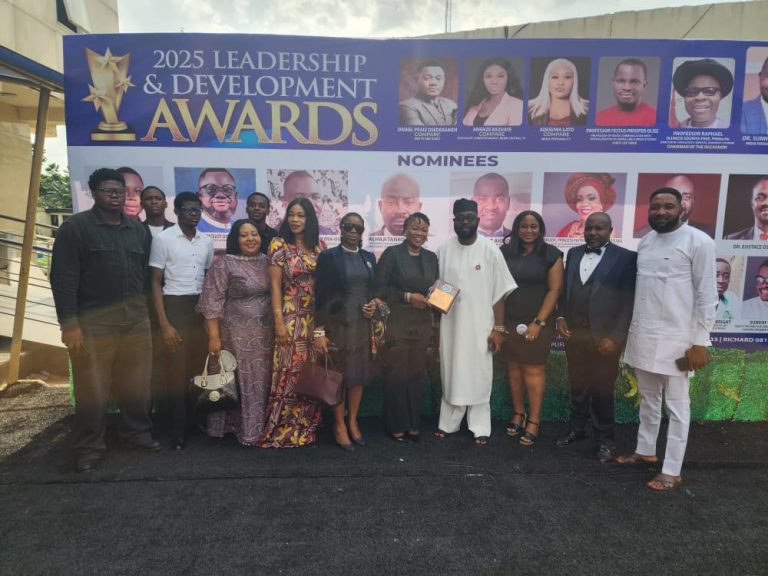
The Coordinator, Office of the First Lady, Edo State, Mrs. Edesili Okpebholo Anani; Majority Leader, Edo State House of Assembly, Hon. Jonathan Aigbokhan, and human rights lawyer, President Aigbokhan, alongside 27 others were on Friday , December 19, 2025, honoured with the 2025 Leadership & Development Award.
In his welcome address at the event with the theme: ‘Empowering Tomorrow’s Leaders: Innovating for a Sustainable Future,’ Team Lead, Leadership and Development Initiatives, Dr. Sunny Duke Okosun, said the initiative was to recognise and celebrate the outstanding contributions of individuals and organizations that are shaping the future of “our world.”
Okosun, who said the awardees were not just selected for award sake, noted that “our awardees have demonstrated exceptional leadership, innovation, and commitment to making a positive impact in their respective fields. Their stories will inspire us, their achievements will motivate us, and their dedication will challenge us to strive for greatness.”
The Team Lead, while expressing his organisation’s
commitment to identifying, recognizing, and empowering leaders who are making a difference, said “we also look to the future, recognizing that the leaders of tomorrow will be those who innovate, collaborate, and prioritize sustainability.”
READ ALSO:Vanguard Correspondent Bags Edo Icon Award 2025
Okosun, who congratulated the awardees on “your outstanding achievements,” stressed: “Let us continue to inspire, motivate, and challenge each other to be the leaders we need for a brighter tomorrow.”
In her keynote address, Anani described the theme of the event as timely and profound, stressing that “it speaks directly to the urgent need to prepare our present and future generations with the skills, values, and mindset required to navigate an increasingly complex world.”
The Coordinator, who noted that “a sustainable future demands leaders who are conscious of the environment, committed to social inclusion, and driven by economic responsibility,” challenged: “Leadership in our time must go beyond titles and positions; it must be anchored on service, innovation, integrity, and a clear vision for sustainable development. Leadership empowerment begins with education, mentorship, and opportunity.”
She added: “When we invest in our young people by equipping them with knowledge, encouraging creativity, and providing platforms for growth we are laying the foundation for enduring progress. Innovation, in this context, is not limited to technology alone; it also includes innovative thinking in governance, entrepreneurship, social development, and community engagement.
READ ALSO:Ballon d’Or: Why Neymar Didn’t Win Award – Gerard
“A sustainable future demands leaders who are conscious of the environment, committed to social inclusion, and driven by economic responsibility. It calls for leaders who can balance progress with preservation, growth with equity, and ambition with compassion. As a society, we must therefore foster innovation that addresses real challenges, creates jobs, strengthens communities, and improves the quality of life for all.”
Guest Speaker at the event, Prof. Festus Olise, described leadership as a curse to Nigeria, adding: “Year in, year out, we elect leaders into leadership positions yet our problems persist.”
Majority Leader of the Edo State House of Assembly who happened to be one of the recipients, thanked the organisers, stressing that it is a challenge for him to do more for his people.
“I have done much for my constituents since I was elected, but the award will spure me to do more. Leadership is about catering for the followers, and this is a role I have been playing to the best of my ability.”
News
Delta Speaker Advocates Strict Legislative Protection Of N’Delta Environment

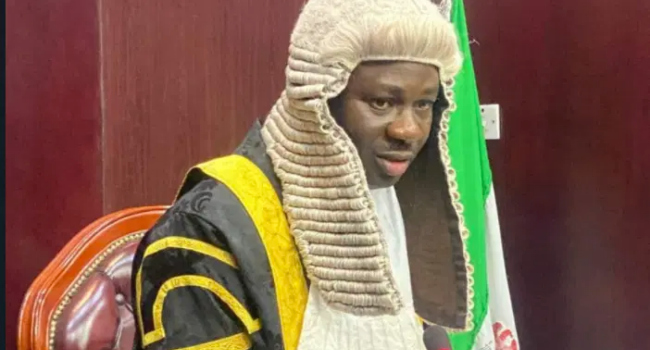
The Speaker of the Delta state House of Assembly Hon. Emomotimi Guwor has advocated for more stringent legislations to protect the Niger Delta environment against violators, especially multinational and local oil companies.
He lamented that these multinational and local oil companies have turned the Niger Delta environment to dumping sites with the pollution of oil exploration and exploitation.
Guwor spoke at the 2nd annual Ijaw media conference 2025, organized by the Ijaw Publishers’ Forum, IPF in Delta State.
According to him, this will curb further damages of the Niger Delta environment, thereby saving the environment for future generations.
READ ALSO:Delta: Suspected Kidnapper Killed In Gun Battle With Police
The Delta state speaker, who was represented by a former Commissioner for Oil and Gas, Chief Emma Amgbaduba, noted that environmental neglect and social injustice were key drivers of unrest in oil-producing areas.
According to him, ”fishermen and farmers are in acute hunger and hardship due to the polluted rivers and degraded farmlands have pushed many families into hardship, threatening livelihoods that once sustained entire communities”
He warned that unless urgent steps are taken to protect natural resources, the human cost of oil exploration would continue to deepen poverty and insecurity in the region, with consequences for the national economy.
READ ALSO:Panic In Delta Female School Over False Herdsmen Attack
Guwor emphasized that host communities must demand strict compliance by international and indigenous oil companies with global environmental standards and the Petroleum Industry Act (PIA).
He noted that environmental neglect and social injustice were key drivers of unrest in oil-producing areas.
Guwor urged residents to take ownership of environmental protection in their communities, while acknowledging ongoing efforts to curb crude oil theft, which he said has worsened pollution and economic losses.
The Speaker stressed that peaceful coexistence within communities remained critical to restoring confidence, attracting investments and improving living conditions in the Niger Delta.
News
IPF’s Conference: Igali Seeks Approval Of License For Locals To Operate Modular Refinery

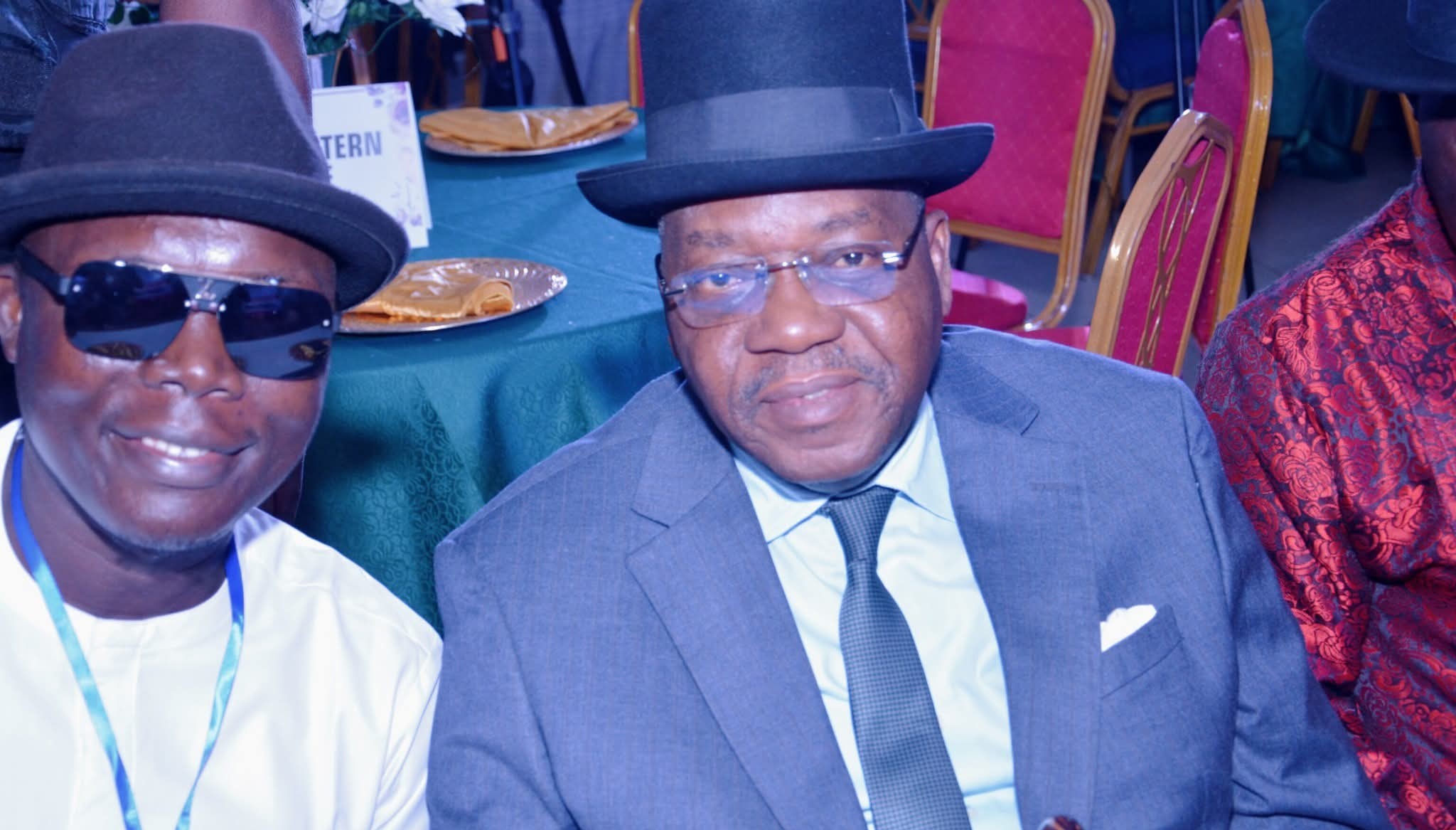
The National Chairman of Pan Niger Delta Forum,( PANDEF) Amb. Godknows Boladei lgali, has appealed to President Bola Ahmed Tinubu to approve license for Niger Delta sons and daughters who have the requirements to operate modular refineries as it is done in the US and the Western world.
Dr. Igali who was the keynote speaker at the 2025 Ijaw Media Conference made the call on Wednesday December 17, in Warri.
He stated that the operation of modular refineries was for the best interest of increasing the growth of the nation’s economy as well as to create a sense of belonging to the people that own the crude oil and gas.
He said that it is important for the people to properly manage their God-given resources towards the welfare of humanity rather than being destroyed in the name of illegal oil bunkering.
READ ALSO:IPF Holds Annual Ijaw Media Conference December
by government security agencies thereby resulting in pollution and degradation of the environment they lived in.
He asserted that most of the raw materials used by industries are deposited in the Niger Delta region, especially crude oil, Gas, palm oil, rubber, cotton etc, stressing that the region will continue to be relevant in Nigeria because of her natural wealth.
He affirmed that Niger Deltans should think of sustaining its natural resources as well as safeguarding its environment for today and the future generations.
READ ALSO:IPF Throws Weight Behind Otuaro-led PAP, Urges Critics To Be Constructive
He urged the people to be more focused on education and professional skill acquisition, stressing that with the right education and skills, the scholars can invent new things that will better the society.
Igali also commended the Presidential Amnesty Programme Coordinator, Dr. Dennis Otuaro for his good works, while urging him not to be distracted by critics rather, he should continue sending “our sons and daughters abroad to acquire more skills and come back home to develop the Niger Delta region.”
He also urged Niger Deltans to sustain the existing peace, stressing that without peace development cannot strive in the communities.
-

 Metro5 days ago
Suspected Kidnappers Abduct 18 Passengers On Benin-Akure Road
-

 News5 days ago
OPINION: Time For The Abachas To Rejoice
-

 News5 days ago
I’m Not Distracted By Anti-Niger Delta Elements, Says PAP Boss, Otuaro
-

 News4 days ago
Wage Dispute: Court Orders PSG To Pay Mbappe €61 Million
-

 Sports4 days ago
JUST IN: Dembélé Named FIFA Best Men’s Player, Bonmatí Wins Women’s Award
-

 News5 days ago
Edo Assembly Charges Contractor Handling Ekekhuan Road To Accelerate Work
-

 Headline3 days ago
Aircraft Crashes In Owerri With Four Persons Onboard
-

 Business4 days ago
9th FirstBank Digital Xperience Centre Launched In UNIBEN
-

 Metro5 days ago
NDLEA Seizes 457kg of Cannabis, Arrests Suspected Trafficker In Edo
-

 News5 days ago
Ex-Nigerian Amb., Igali, To Deliver Keynote Address As IPF Holds Ijaw Media Conference

