
News
OPINION: Endless Season Of Guns, Terror And Uncertainties

By Tony Erha
Everywhere in the world, guns and guns run and ruin the affairs of men. It’s such unenviable era, where sacred human lives have become worthless. An anomie void of human feelings. Man’s inhumanity to man is an escalating order, where warfare, dangerous partisan politics, religious crises, militancy, robbery, kidnapping, economic sabotage and other criminality breed excessive human killings, maiming, arson etc. Nigeria, African’s thrust, is so ‘lucky’ to have more than a fair share of the attendant insecurity, as she ‘competes’ for the gold-medal spoil in Africa. Suffice that the most populous black African nation, is a runner-up to the Democratic Republic Congo (DRC), in the insecurity rating, according to the Africa Organised Crime Index of 2023.
In Nigeria, prided African giant and engine-room of the continent, gun and its debilitating components are a blight which puts the country and her people on the heat. Although ‘light arms’ are officially endorsed to be used in the public space, but its proliferated acquisitions and usage, have altogether become huge and forms a lethal threat to the society. Whereas the Boko Haram and its associated multinational armed groups are on the offensive, rebellious and succession militancy, ethnicity and religious crises have worsened the nation’s escalating insecurity.
Gravely, a certain ethnic minority tends to be the most that is at war with the rest tribes of the country, who are in the majority. Over the years, this minority group, aided by their nomadic herders and the terrorists, pill up light arms and others weapons of mass destruction against the Nigerian state. And they have overwhelmed the nation with their widespread and brazen attacks, causing high death tolls and destabilisation. It gives a rise to camps of Internally Displaced Persons (IDPs) established countrywide. Their daring attacks and a shoddy fight against them, have not only caused government perceptive integrity loss, but also of the souls of its numerous security operatives and resources ordinarily meant for the growing need of the public.
READ ALSO: OPINION: On El-Rufai, Aláròká And Terrorists
The merchants of death have obviously cashed in on the fear factor of ‘gun’ to wage protracted wars on the rest on the people. Their miscalculation is that it is they alone, who have the monopoly of causing fear, using the gun and its complementary weapons of death. Indeed, the Boko Haram and their accomplices in the ‘terrorism business’ parade before all sophisticated weapons, which the Nigerian security operatives barely have. The conspiracy theory is that some foreign powers are fingered as aiding the terrorists to destabilise the country.
It’s so obvious that the relentless attackers are motivated by the complex narrative that “Authority lies in that man who wields the barrel of the gun”. This is a similitude to the marbled words of Mao Zedong, the late Marxist and theorist, whose founding of the People’s Republic of China, and as Chairman of the oriental land was by gun and duress.
Like Mao Zedong, Poke Toholo, a Semiliole Indian protagonist of the James Hadley Chase thrilling fiction, Want to Stay Alive?, also gave his own theory that; “Fear is the key that opens the wallets of the rich”. “I have found the formula for fear”, boasted Toholo, whose assassination gambit and financial exploitation of his willy-nilly human targets had temporarily validated his theory, until another fearless man told Toholo to ‘go to hell’.
Being a man who once hunted animals for survival, with the Dane and double-barrel guns, I do not need to be told how very powerful the gun can be. With a single shot in the wild all were bound to obey. From the extroverted tweeting birds on the arboreals to the noisy terrestrial animals, including the ants, that are instantly scared to a standstill and muteness, the gun is the beginning of wisdom. Even the ghost-trees and the wind will pays homage to the gun as they amplify the wild with echoes of its shots!
READ ALSO: [OPINION] Nepal Bloodshed: Of Nigeria’s Big Masquerades And Gọntọ
The world, Nigeria inclusive, has turned a killing field of human lives, by the gun, the gunpowder and its derivatives. That is where the aforesaid Chairman Mao Zedong’s China gets implicated for inventing the gunpowder in the 9th century, just as Alfred Noble wouldn’t be ‘ennobled’ for similarly creating the dynamite and explosives and assorted guns, which champion today’s warfare, killings and maiming in larger scales. Where face-to-face or conventional warfare of infantry and weaponry, have ceased to be the vogue, long range missiles is the in-thing, where wars are fought far-off or remotely, by mere pressing of the buttons. No thanks to the perilous creativity by the Chinese and Alfred Noble, without which our world would have been safer. Nevertheless, this isn’t to entirely blacklist a civilisation, where the invention of the gunpowder and its accessories have immensely contributed meaningfully to its leaps, more so that the gunpowder has other important uses that have hastened industrial and human advancements.
Penitently, Alfred Noble (1833-1896), the Swedish chemist, inventor and businessman, by creating dynamite, explosives and manufacturing of guns for sales and human destruction, that have been de-emphasised. The disasters associated with his inventions, later brought about today’s Noble Prize awards, which discourage the use of his deadly creations and others to harm humankind. In his demise, scandals had spread over his name, when a daring journalist vaguely regarded him and his inventions as “merchant of death’.
Unfortunately, Nigeria, a hitherto peaceful country that became more proned to internal crises, which now redifines earns her ‘a brigandage culture’, evidently accuse her security apparatus as an aggravator of the security lapses. It thereby runs true to the sarcasm of the late General Salisu Ibrahim of “an army of anything goes”, where serving army chiefs have severally corroborated the sabotage within its ranks and files, in the fight against terrorism and militancy.
Also, Dauda Lawal, governor of Nigeria’s Zamfara State, once lamented that despite procuring 150 vehicles for security agencies in Zamfara, he had no control over their deployment, since directives must come from a distant Abuja, that is less perturbed about the insecurity upsurge in the Nigerian border state.
But there are exceptions to the sabotage by Mallam Nuhu Ribadu, Maj. General Christopher Musa and Mr. Adeola Ajayi, National Security Adviser, Chief of Defence Staff and Director General of the Department of State Services, respectively, who are currently undetterred at the onslaughts, which turn the table against terrorism and banditary. As the insecurity blight is ordinarily fought by all and sundry, the efforts by the aforementioned three, is invitational to the public to brace up and fight the insecurity scourge, in the same manner an intrepid man had told the ravaging assassin, Poke Toholo, to ‘go to hell’

Tony Erha

News
PAP Sends Additional 34 Foreign Post-graduate Scholarship Beneficiaries To UK Varsities

The Presidential Amnesty Programme (PAP) has deployed an additional 34 foreign post-graduate scholarship beneficiaries to various universities in the United Kingdom for the 2025-2026 academic year.
This was contained in a statement made available to newsmen in Warri by Mr Igoniko Oduma, Special Assistant on Media to Dr. Dennis Otuaro, the Administrator, PAP.
According to the statement, the scholars’ programmes include data science, fintech analytics, cyber security, international energy law and policy, construction project management, public health, agri-food technology, electrical and petroleum engineering, among others.
The statement added that more foreign post-graduate scholars will be sent to UK universities in the current academic session.
“In December 2025, nine students, who were the first set of offshore post-graduate scholarship developments by the PAP Administrator, Dr Dennis Otuaro, for the 2024-2025 academic year, graduated from their various programmes in UK universities.
READ ALSO:PAP Scholarship Scheme Vehicle For Better Future For Niger Delta —Otuaro
“Otuaro has deployed over 9000 students to universities within and outside Nigeria for different industry-relevant programmes since he assumed office in March 2024,” the statement partly reads.
Speaking at the pre-departure orientation programme for the scholars at the PAP headquarters in Abuja, on Thursday, Otuaro said that the large-scale deployment was aimed at making the Niger Delta a knowledge-driven region.
He said that his leadership reinvigorated the programme to give it a new momentum in service delivery to the people of the region based on the mandate of President Bola Tinubu.
Otuaro said, “We are sending all of you for post-graduate studies in various universities in the United Kingdom.
“The PAP now has a new momentum and direction because of the repositioning and broad reforms that we carried out in line with the mandate of His Excellency, President Bola Ahmed Tinubu GCFR.
READ ALSO:Otuaro Tasks Media On Objective Reportage
“The objective behind the huge scholarships deployment is to ensure that we develop the needed human capital to transform the Niger Delta and generate knowledge-wealth.
“We want to develop relevant manpower in critical disciplines for our region and by extension, the country, because you are expected to contribute your quota to national development after successful graduation.”
The PAP boss, who was represented at the event by his Technical Assistant, Mr Edgar Biu, advised the scholars to study hard to achieve academic excellence in their various fields of research.
According to him, the scholars have an obligation to justify the Federal Government’s investment in their education and future.
READ ALSO:I’m Not Distracted By Anti-Niger Delta Elements, Says PAP Boss, Otuaro
He reiterated his warning that beneficiaries should not take for granted the opportunity to further their academic pursuits in the interest of the Niger Delta and indeed the country.
Otuaro expressed appreciation to President Tinubu for his “enormous interest and support for the Programme”, particularly the approval of an upward review of the programme’s budget from N65billion to N150billion.
He also expressed gratitude to the National Security Adviser, Mallam Nuhu Ribadu, for his impeccable guidance and supervision of the programme’s initiatives.
Otuaro, therefore, cautioned the scholars to obey their host country’s laws and the rules and regulations of their various institutions, stressing that they are ambassadors of Nigeria, the Niger Delta and their communities and families.
Highpoint of the orientation programme was the presentation of laptops to the scholars to help them in their studies.
News
Industrial Court Bars Resident Doctors From Strike

The National Industrial Court in Abuja has issued an interim injunction restraining the Nigerian Association of Resident Doctors (NARD) and its agents from embarking on any form of industrial action, including strikes, go-slows, picketing, or preparatory steps for protest, from Monday, January 12, 2026.
Justice E.D. Subilim ordered that the injunction remain in force pending the hearing of the motion on January 21. The suit was filed by the Attorney General of the Federation (AGF) and the Federal Government against NARD, its president, Dr Mohammad Suleiman, and Dr Shuaibu Ibrahim.
The court order comes days after resident doctors at the Usmanu Danfodiyo University Teaching Hospital (UDUTH), Sokoto, declared their full support for the nationwide strike announced by NARD over the government’s alleged failure to honour critical welfare and training agreements.
UDUTH doctors cited the non-reinstatement of five disengaged resident doctors at the Federal Teaching Hospital, Lokoja, unpaid promotion and salary arrears, and incomplete implementation of the Professional Allowance Table as key grievances. Other unresolved issues include withheld specialist allowances, delayed house officers’ salaries, postgraduate training certification delays, and deteriorating hospital infrastructure.
READ ALSO:Resident Doctors Suspend Strike, Issue Fresh Four-week Ultimatum
However, NARD had on Tuesday noted that there was no going back on the industrial action, insisting that the strike is necessary and not politically motivated. Speaking in Abuja, Dr Suleiman said the withdrawal of services from midnight on Monday is a response to “unmet commitments, shifting government positions and worsening working conditions for resident doctors, not partisan considerations.”
He argued that none of the demands outlined in the Memorandum of Understanding signed with the Federal Government on November 27, 2025, have been implemented.
“Every issue is either at the same point where it was when we signed the MoU or we have even gone backwards,” Dr Suleiman said, adding that claims by the Ministry of Health that some issues had been resolved were misleading.
He further challenged the government to show where N90 billion, allegedly allocated in the 2026 budget for health workers’ professional allowances, has been provided.
READ ALSO:Doctors’ Strike Continues As NARD Demands Fair Deal, Better Pay
The association also demanded the immediate reinstatement of the five disengaged resident doctors at FTH Lokoja with full back pay and rejected plans to redeploy them elsewhere.
Other grievances include delayed promotion arrears across 62 tertiary institutions, non-recognition of specialist certificates, and outstanding salary and allowance payments affecting nearly 40 percent of resident doctors.
While NARD remains open to dialogue and has appealed to President Bola Ahmed Tinubu for decisive intervention, it warned that unless concrete action is taken, the planned industrial action will go ahead, potentially disrupting healthcare services nationwide. Dr Mujitaba Umar, President of the UDUTH chapter, described the situation as “difficult but unavoidable,” while the chapter’s General Secretary, Dr Muhammad Abdulrahman Hassan, urged the Federal Government to act swiftly “in the interest of the Nigerian populace and the healthcare system.”
News
Nigeria To Get Fresh $9.5m Abacha Loot From UK’s Jersey
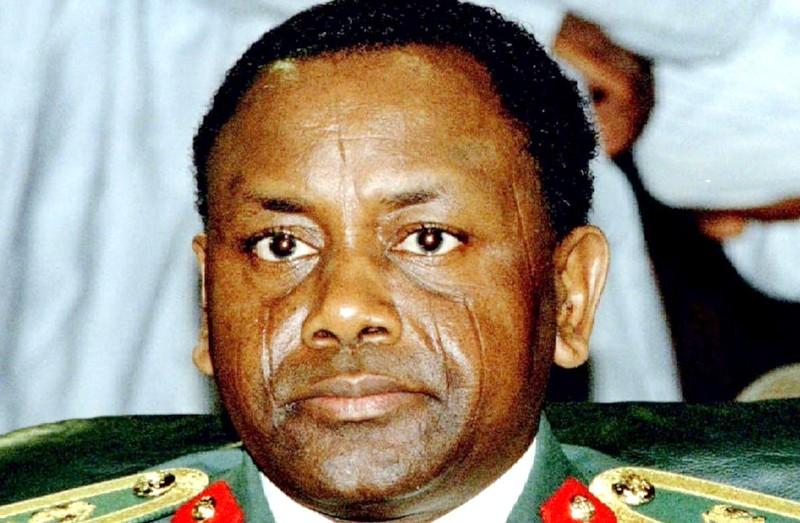
Nigeria to receive fresh $9.5 million (£7 million), believed to be stolen funds linked to former military Head of State, Sani Abacha, from the United Kingdom’s Jersey.
According to the BBC, Jersey has agreed to repatriate the fund to the Nigerian government.
The money, described as proceeds of “tainted property,” is said to be part of the vast fortune stolen by Abacha, who ruled Nigeria between 1993 and 1998.
READ ALSO:How I Transited From Abacha’s Friend To prisoner — Lamido
The funds were kept in a bank account in Jersey and had been tied up in legal proceedings for several years.
Although the assets were first recovered during the administration of former President Goodluck Jonathan, court challenges stalled their return to Nigeria. Progress was made in December 2025 when Jersey’s Attorney-General, Mark Temple, signed a memorandum of understanding, MoU, with Nigerian authorities to enable the repatriation.
The latest agreement builds on two earlier arrangements between Jersey and Nigeria that led to the return of more than $300 million (£230m) in recovered assets.

 News3 days ago
How To Calculate Your Taxable Income
- Business4 days ago
NNPCL Reduces Fuel Price Again
- Metro4 days ago
AAU Disowns Students Over Protest
- Metro4 days ago
Edo: Suspected Kidnappers Kill Victim, Hold On To Elder Brother
- Metro3 days ago
JUST IN: Court Grants Malami, Wife, Son N500m Bail Each
- Headline3 days ago
Russia Deploys Navy To Guard Venezuelan Oil Tanker Chased By US In Atlantic
- Metro2 days ago
Edo widow-lawyer Diabolically Blinded Over Contract Seeks Okpebholo’s Intervention
- Entertainment3 days ago
VIDEO: ‘Baba Oko Bournvita,’ Portable Drags His Father, Alleges Bad Parenting, Extortion
- Metro4 days ago
Nine Soldiers Feared Dead In Borno IED Explosion
- Politics3 days ago
2027: Details Of PDP Leaders, Jonathan’s Meeting Emerge


