
News
[OPINION] Nepal Bloodshed: Of Nigeria’s Big Masquerades And Gọntọ

By Festus Adedayo
Nepal, the Himalayan nation of 30 million people, boiled like water on a lit cauldron last week. As my people say, behind the logic of christening a woman at birth as “one who died with her glory,” (Kumolu) is a plethora of reasons. The bloodshed reminds me of the theme of resistance in the song of Ibadan bard, TataloAlamu. In one of his tracks, Alamu sang that the big masquerade (eégún) who walks into a gathering without recognizing the smaller one (gòntò) deserves the retaliation of non-recognition he gets. The song goes thus: “Bí eégún ńlá bá wọlé t’ó l’óhun ò rí gòntò, gòntò náà ò r’éégún …”
Ibeji, British-Nigerian Afro-soul singer-songwriter, whose fifth studio album, Intermission, won the Best Alternative Album at the 2022 Headies Award, also explored this motif. The eegun and gọntọ to him symbolize victory of the oppressed in the hands of their oppressors. The same motif can be found in Bob Marley’s Small Axe track where he asked the oppressors, “the evil men,” not to boast at their Pyrrhic victory against the people. They are “playing smart (but) not being clever,” he declared, because they are “working in iniquity” to “achieve vanity”. If they ever thought they were “the big tree,” the mass of the people, sang Marley, are “the small axe” that are “sharpened to cut you down” and “ready to cut you down.”
If you didn’t hear Tatalo or Ibeji sing in Nepal last week, the youths heeded the signification of their songs. Gọntọ will sooner than later conquer the selfish and oppressive big masquerades who are the political leaders bent on suppressing their voices. Yes, the gọntọ in power today may ignore the welfare of the common man on the street, the agency to challenge the gọntọ is resistance. An unrest which began Monday got this landlocked country in South Asia tailspinning into unimaginable chaos.
What set off public anger was Nepalese authorities’ ban of 26 social media platforms. Nepal has a dysfunctional leadership similar in texture and form to Nigeria’s. Unemployment, heavily concentrated among younger adults of both countries, has resulted in thousands seeking existential bailouts outside their shores. In Nepal, young men and women, in tens of thousands, according to a New York Times report of last week, exodus out daily to the Persian Gulf, Malaysia and India. They swarm long-term contracts in oil-rich countries to work as seasonal migrant labourers. In Nigeria, young men and women swarm out to risk their lives. In the process, many die unsung in the Mediterranean Sea. Nepal government data reveals that over 741,000 youth japa-ed in 2024 to eke a living. The World Bank reports that a fifth of Nepalese people, aged between 15-24, are unemployed and the country has a GDP per capita of just $1,447. The statistics are almost a replay of the scary figures bedeviling Nigeria.
MORE FROM THE AUTHOR: OPINION: Jonathan’s Betrayal And Askaris In Nigerian Politics
There is however a truth that tastes as bitter as Jogbo leaf in the mouth of Nigerian and Nepalese leaders. It is that their dysfunctional leadership challenges are borne out of failure to recognize that a trinity exists between the voter, (people) votes and the voted. This trinity is almost like the sacred pact between the drum, the drumstick and the drummer. Late Ibadan Awurebe music lord, EpoAkara, alluded to this trinity in one of the lines of his song when he sang that the drummer and the brass bell are woven together like a tapestry. “Oní’lù l’ó ni saworo…” he sang.
Taking this further in his 1999 epic movie, Saworoide, Tunde Kelani deployed a biting satire to convey how Nigerian rulers have consistently betrayed this sacred pact with the people. He chose the sacred Yoruba drum, Iya Ilu, to convey this. As a motif, he then used the ritual significance of the drum and the jangling brass bell decorating its neck. In the ancient town of Jogbo, (a very bitter leaf chosen as representative of the bitterness encountered by the people) this drum plays a central role in crowning kings. Kelani’s drum motif now stood as a mystical symbol, the people’s voice and a pact with kings (rulers) that they have the obligation of serving them. At the end, Kelani was able to explore themes of tradition, corruption, voice of the people and leadership failure in this highly rated film.
When the face of this sacred trinity between the people, the drum and the drumming stick is trodden upon with impunity, there will be disequilibrium. Rats will cease to chirp and birds won’t chirrup as they used to. Just as is the case today in Nigeria.
Th Siamese of Nepal and Nigeria is not just in both countries’ humongous population rascality of 300 and 200 million people. Their leaders also share texture of irresponsibility. In its rebellion last week, it will however appear that the Gen Z of Nepal, unlike Nigeria’s, was pushed to the wall against leaders who have over the decades fixed their individual stomachs, rather than fixing the nation.
MORE FROM THE AUTHOR:OPINION: A ‘Corruption-free’ Nigeria And Brazil As Hyena
I agree that sometimes, leaders’ intention can be misjudged by the people. Leaders also sometimes suffer for their stiff-necked commitment to doing good. Former First Lady of the United States, Rosalynn Carter, had a fabled quote in this regard. Late Governor Abiola Ajimobi of Oyo State gleefully reproduced it to explain his leadership roadmap. Carter had posited that, while “a leader takes people where they want to go,” a great leader “takes (them) where they don’t necessarily want to go, but ought to be.” This was the fate of Chief Obafemi Awolowo in the 1954 federal elections.
Back to Awolowo. He became a casualty of the Carter admonition. As Premier, he brought before the Western Region parliament four policy frameworks which eventually became his political undoing. They were (1) agricultural development, which included rubber plantation (2) customary courts reforms (3) democratization of local councils and (4) free universal primary education and free health service. Though these policies later revolutionize the West, they cost Awolowo’s Action Group (AG) victory in the 1954 federal elections. The electoral loss made AG the only party in power to lose a parliamentary election supervised by it.
Because no meaningful agricultural revolution policy could be achieved without acquisition of lands, peeved, those whose lands were acquired for the policy voted against Awo in the election. The 1953 law enacted to replace old and illiterate customary court presidents, many of whom were chiefs, with educated ones, suffered backlash. Adelabu Adegoke for instance rode on this to form the Mabolaje/NCNC alliance, becoming the doyen of the common people in the process. Also, the AG’s new policy of democratizing local councils by stopping nomination and replacing it with election of members irked those steeped in the past. They in turn voted against the AG.
The most sweeping rebellion against Awo’s AG came with the free education and health policies. While Awolowo supported voluntary education, many leaders of the party voted for compulsory education. Many members of the farming population, afraid that the policy would deny their children and wards’ help on the farm, voted against AG in the 1954 election. Also, a capitation tax of 10 shillings to fund the policy imposed on every taxable adult boomeranged. Opposition elements went out to incite the people that the tax was meant to enable ministers build personal houses and buy cars. These all led to the AG’s loss in the 1954 election.
MORE FROM THE AUTHOR:OPINION: Is Èmil’ókàn Audacity Or Incantation Ritual?
While it may be unpatriotic to call for a walk on the violence road, the truth is that, Third World leaders are sworn to self-destruct unless a seismic shake recalibrates their brains. Yoruba, in affirming that likes should attract likes, say “ó jọ gáté, kòjọ gáté, ó f’ẹsè méjèèjì tiro”. They similarly render a call for similarity of treatment of felons in an illustration of a limping man who leapt out of the same closet where a limping masquerade just leapt into, costumed in the usual enormous, multi-colored regalia.
Like AG in 1953, the present FG must have persuaded itself that, by taking Nigerians down the murky alley of a rough road, it was going the route of Rosalynn Carter. The ousted clowns in Nepal must have similarly thought so. Regime clowns may cite AG’s 1954 public perception as justification. However, in barely two years, the rhythm changed for Action Group. While it launched these policies, especially the free education and health service in 1955, by 1956, the dividends began to trickle in for the people. The party then won that year’s regional election by 48 to 32 seats, as well as subsequent elections.
Conversely, in Nigeria today, what we get is impostor economics. Early in the month, the Nigerian president, at a Villa event, declared that he had met revenue target for 2025, ahead of schedule. The country would no longer rely on borrowing to fund its budget, he said. The exchange rate, he further said, had stabilized after initial turbulence and that the Naira had appreciated from over N1,900/$ to about N1,450/$.
Regime fawners went to town with these bogus statistics. Again, just as his lickspittle Senate President said last year that FG had dashed states N30 billion each, he and his commissars have engaged in a binge of demonizing Nigerian 36 states. The question people ask the fawners is, how have all those mantras of “revenue target”, “stable Naira” and “downward inflation” impacted on the common man? Have transport fares gone down? Are medications cheaper? Are Nigerians dying less from acute poverty? The “revenue target” was met as a result of squeezing the people to pay tax so, how much has he given back to the people in terms of social safety nets? Yet, the presidential economy is becoming elastic, the president’s second home is France and the I-don’t-care attitude of the leadership is worsening.
I am on a WhatsApp platform where there is intense musical-chair competition to fawn and capture the hearts of powers-that-be. Someone there asked why “state governments” are not pilloried for stagnation of development but the FG. He hoisted Prof Toyin Falola who constantly “bemoan(s)” Nigeria’s “dysfunctional federalism” and “the generous financial inducement of the media” as reasons why this FG-bashing view is gaining traction.
My reply to him was, “Doesn’t this sound awkward and I dare say, self-serving? To divert the proportion of blame and responsibility of Nigeria’s developmental stagnation from a central government that collects 52% of federal allocation and laying such at the feet of states – 36 of which share 32% of such national allocation – isn’t a watertight logic. The truth is, Nigeria’s federal government is big-for-nothing, wasteful, and needed to be pruned if we want development. It is why there is unbelievable squandering and theft at the Aso Rock Villa. Not heaping proportionally high blame on the FG as against states for Nigeria’s stagnation, seeking a whipping boy in states and scapegoating the media equal playing the ostrich. This is the usual singsong of Nigerian politicians.”
This generated reactions. What the revenue formula means is that, with 36 states collecting 32% of federal allocations, each state collects less than one per cent of this monthly allocation. While no one should defend state governments, many of whom are inept and wasteful, we should not lose track of the fact that the federal government has grown too unwieldy, receiving too much, superintending over too much, giving so little and is a bastion of corruption.
Recently, some ministers in this government were accused of owning properties that are far beyond their means. Like General Yakubu Gowon, perceived as timid in the face of corrupt elements in his government, mum has been the word from the Villa. In 1975, the scandal surrounding the importation of cements, nicknamed the Cement Armada, which was handled by officials of the defense ministry and the CBN under Gowon, was mind-boggling. Governor of Benue/Plateau State, Police Commissioner Joseph D. Gomwalk, was one of the accused. Gowon acquitted him.
The way out of the Nepal volcano that will surely sweep through Africa is for governments to prioritize the welfare of their people. Regime fawners and data boys can only worsen the fates of rulers. Once President Bola Tinubu, in his imperial power as the Eegun, does not serve miniature pounded yam to the gọntọ, the Nigerian masses, he can be assured that the fate of Nepal Prime Minister, Khadga Prasad Sharma Oli, commonly known as K. P. Sharma Oli, will be far from him.



News
Man Charged After Fatal Southall Collision
A 20-year-old man has been charged after a fatal road collision in Southall, west London, which claimed the life of a 17-year-old passenger.
The Metropolitan Police said officers were called at about 1:04 a.m. on Saturday, September 19, following reports of a collision involving a Ford Mustang on South Road, Southall.
Officers attended the scene alongside paramedics from the London Ambulance Service and firefighters from the London Fire Brigade.
Despite efforts by emergency responders, 17-year-old passenger Ranbir Singh died at the scene.
His next of kin have been informed and are being supported by specialist officers.
READ ALSO:
Another passenger, a 26-year-old man, sustained serious injuries in the collision and remains in hospital, according to police.
The driver of the vehicle, Sukhveer Singh, 20, of Townsend Road, Southall, was arrested at the scene.
He was subsequently charged on Sunday, September 20, with causing death by dangerous driving, aggravated vehicle taking and dangerous driving.
He was also charged with driving otherwise than in accordance with a licence and using a vehicle without insurance.
Singh appeared before Uxbridge Magistrates’ Court on Monday, September 21, and was remanded in custody.
He is due to appear at the Old Bailey on Monday, October 19.
READ ALSO:
Detective Inspector Fiaz Janjua, from the Serious Collision Investigation Unit, said: “This is a truly tragic incident in which a young man has lost his life and another remains in hospital with serious injuries.
“Our deepest sympathies remain with Ranbir’s family and friends, who continue to be supported by specially trained officers. during this extremely difficult time.
“While a man has now been charged in connection with this collision, our investigation remains ongoing and we are continuing to establish the full circumstances leading up to the incident.
READ ALSO:
“I would ask anyone who witnessed the collision, the manner of driving beforehand, or the movements of the Ford Mustang in the Southall area during the early hours of Saturday, 19 September, to come forward.”
Police are particularly appealing to anyone who may have CCTV footage, doorbell recordings, mobile phone footage or dashcam recordings that could assist the investigation.
The Met urged anyone with information to contact police on 101, quoting reference 01/8080469/26.
The force said the investigation remains ongoing as detectives work to establish the circumstances leading up to the collision.
(MetPolice)
News
Iranian Airlines Hit By US Sanctions As Oil Prices Rise On Saudi Attacks
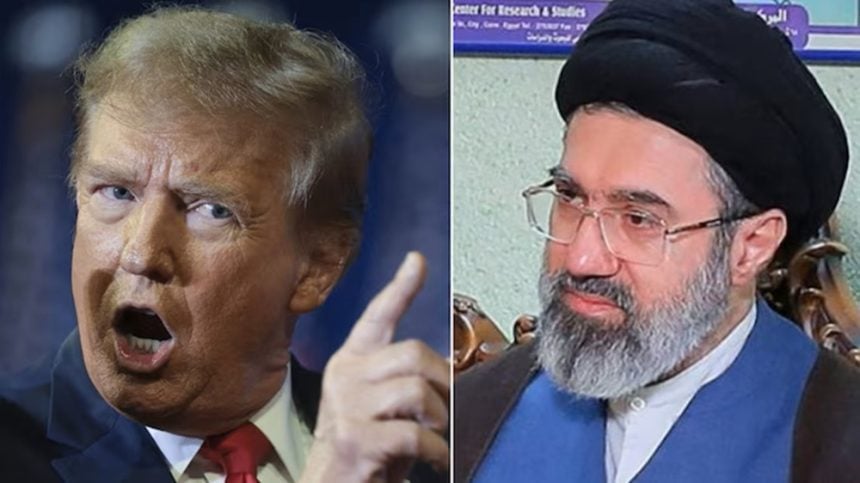
Iranian airlines have been barred from operating in several neighbouring countries following the implementation of new US sanctions, as the wider Middle East conflict continued to put pressure on regional energy supplies and push oil prices higher.
The United Arab Emirates suspended all flights operated by Iranian airlines until further notice after a US deadline for companies around the world to stop doing business with Iran’s aviation sector expired.
Iran’s Tasnim news agency also reported that flights to Oman, Georgia, Azerbaijan and Baghdad had been halted. Iranian authorities were reportedly working to redirect some services to Najaf in Iraq.
The measures are part of a broader US effort to isolate Iran economically by imposing sanctions on companies in third countries that continue doing business with Iranian firms.
Washington had set September 23 as the deadline for companies worldwide to comply with restrictions targeting Iranian airlines, with the stated aim of grounding Iran’s entire civilian aircraft fleet.
READ ALSO: Iran War Is ‘Small Potatoes’ For US – Trump
The restrictions have already affected Iran’s international air links, with Tehran’s Imam Khomeini Airport showing scheduled services to countries including Afghanistan, Armenia, China, Iraq, Pakistan, Tajikistan and Turkey, but no flights to or from several Gulf states.
Iran has warned that neighbouring countries complying with the US restrictions could face retaliation.
A senior Iranian official warned on Wednesday that airports in countries enforcing the ban could be made “unusable”.
The latest sanctions came as tensions across the region continued to affect global energy markets.
Oil prices rose sharply on Thursday after Yemen’s Iran-backed Houthi fighters launched missile attacks against Saudi Arabia, raising fresh concerns about disruptions to crude supplies.
READ ALSO: Iran Plans New Restricted Gulf Zone As Hormuz Tensions Rise
Saudi Arabia said it intercepted six ballistic missiles fired by the Houthis towards areas including Taif and the Yanbu region on the Red Sea.
Yanbu is particularly important to Saudi Arabia’s oil-export strategy because the port provides an alternative route for crude when shipments through the Strait of Hormuz are disrupted.
Brent crude futures settled at $106.60 a barrel, gaining $3.52, or 3.4 per cent, while US West Texas Intermediate crude rose $2.45, or 2.7 per cent, to settle at $94.61.
Both benchmarks had risen by about 5 per cent at their session highs. Brent recorded its highest closing price since September 15, while the gain represented WTI’s first rise after six consecutive sessions of losses.
The price increase came despite signs that diplomatic efforts between Washington and Tehran could eventually ease pressure on oil supplies.
READ ALSO: Iran Executes Man Accused Of Aiding US, Israel
Reuters reported that US and Iranian negotiators in New York were exploring a possible phased agreement under which Iran would reopen the Strait of Hormuz while the United States eased its economic blockade of Iran.
The Strait of Hormuz is a crucial global oil route and its disruption has been a major factor behind the volatility in energy markets during the conflict.
The prospect of negotiations helped crude prices retreat from their intraday highs.
The wider conflict has also affected Saudi Arabia’s ability to export crude. Saudi Arabia has been using its East-West pipeline to divert oil towards the Red Sea after disruptions to Gulf shipping routes. The country has been working to restore export capacity through Yanbu.
READ ALSO: Burutu Ex-Aspirants Trash Vote Of Confidence On Takeme, Demand Probe Of ₦23.7bn Council Funds
Meanwhile, the latest US sanctions threaten to deepen Iran’s economic isolation.
President Donald Trump previously described the expanded sanctions strategy as “economic D-Day”, referring to Washington’s attempt to increase pressure on Tehran by targeting companies outside Iran that continue to do business with sanctioned Iranian entities.
Iranian authorities have warned that the sanctions and wider blockade could worsen the country’s economic difficulties.
The latest developments have therefore created two competing pressures for oil markets: continued military escalation around major energy infrastructure and shipping routes could push prices higher, while progress in US-Iran negotiations and a reopening of the Strait of Hormuz could ease supply concerns.
(Reuters)
News
Report: UK Considers Raising Tax-free Allowance To £15,570

The UK government is reportedly considering increasing the personal income tax allowance from £12,570 to £15,570, a move that could leave millions of workers with more disposable income and prevent most state pensioners from paying tax on part of next year’s pension increase.
The proposal, reported by Sky News citing The Telegraph, would represent the first increase in the personal allowance in five years. The threshold has remained frozen at £12,570 since 2021.
If implemented, the new threshold would be close to the level the allowance might have reached had it continued rising instead of being frozen.
The proposal is being considered by Chancellor John Healey and Prime Minister Andy Burnham, according to the report. It was suggested by Labour donor and Ecotricity owner Dale Vince.
READ ALSO: UK Inflation Rises To Five-month High, Putting Pressure On Bank Of England
Vince said: “If Labour wants to get the economy moving, it should put money into the pockets of people who will spend it.”
He added: “Raising the personal allowance to £15,570 would give millions of people a meaningful boost, with the biggest benefit going to those on the lowest incomes.”
He proposed funding the measure through changes to capital gains tax and by ending interest payments on Bank of England reserves.
“We can pay for it by making the tax system fairer – starting with capital gains and the billions we currently hand to banks in interest,” Vince said.
READ ALSO:Fish Virus Outbreak Hits UK Facilities
However, the government has not confirmed that the proposal will be included in the upcoming Budget.
A Treasury spokesperson said decisions on taxation were matters for the Chancellor to announce at fiscal events, rather than issues the department would “routinely comment on rumour, speculation or proposals”.
The proposed increase could also address an issue facing pensioners.
The UK’s state pension is expected to rise by 3.9% next April under the government’s triple lock system, which guarantees an annual increase based on whichever is highest among inflation, average wage growth or 2.5%.
Provisional wage figures show growth of 3.9%, meaning the full new state pension could increase from £12,547.60 to about £13,036.60.
READ ALSO:Over 150 UK Flights Cancelled After Air Traffic Glitch
That would put the state pension above the current £12,570 personal allowance by approximately £457.
For pensioners with total retirement income below £50,270, that amount would normally be subject to the basic 20% income tax rate, potentially resulting in an annual tax bill of about £91.40.
Increasing the personal allowance to £15,570 would place the projected state pension below the new threshold, meaning pensioners would not pay income tax on the state pension itself, assuming they had no other taxable income.
The proposal comes as the government faces pressure over its finances ahead of the next Budget.
READ ALSO:Top 10 Degrees That Provide Fastest Payback In UK
Official figures showed that the UK public sector borrowed £18.3bn in August, the second-highest borrowing figure recorded for the month. Borrowing for the financial year so far was also £8.1bn above the level forecast by the Office for Budget Responsibility.
The government is therefore expected to face difficult decisions over taxation and spending when the Chancellor delivers the Budget.
Other possible tax changes under discussion include changes to capital gains tax and the proposed high-value council tax surcharge on expensive properties.
No decision on the personal allowance has been announced, and the final policy will depend on the Chancellor’s Budget decisions.
(skynews)

 News4 days ago
BREAKING: Tinubu Extends Working Vacation
- News5 days ago
Six Hidden Health Benefits Of Unsweetened Zobo
- News5 days ago
How 36 Nigerian States Got Their Names
- News5 days ago
2027: Step-by-step Guide To Applying For INEC Ad Hoc Staff Recruitment
- Headline4 days ago
How To Format An Academic CV For US Master’s, PhD Applications
- Headline5 days ago
Nigerian Man Jailed After Masturbating In Front Of Woman On UK Train
- News4 days ago
Benue Govt Suspends Muslim Pilgrims Welfare Board Chairman, Secretary
- News5 days ago
Stop Acid Reflux Pain: Foods You Must Ban From Your Kitchen
 News3 days ago
OPINION: The Stranger In APC’s Kitchen
- News5 days ago
[OPINION] Wike-APC: Fights Always End Adultery


