

News
OPINION: Escaping From Nigeria




By Lasisi Olagunju
When Christopher Columbus met the Tanio people in today’s Bahamas in 1492, he handed them a sword, they grasped it by the blade and had their fingers cut. To Columbus, that was enough proof that the Tanios lacked the right education and knowledge and therefore could be easily conquered.
Columbus wrote of that experience: “They brought us parrots and balls of cotton and spears and many other things, which they exchanged for the glass beads and hawks’ bells. They willingly traded everything they owned…They were well built, with good bodies and handsome features…They do not bear arms, and do not know them, for I showed them a sword, they took it by the edge and cut themselves out of ignorance. They have no iron. Their spears are made of cane…They would make fine servants…With fifty men we could subjugate them all and make them do whatever we want.”
Before Columbus came with his sword, these people quietly ruled their world across present-day Puerto Rico, Cuba, Jamaica, Haiti, the Bahamas, and the Virgin Islands. A large part of what we call the Caribbean today was their turf. They were a very good people in character and carriage. Their name, ‘Taíno’ itself means ‘good and noble.’ They made their modest contributions to the world of knowledge and, especially, to language. To English Language they donated the words ‘hammock,’ ‘canoe,’ ‘barbecue,’ ‘tobacco,’ and ‘hurricane’. There may be more.
They had their art and science. History and historians tell us that these people cultivated corn and yams, shaped fine brown pottery, spun cotton into thread, and crafted slender darts tipped with fish teeth and wood, deft weapons with which they defended their peaceful islands against their fierce, hostile neighbours, the Caribs, whose name endures in the Caribbean Sea. Robert M. Poole, a former editor of National Geographic and author of ‘Explorers House’ describes them as an “inventive people who learned to strain cyanide from life-giving yuca, developed pepper gas for warfare, devised an extensive pharmacopeia from nature, built oceangoing canoes large enough for more than 100 paddlers and played games with a ball made of rubber.” Yet, Columbus, the explorer and navigator from Europe, said they were ignorant, backward and weak and should be cheap food for the maggot of his sword. And that was because their knowledge was stale, their skills outdated.
Columbus visited on the Taíno not only the violence of the sword. His party also gave them slavery, diseases and other fatal afflictions beyond their knowledge and capacity to manage. They were so overwhelmed such that by the year 1550, just fifty-eight years after they encountered Columbus, the race was deemed extinct.
History teaches that those who fail to master the tools of their age become victims of it. What Columbus noticed and exploited was not total ignorance but tech and knowledge gaps; what he met were a good people, “inventive” but unfamiliar with iron and steel, the technology that defined power in that age of colonialism and conquest, of exploration and subjugation. Read ‘The American West: A New Interpretive History’ by Robert Hine and John Faragher. You may also read ‘Who Were the Taíno, the Original Inhabitants of Columbus’ Island Colonies?’ by Robert M. Poole in the October 2011 issue of the Smithsonian magazine. But as you read those texts and many more, think of our today and the Columbus in our lives.
MORE FROM THE AUTHOR:OPINION: APC’s Slave-raiding Expeditions
The weapon of power of this era is not steel but digital technology. Those who embrace it rule the world; those who don’t are ruled by it. The lesson from history is unmistakable: innovation ecosystems are not born, they are built to dominate. United States’ richest state is California. Its tech sector in 2024 generated $542.5 billion in direct economic impact. Check the history of its Silicon Valley, the role played in its rise by Stanford University, by the US military, the government and the organised private sector. If you read Christophe Lécuyer’s ‘Making Silicon Valley’ and J. A. Estruth in ‘A New Utopia: A Political History of the Silicon Valley, 1945 to 1995’, you would find that revolutions rarely begin by accident.
Here, while our village head keeps vigil over his guards, he leaves the children of the village unguarded. Millions are out of school; millions more who are in school are under-taught and under-trained because their teachers are hungry. Millions who managed to graduate are out there wondering what next. And they are all in the 21st century with the Columbuses of this age actively swording and enslaving them.
Nigeria routinely happens to its young. What does that mean? It is a shorthand for broken optimism. In the Yoruba cultural ecosystem, it is the world (aye), in its cosmic wickedness, at work. It is to say that the country’s realities have thrown their crushing weight at youthful hope and ambition. So, how will the victim of Nigeria escape Nigeria? There is only one escape route for the afflicted: make the appropriate sacrifices. And what are the votive offerings, items of appeasement: education, skills, jobs and character.
A lawyer and public affairs commentator, Eseroghene Mudiaga-Erhueh gave an offering in an edition of The Guardian last week. In beautiful, elegant prose, she cast a long look at what Nigeria has made of its young and declared that “today’s young Nigerian has two clear career paths: work legally and stay broke, or bend the rules and cash out.” It is a deep reflection on what life is for the youth of Nigeria – even for the not-so-young. The option that pays well and is profitable is the one that wears the jersey of crime.
“So true”, I told a Nigerian senator who shared the article with me. The writer was right; we can see it. The bird that won’t cut corners in Nigeria is the flightless creature outside, in the rain, drenched and hungry. The senator, in his response to the lawyer’s lamentation said it was “the Nigerian situation brilliantly encapsulated.” He was right.
In ‘The Problem of Poverty’ published in the November 1904 edition of the American Journal of Sociology, the author, Emil Münsterberg, German politician and jurist, tells us that it is in the nature of man to struggle against poverty and want. A man made poor by society, he says, “will either beg the means of subsistence from his fellows, or, if this fails, he will resort to fraud or force in his efforts to obtain it.” That is the dilemma of the law. Yahoo yahoo is a southern Nigerian affliction; youths who do it are, without shame, supported by their parents. The youths of the north who are not into begging (almajiri) are divided between banditry/mass kidnapping and commercial terrorism. The law has been unable to exercise its preventive powers over these crimes and the criminals. Prosecution has not worked, penalties have failed. And you ask why? “The history of poverty furnishes numerous proofs of the fact that the instinct of self-preservation is under all circumstances stronger than the fear of penalty.” That is Emil Münsterberg again. He says steps must be taken to anticipate the poor man’s instinctive action “by voluntarily supplying (him) with the means of satisfying his natural wants.” The society will be in self-deception if it thinks punishment is enough deterrence for crimes caused by deprivation.
MORE FROM THE AUTHOR:OPINION: ‘Federal Highways of Horror’
The bird of Nigeria sits on a tight rope. We can change service chiefs like diapers; we can employ marabouts to conjure peace and electoral victories. We can gag the bell and break the coconut of power on the head of the parrot. Nothing will work as long as poverty continues to pass seamlessly from parents to children, locking generations and generations in a continuous loop of deprivation.
Why are children born into poverty more likely to remain poor as adults? A Yoruba saying answers this sad, tragic question: Ìsé kìí mú oko l’áya k’ó má ran omo (poverty cannot afflict husband and wife and spare their children). I read a little of a 2024 book, ‘The Escape from Poverty’. The authors interrogate inter-generational perpetuation of poverty (IGPP) and its close correlation with child poverty and inequality. They conclude that “combating child poverty is key to ending inter-generational perpetuation of poverty, (and) ending inter-generational perpetuation of poverty is essential to reducing child poverty.” It is a cycle, and it is vicious. For us to have peace, it must be broken; but what does it take to break a cycle? James Clear, author of New York Times bestseller, ‘Atomic Habits’, says it only takes five minutes to break a cycle. The Gordian knot was proving difficult for Alexander the Great to untangle; he sliced it with his sword. The authors of ‘The Escape from Poverty’ list having or not having education as a key factor in determining whether a child will grow poor or not poor. They argue that breaking poverty cycles is not only a technical question but also a political one. Breaking the cycle of poverty in Nigeria requires more than slogans of renewed or recycled hopes, or doling out temporary relief measures; it demands deliberate investment in the transformative power of education, particularly digital education and skills acquisition.
We have history to guide us. In 1955, Western Nigeria dazed Nigeria with free primary education, the success of that leap created a super people. Other regions saw it, scrambled and copied it. In 2025, Nigeria fumbles with the matchbox; lighting the torch again has become one of the 12 impossible tasks assigned to Hercules.
Nigeria may be a bumbling behemoth but every cloud has a silver lining. I was at an Odu’a Investment Foundation’s digital education event organised for South Western Nigeria’s school children last Friday. Students from secondary schools from all parts of the South West, trained by the foundation, competed in a show of digital skills. They called it the Byte Busters club coding showcase. Restless Professor Seun Kolade of UK’s Sheffield Business School is the project director. In one short year, teenagers who once barely knew how to use a mouse displayed what the intervention empowered them to build: apps and AI tools, quiz platforms, CCTV and virtual school tours. I saw the Yoruba kitting their youths for a digital escape from the ravages of Nigeria and its suffocation. I saw problem-solving in structured, locally grounded ways. It is a quiet revolution. I saw nimble fingers ready to code their way out of the country’s frustrations. It was an eye opener.
“We are raising a generation of tech leaders…We are defining the future. We should have our own silicon valley in the South West; we have the talent,” chairman of the foundation’s advisory council, Ambassador Dr. Olatokunbo Awolowo Dosumu said as she marvelled at the genius showcased by the school teens plus the self-confidence they exuded. Her father did it in 1955; she is doing it in 2025.
Why do we need education at all? After all, people become presidents, governors and ministers without certificates. There have been so many sermons about teaching your children so that he will give you peace. So what will happen if a nation refuses to teach their children? They will become bandits and Yahoo boys and girls and their governors and senators will have no village or hometown to retire to; they will become homeless at home. Their country will tell horror stories like what our National Human Rights Commission announced four months ago: “At least 2,266 people were killed (by bandits and insurgents) in the first half of 2025, compared to 1,083 in the first half of 2024 and 2,194 for the full year last year.”
MORE FROM THE AUTHOR:OPINION: Ofala: Glo And An Invite From Agbogidi
The way to peace and prosperity is to build new ladders of opportunity for those historically left behind. The right education for our time must “teach the hand to work right, the head to think well, and the heart to choose rightly.” I do not know who to credit those words to. What I know, and sure of, is that from software development to remote service provision, the global demand for technology-enabled work grows daily. It should not be too difficult for Nigeria to know that a well-trained Nigerian youth population will compete and thrive beyond traditional boundaries; they will give the country peace of mind.
It is difficult to put a full stop to this without stressing that if children must be freed from the chains of penury that bind their parents, they must have the skills that sell today. The country will fall to the sharp edges of Columbus’s sword unless our home suckles success and kills failure. If nurtured through the keyboards, curiosity, and creativity of the Nigerian young, digital education will do for Nigeria what Silicon Valley did for California, a transformation of economy, of identity, of community, and of national purpose.
At the Ibadan event, I listened to retired Methodist Bishop Ayo Ladigbolu saying it his own episcopal way. Goats are curious because they were taught curiosity by their parents, Bishop Ladigbolu told his audience. He adds that what ram taught his own children makes them competent in locking horns (“èkó tí àgbò fi kó omo rè ní í fi í nkàn”). The education and skills which kittens got from their parent are what prepared and empowered them to jump walls (“èkó tí ológìnní fi kó omo rè ní í fi nf’ògiri”). The bishop dropped those deep Yoruba ancestral nuggets and added one more counsel: “K’á wo nkan re fi kó’mo wa…” (let us nurture our kids with noble skills). If you are wise, for this era, you would make the garment fit for this era. “Aso ìgbà ni àá dá fún’gbà.” The bishop was right. What kind of home sews loincloths, or even, nakedness for harmattan? That is what Nigeria has been doing for its youths. If this country won’t flow into extinction, it must redirect the course of its waters away from the desert.
“Àbá níí d’òótó, ojo kìí jé ká le ga.” The bishop again. And what does that mean? An attempt at translation here: Proposals are what lead to results; cowardice stunts. It is already getting late. Columbus wanted trade and its profits from the spice and silk of Asia. With his blade adequately whetted, he set out for his ambition in August 1492, he had more than Asia’s spice and silk. He got America’s federal capital named after him; he also had what has come to be known as ‘the new world.’ The explorer was successful because he had the requisite education; knowledge of Geography was his ‘digital’ skill. His life is a proof that with determination and the right education, it is possible to break any vicious cycle – and conquer the world. I enjoyed what Odu’a Investment Foundation showcased in Ibadan last week. Results come from attempts, the hesitant rarely grows.




News
N5m, N10m Zero-interest Loans: SheVentures Opens Applications For Women Entrepreneurs


First City Monument Bank (FCMB) has opened a new round of applications for its SheVentures proposition, offering zero-interest loans of up to ₦10 million to women entrepreneurs to ease access to working capital and support business growth.
The facility provides loans ranging from ₦500,000 to ₦5 million under a general category, and ₦5 million to ₦10 million for sector-specific businesses, with funding capped at up to 50% of an applicant’s average monthly turnover.
At the centre of the offering is a 0% interest rate, with all charges embedded in a transparent structure.
Repayment is structured over four or six months, allowing businesses to match obligations with their cash flow cycles.
READ ALSO:I’ve Been Blacklisted In Music Industry For 13 Years – Seun Kuti
Yemisi Edun, Managing Director and Chief Executive of First City Monument Bank (FCMB), said the initiative reflects a deliberate approach to inclusive growth.
“Inclusive growth requires access to capital and the right conditions for businesses to deploy that capital effectively.
“Women-led enterprises are critical to economic activity, yet they face structural barriers.
This intervention aims to help close that gap by providing financing that supports job creation, business expansion, and long-term sustainability for women entrepreneurs.”
“Access to affordable finance remains a major constraint for women entrepreneurs,” said Nnenna Jacob-Ogogo, Group Head, SheVentures and Impact Segments at First City Monument Bank (FCMB).
READ ALSO:My Beef With Wizkid Is For Life – Seun Kuti
“By removing the cost barrier and offering quick, flexible funding, this zero-interest loan is designed to safeguard existing jobs, enable businesses to invest in growth initiatives, and foster resilience in challenging economic conditions.”
Women-owned businesses account for a significant share of Nigeria’s small and medium-sized enterprises but continue to face high borrowing costs and limited access to credit.
Through these efforts, SheVentures tackles persistent financing gaps facing women-led businesses, combining targeted funding with broader support to empower women entrepreneurs, encourage business innovation, and enhance their ability to compete on a national scale.
Applications for the zero-interest loan are now open.Apply now.
News
Xenophobic Attacks: Oshiomhole Tells FG To Retaliate Against South African Companies In Nigeria

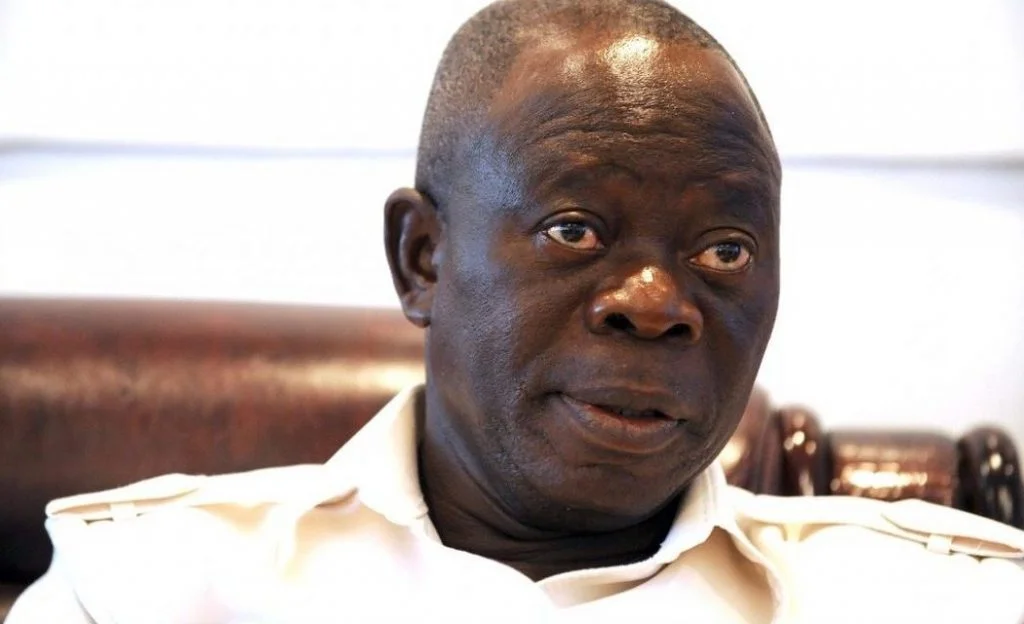
Senator Adams Oshiomhole has called on the Federal Government to retaliate against South African businesses operating in Nigeria following the recent attacks on Nigerians in South Africa.
Speaking during plenary on Tuesday, Oshiomhole said the Federal Government should consider revoking the working license of South African owned companies such as MTN and DSTV.
He argued that Nigeria must respond firmly to what he described as persistent hostility against its citizens.
READ ALSO:South Africa To Investigate ‘Mystery’ Of Planeload Of Palestinians
“I am not going to shed tears. If you hit me, I hit you. I think it is appropriate in diplomacy. It is an economic struggle,” Oshiomhole said.
He argued that while some South Africans accuse Nigerians of taking their jobs, Nigerians should return home and take over employment opportunities created by major South African companies operating in the country, including MTN and DSTV.
“When we hit back, the President of South Africa will not only talk but will also go on his knees to recognise that Nigeria cannot be intimidated.
READ ALSO:South African Ambassador Found Dead Outside Paris Hotel
“We will not condone any life being lost. If a crime has been committed under the South African law they have the right to bring any such person to justice, but to kill our people as if we are helpless, we will not allow that,” Oshiomhole added.
DAILY POST reports that several Nigerians in South Africa have reportedly been attacked, and their businesses destroyed, in ongoing xenophobic attacks in the country.
News
IGP Orders Officers Display Name Tag On Uniform, Gives Update On State Police

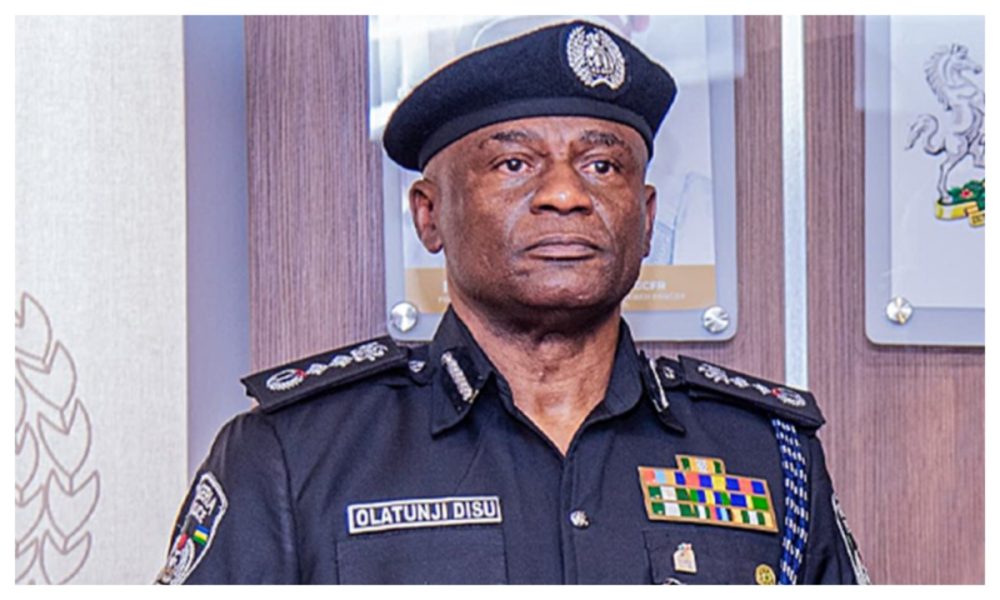
The Inspector General of Police, IGP, Tunji Disu, has ordered all police personnel to always have their name tags on their uniforms for easy identification.
Disu disclosed that only police personnel who are undercover are exempted from displaying their name tags.
Speaking on Tuesday, Disu said: “All police officers should have their name tags. All of us on the high table have our names apart from the undercover among us so if you look at all the Commissioners of Police we have our name tags, so it’s not our standard.
READ ALSO:
“All the Commissioners of Police are here and that is why we called this meeting, we have list of things like this that we will want to discuss with the Commissioners of Police, we have told them earlier and we will still let them know that every that happens within their area of jurisdiction falls under their control.”
On the issue of state police, the IGP said: “Since we got the signal that the Federal Government of Nigeria intend to establish State Police and since we are the federal police, we decided to take the bull by the horn and put down our own side of what we believe on how the state police should be run.
“A lot of things were taken into consideration, a lot of comparative analysis was done and it has been transmitted to the National Assembly.”
-

 Politics4 days ago
2027: Tinubu’s Re-election May Put An End To Nigeria — Baba Ahmed Warns
-

 Politics5 days ago
BREAKING: 2027: Former Adamawa APC Guber Candidate, Aishatu Binani Defects To NDC
-

 Business4 days ago
JUST IN: Nigerian Filling Stations Reduce Fuel Price After Hike
-

 Politics5 days ago
Senatorial Seat: Ogbakha-Edo Warns Against Imposition Of Candidates In Edo South
-

 Entertainment5 days ago
Actress Eniola Badmus Gets New Federal Appointment
-

 News2 days ago
BREAKING: Wike Picks Alabo George For Rivers Governorship
-

 News3 days ago
OPINION: Why South Africans Murder Nigerians In Cold Blood
-

 Politics4 days ago
NDC Speaks On Peter Obi, Kwankwaso Joining Party
-

 News4 days ago
2027: Pastor Adeboye Speaks On Nigeria’s Next President
-

 Politics5 days ago
2027: Pondi, Otuaro, Other Delta South Stakeholders, Endorse Senator Joel-Onowakpo For Second Term
