

News
OPINION: ‘Federal Highways of Horror’



By Lasisi Olagunju
You know where the latest anti-government journalists are in Lagos? Kirikiri. On a day that Nigerians were celebrating an additional spur of 100 kilometres to the Lagos-Calabar Coastal Road, the killjoys of Kirikiri struck. They took a happy, joyous people of 200 million on a gruelling, bumpy ride across the country. They ran painful stories of craters and potholes and headlined them: ‘Federal Highways of Horror.’
It is a miracle that our Minister of Works, Dave Umahi, has not pummeled the Lagos newspaper called Vanguard. It ran the bad stories. It is still unclear why the minister has not rebuked its owner and spanked its journalists for publishing what they were not supposed to publish. Not once, but twice, last week they allowed the devil to use them to tell stories of collapsed federal roads from the north to the south. Their stories portrayed hardworking Umahi as a failure in monumental proportions.
Those journalists, injected with an overdose of impudence, said they did an investigation. They painted a grim picture of federal highways across multiple Nigerian states suffering severe neglect. They said the neglect has made travel dangerous, expensive, and time-consuming. They wrote as if they were sent to pull down a house built by God.
In the South, they came up with a long list of bad roads. They said northern states shared the same story of pain. They described some roads as crater-filled horror scenes; some as barely passable, others as sites long abandoned by contractors. On the few ones harbouring contractors, the signs they displayed showed slow men at work.
It does not rain; it pours. Amid narratives of millions of bad federal roads, Umahi made himself professor last week. “I am a professor of Engineering,” he announced on national television. Professor Umahi? I pray he is not asked to name the king who blessed him with that chieftaincy title. Some Arise News television journalists, whose eyes lack lashes, forced him to make himself professor. They habitually tug at the hem of Umahi’s professorial gown. They pelt him with questions that should never be asked. They remind our working Minister of Works that a river that is not dirty does not hide its depth. Last week, they demanded the cost of federal roads per kilometre. Who does that? And, I am happy, Minister Umahi gave it back to them. He said they are illiterates. Yeah. Don’t they know that for our federal government, spirits decide the total costs of projects? If they were truly not illiterates, they would know that this government is a wholesale seller and buyer; it is too rich to do retail business measured with short tape rules and elementary school rulers.
READ ALSO:OPINION Generals, Marabouts And Boko Haram
Oyo State governor, Seyi Makinde, thought because he was governor and engineer he could join the talk and say that calculating the average cost per kilometre was possible in road construction. He was similarly told by our minister to shut up or he would be summoned to a debate on the very difficult mathematics of road construction. Umahi said he is Makinde’s senior in engineering. Senior Prefect Umahi described electrical electronics engineers as ‘technicians’ who must not speak on project costs.
Now, what we are told to hold as knowledge from Professor Umahi is that it is impossible to know how much a kilometre of road costs in Nigeria until such projects are completed. God is great. The World Bank must have missed that wisdom back in 1999 when it created the Road Costs Knowledge System (ROCKS), a database that calmly lists what it costs to build or fix a kilometre of road from Umahi’s village in Ebonyi to Makinde’s Ajia in Ibadan. A key feature of the World Bank’s ROCKS is its record of actual and estimated road work costs, clearly defined per kilometre and per square metre. Apparently, only in Nigeria do roads and their costs defy mathematics and logic.
In utter helplessness, we watch the roads and their costs stretch and shrink like chewing gum depending on whose fingers are working the calculator. While other countries classify their roads by type and cost per kilometre, we prefer a more spiritual approach – if you are an enemy, call it faith-based budgeting.
Clarity is the father of all openness. Why is it missing here? Again, that is not a question or a proverb that we must hear again from anyone, especially professional troublemakers called journalists. What is the problem of Nigerian journalists? Because their eyes have no skin, they query power. Where a cup is half-full, what our journalists see all their lives is a half-empty cup. They didn’t start today. They are historically insolent. What they do to this government, they did to even our ancestor, Lord Lugard, in 1913, one full year before Amalgamation. On 8 March, 1913, one rude journalist working with a newspaper called Lagos Weekly Record wrote that Lugard was a wicked, ruthless character, “a man whose walking stick is a pistol and whose thoughts by day and dreams at night are punitive expeditions and military patrols.”
And what was Lugard’s reaction to such attacks? He fought them with laws and knocks. At a point, he documented their impudence with a letter to his wife, Flora. In the letter, he bunched the journalist with all the other “educated native” who deserved no sympathy. He wrote about the native enemy of the state: “His loud and arrogant conceit are distasteful to me, his lack of natural dignity and of courtesy antagonise me.” Lugard’s biographer, Margery Perham, graciously remembered to put this in the book: ‘Lugard: The Years of Authority’ on page 585. If you can’t get Perham but are fortunate to get Jonathan Derrick’s ‘Africa, Empire and Fleet Street’, check the details there. They are on page 115.
MORE FROM THE AUTHOR:OPINION: Hobbes, Nigeria, And Sarkozy
So, as Lugard, the creator of Nigeria rightly wrote, the Nigerian journalist is arrogant and lacks courtesy. Such are called alárífín in Yoruba. In the days of old, the crime of àrífín carried capital punishment. Aróbafín l’oba npa. But today’s journalists are lucky that they are in a republican democracy. Even then, someone should pay for their bad behaviour. The slap they get from ministers like Umahi is the first tranche of the cost of their bad manners.
What should the state do to the conceited who won’t let expressway contracts be awarded expressly in peace? I have a solution to their problem: Like the Vanguard, they should all be relocated to Kirikiri; all of them, from Lagos to Ibadan; from Ibadan to Lagos. And, if I had my way, I would tip off Umahi and all his harangued hardworking colleagues to award contracts this week for more cells for enemies of the president’s coastal elephant and other projects of renewal. Their new accommodation should enjoy maximum security. They deserve Kirikiri, Kirikiri deserves them.
What comes fast cannot be delayed again. It happened to cricket. Cricket set his wedding day and simultaneously asked his doctor to start preparing for child delivery. The contracts for a safe house for Nigerian journalists can be awarded today, or, latest tomorrow. There is no need for formalities. Exactly like the Coastal Road contract, this is another no for competitive bidding. We already know contractors with proven track records of expertise in casting beams and building cells. We select and hit the site digging. We can fix the contract cost after the job is done.
From this point, we see long shadows over the country; there is no clarity about important things government do. But, one day soon, like sun rays, clarity will force its way in; it is the father of openness.
Now, beyond the scaffold of satire, I wish I could just tear the mask and tell Minister Umahi that what we have today under his watch is road transportation without roads. And he is Minister of Works in charge of roads. It is a shame.
MORE FROM THE AUTHOR:OPINION: Every democracy ‘Murders Itself’
In May this year (2025), I wrote ‘The shame of Ibadan-Ife-Ilesa road.’ The first two paragraphs of the piece read:
“Mr Dele Alake represents Ekiti State in the Federal Executive Council. Alhaji Gboyega Oyetola represents Osun State in the Federal Executive Council. Mr Olubunmi Tunji-Ojo represents Ondo State in the Federal Executive Council. All three of them are the president’s core men. Each time the council sits and approves federal roads for reconstruction in states other than theirs, what goes on in their minds? They are very powerful ministers but all federal roads that lead to their states are decrepit and abandoned. And they know. So, what is the problem?
“The Ibadan-Ife-Ilesa road that links these ministers’ states to Lagos and to the North is the worst in Nigeria. Senate leader, Opeyemi Bamidele, is from Ekiti State. He belongs to the president’s inner caucus. Tough-talking PDP Senator Francis Fadahunsi represents Ife-Ijesa senatorial district. There are seven other senators and several Reps of APC and PDP from those three states. Has anyone heard them say or do anything to make that road well again? Do these people go home and how do they get home whenever they go home? Nigerians of all states lose lives and limbs on that road daily. Death by installments on the road is harrowing and it is a daily experience. It is a fitting tribute to the attention we pay to our people’s welfare.”
That was on May 12, 2025 (five months ago). If the road was “going, going” when I wrote that piece, it is gone now. Gone. An ex-senator told a columnist in May this year that N20 billion had been “released for repairs” of that road. In August 2025, Umahi announced the release of 30 percent of the contract sum. How much is the contract sum? Don’t even go there. If you go there, the minister will be angry. He will remind you that you are not a road professor. If you must ask any question at all, ask what has happened to what Umahi said was released, his 30 percent. Ask, because, nothing that is worth one kobo has happened on that road this year.
But the total collapse of the road did not come to me as a surprise. By the noon of May 12, 2025 when I published the article, one of the senators I called out in the piece called me.
“They have just read to me what you wrote.” He told me. Big men don’t read newspapers; newspapers are read to big men. Senator said he laughed at my naivety. He wondered why I was disturbing myself writing rubbish about a contract that may never be executed.
MORE FROM THE AUTHOR:OPINION: A Minister’s Message To Me
“Do you think Nigeria can ever be better than it is? (Sé ìwo rò wípé Nigeria lè dára jù báyìí lo ni?)” He asked and proceeded to shame me with names, facts and figures all of which answered his question with a no. He said I should record and publish all he said. I laughed at the audacity of his directive. An orphan like me will never dare court a wound on the back.
Besides, I was taught early in life to make my eyes flexible enough for them to see the nose. That was the wisdom that eluded Partridge who claimed to know it all, and because he made that claim, he blocked his own opportunity to learn Ifá from the pigeon. ‘Mo m’Obàrà, mo m’Ofún,’ tí kò j e kí ẹyẹlé k’ àparò n’Ífá (I know Obàrà, I know Ofún’ made the pigeon not to teach Ifá to the partridge).
So, my pigeon listened attentively to the incantation from the hawk. This senator ended his long, windy speech with a submission that the Ibadan-Ife-Ilesa road, and other federal roads in the South-West were decrepit and abandoned because the Works Minister “does not like hearing South-West at all.” I heard him and sighed.
When the outspoken gentleman spoke with me five months ago, he was a PDP senator. He has since moved to Dave Umahi’s party. Now, I wonder if he will still say what he said now that he is in APC.
Author and literary critic, Robert M. Wren (1928-1989), in 1982 wrote “The Last Bridge on ‘The Road’: Soyinka’s Rage and Compassion.” He tells us that in 1962, Wole Soyinka, in a Lagos Daily Express essay entitled ‘Bad Roads, Bad Users, Bad Deaths’ captured Nigeria’s enduring road crisis. Writing with outrage and in satire, Soyinka lamented the deadly state of the highways. He agonised over the state of the Lagos–Ibadan road (Mile 34); there was what he called “the death-trap at Ife”, and “the last bridge on Ikorodu Road.” Soyinka recalled and deplored a senator’s refusal to carry a crash victim with a spinal cord injury to Ibadan. More than six decades later, the roads are still bad, very bad; they still kill; senators are still cold-blooded; they still wonder why anyone bothers to care that the roads are bad.




News
Xenophobic Attacks: Oshiomhole Tells FG To Retaliate Against South African Companies In Nigeria

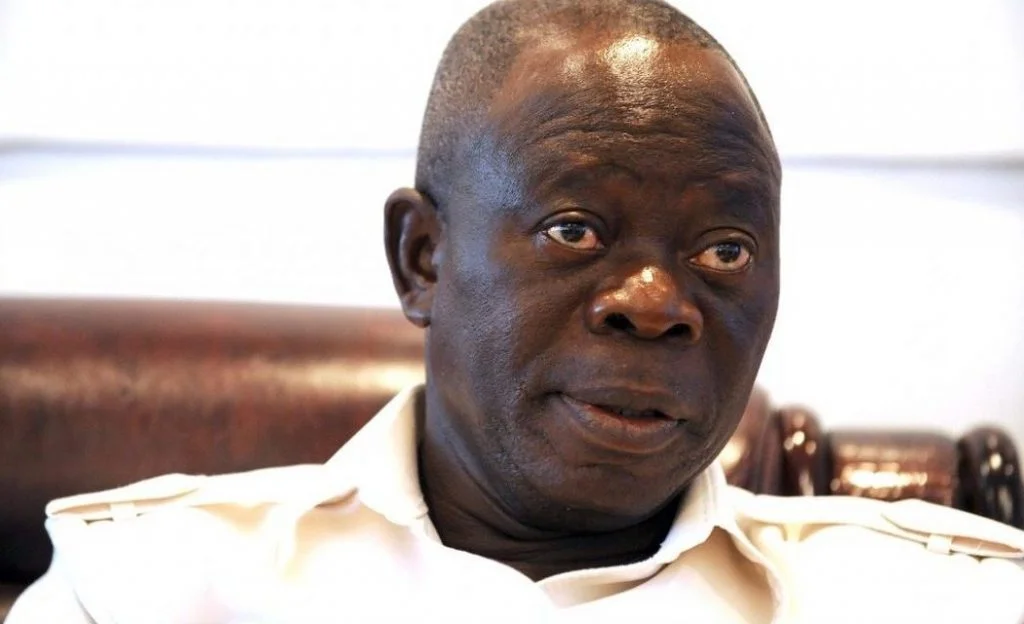
Senator Adams Oshiomhole has called on the Federal Government to retaliate against South African businesses operating in Nigeria following the recent attacks on Nigerians in South Africa.
Speaking during plenary on Tuesday, Oshiomhole said the Federal Government should consider revoking the working license of South African owned companies such as MTN and DSTV.
He argued that Nigeria must respond firmly to what he described as persistent hostility against its citizens.
READ ALSO:South Africa To Investigate ‘Mystery’ Of Planeload Of Palestinians
“I am not going to shed tears. If you hit me, I hit you. I think it is appropriate in diplomacy. It is an economic struggle,” Oshiomhole said.
He argued that while some South Africans accuse Nigerians of taking their jobs, Nigerians should return home and take over employment opportunities created by major South African companies operating in the country, including MTN and DSTV.
“When we hit back, the President of South Africa will not only talk but will also go on his knees to recognise that Nigeria cannot be intimidated.
READ ALSO:South African Ambassador Found Dead Outside Paris Hotel
“We will not condone any life being lost. If a crime has been committed under the South African law they have the right to bring any such person to justice, but to kill our people as if we are helpless, we will not allow that,” Oshiomhole added.
DAILY POST reports that several Nigerians in South Africa have reportedly been attacked, and their businesses destroyed, in ongoing xenophobic attacks in the country.
News
IGP Orders Officers Display Name Tag On Uniform, Gives Update On State Police

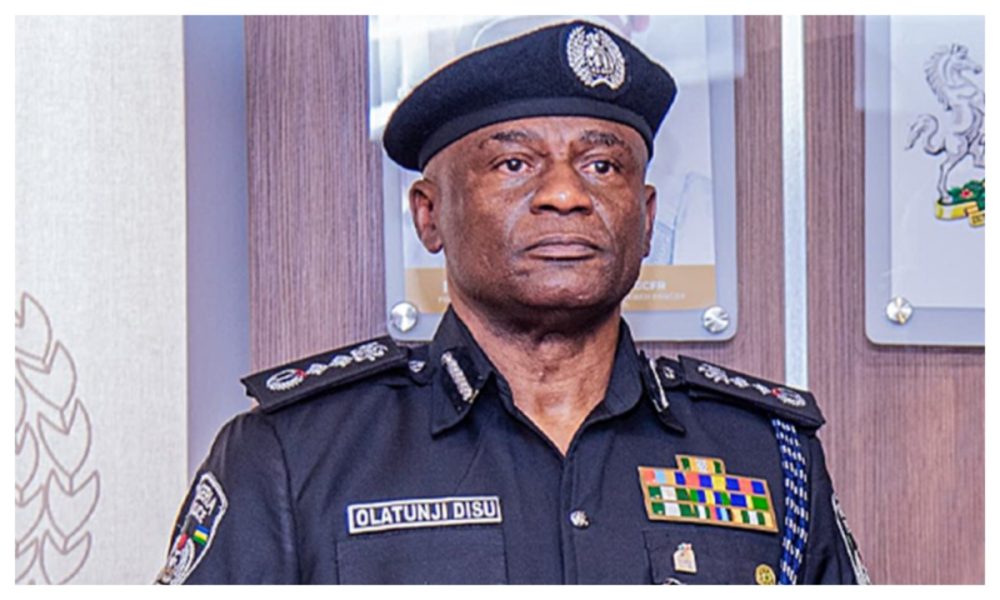
The Inspector General of Police, IGP, Tunji Disu, has ordered all police personnel to always have their name tags on their uniforms for easy identification.
Disu disclosed that only police personnel who are undercover are exempted from displaying their name tags.
Speaking on Tuesday, Disu said: “All police officers should have their name tags. All of us on the high table have our names apart from the undercover among us so if you look at all the Commissioners of Police we have our name tags, so it’s not our standard.
READ ALSO:
“All the Commissioners of Police are here and that is why we called this meeting, we have list of things like this that we will want to discuss with the Commissioners of Police, we have told them earlier and we will still let them know that every that happens within their area of jurisdiction falls under their control.”
On the issue of state police, the IGP said: “Since we got the signal that the Federal Government of Nigeria intend to establish State Police and since we are the federal police, we decided to take the bull by the horn and put down our own side of what we believe on how the state police should be run.
“A lot of things were taken into consideration, a lot of comparative analysis was done and it has been transmitted to the National Assembly.”
News
Court Orders SERAP To Pay DSS Operatives N100m For Defamation
The High Court of the Federal Capital Territory has ordered a non-governmental organization, the Socio-Economic Rights and Accountability Project, SERAP, to pay N100 million as damaged to two operatives of the Department of the State Services, DSS, for unjustly defaming them in some publications.
The court also ordered SERAP to tender public apologies to the defamed officers,
Sarah John and Gabriel Ogundele, in two national newspapers, two television stations and its website.
Besides, the organization was also ordered to pay the two operatives N1 million as cost of litigation and 10 percent post-judgment interest annually on the judgment sum until it’s fully liquidated.
Justice Yusuf Halilu of the High Court of the Federal Capital Territory gave the order on Tuesday while delivering judgment in a N5.5 billion defamation suit instituted against SERAP by the DSS operatives.
The judge found SERAP liable for unjustly defaming the two DSS operatives with allegations that they unlawfully invaded its Abuja office, harassed and intimidated its staff, in September 2024.
READ ALSO:How We Arrested Terror Suspect Who Threatened To Kill Students, Teachers In Abuja — DSS
In the offending publication on its website and Twitter handle, SERAP alleged that the two operatives unlawfully invaded and occupied its office with sinister motives.
The judge held that the publication was in bad taste especially from an organization established to promote transparency and accountability, as nothing in the publication was found to be truthful.
The DSS staff had listed SERAP as 1st defendant in the suit marked CV/4547/2024. SERAP’s Deputy Director, Kolawole Oluwadare, was listed as the 2nd defendant.
In the suit, the claimants – Sarah John and Gabriel Ogundele – accused the two defendants of making false claims that they invaded SERAP’s Abuja office on September 9, 2024..
Counsel to the DSS, Oluwagbemileke Samuel Kehinde, had while adopting his final address in the mater urged the judge to grant all the reliefs sought by his client in the interest of justice.
READ ALSO:DSS Arrests Suspected Gunrunner, Recovers 832 Rounds Of Ammunition
He admitted that although the names of the two claimants were not mentioned in the defamation materials, they had however established substantial circumstances that they are the ones referred to in the published defamation article by SERAP on its website.
The counsel submitted that all ingredients of defamation have been clearly established and the offending publication referred to the two officials of the secret police.
However, SERAP, through its counsel, Victoria Bassey from Tayo Oyetibo, SAN, law firm, asked the court to dismiss the suit on the ground that the two claimants did not establish that they were the ones referred to in the alleged defamation materials.
She said that SERAP used “DSS officials” in the alleged offending publication, adding that the two claimants must establish that they are the ones referred to before their case can succeed.
Similar arguments were canvassed by Oluwatosin Adefioye who stood for the second defendant, adding that there was no dispute in the September 9, 2024 operation of DSS in SERAP’s office.
READ ALSO:Alleged Cyberstalking: DSS Plays Video Evidence In Sowore’s Trial
He said that since SERAP in the publication did not name any particular person, the claimants must plead special circumstances that they were the ones referred to as the DSS officials.
Besides, he said that there is no organization by name Department of State Services in law, hence, DSS cannot claim being defamed adding that the only entity known to law is National Security Agency.
The claimants had in the suit stated that the alleged false claim by SERAP has negatively impacted on their reputation.
The DSS also stated, in the statement of claim, that, in line with the agency’s practice of engaging with officials of non-governmental organisations operating in the FCT to establish a relationship with their new leadership, it directed the two officials – John and Ogunleye – to visit SERAP’s office and invite them for a familiarization meeting.
The claimants added that in carrying out the directive, John and Ogunleye paid a friendly visit to SERAP’s office at 18 Bamako Street, Wuse Zone 1, Abuja on September 9 and met with one Ruth, who upon being informed about the purpose of the visit, claimed that none of SERAP’s management staff was in the country and advised that a formal letter of invitation be written by the DSS.
READ ALSO:DSS, Police Partner NCCSALW To End Terrorism, Mop Up Illegal Arms
John and Ogundele, who claimed that their interactions with Ruth were recorded, said before they immediately exited SERAP’s office, Ruth promised to inform her organisation’s management about the visit and volunteered a phone number – 08160537202.
They said it was surprising that, shortly after their visit, SERAP posted on its X (Twitter) handle – @SERAPNigeria – that officers of the DSS are presently unlawfully occupying its office.
The claimant added, “On the same day, the defendants also published a statement on SERAP’s website, which was widely reported by several media outfits, falsely alleging that some officers from the DSS, described as “a tall, large, dark-skinned woman” and “a slim, dark skinned man,” invaded their Abuja office and interrogated the staff of the first defendant (SERAP).
John and Ogundele stated that “due to the false statements published by the defendants, the DSS has been ridiculed and criticised by international agencies such as the Amnesty International and prominent members of the Nigerian society, such as Femi Falana (SAN)”.
“Due to the false statements published by the defendants, members of the public and the international community formed the opinion that the Federal Government is using the DSS to harass the defendants.”
READ ALSO:SERAP To Court: Stop CBN From ‘Implementing ‘Unlawful, Unjust ATM Fee Hike’
They added that the defendants’ statements caused harm to their reputation because the staff and management of the DSS have formed the opinion that the claimants did not follow orders and carried out an unsanctioned operation and are therefore, incompetent and unprofessional.
The claimants therefore prayed the court for the following reliefs: “An order directing the defendants to tender an apology to the claimants via the first defendant’s (SERAP’s) website, X (twitter) handle, two national daily newspapers (Punch and Vanguard) and two national news television stations (Arise Television and Channels Television) for falsely accusing the claimants of unlawfully invading the first defendant’s office and interrogating the first defendant’s staff.
“An order directing the defendants to pay the claimants the sum of N5 billion as damages for the libellous statements published about the claimants.
“Interest on the sum of N5b at the rate of 10 percent per annum from the date of judgment until the judgment sum is realised or liquidated.
“An order directing the defendants to pay the claimants the sum of N50 million as costs of this action.”
-

 Politics4 days ago
2027: Tinubu’s Re-election May Put An End To Nigeria — Baba Ahmed Warns
-

 Metro5 days ago
I’m A Street Girl’ – Bimbo Ademoye Clashes With Area Boys [VIDEO]
-

 Politics5 days ago
BREAKING: 2027: Former Adamawa APC Guber Candidate, Aishatu Binani Defects To NDC
-

 Business3 days ago
JUST IN: Nigerian Filling Stations Reduce Fuel Price After Hike
-

 Politics5 days ago
Senatorial Seat: Ogbakha-Edo Warns Against Imposition Of Candidates In Edo South
-

 Entertainment4 days ago
Actress Eniola Badmus Gets New Federal Appointment
-

 News5 days ago
10 African Countries With Highest Petrol Prices In Prices In April 2026
-

 News2 days ago
BREAKING: Wike Picks Alabo George For Rivers Governorship
-

 Politics3 days ago
NDC Speaks On Peter Obi, Kwankwaso Joining Party
-

 News3 days ago
OPINION: Why South Africans Murder Nigerians In Cold Blood
