
News
OPINION: Fayose-Obasanjo: Two Eboras Dragging Same Pair Of Trousers (1)

Tunde Odesola
Accident and misfortune have no permanent abodes, though both roam aimfully about, looking to pounce. They are identical twins with different temperaments: one sprints, the other stalks. Sometimes they travel separately, sometimes hand-in-hand, depending on the havoc at hand. Swift or slow, they strike and go. The ensuing scenario, which occurred during the childhood of an acquaintance, writes in capital leatters the joint signature of accident and misfortune.
Looking for a tan, my white acquaintance traced the sun to the beach, where he lay spread-eagled. When the sun hung low and hot – nígbàtí òrùn kan àtàrí – bronzing his forehead, John Fury (not his real name) decided to wade into the ocean for a cooling baptism.
For half an hour, John dived deep into the ocean, ducking under the waves, treading the tide, enjoying the symphony of heat and water.
After he was done, John rose from the sea and walked up the beach, refreshed and satisfied. Then, from the corner of his eye, he saw the wave coming behind. It swept past swimmers and giggling fun-seekers, frothy and hurtless, until it hit his calves, which buckled and sent him tumbling over backwards onto the sand.
He blinked and tried to laugh it off as he lay on his back and watched the ebbing tide foaming and fuming back into the sea. But the laugh flickered and fizzled out like a candle in the wind.
MORE FROM THE AUTHOR:OPINION: The ‘Fool’ Who Stopped Wike
John couldn’t move.
From the chest down, he lay paralysed. “Medicine saved my hands,” he told me a few days ago, rubbing his hands together as if to reassure himself they were still working. But he never got up to walk again. The wheelchair became his legs. It’s now 20 years after.
Unpredictability is the nature of accident, though misfortune may holler before hauling. Either way – accident or misfortune – the tide swings for friend or foe, never rejoice in another fellow’s fall because anyone may hold the cookie in both hands, no one can predict the way it’s going to crumble.
The next time you come across the physically-challenged or cognitively-impaired, please, do know that some of them were once able-bodied like you before fate or freewill caused an accident or a misfortune, changing their lives. But whether disability is inborn or sustained, persons living with physical or mental challenges must not be despised; rather, they should be given the wings to fly. An accident or a misfortune, you or I could have been in disability shoes.
Uhmm! Most Nigerian leaders are a study in accident; most are misfortune recalibrated; the nation’s backwardness, a badge of their ruinous reign. None is blameless. On their watch, the term ‘Accidental Discharge’ became government’s pacifier for the families of innocent citizens killed guns-a-blazing by ill-equipped and frustrated security forces.
While Nigerians shouted themselves hoarse holding a national debate on the propriety of the nation’s serving and retired generals turning their subordinates into ‘maiguards’ guarding a multimillion-dollar personal land belonging to a former Chief of Naval Staff, retired Vice Admiral Awwal Zubairu Gambo, Reuters, on November 19, 2025, published a story, “UK to build new munition factories to boost warfighting readiness.” On the same day, ABC News published a story titled “UK inflation drops to 4-month low, paving way for December rate cut”, just as Associated Press went to press with “UK defence secretary warns Russia it is ready to deal with any incursions after spy ship spotted”.
Topping the list of big headlines from Germany are two stories by Reuters. The first story is “Germany set to approve $3.5 billion defence package,” the other is “Industrial Electricity Price Relief on the Way.” In France, Reuters reports, “French National Team Qualifies for 2026 World Cup,” and “Early Greek Loan Repayment Gives France Budget Relief.”
MORE FROM THE AUTHOR:[OPINION] Wasiu Ayinde: The Shame Of A Nation (2)
Rummaging through news reports, using the lens of PUNCH, this is a list of some Nigerian headlines. “Kebbi school abduction happened despite intelligence report – Tinubu,” “Tension as Wike, soldiers clash over ex-naval chief’s land,” “WQC: DR Congo knock out Super Eagles,” “Govs revolt as Wike’s expulsion breaks PDP,” “Police fire teargas as PDP factions clash in Abuja,” “Trump’s comment fuelled renewed attacks by violent groups – Akume,” “45 million Nigerians practise open defecation – Minister,” “N20bn fraud: Court adjourns arraignment as ex-director fails to appear,” “Banditry: Kwara closes schools in four LGs, demands military base.”
Need we search further to see why our country is today a paraDIES? Need we look further to know why our national hoe’s blade is blunted and our earth ravaged? A Yoruba proverb had long cautioned, ‘E wo enu ile, e wo enu oko’. Talentlessness is the Number 1 requirement for public office in Nigeria. Skilllessness is Number 2.
Ex-dictator, Chief Olusegun Matthew Okikiola Aremu Obasanjo is an 88-year-old retired general, farmer, engineer, statesman, politician and author. Aremu has survived many accidents and misfortunes in his rollercoaster life. Hailed by adherents and sycophants as Ebora Owu, Obasanjo, in all his 26 years of military service, never had a reported case of ‘accidental discharge’. However, controversy has continued to overshadow his involvement in the Nigerian Civil War, particularly the surrender of Biafran forces on January 15, 1970, with many crediting Colonel Benjamin Adekunle as the architect of Biafran surrender.
But there is another Ebora in Ekiti. His name at birth is Peter Ayodele, the son of Fayose. Fayose is a former governor of Ekiti State. He’s also a failed godfather and a failed People’s Democratic Party senatorial candidate. Tall, strong and combustive, Fayose calls himself Ebora to Nje Fried Rice – the Spirit who devours Fried Rice, impliedly placing himself high and above indigenous deities fed by humans.
Ebora is a Yoruba word that means spirit, gnome, powerful entity, or extraordinary individual. Fayose’s supporters also call him Oshokomole, a name that means spirit or tough and bold character. While Obasanjo combines soldiering toughness with his Ebora-ness, Fayose embodies two spirits – Ebora To Nje Fried Rice and Oshokomale. Both leaders are similar in many respects.
MORE FROM THE AUTHOR:[OPINION] Wasiu Ayinde: Shame Of A Nation (1)
Fayose came into national prominence in 2003 when he contested, grabbed and ran with the governorship crown of Ekiti. He powered into power on the wings of widespread appeal and federal might, having endeared himself to the masses with his free water supply initiative. But joy has a slender body that breaks too soon, warns Ola Rotimi in “The Gods Are Not to blame”. Soon, a poultry venture embarked upon by Governor Fayose in Ekiti put a knife into the father-son relationship between him and Obasanjo, who was the President. Fayose fell victim to a state-orchestrated impeachment plot and fled the Government House in disguise in October 2006.
Before an 18-wheeler truck came between them, Fayose was beholden to Obasanjo, whom he saw as the custodian of his political life, his god after God. Fayose’s first term was administered in ‘Ílà-Ílo’ hell, where he was a messenger to the different gods who demanded attention, favour and servitude. One of the Ekiti gods, whom Fayose had fallen out with, was particularly close to Obasanjo. The god, old and rich, muttered, “Good riddance,” when Fayose fled the Government House, tail between legs.
That was the day Fayose drew a red line. Instead of four years, he barely spent two in office. When he returned to the country after Obasanjo left office, Fayose was bleeding in the eyes, cursing out Obasanjo, whom he said was stricken by poverty after leaving office as military head of state in 1979, adding that the Ota farmer had to be rehabilitated before he could run for the Presidency in 1999.
In February 2011, I got a text inviting me to cover the 60th birthday anniversary of former Governor Olagunsoye Oyinlola of Osun State, in Okuku. That was ‘ojo buruku, Esu gbomi mu’ day when rampaging Satan was pacified to drink water. Dignitaries like Obasanjo and a former military Head of State, General Ibrahim Babangida, were in attendance when Fayose walked into the dining room of Oyinlola, whose wife, Princess Omolola, was personally serving out food to the political heavyweights. The host, Oyinlola, who had seen Fayose greet IBB and guests, without greeting Obasanjo, went up to him and asked why he didn’t greet Obasanjo. Fayose was blunt: I won’t greet a wicked father. Not one to be caught off guard, Obasanjo cocked his gun, aimed and fired back: I won’t acknowledge any greeting from a bad child.
Thus, the cat and mouse fight continued until 2013-2014 when Fayose was planning to run for governor the second time, and needed the platform of the PDP. That was when he reached out to Obasanjo in a letter seeking forgiveness and expressing remorse.
To be continued.
Email: tundeodes2003@yahoo.com
Facebook: @Tunde Odesola
X: @Tunde_Odesola



News
Eating Takeout Food Often May Increase Heart Disease Risk — Study
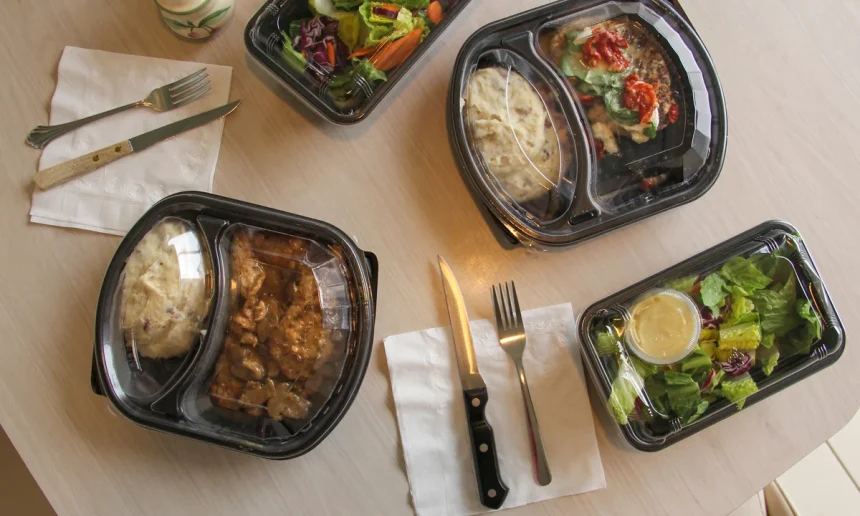
Research suggests that higher takeout food consumption may increase a person’s risk of cardiovascular disease, like heart disease.
In a new study, published in Food Science & Nutrition, researchers said eating takeout food too often can influence systemic inflammation that underlies much cardiovascular disease.
The study of over eight thousand people in the 2009 to 2018 U.S. National Health and Nutrition Examination Survey (NHANES) found that those who eat greater amounts of takeout food are likely to have various elevated risk factors for heart disease.
They were interviewed in their homes and also visited a mobile examination centre, where they recalled their food intake, received cardiometabolic health assessments, and had blood collected.
READ ALSO:23 Ships With Fuel, Food Items To Arrive Lagos Ports – NPA
Mammograms may predict heart disease risk in women — Study
The researchers found a correlation between the amount of takeout food a person consumes and their likelihood of developing chronic low-level inflammation, a key driver of cardiovascular pathology.
Deaths from cardiovascular disease and the consumption of takeout foods are both on the rise, and while that does not prove a causal relationship, the study explores whether there is a connection between the two.
The study tracked degrees of systemic inflammation according to the Dietary Inflammatory Index (DII), a scale that quantifies the risk of inflammation related to the intake of specific dietary substances.
READ ALSO:Food Security: 14,000 Smallholder Farmers To Benefit From N4bn Smart Agriculture Training In Bauchi
The three major takeaways from the analysis included that a higher level of takeout food consumption corresponded to an unfavourable cardiometabolic profile consisting of lower HDL, as well as higher triglycerides, fasting glucose, serum insulin, and insulin resistance.
Jayne Morgan, MD, cardiologist and Vice President of Medical Affairs in a reaction, who was not involved in the study, explained that “Takeout food raises the cardiovascular risk not because of one ingredient, but because of a predictable combination of nutrients, additives, and preparation methods that adversely affect blood pressure, lipids, insulin sensitivity, inflammation, and endothelial function.”
“This includes excess sodium that increases blood volume and blood vessel stiffness, and unhealthy fats, usually saturated fats or trans fats, that increase cholesterol level and atherosclerosis, a condition that can lead to heart attack and stroke.”
Michelle Routhenstein, Preventive Cardiology Dietitian at Entirely Nourished, also not involved in this study, declared, “It is also important to recognise that frequent takeout use often reflects broader lifestyle pressures such as demanding schedules, limited access to cooking resources, irregular meals, and disrupted sleep, all of which can quietly compound cardiovascular risk.”
News
How To Identify Fake Kiss Condoms In Circulation
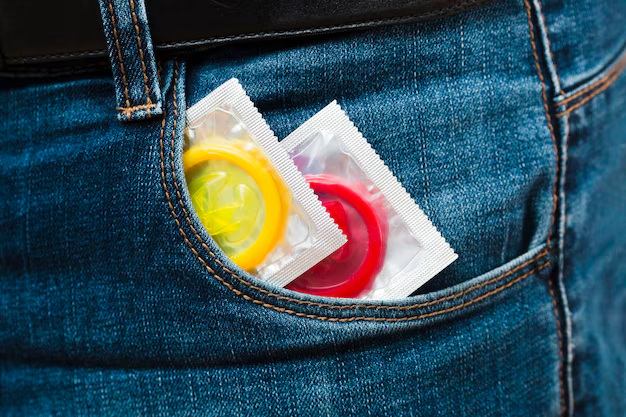
The National Agency for Food and Drug Administration and Control (NAFDAC) has recently warned Nigerians about the circulation of counterfeit Kiss brand condoms in major markets across the country.
Contents
Original DKT Kiss condoms
Fake Kiss condoms
In a public alert published on its website recently and referenced as Public Alert No. 042/2025, the agency said the warning followed information received from DKT International Nigeria, a non-governmental organisation involved in contraceptive social marketing and HIV/AIDS prevention.
NAFDAC stated, “The National Agency for Food and Drug Administration and Control is notifying the public about the sale and distribution of fake Kiss condoms in various Nigerian markets.
“The information was received from the MAH-DKT International Nigeria, a leading non-governmental organisation focused on contraceptive social marketing. Its mission is to provide Nigerians with affordable and safe options for family planning and HIV/AIDS prevention.
“The fake Kiss condoms have been reported to be found in Onitsha Market, Idumota Market, Trade Fair Market, and various markets in Kano, Abuja, Uyo, Gombe, Enugu, and others.”
READ ALSO:Married Man Denies Wife At Brazil Concert To Kiss Tems On Stage [VIDEO]
Kiss condom is a brand of male latex condoms designed to offer sexual protection, including the prevention of unwanted pregnancy and sexually transmitted infections such as HIV, gonorrhoea and syphilis.
To help consumers avoid counterfeit products, NAFDAC outlined key differences between original and fake Kiss condoms.
Original DKT Kiss condoms
The original product comes in a light red box pack with clear instructions printed on the lower part of the pack, including single-use warnings and storage and caution information. The box contains detailed medical device information, including MDSS GmbH, Germany, and a complete Nigerian address at Isolo Industrial Layout, Oshodi-Apapa Expressway.
The condom pack is light red, with the word “Kiss” closely written on six lines. The wallet outer pack is lighter red, carries the Oshodi-Apapa address, manufacturer details, and a clear product description beside the condom image. The hidden flap includes revision dates, medical device details, and caution information, while the wallet inner contains detailed instructions and eight bullet points under important notes.
READ ALSO:Lagos Names Mandy Kiss Anti-drug Abuse Ambassador
The original condom is large, oval-shaped, well-lubricated, and has a large teat end for semen collection.
Fake Kiss condoms
In contrast, fake Kiss condoms come in darker-coloured box packs with little or no additional information. Some boxes are plain white inside and lack condom images. The address is wrongly listed as 42, Montgomery Road, Yaba, Lagos, while the manufacturer’s address is incomplete or missing. Storage and caution information is absent.
The condom pack is darker, with “Kiss” loosely written on five lines and wide spacing. The condom strip is longer than the original. The wallet outer pack is also darker red, carries incorrect or missing addresses, lacks colour wave designs, and shows inconsistencies in barcode lines. Medical device and caution information are missing, and the hidden flap contains no details.
Inside the wallet, information is summarised with only six bullet points. The fake condom is thinner, round-shaped, less lubricated, and has a smaller teat end.
(TRIBUNE)
News
Lagos: Police Arrest 14 Suspected Traffic Robbers On Lekki-Epe Expressway
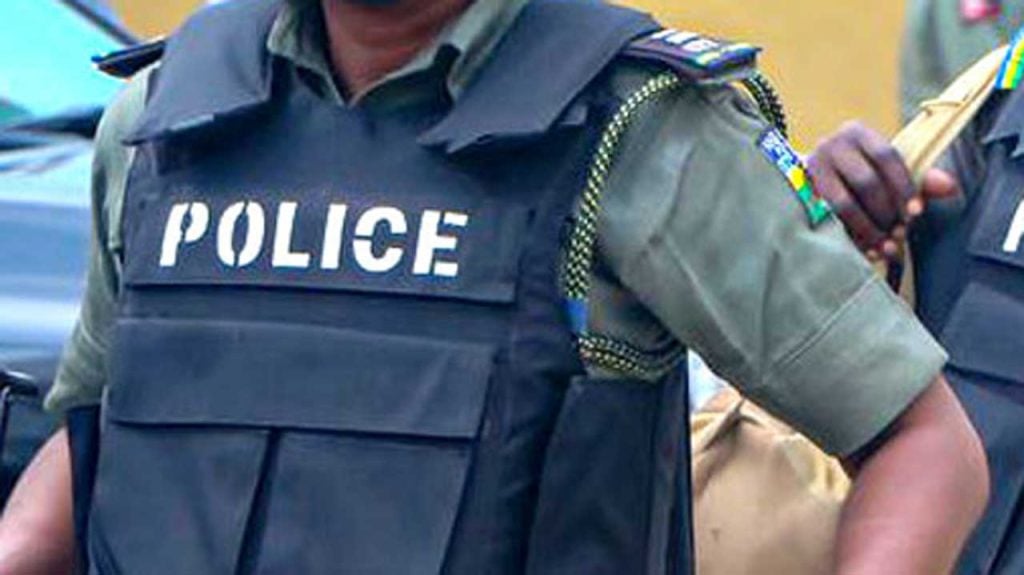
Fourteen persons suspected to be involved in traffic-related robbery have been arrested at various points along the Lekki-Epe Expressway in Lagos over the past two weeks.
The arrests were confirmed on Tuesday by the Lagos State Police Command spokesperson, SP Abimbola Adebisi, via a post on her official X handle, @AbimbolaShotayo.
According to her, operatives of the Command’s Tactical Squad based in Elemoro carried out the operations that led to the suspects’ apprehension.
READ ALSO:VIDEO: Chaos As Last-minute Shoppers Overwhelm Lagos Balogun Market
She explained that the arrests followed sustained patrols and intelligence-driven operations aimed at curbing criminal activities associated with traffic congestion and improving the safety of motorists and other road users along the busy corridor.
Adebisi noted that the development reflects the Command’s determination to strengthen security and uphold law and order on the Lekki-Epe axis, adding that the Tactical Squad has continued to proactively identify crime-prone areas and respond swiftly to threats posed by criminal elements.
She called on residents and commuters to support police efforts by providing timely and credible information that could assist in preventing and detecting crime.
READ ALSO:VIDEO: Chaos As Last-minute Shoppers Overwhelm Lagos Balogun Market
“Security is a shared responsibility. Members of the public are encouraged to stay alert and promptly report any suspicious movements or activities to the nearest police station,” she said.
The police spokesperson further reassured residents and road users of the Command’s commitment to maintaining aggressive patrols and security operations to protect lives and property in the area.
She reiterated the Command’s community policing message, “See Something, Say Something,” stressing the importance of cooperation between the police and the public in sustaining peace and security.

 Headline5 days ago
JUST IN: US Forces Bomb Terrorists Camps In Nigeria
- Headline5 days ago
US Dept Of War Shares Video Of Air Strikes In Nigeria
- News4 days ago
PHOTOS: SGF George Akume Weds Ooni’s Ex-Queen
- News3 days ago
Ex-Edo Gov Obaseki Reacts As His Cousin Is Beaten, Stripped
- News2 days ago
BREAKING: Anthony Joshua Involved In Road Accident
- News5 days ago
Shehu Sani Reacts To Trump’s Military Strikes In Nigeria
- News5 days ago
Trump’s Airstrikes: Halt Military Cooperation With US Immediately – Sheikh Gumi Tells Tinubu Govt
- Headline5 days ago
U.S. Lawmaker Reacts To Nigeria, U.S. Airstrikes
- Metro3 days ago
Obaseki Beaten, Stripped In Edo
- Politics2 days ago
Wike Speaks On Defecting To APC


