
News
OPINION: The ‘Fool’ Who Stopped Wike

Tunde Odesola
The bully in me met its match in my primary school classmate, Lukman Oluwuyi, on our way back home one afternoon. In the eyes of a schoolkid, St Paul Anglican School, Idi-Oro, Lagos, was a couple of giant two-storey buildings on an expansive compound which served as an assembly ground in the morning and a football field during break. That was in the 70s when any elder on the street could fetch a cane, flog a wayward child, and march the culprit home to the applause of the entire neighbourhood. In those days, an erring child preferred a quick, anonymous beating to the humiliation of being beaten and escorted home by a Good Samaritan stranger.
Caramel-complexioned and restless, Lukman was a wiry boy with wavy, matted hair that glistened. Were he white, he’d have passed for a brunette; I, in my childish rascality, thought him an Arab. Lukman was ‘my boy’ until one day when a tiff broke out between us. Time has blunted the exact cause of our disagreement, but I remember it was on Ojowere Street, near Alli Lane, Mushin – two streets I learnt have been swallowed by the Lagos railway projects of the Babajide Sanwo-Olu administration.
On the fateful day, Ojowere Street was a long stretch of clay, having just been graded, as my friend and I plodded along in the simmering heat. Clad in a green khaki shirt and shorts, I was heading home to Lawanson Crescent, while Lukman was going to their house off Kayode Street, before the Deity at Crossroads, Èsù Láàlú Onile Orita, decided to meddle in our affairs.
I was democratic in my bullying. “I’ll beat you, Lukman,” I warned. Lukman did not retort; he merely struck a Kung-fu pose, evidence of the Indian and Chinese films he had been watching lately. I was livid, “Is this not Lukman, my bo-i? Lukman!! Lukman, who I’m bigger and stronger than? Lukman, whom I would tell to shut up, and dared not say a word, now turning against me?” I lunged at him, throwing the combinations I had learnt watching the Great Muhammed Alli on TV. But Luku, clever and resilient, found a way below my blows, scooped me halfway up, and slammed the pot of my rump (ikokodi) hard on the new road.
That act of gross rebellion got me madder. I sprang up, chased and quickly caught up with him. Probably out of fear, or not wanting to rub salt in injury, Lukman seemed unwilling to fight, but I was determined to avenge the insult. I knew I was the tiger. Lukman was the lamb. So, still on Ojowere Street, I engaged him in another round of fighting. I was bigger and stronger, but in no time, I found myself under Lukman the second time. Each time he slammed me, he quickly got up, like someone afraid, picked hup is bag, and walked away as if nothing had happened.
In our time, to cement your victory over a vanquished, the victor fed his victim with soil. In my opinion, Lukman’s failure to do that meant he wasn’t victorious yet; ìjà sèsè bèrè ni’.
“Mi o ni gba, Lukman won’t get away with this sacrilege,” I sprang up and went after him. He struck his Kung-fu pose while I squared up in my boxer’s pose. Gbangan! I found myself on the ground again. I got up, chased and caught up with him for the fourth time, warning, “Lukman, ma na e, I will beat you.” That was the moment an old trader, who sold keys, padlocks, nails and hoes, etc, along the road, shouted, “Ma na e, ma na e, o ti la o mole ni emeta, o je kori sile, yio kan na o pa. Ole!” (You keep shouting ‘I’ll beat you’, yet he has floored you thrice; you’d better head home before he kills you, lazy boy!)
Quietly, I picked up my bag and headed homeward, seething and determined that Lukman would get his comeuppance before we departed that day. But, somehow, we didn’t get to fight again that day as Èsù Òdàrà had left Ojowere for another assignment. I can’t remember if we ever fought again in primary school, though we fought once in secondary school, when I thought he was caressing my sword with his bare palm. Honestly, I didn’t know how I came to think so highly of myself. Could it be the Mushin spirit at work?
MORE FROM THE AUTHOR:[OPINION] Wasiu Ayinde: The Shame Of A Nation (2)
After secondary school, we lost touch. Decades passed before I saw him again on October 1, 2016, during the reunion of the Old Students Association of Archbishop Aggey Memorial Secondary School, Mushin. I recounted his victory in primary school and the rematch in secondary school; he had forgotten both, but he laughed like a drunken sweepstake winner. Lukman travelled out to France in search of greener pastures in 2008 and came back to Nigeria for the first time in 2016, attending the reunion during the visit.
A few days after returning to France, Lukman died in a hospital. Shhhhhh! It’s not the wicked people of Aye Akamara that killed Luku. It was mosquitoes. My dear Elukumede died of malaria fever, which he took from Nigeria to France. Malaria is strange to France.
Faction is a literary style that combines fact and fiction. The Lukman story you just read is a fact. What you’re about to read next is an invented myth, a fiction.
Here it goes. Once upon a time, there lived in Eripa, Osun State, a farmer named Arije, whose compound was next to that of Abanikanda, a fisherman. One night, Abanikanda fell asleep while cooking his fish for the next day’s market. Soon, the cooking fire became a ball of billowy red throat of fury.
It was Abanikanda’s daughter who saw the inferno. She screamed, “Fire, fire, neighbours, fire, help!” Arije heard the shout and turned in his bed, curling up behind his wife, saying, “It’s their fire, let them quench it. I’m unavailable. Dem no dey see me.”
The fire raged and crackled. Arije snuggled. “Abanikanda cooks too much fish every day; he brought fire upon himself,” he said.
Leaping in tongues, the fire consumed the grass and roots used in making Abanikanda’s thatched roof, releasing into the air flares, which jumped on Arije’s roof, burning ferociously. Farmer Arije woke up to sorrow and tears, learning an eternal lesson.
The Lukman and Arije stories illustrate, on the surface, the shameful clash between the Minister of the Federal Capital Territory, Abuja, Nyesom Wike, and one misoriented lieutenant in the Nigerian Navy, A. M. Yerima, a Kaduna indigene, who led a group of misguided, gun-clutching soldiers to secure a parcel of land for a retired Chief of Naval Staff, Vice Admiral Awwal Zubairu Gambo, who left service at the age of 57, and plunged into a life of luxury, which afforded him a multi-billion naira block of several buildings in Abuja.
On a deeper level, the clash highlights the crushing power game in the shithole we call Nigeria, our own dear native land, where though tribes and tongues may differ, in gangsterism we stand. It exposes to the ridicule of the international community, an inefficient, ill-equipped, ragtag and oppressive military which always places self-interest and clan above the Constitution and national interest. It shows a country of power-drunk, corrupt and immoral leadership being hailed by an ignorant public, who, having eaten the Stockholm Syndrome apple, grew to love their oppressors both in the ruling party and the opposition.
For his antecedents, if you called Wike talkative, belligerent, a spoiler, mischievous and arrogant, you are 100% right. But in his clash against the colluding military leadership, Wike was dead right, 200%. The backlash against Wike, however, arose from the poetic justice that saw him steaming in the stew of the victimisation and impunity, which the government he represents serves to the citizenry daily. Wike thus represents the spider caught in its own web. I do not pity him.
MORE FROM THE AUTHOR:[OPINION] Wasiu Ayinde: Shame Of A Nation (1)
At all levels, Nigeria’s problem is systemic failure, a medical term for heart failure, needing urgent surgery, and as such, there’s a need to analyse the Wike-Military saga in proper perspective. We must shear the meat of this matter from the bones, abattoir-fashion.
Before this saga, I had never written a word, sentence or paragraph in favour of Wike. However, beyond the God-don-catch-Wike cacophony renting the press, airwaves and social media, I urge reasonable Nigerians to run a fine-tooth comb through the issue and dismount from the APC-Opposition fence.
To aid deconstruction and discernment, I hereby present two sequences to the story, illustrating reportage from traditional media and online posts.
Sequence 1
From a land-selling outfit, Gambo bought a sprawling swath of land in Abuja. He embarked on erecting many buildings on the land. Officials of the Federal Capital Territory Administration visited the site and alleged that there was no government approval for the land. The visiting officials told the builders to provide proof of ownership, government approval for the land and building approval plan. Thus, they told the owner to stop building.
Sequence 2
Gambo continued to build and refused to present any proof to FCTA. Instead, gun-wielding soldiers were drafted to the site. Officials of the FCTA who visited the site again were turned back, and they went to their office to report their findings. On the 11th day of the 11th month of 2025, at probably the 11th hour, Wike called the Chief of Defence Staff, General Christopher Musa, and the Chief of Naval Staff, Vice Admiral Idi Abass, before embarking on a visit to the site, telling them the situation at hand.
Before we get to what happened on the site when Wike visited, I’ll ask some questions. What stopped Gambo from presenting the papers of the land and building approval plan to FCTA when asked to do so? Is Gambo not answerable to the constituted authorities’ inquiry because he was a soldier? Is he above the law because he retired as a CNS? Who ordered the drafting of soldiers to the site, because as a retired officer, who no longer has even a troop under his command, Gambo cannot legally order armed soldiers to guard his private estate when Nigeria is suffering from a manpower shortage in the ongoing battle with terrorists and bandits. Why did Musa and Abass not order the Yerima-led soldiers on maiguard duty to allow Wike and FCTA officials to do their inspection job and leave in peace? Why has the band of retired generals come after Wike while they are silent on the infractions of Gambo? Did Gambo get the money to buy such an expanse of land from his meagre military earnings? The answers to most of the questions are impunity and official corruption.
I daresay that aside from the ceaseless arrogance and oppression of the Nigerian military against the masses, I saw in the Abuja saga the fangs of the oppressive Fulani hegemony in the military and politics of Nigeria unbare. I dare to say that no Yoruba or Igbo officer would dare do what Kano-born Gambo and his gambolling soldiers did in Abuja.
As they say, you can’t build something on nothing. Singling Wike’s action out for condemnation without seeing through the tribal guile of a cabal in the Nigerian military, whose mantra had long been ‘born to rule’, is to fall cheaply to their ancient deception of divide and rule.
As for Wike’s multitude of antagonists sitting on the opposition fence, I’ll urge caution and wish they ponder on the lessons behind the action of Farmer Arije from Eripa. I hope this multitude know that in countries with serious military, like the US, China, Germany, France Britain, etc, where soldiers know their responsibilities, officers and men are under the laws of the land, not above it – unlike Nigerian soldiers – burning down Fela’s house, throwing his mother through an upstairs window, killing hundreds of innocent civilians in Odi, harassing MKO Abiola and his wife in the 80s, killing Dele Giwa, Ken Saro-Wiwa, the list is endless. Our monstrous military must be tamed and made to bow to the Constitution.
MORE FROM THE AUTHOR:OPINION: Oluwo Holier Than The Godless Ilorin Imam (1)
A ‘repentant’ Boko Haram or secondary school dropout who joins the military today as a recruit believes only his military superiors are those he can obey, not any constituted authority. This was why one low-ranking idiot in army uniform, some years ago, while driving against traffic in Lagos, dared to confront Governor Sanwo-Olu, saying he was a soldier. In 2012, Governor Babatunde Fashola arrested a colonel and a staff sergeant for driving on the restricted BRT Lane in separate vehicles. If not a governor, in some cases, or the President, no law-enforcement official in Nigeria can stop an erring soldier, not the police, not the DSS. Nigerian soldiers fear no law; they only fear the military, Boko Haram, terrorists, IPOB and Trump. Nigeria must stop their impunity for us to have a country.
I think everyone is talking tongue-in-cheek on this matter, as it now appears, because of the fear of a military coup. In that case, it is not wrong to draw a conclusion that President Bola Tinubu truly needs the prayers of Nigerians.
Each time soldiers’ ‘asemáse’ impunity rears its head in Nigeria, I always remember former police spokesperson, Alozie Ogugbuaja, who, while in service, described the Nigerian military as a bunch of ‘peppersouping’ and ‘beering’ generals who only excel at coup planning and execution. God bless Ogugbuaja.
The excesses of the Nigerian military predate Ogugbuaja’s outburst. It goes even beyond independence and the post-Civil War era when Nigerians, showing courtesy, allowed soldiers to board public transport for free. Soon, soldiers began to deboard passengers from the front seats of public transportation buses, even as they wouldn’t pay a dime to vehicle conductors.
The Lukman Oluwuyi metaphor speaks to the Goliath which the Nigerian military represents, while insurgency, banditry, etc, have become David defeating Goliath. Yerima’s disrespect came before Wike’s because, by arrogantly being in the place he was not supposed to be, he disrespected the Constitution and the Oath he had sworn. Yerima condescendingly expressed shock that a policeman was talking to him, saying, “Look at a policeman talking to me”, as if he, Yerima, gave God the clay with which Adam and Eve were created.
LDRSHIP is the acronym for the seven core values of the U.S. Army. L means Loyalty to the Constitution. D stands for Duty of Fulfilling obligations by completing tasks and accomplishing assigned missions as part of a team. R means treating people with dignity and respect, recognising the value of every individual. S means Put the welfare of the nation, the Army, and your subordinates before your own personal interests. H means Live up to and embody all the Army values in every action. I means Integrity: Do what is right, both legally and morally, ensuring honesty and trustworthiness. P stands for Personal Courage: Face fear, danger, and adversity, whether physical or moral. How many Nigerian soldiers can tick all the boxes of the acronym? I don’t know. But I know how many who are good at peppersouping and beering.
In the US, civilians can walk into stores to buy military camouflage, which they proudly wear in support and solidarity with their soldiers. In Nigeria, soldiers will beat you to a pulp and lock you up if you wear any dress they consider ‘army green’ in colour. They will seize your car if its colour is too green. What an upside-down country!
I’ll leave you with the words of some three wise men. I’ll start with Dwight D. Eisenhower, the 34th President of the United States. He says, “Force can protect in emergency, but only justice, fairness, consideration, and cooperation can finally lead men to peace.” Are Nigerian big-for-number soldiers listening?
Albert Einstein is my second wise man. He says, “Force always attracts men of low morality.” I’ll expatiate by adding ‘unnecessary’ to Einstein’s force.
My third and final wise man is Rumi, a 13th-century Persian poet and Islamic scholar. He bequeaths these eternal words to humanity: “Raise your words, not your voice. It is rain that grows flowers, not thunder.” This advice is for Wike, who needs to improve his public attitude. He should have been gracious at the scene. But the attitude of Yerima was so nauseating, to say the least. I am a commissioned officer, my foot!
Email: tundeodes2003@yahoo.com
Facebook: @Tunde Odesola
X: @Tunde_Odesola



News
Children’s Day: Chaos At Ogbe Stadium As Dozens Faint
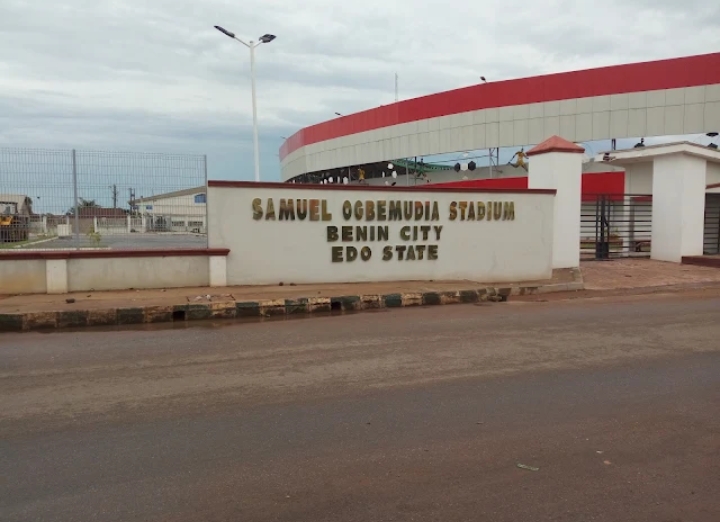
Chaos erupted on Wednesday during the Children’s Day celebration as dozens of students reportedly collapsed following a stampede triggered by the use of pepper spray.
The event,
organised by the Edo State Ministry of Education at the Samuel Ogbemudia Stadium was disrupted after some male students of Ihogbe College allegedly made uncompromising advances towards female students at the venue.
A parent who identified himself as Oboh Emmanuel said, “the behaviour of those uncultured students attracted the attention of bouncers stationed at the stadium as they rebuked the male students.”
Oboh said the affected students later regrouped and attacked the bouncers, leading to a confrontation within the crowded arena.
READ ALSO:Children’s Day: Edo Commits To Child Protection
It was gathered that in the ensuing confusion, the bouncers were reported to have deployed pepper spray in an area occupied by a large number of students.
Several students, particularly female students, reportedly fainted after inhaling the substance, while others sustained injuries after being stepped on during the ensuing melee.
The panic was said to have spread across the stadium as students, teachers and parents scampered for safety.
Many of the affected students were reportedly rushed to the Edo Specialist Hospital for medical attention.
READ ALSO: Egor LG Chair, Ogbemudia, Vice, Osawe Impeached
Reacting to the incident, Chief Press Secretary to Governor Monday Okpebholo, Dr Patrick Ebojele, said the security personnel that fired the tear gas had been detained.
He said all the students, except two, that were rushed to the hospital have been discharged.
Ebojele stated that doctors wanted to observe the students till tomorrow before allowing them to go home.
“The two students are not seriously injured. Doctors want to observe them overnight. Permanent Secretary, Ministry of Education is still at the hospital. The man who used pepper spray has been detained.
“The incident did not happen the way it is being exaggerated. All modalities were put in place to ensure the children enjoyed their day.”
News
Okpebholo Salutes Edo Muslims, Seeks Continued Support, Prayers
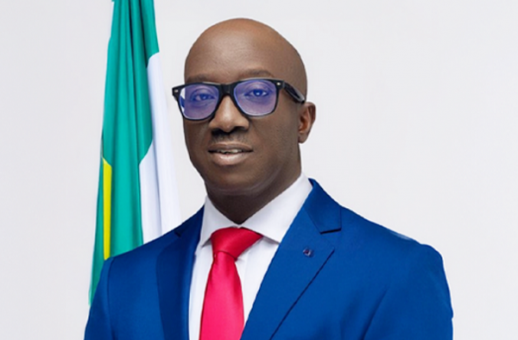
Governor Monday Okpebholo of Edo State has urged Muslims and all Nigerians to continue to pray for peace, unity and progress in the country even as they celebrate the annual Eid-al-Adha
The governor, who was represented by his deputy, Dennis Idahosa, stated this during the annual Eid-al-Adha celebration with Muslim faithfuls held at Government House in Benin City.
He reiterated his administration’s commitment to fairness, inclusivity and equal opportunities for all citizens irrespective of religion and tribe.
READ ALSO:ADC Penetrates Okpebholo’s District As Defections Strengthen Party in Edo Central
According to him, the present administration remains determined to building a government that reflects the diversity of Edo State, noting that competent and qualified Muslims have continued to play vital roles in his government because of their capacity, integrity and commitment to service.
“As a government, we remain committed to fairness, inclusivity and equal opportunity for every Edo citizen, irrespective of religion, ethnicity or political affiliation. This is why quality and competent Muslims are serving in key positions in our administration.”
Okpebholo appreciated the Muslim community in Edo State for their unwavering support and continuous prayers for his administration, noting that such prayers and support have contributed immensely to the peace and steady development being witnessed across the state.
READ ALSO:Okpebholo Felicitates Muslims On Eid-el-Fitr Celebration
He then called on all Nigerians to use the occasion of Eid-al-Adha to pray for the administration of President Bola Ahmed Tinubu, stressing that the country needs collective prayers, unity and cooperation to overcome its present economic and security challenges.
“I urge all Muslims and indeed all Nigerians to use this occasion to pray for our dear nation and for the administration of President Bola Ahmed Tinubu. Nigeria needs our collective prayers, unity and support as we strive to overcome our challenges and build a more prosperous future for all.”
In his remarks, the Chief Imam of Edo State, Abdulfatai Enabulele, applauded the governor for what he described as remarkable developmental strides recorded in less than two years in office.
The cleric commended the administration for ongoing infrastructural development and efforts geared towards improving governance in the state, but appealed to the government to revisit and complete some abandoned projects inherited from the previous administration for the benefit of the people.
News
Children’s Day: Edo Commits To Child Protection
The Edo State Government has reaffirmed its commitment to protecting the rights of children, promoting quality education, and strengthening sports development across the state.
This assurance was given by the governor of Edo State, Monday Okpebholo, during the 2026 Children’s Day Celebration and Governor’s Cup Finale held on Wednesday at the Samuel Ogbemudia Stadium, Benin City.
Addressing pupils, students and teachers,
the governor described children as the pride of Edo State and the future of the nation.
The governor, represented by his deputy, Dennis Idahosa,
noted that the annual celebration provides an opportunity to honour their dreams, talents, and limitless potential.
READ ALSO:Eid-el-Kabir: Edo Deputy Gov Solicits prayers For Okpebholo
Speaking on this year’s Children’s Day theme, “Choose Kindness, Reject Bullying,” the governor said the message was timely and significant, as it emphasizes the need to create safe, supportive, and inclusive environments for children both in schools and communities.
He stated that bullying in all forms — physical, verbal, emotional, or online — has no place in society, adding that the Edo State Government remains fully committed to protecting the rights and dignity of every child.
According to him, the administration will continue to strengthen policies and programmes that promote child protection, discipline, mutual respect, and positive learning environments across schools in the State.
The governor urged children to embrace kindness, compassion, teamwork, and respect for one another, stressing that true strength lies not in intimidation but in empathy, good character, and mutual understanding.

 Metro5 days ago
My Husband Abandoned Me On Our Wedding Night To Attend Political Meeting, I Want Our Marriage Dissolved
- Headline4 days ago
Woman Passes Out After Receiving 100 Strokes Of Cane
- Headline4 days ago
JUST IN: White House Locked Down Briefly As Gunman Opens Fire At Security Checkpoint
- Politics3 days ago
Two Masked Men Gun Down Politician In His Rivers State Hotel
- Politics5 days ago
Warri Ijaw Hail INEC Delineation Report, Call For Additional Electoral Wards, Others
- News3 days ago
More Pain For Nigerians As Cooking Gas Price Increases Nationwide
- News5 days ago
Alleged Terrorism: Court Rejects Defendant’s Bid To Travel Abroad
- Metro5 days ago
My Wife Stop Cooking My Food, Beats Me Black And Blue All the Time, Man Tells Court
- News3 days ago
FG Declares Two Days Public Holiday For Eid-el Kabir Celebration
- Politics5 days ago
What I’ll Do As President Of Nigeria — Amaechi


