
News
OPINION: Ganduje And China’s Execution Noose
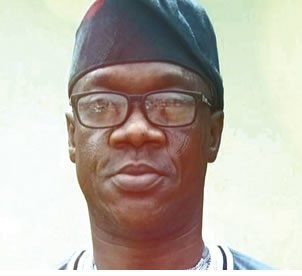
By Suyi Ayodele
“I have not knelt since China’s liberation.” Those were the last words she spoke before the executioner put a shot in the back of her head. She refused to kneel down at her execution. She died standing!
Yan Jianhong was a Deputy Secretary of the Guizhou Provincial Planning Commission, People’s Republic of China. She was also a former member of the Standing Committee of the Guizhou Provincial Political Consultative Conference, and former Chairman, Guizhou International Trust and Investment Corporation. Her husband, Liu Zhengwei was Communist Party Secretary of Guizhou Province. She took undue advantage of those positions. She was executed on January 16, 1995, for corruption, her status did not count. She was not alone.
On September 14, 2000, China executed Cheng Kejie. He was the Chairman of the People’s Government of the Guangxi Zhuang Autonomous Region and Vice-Chairman of the Standing Committee of the National People’s Congress. China’s Supreme Court approved his death sentence on September 7, 2000, and he was executed a week later!
Cheng was executed for accepting bribes and was also accused of fraudulently procuring 7,000 tonnes of sugar from Guiyang Sugar Factory at a reduced price for resale, thereby generating a significant profit margin. Such a practice, the authority reasoned, was capable of ruining the nation’s economy.
Earlier on March 8, 2000, the Chinese Government executed Hu Changqinga, a prominent Chinese politician who served as vice governor of Jiangxi. He was found guilty of bribery and corruption and was executed by firing squad!
The same fate befell Lai Xiaomin, who served as Chinese Communist Party Committee Secretary and Chairman of the Board of China Huarong Asset Management from September 2012 to April 2018. He was executed on January 29, 2021, for bribery, embezzlement, and bigamy. His private assets were also seized and his family left with nothing!
The former vice governor of Anhuli, Wang Huaizhong, was on February 12, 2004, executed by firing squad, also for corruption. The same thing happened to Wang Shouxin on January 8, 1980 when she was executed for the “biggest scandal of the People’s Republic of China prior to 1979.” She was said to have embezzled “at least 536,000 yuan of state funds”.
There were other executions for corrupt practices such as Wen Qiang, a judicial officer whose life was on July 7, 2010, snuffed out for taking more than 12 million yuan ($1.76 m) in bribes. Zheng Xiaoyu, Director, State Food and Drug Administration, who was executed on July 10, 2007, for “corruption and allowing possibly tainted products in mainland China.”
MORE FROM THE AUTHOR: OPINION: The Ibàs Of Rivers State
China’s largest corruption case involved Li Jianping, a former official in the Inner Mongolia Autonomous Region. He was said to have been involved in fraud running into $421 million (over three billion yuan). The 64-year-old was executed in August 2024.
I have taken the time to list the above cases in China since the present administration is likely to copy the one-party system operational in China. Unlike how we have messed up the presidential system of government we copied from America in 1979, Nigerians owe it a duty to ensure that as the nation slides, gradually, to a one-party State, a la China, we should also copy those things that make China great.
In China, it is a capital offence for politicians or government officials to be caught on camera stuffing dollars in their suits pocket. Such persons don’t live to spend the dollars. In multi-party Nigeria, such people get promoted!
Abdullahi Umar Ganduje, the immediate past governor of Kano State and current National Chairman of the ruling All Progressives Alliance (APC), loves China and its development. In contrast, given the examples above, China hates characters in Ganduje’s mould.
That Ganduje loves China for its development is good enough. It is equally noble that our leaders love the developmental strides they see in the sane nations of the world. But unfortunately, as much as Ganduje loves China, the countryhates the Gandujes of this world because it knows that people like Ganduje would hamper, hinder and retard its development.
China is not just a developed country; it is a nation that has converted its huge population to greater advantages for the Chinese people. Every rational mind and leader should be proud of a nation like China. Nigeria was also once on the path of greatness like China before wasters took over the reins of leadership, and the locusts we have as leaders ate up our vegetation!
China, contrary to Ganduje’s warped reasoning, is not developed because it practices a one-party system. One of the major factors, the most prominent, I say without prevarication, that made China what it is today, is that the country gives the worst treatment to its corrupt leaders.
Ganduje is happy that members of the opposition political parties are trooping daily to the ruling APC. The latest was the defection of the three senators from Kebbi State (Adamu Aliero (Kebbi Central, Yahaya Abdullahi, Kebbi North and Garba Maidoki Kebbi South), who all abandoned their Peoples Democratic Party (PDP) for the APC.
MORE FROM THE AUTHOR: OPINION: Hakeem Baba-Ahmed, The North And Our Votes
The APC National Chairman took the trio to the Aso Rock Villa on Friday to see President Bola Ahmed Tinubu like trophies. He was accosted by State House correspondents who asked him about his feeling concerning the shift towards a one-party State in Nigeria.
Ganduje, rightly though, noted that nobody should quarrel with the fact that politicians were moving in droves to the APC. He assured that leaders who worried “about a one-party State have no need to fear.”
Then he posited: “A one-party State is not by force; it is by negotiation. It is by other political parties seeing the effect of the positive governance of our party. If they decide to come to our party willingly, I think there is nothing wrong with that.”
To further allay the fear, the Kano politician drew a parallel from China’s one-party system, saying, “Today, China is one of the strongest countries in the world and is a one-party system. We are not saying we are working for a one-party system, but if this is the wish of Nigerians, we cannot quarrel with that.” He went further to slam the current multi-party system Nigeria runs philosophising, “You know they say too many cooks spoil the soup; too many political parties spoil governance.”
There are some fundamental issues in Ganduje’s submissions. One, the APC National Chairman lied when he tried to project that those moving over to the APC were doing so because they were “seeing the effect of the positive governance of our party.” We all know that nothing can be farther from the truth than this assertion. Except Ganduje lives in another Nigeria than the one we have; every rational mind knows that the APC-led government since 2015 has led Nigeria to the bottomless pit of poverty and despair. I cannot see anything enviable that should attract this level of bandwagon folly going on in our political space!
Again, the attempt by Ganduje to condemn the multi-party system is equally an unfair judgement on that system by the very people who made nonsense of the system. If, for instance, the PDP had behaved the way the Ganduje APC is behaving, there would not have been a party called APC today! It is people like Ganduje and the intolerant president like his principal that make the multi-party system to look like it is a failed system.
That Ganduje also made the attempt to hoodwink us to believe that his party and government were not forcing people to join the APC goes to confirm the hopelessness of our situation in the hands of these guys whose penchant for the tall tale is legendary! The most doltish of us knows that there is nothing ‘voluntary’ in the gale of defections we are witnessing.
It is also fallacious for Ganduje to think that China is developed because it practices a one-party system! We need to impress on Ganduje that a nation that hates corruption is bound to develop. China abhors corruption and executes corrupt leaders. Anyone who shows any sign that could hinder China’s paths to greatness does not live to tell the story. Evidence of that attitude abounds. That is what makes China great. That is what can make Nigeria to be great again, if we all desire greatness.
MORE FROM THE AUTHOR:OPINION: Adenuga, Politicians And Lessons In Loyalty
It is also perilous for Ganduje to think Nigeria becoming a one-party State will have no consequences. For him to believe that the heavens will not fall if Nigeria slides to a one-party State as the APC is wont to have it, tells more about the shallowness of his discernment!
So, justifying the intended perfidy of a one-party State, Ganduje drew an analogy from China. Can we ask the former Kano State governor, who was once caught on camera stuffing dollar bills into his babariga, what would have been his fate if he were Chinese? If Nigeria were to be China, what would have happened to Ganduje and his acolytes in the face of the allegations of corruption the Kano State Government brought against them after he left office?
Honestly, a one-party State like China would not have been a bad idea here if only we could copy China wholesale by doing to people like Ganduje what China does to its citizens who are caught with their hands in the nation’s cookie jar. The elders of my place say that when one prays to be as rich as the man with a big mansion, the one praying should also be prepared to go the same route the owner of the mansion passed through (Òòsa òkè jé kí ndà bí onílé yí gbúdò se òhun tí onílé se). Is Ganduje ready to be given the Chinese treatment for corrupt leaders? Is his neck thick enough for the Chinese hangman’s noose?
This is what Ganduje should consider before drawing a parallel between Nigeria and the one-party State of China. He should have mentioned that China has no room for the type of leaders we have in Nigeria. That if it were to be China, there would have been no way President Tinubu would be occupying Aso rock Villa now. That 99.9 percent of our political leaders would have either been in jail or serving as manure in their shallow graves having been executed by the State.
How do we reconcile the fact that the man once adjudged “the most corrupt governor in Nigeria” is the current President who is also desperately chasing his second term? How do we come to terms with the fact that the number three man in the hierarchy, Senate President Godswill Akpabio, did not contest the primary of his party where the senatorial candidate was nominated, but today, he ‘won’ an election to the senate where he emerged the Senate President because the Supreme Court said so?
Would China have closed its eyes to the fact that while the returning officer for the 2019 senatorial election in Akpabio’s Akwa Ibom North-West Senatorial District, Professor Peter Ogban, is in jail for announcing fake results in two local government areas – Oruk Anam and Etim Ekpo – in Akpabio’s favour, the sole beneficiary of the electoral heist is busy “sending prayers to the emails” of other senators today?
Go to Imo State. Would China allow a man who came fourth in an election to be the governor of any of its provinces? Can any minister in China ride a Rolls Royce to the office without the State interrogating his sources of income? Or can the son of President Xi Jinping embark on ‘state visits’ to any of the provinces in China with crass impunity as we have here in Nigeria?
The axiom: “a nation gets the type of leaders it deserves”, has proven to be true of our calamity as a nation. The possibility of a one-party State before 2027 is something that should not scare us again. If it happens, we SHALL all live to savour the sour taste! So, for the Gandujes of this era, I say, ride on!



News
Edo Targets 2.2 Million Children For Measles, Rubella Vaccination

The Edo State Government says it is targeting about 2.2 million children aged between 0 and 14 years for measles and rubella vaccination across the state.
The Director of Disease Control and Immunization at the Edo State Primary Health Care Development Agency, Dr. Eseigbe Efeomon, who disclosed this during stakeholders’ sensitisation meeting in Benin City, said this would be done in collaboration with development partners.
Efeomon, while noting that the vaccination exercise scheduled to hold simultaneously from January 20 to January 30, 2026, across the 18 local government areas of Edo State at designated health facilities and temporary vaccination posts, said the campaign aims to contribute significantly to the reduction of measles and rubella in Nigeria.
He explained that achieving this target requires increased population immunity through sustained vaccination.
READ ALSO:Man Arrested In Edo For Alleged Abduction Of 4-year-old
Dr. Efeomon stressed that only qualified and certified health workers would be recruited as vaccinators because the vaccines are injectable.
According to him, the vaccination strategy would involve fixed posts and temporary fixed posts, and vaccination cards would be issued to all vaccinated children as proof, which parents and caregivers are advised to keep for future reference.
He added that vaccination teams would visit schools, churches, mosques, markets, motor parks, internally displaced persons’ camps and other public places, while children who receive the vaccine would be finger-marked to prevent double vaccination.
He reiterated that the overarching goal of the campaign is to drastically reduce rubella incidence nationwide and protect children from preventable diseases through effective immunisation coverage.
READ ALSO:Edo widow-lawyer Diabolically Blinded Over Contract Seeks Okpebholo’s Intervention
Also speaking, the World Health Organization Local Government Facilitator, Mr. Ajaero Paul, described measles and rubella as major causes of death and congenital abnormalities among children globally.
He said both diseases are preventable through the measles-rubella vaccine, which he described as safe and effective,
He added that sustained advocacy is critical to reducing child mortality and lifelong disabilities.
On his part, UNICEF Social and Behavioural Change Health Officer, Yakubu Suleiman, emphasised that the measles-rubella vaccine is safe and effective for all children aged nine months to 14 years.
READ ALSO:Edo: Suspected Kidnappers Kill Victim, Hold On To Elder Brother
He stated that the government has fully paid for the vaccines, making them available at no cost to all eligible children in government health facilities across the state.
Suleiman explained that vaccination not only protects individual children but also safeguards communities from deadly vaccine-preventable diseases such as measles and rubella.
He added that even children who had previously received the measles vaccine should still be given the measles-rubella vaccine and appealed to schools and other key stakeholders to support the campaign to ensure that no child is left behind.
News
Togo, Niger, Benin Owe Nigeria Over $17.8m For Supplied Electricity – NERC

Nigeria’s electricity regulator has disclosed that three neighbouring countries, Togo, Niger and Benin, are indebted to Nigeria to the tune of $17.8 million, equivalent to more than N25 billion at prevailing exchange rates, for power supplied under bilateral electricity agreements.
The Nigerian Electricity Regulatory Commission, NERC, made this known in its Third Quarter 2025 report, which reviewed market performance within the Nigerian Electricity Supply Industry, NESI.
According to the report, the international customers were billed a total of $18.69 million by the Market Operator for electricity supplied during the third quarter of 2025. However, only $7.125 million was paid, leaving an unpaid balance of $11.56 million for the period under review.
NERC also revealed that the same international offtakers had outstanding legacy debts amounting to $14.7 million from previous quarters. Of this amount, $7.84 million was settled, leaving a residual balance of $6.23 million.
READ ALSO:Expert Identify Foods That Increase Hypertension Medication’s Effectiveness
When combined with the Q3 2025 shortfall, the total outstanding debt stood at $17.8 million, which translates to about N25.36 billion at an exchange rate of N1,425 to one US dollar.
The regulator identified the international electricity customers as Compagnie Énergie Électrique du Togo, Société Béninoise d’Énergie Électrique of Benin Republic, and Société Nigérienne d’Électricité of Niger Republic.
NERC stated that the three utilities collectively paid just $7.125 million against the $18.69 million invoice issued for electricity supplied in the third quarter, resulting in a remittance performance of 38.09 per cent.
This meant that more than half of the billed amount remained unpaid at the close of the quarter.
READ ALSO:Electricity Workers Threatens Shutdown Over Staff Brutality
The commission explained that the electricity exported to the three countries was generated by grid-connected Nigerian generation companies and delivered through cross-border bilateral power supply arrangements.
By contrast, NERC reported a stronger payment performance among domestic bilateral customers. According to the report, local customers paid N3.19 billion out of the N3.64 billion invoiced for the same quarter, representing a remittance rate of 87.61 per cent.
The regulator further noted that some bilateral customers, both international and domestic, made additional payments to offset outstanding invoices from earlier quarters.
READ ALSO:Reps Ask NERC, DISCOs To Reverse Band A Tariff Hike
Specifically, the Market Operator received $7.84 million from international customers and N1.3 billion from domestic customers in settlement of previous obligations.
Beyond bilateral transactions, NERC disclosed that Nigeria’s 11 electricity distribution companies remitted a total of N381.29 billion to the Nigerian Bulk Electricity Trading Plc and the Market Operator in the third quarter of 2025. This was out of a cumulative invoice of N400.48 billion, translating to an overall remittance performance of 95.21 per cent.
The commission said the figures were derived from reconciled market settlement data submitted as of December 18, 2025, as part of its statutory evaluation of the commercial health and performance of the electricity market.
News
Expert Identify Foods That Increase Hypertension Medication’s Effectiveness

Hypertension remains one of the leading causes of premature death worldwide, contributing significantly to heart disease, stroke, and kidney failure. Despite the availability of effective antihypertensive drugs, long-term control of high blood pressure is often challenging because of drug resistance, side effects, and poor adherence.
This has fueled growing scientific interest in complementary strategies that can enhance drug efficacy while minimising toxicity. One promising approach is the combination of conventional antihypertensive medications with herbs and spices in many kitchens.
Recent evidence suggests that augmenting modern antihypertensive drugs with foods rich in p-coumaric acid, a naturally occurring phenolic acid, may offer a novel and effective strategy for blood pressure control.
Phenolic compounds, commonly found in fruits, vegetables, whole grains, and legumes, are known for their antioxidant, anti-inflammatory, and blood vessel–protective properties.
READ ALSO:Russia, China Afraid Of US Under My Administration — Trump
In a study, researchers investigated the combined effects of lisinopril, a widely used antihypertensive drugs and p-coumaric acid on hypertension.
They reported in the Comparative Clinical Pathology that p-coumaric acid enhance the antihypertensive action of lisinopril, potentially allowing for improved blood pressure control without increasing drug dosage.
The study used an established animal model in which hypertension was induced in rats through oral administration of L-NAME, a compound known to suppress nitric oxide production and raise blood pressure.
Following the induction of hypertension, the animals were treated for 14 days with p-coumaric acid (at two different doses), lisinopril alone, or a combination of both.
READ ALSO:Man Suffers Hypertension As Daughter, Grand-daughter Disappear For 10 Years
Untreated hypertensive rats showed significantly elevated activities of key enzymes linked to high blood pressure such as ACE, arginase, acetylcholinesterase, and phosphodiesterase-5 along with increased lipid peroxidation, an indicator of oxidative stress. At the same time, levels of nitric oxide, a critical molecule for blood vessel relaxation, were markedly reduced.
By contrast, rats treated with a combination of lisinopril and p-coumaric acid experienced notable improvements. Blood pressure was better controlled; harmful enzyme activities were reduced, oxidative stress declined, and nitric oxide levels increased. These improvements were mirrored in the tissues the heart compared with untreated hypertensive animals.
They said that the findings suggest that p-coumaric acid may enhance the antihypertensive action of lisinopril, potentially allowing for improved blood pressure control without increasing drug dosage.
This drug–food interaction model is particularly important in the circumstance of long-term hypertension management. Many patients rely on lifelong medication, and strategies that can improve treatment outcomes while reducing side effects are highly desirable.
READ ALSO:Delta Unveils Free Hypertension, Diabetes Screening
The study also reinforces the growing recognition that diet is not merely supportive but can be biologically active in disease control.
The use of medicinal plants and plant-based therapies in the management of hypertension is deeply rooted in traditional medicine across many cultures. While such practices have often existed outside conventional healthcare systems, modern scientific research is now providing evidence-based explanations for their effectiveness.
While these findings are based on animal studies and cannot yet be directly translated into clinical recommendations for humans, they open the door to future research on dietary strategies that can safely complement antihypertensive drugs.
READ ALSO:Why West African Troops Overturned Benin’s Coup But Watched Others Pass
Further clinical studies are needed to determine appropriate dosages, safety profiles, and real-world effectiveness.
In the fight against hypertension, the future may lie not only in new drugs, but also in smarter combinations, where medicine and nutrition work together to deliver better, safer outcomes for patients.
Such nutrition to help maintain healthy blood pressure includes garlic, potatoes, walnuts,tomato and tomato products, legumes and citrus fruits (grapefruits and oranges).
(TRIBUNE)

 News4 days ago
What I Saw After A Lady Undressed Herself — Pastor Adeboye
- Headline4 days ago
PROPHECY: Primate Ayodele Reveals Trump’s Plot Against Tinubu
- Metro4 days ago
Armed Robbers Shot PoS Operator To Death In Edo
- Business3 days ago
NNPCL Reduces Fuel Price Again
- Metro3 days ago
AAU Disowns Students Over Protest
- Metro4 days ago
Joint Task Force Kills 23 Bandits Fleeing Kano After Attacks
- Politics4 days ago
2027: Rivers APC Pledges To Follow Wike’s Instructions
- Metro3 days ago
Edo: Suspected Kidnappers Kill Victim, Hold On To Elder Brother
- Metro3 days ago
Nine Soldiers Feared Dead In Borno IED Explosion
- Entertainment4 days ago
Anthony Joshua Returns To UK In Private Jet


