
News
OPINION: Government’s One-grain Palliative
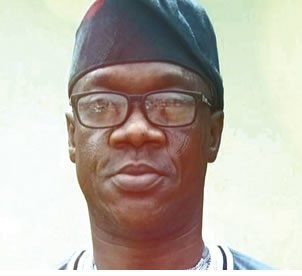
By Suyi Ayodele
The food you give to a slave is not to make him grow fat, but for him not to die (Oñje tí a ñfún erú, ki i se ki o baa sanra, ki o ma baa kú ni)! That was the closing remarks of Òsúntúndé, a character in the Yoruba epic drama, “Efunsetan Aniwura”. Òsúntúndé, one of the male slaves of Efunsetan Aniwura, the Iyalode of Ibadan, gives this line while discussing the parlous conditions of the slaves in the household of Efunsetan. Most of our leaders are just like Efunsetan Aniwura, or even worse than the legendary Iyalode of Ibadan, whose reign of terror and wickedness was terminated by Obadoke Latoosa Oyatoosa, simply, Aare Latoosa (c. 1820-1885). Latoosa, as the Aare Ona Kakanfo of Oyo Empire, had to rise to the occasion after Efunsetan, against all pleas, executed her female slave, Awero, who was put in the family way by one of the male slaves, Itawuyi. An attempt by Itawuyi to save his lover, Awero, also resulted in his death. That incident was the last Ibadan would take from a female overlord. Latoosa moved in and Iyalode was captured and made to sweep the Aare’s compound. Efunsetan died a sad woman on June 30, 1874. The entire Efunsetan’s reign of terror is recorded in the drama, “Efunsetan Aniwura”, written by the most prolific raconteur and literary icon, the late Professor Akinwumi Isola (December 24, 1939-February 17, 2018). Many have argued that Efunsetan was not as horrible as she is portrayed in the drama. Not a few believe till date that Iyalode Efunsetan was simply a victim of the “dominance of the phallus over the clitoris”. Interestingly, the playwright, Akinwumi, also agreed that if he had had access to the information he had later in life as against those available to him when he wrote the drama as an undergraduate (1968), he probably would have given a less notorious character portrait of the Ibadan strong woman. The arguments notwithstanding, the life of Iyalode Efunsetan Aniwura as depicted in the play, especially the miserable meals she served her slaves, mirrors how our present ruiners treat Nigerians, their conquered serfs.
There is a book “they did not want us to read.” That was how my late cousin and mentor, Ayegbusi Rufus Akanni (ARA), put it when he presented a copy to me as a gift, in 1989. The title is: “Just Before Dawn” (JBD), and the author is the inimitable writer, Kole Omotoso (Bankole Ajibabi Omotoso, April 21, 1943-July 19, 2023), who in his later domain, South Africa, was known as “Yebo Gogo Man”. JBD was not just a gift. I had instructions to read every episode of the narratives in the book and give a summary of each event according to my understanding. It was an order I carried out ‘compulsorily by force’! Why my late cousin decided to give me the book and asked for the tasking summaries, I cannot say. Needless, however, to say that I treasured the book, lent it out to so many people and had to rebind it when it was getting overused. Fortunately for me, I got a ‘new’ copy (obviously a pirated version) from a popular bookseller a few months ago. Omotoso’s JBD is the political Bible of Nigeria. In it, readers are given the ‘expo’ of how our rulers see the masses. On page 199, while introducing the politics of the Ibadan maverick political icon, the late Chief Adegoke Adelabu, aka, Penkelemes, Omotoso says “Adegoke Adelabu lived for the people.” Penkelemes gave a unique definition of the poor of the poor in Nigeria. He used the euphemism, “masses”, for them. To the man and his bombastic grammar, the masses “are known by their wants, distinguished by their disabilities and conspicuous by their incapacities.” Perfect definition! The First Republic politician knew that the poor must be saved from total annihilation by the serpentine rulers, and he had his own means of achieving that. Again, here is what Penkelemes said: “An overdose of doctrinaire socialism without a judicious admixture of progressive conservatism, of orthodox liberalism and of that centre-stabilizing process, leads inevitably to communism, to totalitarianism, to regimentation and to fanatical, ideological and doctrinal intolerance of opposition.” My Goodness! Forget the magniloquence and orotundity (I don’t want to copy the old lexicographer) of the dictions. No one can deny that for the Nigerian masses of today to be delivered from the knees of their leaders on their necks; they need exactly what Adelabu saw over 50 years ago! The poor Nigerians are on the crag. Their situation is iffy, a la Penkelemes.
FROM THE AUTHOR: OPINION: Salute To Melchisedec Of Nigeria
Experts in the study of Standard Nigerian English (SNE) such as Ayo Bamgbose, Ayo Banjo, Festus Adesanoye, Andrew Thomas, David Jowitt, and many more, are united in their assertion that one of the basic features of SNE at the Lexico-Semantic level is “Semantic Shift or Extension”. This sociolinguistic term simply means that the semantic range (meanings) of a word can be restricted or narrowed and shifted or extended depending on the environment it is used (Contextualisation). When this is done, the hitherto original meaning of that word in its native First Language (L1) usage, assumes a different meaning in the Second Language (L2) situation. If there is anything that the locusts we have as leaders have contributed to the advancement of knowledge in the present political dispensation, it is the new meanings they have given to some lexicons that crept into the codification of SNE. When a man without teeth is given an Akara to eat, the tendency that it will turn to bone is high (Akara de enu akayin di eegun). A word that hitherto has simple and uncomplicated meaning, has assumed a different semantic interpretation in contemporary Nigeria. I am talking of the word “palliative”, which became even more popular during the COVID-19 pandemic, but which gained prominence after the May 29, 2023, misadventure of President Bola Ahmed (Adekunle) Tinubu in announcing the removal of fuel subsidy without any plan to address the multiplier effects on the lives of the poor people. Desperate for a solution to the devil-may-care announcement, the government introduced what it called “palliative” to cushion the effects of the untold hardship Nigerians are subjected to. The first of such attempts was the now abandoned N8,000 per “vulnerable household” by the government. Following the outcry that greeted that venture, which not a few Nigerians regarded as a veiled scam, the government changed gear and announced that it would be giving each state the sum of N5,000,000, 000 to buy “palliatives” for the “vulnerable households” in the states across the federation. For a proper understanding of what those in government are doing to us, let us impose on ourselves here, a simple exercise in semantics to have a full grasp of the most abused word, “palliative”.
Shorter Oxford Dictionary (Sixth Edition) describes “palliative”, among other definitions, as: “A thing which gives superficial or temporary relief…” (Page 2079). On its part, Webster’s Universal Dictionary & Thesaurus defines it as: “Alleviating without curing” (Page 348). The International Webster’s Comprehensive of The English Language (Deluxe Encyclopedic Edition) describes it as “That which serves to palliate”, with the definition of “palliate” given as: “To relieve the symptom or effects of without curing…” (Page 909). Of all the definitions, the one I consider best as it relates to the current shenanigan of the government at pulling the wool over our faces is the definition by Cambridge Dictionary, which says “palliative” is “making a problem seem less serious but not solving the problem or making it disappear”. This is exactly the drama of the absurd Nigerians were made to behold on Saturday, October 14, 2023, when the Governor Dapo Abiodun government in Ogun State sent a 10kg bag of rice to the Shokeye Community Development Area (CDA), to be shared to the “vulnerable” households in the CDA. An unnamed man, who apparently is one of the leaders of the CDA, decided to call out the governor in a video, which has since gone viral. The man, who is the chief narrator in the video, displayed the branded 10kg bag of rice and asked how he was expected to share the rice to the “147 households in Shokeye Estate.” The livid resident noted: “In this estate, we have 147 houses with families and tenants. I’m confused now; I don’t know how to share this with 147 households in Shokeye Estate. I’m talking to Dapo Abiodun now; if you people know that you cannot do something, then don’t do it. We are not hungry; we are not beggars. So, we don’t need your rice as palliative. This is not even up to one-eighth of a bag of rice. We don’t need this rice; if you want to give us palliatives, don’t insult us. This is an insult. Shokeye Estate refuses to be insulted.” He advised the governor to return the rice to President Tinubu; that they should go and give it to their children.
FROM THE AUTHOR: OPINION: Nigeria At 63 And Missing Brains
Of course, sending a 10 kg bag of rice to an estate with 147 houses is nothing but ‘insult upon injury’ (what does that mean?)! Expectedly, the government came up with its predictable doltish explanation, the best of risible excuses anyone can offer! The usual culprit is the irritating cliché; “handiwork of the fifth columnist”. Lekan Adediran, the Chief Press secretary (CPS), to Governor Abiodun, while responding to the video, said that some agents of the opposition simply wanted to blackmail the governor. But he admitted that the government sent the wretched 10kg bag of rice to the CDA. Hear him: “This man is aware that the bag of rice is meant for one vulnerable family in the community, and not for all the residents. It was sent to him as the Chairman for onward transfer to a vulnerable widow in his community. But, instead of ensuring that it gets to the intended beneficiary, he chose to play politics with the palliative, exposing himself as the destructive opposition agent that he actually is…. He clearly got it wrong thinking that the government was ready to provide enough bags of rice that would go round every family in his community.” I want to believe that Adediran did not show the draft of his press statement to his principal before releasing it. What type of explanation is this? Did the government specify the particular “vulnerable widow” the rice was meant for? Or the CDA chairman was asked to use his discretion to identify the most “vulnerable widow” in an estate with 147 houses? How many such widows do we have in Shokeye Estate, for instance? How did Adediran and Governor Abiodun arrive at the conclusion that the “most vulnerable” person in Shokeye Estate, CDA, must be a widow? Are all widows poor, or are all vulnerable people widows?
The drama over the “government magic” called ‘palliative’ did not start with Governor Abiodun’s rice of poverty. While it is safe for Governor Abiodun to tag his Shokeye Estate CDA rice saga as handiwork of his political enemies, Arakunrin Rotimi Akeredolu of Ondo State cannot say that with what happened on September 17, 2023, at Arigidi Akoko, where his Commissioner for Women Affairs and Social Welfare, Juliana Osadahun, was beaten to a pulp over the sharing of palliative in the locality. In the video of the event, the All Progressives Congress (APC) chairman in one of the wards in Akoko North-West Local Government Area, Olumide Awolumate, was seen hitting the commissioner with a chair. Osadahun was badly injured and the party subsequently suspended Awolumate, a man whose name, when fully pronounced, says he is not disgraced when he enters the town because he knows his limits (Awolumate-iwon-ara-re-lo-mo).
As the APC ward Chairman, Awolumate was upset by the distribution formular for the ‘palliative’ rice sent to his domain, where the commissioner is the chairman of the committee set up to distribute the ‘palliative’. The ward APC chairman claimed that he was not included in the sharing formular, in addition to not knowing how many bags of rice came into his area. In 2020, during the outbreak of COVID-19, there were loaves of branded bread with the photographs of the current speaker of the Lagos State House of Assembly, Mudashiru Obasa, being shared as “palliative” to ‘cushion’ the effects of the lockdown that was imposed during the pandemic. In some states, “the vulnerable” were given a sachet indomie each, and some quantity of gaari like the Efunsetan slaves who were fed to stay alive. During the October 2020 #EndSARS riots, many warehouses were attacked, and the “palliatives” stored up by politicians taken away freely by the hungry masses. Just recently, in Ibadan, a van conveying bags of rice was attacked by hungry and angry residents, who mistook the bags of rice to be part of the palliatives for the removal of fuel subsidy. Adamawa State also had its own share as residents invaded a warehouse and looted every item therein. There is anger in the land as hunger walks our streets in its stark nakedness! When the two unpleasant situations agree to take a common stand, only the gods can tell the results!
FROM THE AUTHOR: Obasanjo: Day Obas Ate In Public [OPINION]
If we were to take Governor Abiodun’s explanation that more bags of 10kg rice were sent to Shokeye Estate for distribution as true, we may want to probe further if the distribution of bags of rice is the solution to the biting economic hardship in the country. I am asking because every state appears to be doing the same thing. Beyond food, are there no further problems confronting the people as a result of the subsidy removal? Take the bags of rice issue for instance. If every poor Nigerian gets a bag from the government, what about the gas to cook them? How much is a kilogram of cooking gas? Is it going to be just rice and water without ingredients?
The Nigeria Multidimensional Poverty Index (MPI), on November 17, 2022, put our poverty index at 0.257 “with about 133 million people being multidimensionally poor”, out of the figure of 200 million Nigerians. As of June 18, 2023, the World Poverty Clocked (WPC) pegged 71 million Nigerians as “extremely poor”. The 2018/2019 National Monetary Poverty Line data stated that 40.1 percent of the 200 million population benchmark “are poor”, and 63 percent of the same population are “multidimensionally poor.”
The World Bank, which in 2020, projected that given our 17-year high inflation rate, the number of poor Nigerians was 89 million, today gave the figure as 95.1 million. So where do we go from here? Where is the economic blueprint to take us out of the woods? Where are the policies, the directions, the plans, and projections? Why is Nigeria’s economy being run like that of a Point of Sales (POS) kiosk; the one my Igbo people call awara, awara? This is what should get everyone worried. And to think that in the midst of this 10kg-bag-of rice-for-the-vulnerable-households palava, members of the House of Representatives are set to take delivery of brand-new Sports Utility Vehicles (SUVs) as official vehicles, is egregious, to say the least. The SUVs, a Toyota Prado brand, are said to be worth N130 Million each while the bulletproof ones meant for the key officers of the house cost N185 million each! This is happening in a country where a family of five is being given a 10 kg bag of rice as palliative, like the underfed slaves of Efunsetan. I wish someone would help to whisper to these locusts in high places that when what is edible is not available, the people will eat what is inedible!



News
Edo Targets 2.2 Million Children For Measles, Rubella Vaccination
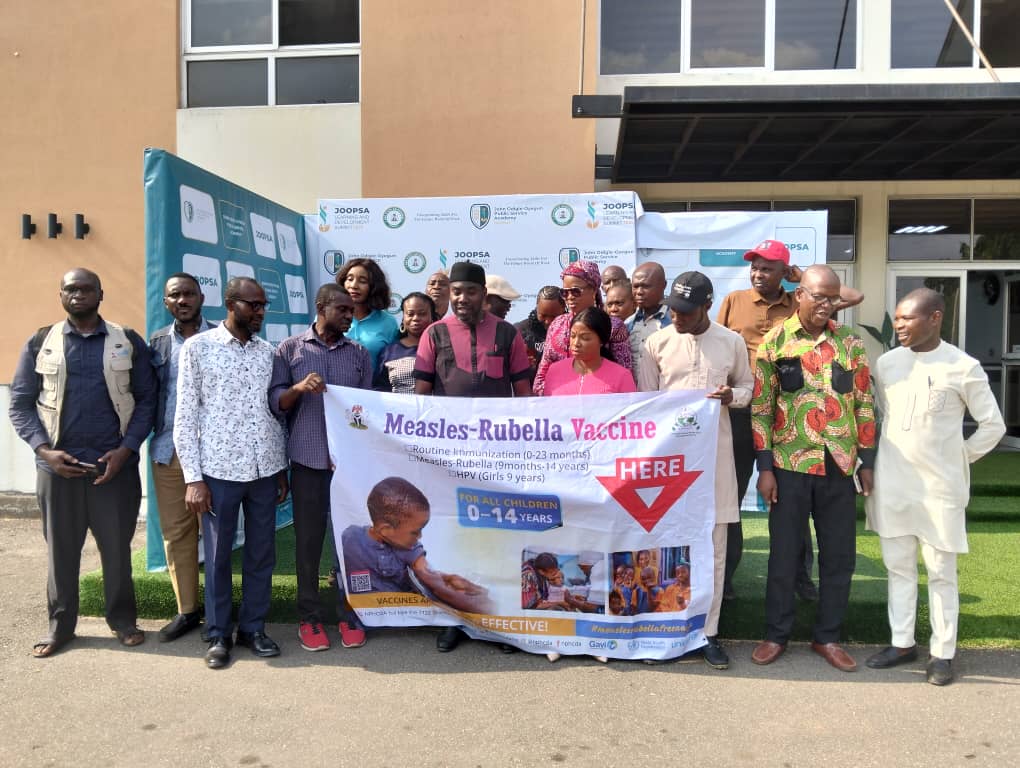
The Edo State Government says it is targeting about 2.2 million children aged between 0 and 14 years for measles and rubella vaccination across the state.
The Director of Disease Control and Immunization at the Edo State Primary Health Care Development Agency, Dr. Eseigbe Efeomon, who disclosed this during stakeholders’ sensitisation meeting in Benin City, said this would be done in collaboration with development partners.
Efeomon, while noting that the vaccination exercise scheduled to hold simultaneously from January 20 to January 30, 2026, across the 18 local government areas of Edo State at designated health facilities and temporary vaccination posts, said the campaign aims to contribute significantly to the reduction of measles and rubella in Nigeria.
He explained that achieving this target requires increased population immunity through sustained vaccination.
READ ALSO:Man Arrested In Edo For Alleged Abduction Of 4-year-old
Dr. Efeomon stressed that only qualified and certified health workers would be recruited as vaccinators because the vaccines are injectable.
According to him, the vaccination strategy would involve fixed posts and temporary fixed posts, and vaccination cards would be issued to all vaccinated children as proof, which parents and caregivers are advised to keep for future reference.
He added that vaccination teams would visit schools, churches, mosques, markets, motor parks, internally displaced persons’ camps and other public places, while children who receive the vaccine would be finger-marked to prevent double vaccination.
He reiterated that the overarching goal of the campaign is to drastically reduce rubella incidence nationwide and protect children from preventable diseases through effective immunisation coverage.
READ ALSO:Edo widow-lawyer Diabolically Blinded Over Contract Seeks Okpebholo’s Intervention
Also speaking, the World Health Organization Local Government Facilitator, Mr. Ajaero Paul, described measles and rubella as major causes of death and congenital abnormalities among children globally.
He said both diseases are preventable through the measles-rubella vaccine, which he described as safe and effective,
He added that sustained advocacy is critical to reducing child mortality and lifelong disabilities.
On his part, UNICEF Social and Behavioural Change Health Officer, Yakubu Suleiman, emphasised that the measles-rubella vaccine is safe and effective for all children aged nine months to 14 years.
READ ALSO:Edo: Suspected Kidnappers Kill Victim, Hold On To Elder Brother
He stated that the government has fully paid for the vaccines, making them available at no cost to all eligible children in government health facilities across the state.
Suleiman explained that vaccination not only protects individual children but also safeguards communities from deadly vaccine-preventable diseases such as measles and rubella.
He added that even children who had previously received the measles vaccine should still be given the measles-rubella vaccine and appealed to schools and other key stakeholders to support the campaign to ensure that no child is left behind.
News
Togo, Niger, Benin Owe Nigeria Over $17.8m For Supplied Electricity – NERC

Nigeria’s electricity regulator has disclosed that three neighbouring countries, Togo, Niger and Benin, are indebted to Nigeria to the tune of $17.8 million, equivalent to more than N25 billion at prevailing exchange rates, for power supplied under bilateral electricity agreements.
The Nigerian Electricity Regulatory Commission, NERC, made this known in its Third Quarter 2025 report, which reviewed market performance within the Nigerian Electricity Supply Industry, NESI.
According to the report, the international customers were billed a total of $18.69 million by the Market Operator for electricity supplied during the third quarter of 2025. However, only $7.125 million was paid, leaving an unpaid balance of $11.56 million for the period under review.
NERC also revealed that the same international offtakers had outstanding legacy debts amounting to $14.7 million from previous quarters. Of this amount, $7.84 million was settled, leaving a residual balance of $6.23 million.
READ ALSO:Expert Identify Foods That Increase Hypertension Medication’s Effectiveness
When combined with the Q3 2025 shortfall, the total outstanding debt stood at $17.8 million, which translates to about N25.36 billion at an exchange rate of N1,425 to one US dollar.
The regulator identified the international electricity customers as Compagnie Énergie Électrique du Togo, Société Béninoise d’Énergie Électrique of Benin Republic, and Société Nigérienne d’Électricité of Niger Republic.
NERC stated that the three utilities collectively paid just $7.125 million against the $18.69 million invoice issued for electricity supplied in the third quarter, resulting in a remittance performance of 38.09 per cent.
This meant that more than half of the billed amount remained unpaid at the close of the quarter.
READ ALSO:Electricity Workers Threatens Shutdown Over Staff Brutality
The commission explained that the electricity exported to the three countries was generated by grid-connected Nigerian generation companies and delivered through cross-border bilateral power supply arrangements.
By contrast, NERC reported a stronger payment performance among domestic bilateral customers. According to the report, local customers paid N3.19 billion out of the N3.64 billion invoiced for the same quarter, representing a remittance rate of 87.61 per cent.
The regulator further noted that some bilateral customers, both international and domestic, made additional payments to offset outstanding invoices from earlier quarters.
READ ALSO:Reps Ask NERC, DISCOs To Reverse Band A Tariff Hike
Specifically, the Market Operator received $7.84 million from international customers and N1.3 billion from domestic customers in settlement of previous obligations.
Beyond bilateral transactions, NERC disclosed that Nigeria’s 11 electricity distribution companies remitted a total of N381.29 billion to the Nigerian Bulk Electricity Trading Plc and the Market Operator in the third quarter of 2025. This was out of a cumulative invoice of N400.48 billion, translating to an overall remittance performance of 95.21 per cent.
The commission said the figures were derived from reconciled market settlement data submitted as of December 18, 2025, as part of its statutory evaluation of the commercial health and performance of the electricity market.
News
Expert Identify Foods That Increase Hypertension Medication’s Effectiveness

Hypertension remains one of the leading causes of premature death worldwide, contributing significantly to heart disease, stroke, and kidney failure. Despite the availability of effective antihypertensive drugs, long-term control of high blood pressure is often challenging because of drug resistance, side effects, and poor adherence.
This has fueled growing scientific interest in complementary strategies that can enhance drug efficacy while minimising toxicity. One promising approach is the combination of conventional antihypertensive medications with herbs and spices in many kitchens.
Recent evidence suggests that augmenting modern antihypertensive drugs with foods rich in p-coumaric acid, a naturally occurring phenolic acid, may offer a novel and effective strategy for blood pressure control.
Phenolic compounds, commonly found in fruits, vegetables, whole grains, and legumes, are known for their antioxidant, anti-inflammatory, and blood vessel–protective properties.
READ ALSO:Russia, China Afraid Of US Under My Administration — Trump
In a study, researchers investigated the combined effects of lisinopril, a widely used antihypertensive drugs and p-coumaric acid on hypertension.
They reported in the Comparative Clinical Pathology that p-coumaric acid enhance the antihypertensive action of lisinopril, potentially allowing for improved blood pressure control without increasing drug dosage.
The study used an established animal model in which hypertension was induced in rats through oral administration of L-NAME, a compound known to suppress nitric oxide production and raise blood pressure.
Following the induction of hypertension, the animals were treated for 14 days with p-coumaric acid (at two different doses), lisinopril alone, or a combination of both.
READ ALSO:Man Suffers Hypertension As Daughter, Grand-daughter Disappear For 10 Years
Untreated hypertensive rats showed significantly elevated activities of key enzymes linked to high blood pressure such as ACE, arginase, acetylcholinesterase, and phosphodiesterase-5 along with increased lipid peroxidation, an indicator of oxidative stress. At the same time, levels of nitric oxide, a critical molecule for blood vessel relaxation, were markedly reduced.
By contrast, rats treated with a combination of lisinopril and p-coumaric acid experienced notable improvements. Blood pressure was better controlled; harmful enzyme activities were reduced, oxidative stress declined, and nitric oxide levels increased. These improvements were mirrored in the tissues the heart compared with untreated hypertensive animals.
They said that the findings suggest that p-coumaric acid may enhance the antihypertensive action of lisinopril, potentially allowing for improved blood pressure control without increasing drug dosage.
This drug–food interaction model is particularly important in the circumstance of long-term hypertension management. Many patients rely on lifelong medication, and strategies that can improve treatment outcomes while reducing side effects are highly desirable.
READ ALSO:Delta Unveils Free Hypertension, Diabetes Screening
The study also reinforces the growing recognition that diet is not merely supportive but can be biologically active in disease control.
The use of medicinal plants and plant-based therapies in the management of hypertension is deeply rooted in traditional medicine across many cultures. While such practices have often existed outside conventional healthcare systems, modern scientific research is now providing evidence-based explanations for their effectiveness.
While these findings are based on animal studies and cannot yet be directly translated into clinical recommendations for humans, they open the door to future research on dietary strategies that can safely complement antihypertensive drugs.
READ ALSO:Why West African Troops Overturned Benin’s Coup But Watched Others Pass
Further clinical studies are needed to determine appropriate dosages, safety profiles, and real-world effectiveness.
In the fight against hypertension, the future may lie not only in new drugs, but also in smarter combinations, where medicine and nutrition work together to deliver better, safer outcomes for patients.
Such nutrition to help maintain healthy blood pressure includes garlic, potatoes, walnuts,tomato and tomato products, legumes and citrus fruits (grapefruits and oranges).
(TRIBUNE)

 News4 days ago
What I Saw After A Lady Undressed Herself — Pastor Adeboye
- Headline4 days ago
PROPHECY: Primate Ayodele Reveals Trump’s Plot Against Tinubu
- Metro4 days ago
Armed Robbers Shot PoS Operator To Death In Edo
- Metro3 days ago
AAU Disowns Students Over Protest
- Metro4 days ago
Joint Task Force Kills 23 Bandits Fleeing Kano After Attacks
- Business3 days ago
NNPCL Reduces Fuel Price Again
- Politics4 days ago
2027: Rivers APC Pledges To Follow Wike’s Instructions
- Metro3 days ago
Edo: Suspected Kidnappers Kill Victim, Hold On To Elder Brother
- Metro3 days ago
Nine Soldiers Feared Dead In Borno IED Explosion
- Metro4 days ago
Gunmen Demand N200m Ransom For Kidnapped Brothers In Edo


