

Headline
OPINION: Homeless Kids Invade South West




By Lasisi Olagunju
“A large percentage of them are from Niger Republic, Mali, and Chad.” The six South-West states are being overrun by an army of homeless young men of unknown address and of mystery background.
Some snakes have beauty; their nimbleness their strength. But these ones in every neighbourhood are not pretty snakes; their presence is ugly. They enter in anonymity, like an invalid, their fangs invisible.
Last Thursday, The Guardian newspaper ran a front page lead story with the headline: ‘Homeless kids invade Abuja, South-West’. The quote above which points at where they come from I lifted from that report. The Guardian and its sources fingered Niger Republic, Mali and Chad as the source of the human flood. I add and implicate northern Nigeria and the choice it makes. We see it every day in trucks and in trailers loaded with human consignments. They land aimless, wild and fear-inducing. The story continues:
“Many strangers move into the (South-West) region in trucks and articulated vehicles loaded with foodstuffs, livestock, and other items, and travel through the Ogbomoso axis into Oyo and to Ibadan. Some of them disembark in Ogbomoso and Ibadan in Oyo State, while others move to Ogun State, and the rest to Lagos State. From Ogbomoso and Ibadan, some disperse into other parts of the state, including Sabo, a large concentration of Hausa/Fulani community, as well as another such community in Ojoo, Iwo Road, and another large concentration at Akinyele, which houses what appears to be the largest pepper market in Nigeria,” the newspaper report said, quoting recent concerns raised by the ‘South-West Security Stakeholders Group’.
There are people who see the influx as a deliberate efflux of scum; something akin to NEPA’s load shedding. There are people who think it is population dumping and excretion of pooh on the Yoruba south. I see it as the natural consequence of elite irresponsibility and state failure. These movements have consequences, and they cannot be pleasant.
On February 21, 2024, Otunba Gbenga Daniel, senator and ex-Ogun State governor, sent out a tweet. He said rather ominously that “21 percent of Nigerians currently live in the South-West. The region is projected to hold close to 50 percent of our (Nigeria’s) population by 2050 because of the pattern of migration which will ultimately put greater strains on existing infrastructure…”
I do not know how ex-Governor Daniel arrived at his projection, but his reference to “pattern of migration” got me thinking. He may be right. And if he is right, the West will be in trouble – if it is not in trouble already. Every day, lorries carry youths from outside Yoruba land to Yoruba land. That is the terrifyingly truthful reality. We see trucks and lorries and crammed buses of boys and men every day entering the west. Yet, the factory producing the homeless runs non-stop and at full capacity, day and night.
Migration is not inherently bad. What is abhorrent is when the quality of the migrants is bad. I was in Liberia towards the end of that country’s civil war. I saw what it meant to have more than half of a county’s entire population in a zone. The country’s total population today is 5.3 million. Before the Liberian civil war, 250,000 people lived in the capital, Monrovia; the war pushed that figure up to what it is today – 1.735 million people, causing unending disruptions that have refused to go away.
MORE FROM THE AUTHOR: OPINION: ‘The Reign Of Our Emperor’
Recently, I wrote against shelling out 100 young female orphans into mass marriage in Niger State. I wrote about the danger of indiscriminate wife-buying and the production of a huge unproductive population, a mass of children that are sentenced to uneducation from the womb. A consortium in Kano came out attacking me for counting their spirit’s nine toes in his presence. They called me a hater of the North. Friends and foes forwarded their piece to me. I commend their diction but deplore their dictum. I wish I could tell them sorry for stepping beyond my ‘Yoruba’ bounds. But, I cannot. I can hear the plaintive words of Socrates “How you have felt, O men of Athens, at hearing the speeches of my accusers, I cannot tell; but I know that their persuasive words almost made me forget who I was — such was the effect of them; and yet they have hardly spoken a word of truth.” Where the northern elite stand is deplorable, quicksand of wickedness.
I have read sympathetic reports that described the daily arrivals as security and economic migrants. That fact itself is problematic – especially when the receivers are challenged too by existential problems. We say tèmi tó mi l’érù má dìkun (what I carry is enough load, do not add to it). Yoruba land already has more than enough of its homelessness to contend with. In shanties and under bridges, adults – male and female – with street children compete for space at night. Even those with roofs over their heads are ‘internally’ displaced in their homes by hunger and want. Now, combine anger inherent in all these with the troubles of unwanted guests. What we have is a volcano humming and rearing to go.
Mass migration like we are discussing potentially ties forehead hairs to occipital strands. Check how ‘foreign’ and ‘indigenous’ okada riders structure their presence across the South. The home boys and the ‘invaders’ hardly mix. Their relationship is forever fanned with the heat of tension. It can’t be different and better. Between popcorn and our molars, there is no enduring friendship; there has never been. Gúgúrú pèlú enu, won kìí s’òré títí d’alé.
Myron Weiner, American author and professor of Political Science, in his ‘A Security Perspective on International Migration’ published in 1992 stressed that “conflicts create refugees but refugees can also create conflicts.” That is the fear that is discussed in hushed tones in every neighborhood in south-west Nigeria now.
What does it mean for the South-West to carry half of Nigeria’s population? ‘The World Population Prospects’, published in 2017 by the United Nation’s Department of Economic and Social Affairs, said by 2050, the world would have 9.8 billion people. It said Nigeria, with eight other countries, would account for half of that figure. “Among the ten largest countries worldwide, Nigeria is growing the most rapidly. Consequently, the population of Nigeria, currently the world’s 7th largest, is projected to surpass that of the United States and become the third largest country in the world shortly before 2050,” the UN report predicted.
MORE FROM THE AUTHOR: OPINION: Kano’s Midnight Kingdom
The United Nations Population Fund Country programme document for Nigeria, published on 3 February, 2023, indicated that our population would reach 400 million by 2050. “The estimated population of Nigeria of 216 million and its annual growth rate of 3.2 percent is driven by a total fertility rate of 5.3. This rate is higher among rural households (5.9) and uneducated and poorest households (6.7). The population is expected to reach 400 million by 2050, making Nigeria the third most populous country globally,” the UNFPA report said.
Now, imagine half of 400 million Nigerians permanently living in Yoruba land as a result of migration from everywhere. Think of the cultural conflagration and the demographic disaster that will ensue. Think of the socio-political fissures, the tension and the permanent threat to peace and stability that will be the lot of the host. If 400 million live in western Nigeria with its present economic problems unsolved, you can be sure that more than half that figure will qualify to be described as homeless.
And, what does it mean to be homeless? The best definition of a situation always comes from those who are in it or have experienced it. “I used to think that the hardest thing about being homeless was not having a bed to sleep in – having to find a doorway, or a derelict building or the back of an abandoned car to lay your head. But I learnt from the young people that I am working with that that is not the hardest part of being homeless. Then I thought it was being hungry or cold. But that too is not the hardest part of being homeless. So I thought it was the boredom, having nothing to do, all day, every day, walking up and down trying to pass the time. But that is not the hardest part. Now I believe that the hardest part of being homeless is to live with the knowledge that if you disappeared from the face of the earth, no-one would even notice. That defines the value of your life. You are of no value to anyone; there is no one to whom you are important, no one who really cares. Your life is virtually meaningless. The message you receive from society, every minute of every day, is that you are not worth the trouble or effort or expense of providing you with even a small bedsit that you can call home.” Jesuit priest, Peter McVerry, wrote the above in his 2001 article, ‘Homelessness’.
“On 6 March, 1986, ten-year-old David Bright testified before the (United States) House Select Committee on Hunger and became an emblem of the homeless children of America in the 1980s. David lived in New York City’s Hotel Martinique, a festering behemoth that was home to 1,500 homeless children and their families.
“‘When I grow up,’ David said, ‘I will be the president of the United States. Then everyone will have a little money in their pockets.’
MORE FROM THE AUTHOR: OPINION: Petrol Pains, Wilderness Wanderings
‘”And,’ David added, ‘no little boy like me will have to put his head down on his desk at school because it hurts to be hungry.’”
The above is part of the introductory paragraphs of a 1989 piece written by Robert M. Hayes for the American Academy of Political Science. Hayes entitled his piece ‘Homeless Children.’ It is a study in societal rejection and abandonment.
Like that 10-year-old American boy, millions of children are on the street of Nigeria dying slowly and quietly in unremitting hunger and rejection. However, unlike the American boy, our own millions without homes do not have desks to put their hunger on. They rummage the dirt of gutters and sewages in search of the ever elusive hope of survival. If they are lucky or smart enough to live and their bones grow big enough, they migrate to the South without skills, compounding their suffering and homelessness. Rescuing them and saving ourselves is why we speak and write and refuse to be silenced. Yet, we are abused and called names.
Fortunately, those who read hatred in every criticism are a fading clan of clowns. There are great people in the North who are as concerned as any patriot could be. An old friend and Senior Advocate from one of the far northern states forwarded my column on mass wedding to me and thanked me. Another old friend, a retired General from the North-East, thumbed up my position and wrote to me: “Thank you. You people are keeping us busy.” This last Saturday, a very knowledgeable Imam from northern Nigeria, Sheikh Muhammad Nuru Khalid, granted a newspaper interview where he spoke against choices that encourage irresponsible child hatching and warned of the threat it poses to societal stability and cohesion. Khalid was the Chief Imam of Apo Legislative Quarters’ mosque in Abuja who was sacked in 2022 for preaching against the ills of General Muhammadu Buhari’s government. I am quoting his Saturday Tribune interview here, copiously:
“A child that was brought up on the streets does not know the affection of the family and he cannot have that love for anybody and therefore he can kill anybody. A child that is being prevented from having education with no justification, the envy in his heart will make him dislike any educated person, the system and the country itself.
“Those potential terrorists that we are seeing on the streets, children begging, children sleeping on the streets, children without clothes, without education, they are potential criminals. And criminals will get access to them to recruit them and become bandits. We have to work towards fairness and justice in governance so that there will be equity in economic opportunities. That will reduce the tendency of having more bandits.”
But it is not easy and won’t be easy. Sheikh Khalid said “If you remove all the Almajiris on the streets today, just give it some time, you will find more of them there again if you do not remove the root of the problem.” He was right. Some plants have to be rooted out for the field to be luxurious. Sheikh Khalid added: “And the root of the problem is the family. The problem of family is how marriage is being conducted and kept. Why is it that the North produces Almajiris? Why is the South not producing Almajiris? If Islam is the problem, why is it that Yoruba Muslims are not producing Almajiris?
“When you have irresponsible parents producing many children, you will have Almajiris or worse than Almajiris. Therefore, we have to regulate marriage in Nigeria. The government must come into it, enact laws that will prevent people from just getting married anyhow. That is how to tackle the issue… Let’s not give it a dimension of Islam and think that this is just for the Muslims. Let the other faiths and other geographical locations understand that the issue of Almajiri is a security issue. Insecurity in any part of Nigeria is also a menace to the entire country. It will affect our economy, it affects our social structure; it affects everything.” Sheikh Khalid was right. May his type be mass-produced in the North.
The problem of millions of the homeless migrating “from Niger Republic”, from “Mali, and Chad” – from everywhere – into the South-West has just started. The flood won’t stop unless the state is mended, and the elite shows genuine care and the leaky dam is repaired. Danger tottering on the brink of disaster should scare and worry everyone. A hurricane is coming.
The author, Dr. Lasisi Olagunju is the Saturday Editor of Nigerian Tribune, and a columnist in the same newspaper. This article was first published by the paper (Nigerian Tribune). It is published here with his permission.




Headline
Aircraft Crashes In Owerri With Four Persons Onboard

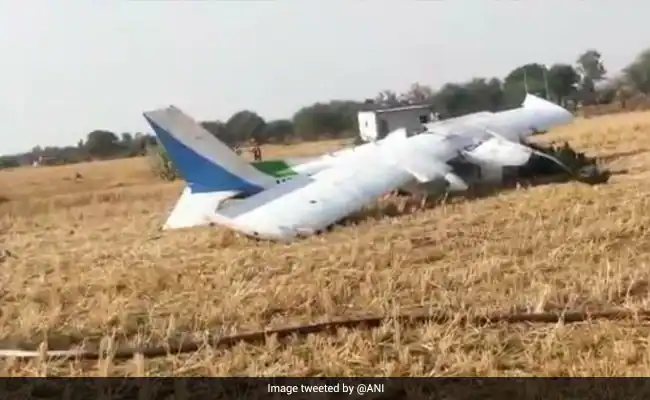
A Cessna 172 aircraft with registration number 5N-ASR, operated by Skypower Express, has crashed at the Sam Mbakwe International Cargo Airport, Owerri, Imo State.
The aircraft had departed Kaduna International Airport en route to Port Harcourt International Airport before diverting to Owerri after the crew declared an emergency.
The crash occurred at about 8:00 pm on the airport premises, with four passengers and crew members onboard.
Confirming the incident, the Director, Public Affairs and Family Assistance of the Nigerian Safety Investigation Bureau (NSIB), Mrs. Bimbo Oladeji, said the agency had been notified of the crash.
READ ALSO:Social Media Feud Spills Into Aircraft As VDM, Mr Jollof Exchange Blows
According to the NSIB, the aircraft crashed on the approach area of Runway 17, but no fatalities have been recorded so far.
The statement said: “Following the occurrence, airport emergency services were successfully activated and arrived on site promptly. Reports indicate that there was no post-crash fire, and the runway remains active for flight operations, with other aircraft taking off safely after the incident.
“Efforts are currently underway to coordinate the recovery and evacuation of the distressed aircraft from the crash site to allow for a detailed wreckage examination.”
The NSIB said it has officially activated its investigation protocols in line with its statutory mandate
READ ALSO:Ogun To Prosecute DJ Over Multiple Road Crashes
The Director-General of NSIB, Capt. Alex Badeh Jr., sympathised with the management of Skypower Express over the incident and expressed relief that no lives were lost.
Badeh Jr. added that the Bureau’s investigation team is already coordinating with relevant authorities to secure the crash site and commence a detailed investigation into the cause of the accident.
Two days ago, 11 persons narrowly escaped death as a private jet crash-landed at Mallam Aminu Kano International Airport, Kano, on Sunday morning.
The occupants, including passengers and cabin crew, were safely evacuated amid an intense atmosphere, eyewitnesses told The Guardian.
READ ALSO:Tanker Crash Kills Three, Fire Razes Shops In Kano
The private jet, owned by Flybird Aviation, crash-landed at about 9:30 a.m. while approaching Kano Airport en route to Abuja.
The incident attracted urgent attention, with emergency staff and other stakeholders converging at the runway to render rescue operations.
The management of the Federal Airports Authority of Nigeria (FAAN) is yet to release an official statement on the incident. Unofficial sources disclosed that the passengers have been taken to an unknown destination.
Several aircraft incidents have occurred at Kano Airport, with several lives lost.
The last incident occurred in May 2002, when an EAS Airline aircraft departed the runway at Aminu Kano International Airport at 1:29 p.m. local time en route to Lagos.
Headline
Musk Breaks Record As First Person Worth Over $600 Billion

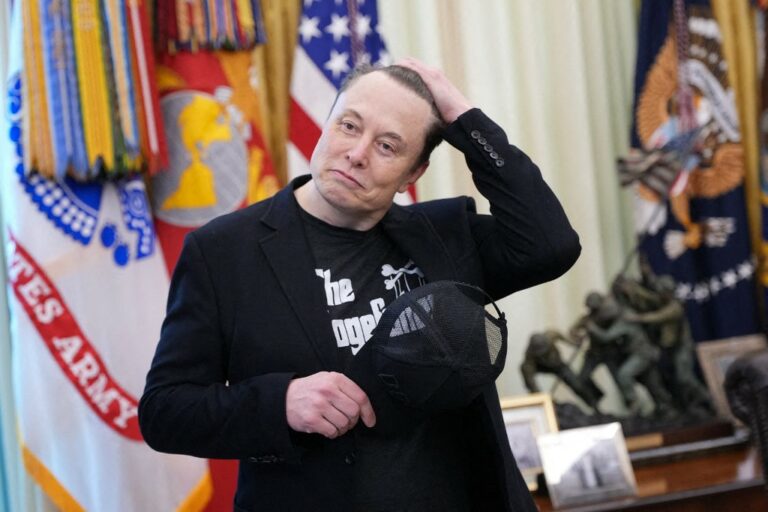
Elon Musk, Chief Executive Officer of SpaceX, Tesla, and xAI, has reached a new personal wealth milestone, surpassing a net worth of $600 billion, driven primarily by a recent valuation increase of SpaceX.
The development makes Musk the first individual in history to exceed the US$600 billion threshold.
According to Bloomberg’s Billionaires Index, Musk’s net worth stood at approximately $638 billion as of 15 December 2025, with the increase largely attributed to SpaceX, which was recently valued at around $800 billion following an insider share sale.
The privately held aerospace company, based in Starbase, Texas, is now considered the most valuable private firm globally, significantly boosting Musk’s personal holdings.
READ ALSO:Elon Musk Joins ‘Cancel Netflix’ Campaign
Musk’s stake in Tesla, estimated at roughly 12 per cent, is valued at nearly $200 billion, while his majority ownership of xAI Holdings is estimated at $60 billion.
Collectively, these assets place him on track to potentially approach US$700 billion, widening the gap between him and the world’s second-richest individual, former Google CEO Larry Page, valued at $265 billion.
The SpaceX valuation comes ahead of a projected public listing in 2026, which could see the company valued at approximately $1.5 trillion.
“Other shareholder meetings are snooze-fests but ours are bangers. Look at this. This is sick,” Musk said in November during Tesla’s shareholder meeting, referring to a performance-linked pay package approved by investors.
READ ALSO:EU Fines Elon Musk’s X €120m For Violating Digital Content Rules
He added, “I super appreciate it.” The package, potentially worth up to US$1 trillion in stock, is tied to market-capitalisation and operational milestones over the next decade.
SpaceX’s Starlink satellite network has also contributed to investor confidence. The company continues to expand high-speed internet access to underserved regions worldwide.
Chad Gibbs, Vice President of Starlink Operations, stated that the satellite technology “bypasses the need to build massive amounts of infrastructure,” allowing broader and faster connectivity.
Musk’s ascent in personal wealth follows years of strategic risk-taking and long-term planning, with Tesla’s focus on electric vehicles, battery technology, and autonomous systems laying the foundation for his financial growth.
Analysts note that the combination of SpaceX’s soaring valuation, Tesla’s long-term incentives, and Musk’s diverse portfolio underpins his current status as the world’s wealthiest individual.
Headline
South Korea, Japan Protest China, Russia Aircraft Incursions
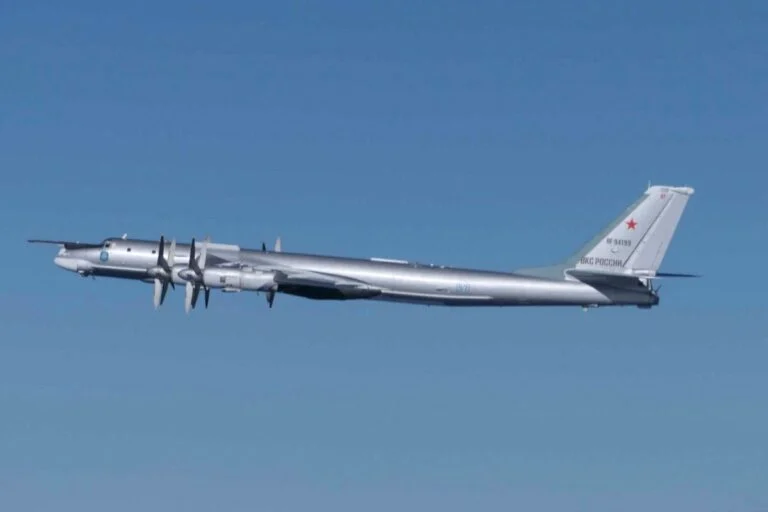
South Korea and Japan reacted furiously on Wednesday after Chinese and Russian military aircraft conducted joint patrols around the two countries, with both Seoul and Tokyo scrambling jets.
South Korea said it had protested with representatives of China and Russia, while Japan said it had conveyed its “serious concerns” over national security.
According to Tokyo, two Russian Tu-95 nuclear-capable bombers on Tuesday flew from the Sea of Japan to rendezvous with two Chinese H-6 bombers in the East China Sea, then conducted a joint flight around the country.
The incident comes as Japan is locked in a dispute with China over comments Prime Minister Sanae Takaichi made about Taiwan.
READ ALSO:China Backs Nigeria, Warns Against Foreign Interference
The bombers’ joint flights were “clearly intended as a show of force against our nation, Defence Minister Shinjiro Koizumi wrote on X Wednesday.
Top government spokesman Minoru Kihara said that Tokyo had “conveyed to both China and Russia our serious concerns over our national security through diplomatic channels”.
Seoul said Tuesday the Russian and Chinese warplanes entered its air defence zone and that a complaint had been lodged with the defence attaches of both countries in the South Korean capital.
“Our military will continue to respond actively to the activities of neighbouring countries’ aircraft within the KADIZ in compliance with international law,” said Lee Kwang-suk, director general of the International Policy Bureau at Seoul’s defence ministry, referring to the Korea Air Defence Identification Zone.
READ ALSO:Trial For South Korean Woman Accused Of ‘Suitcase Murders’ Starts Today
South Korea also said it deployed “fighter jets to take tactical measures in preparation for any contingencies” in response to the Chinese and Russian incursion into the KADIZ.
The planes were spotted before they entered the air defence identification zone, defined as a broader area in which countries police aircraft for security reasons but which does not constitute their airspace.
Japan’s defence ministry also scrambled fighter jets to intercept the warplanes.
Beijing later Tuesday confirmed it had organised drills with Russia’s military according to “annual cooperation plans”.
READ ALSO:South Korean Actress Kim Sae-ron Found Dead In Seoul Apartment
Moscow also described it as a routine exercise, saying it lasted eight hours and that some foreign fighter jets followed the Russian and Chinese aircraft.
Since 2019, China and Russia have regularly flown military aircraft into South Korea’s air defence zone without prior notice, citing joint exercises.
In November last year, Seoul scrambled jets as five Chinese and six Russian military planes flew through its air defence zone.
Similar incidents occurred in June and December 2023, and in May and November 2022.
READ ALSO:Russia Insists Ukraine Must Cede Land Or Face Continued Military Push
Meanwhile, Tokyo said Monday it had scrambled jets in response to repeated takeoff and landing exercises involving fighter jets and military helicopters from China’s Liaoning aircraft carrier as it cruised in international waters near Japan.
It also summoned Beijing’s ambassador after military aircraft from the Liaoning locked radar onto Japanese jets, the latest incident in the row ignited by Takaichi’s comments backing Taiwan.
Takaichi suggested last month that Japan would intervene militarily in any Chinese attack on the self-ruled island, which Beijing claims as its own and has not ruled out seizing by force.
AFP
-

 Metro2 days ago
Suspected Kidnappers Abduct 18 Passengers On Benin-Akure Road
-

 Sports18 hours ago
JUST IN: Dembélé Named FIFA Best Men’s Player, Bonmatí Wins Women’s Award
-

 News2 days ago
Edo Assembly Charges Contractor Handling Ekekhuan Road To Accelerate Work
-

 News2 days ago
I’m Not Distracted By Anti-Niger Delta Elements, Says PAP Boss, Otuaro
-

 News2 days ago
OPINION: Time For The Abachas To Rejoice
-

 Metro2 days ago
NDLEA Seizes 457kg of Cannabis, Arrests Suspected Trafficker In Edo
-

 News17 hours ago
Wage Dispute: Court Orders PSG To Pay Mbappe €61 Million
-

 Business16 hours ago
CBN Revokes Licences Of Aso Savings, Union Homes As NDIC Begins Deposit Payments
-

 News2 days ago
Okpebholo Pledges To Clear Inherited Salary Arrears, Gratuities At AAU
-

 News2 days ago
Ex-Nigerian Amb., Igali, To Deliver Keynote Address As IPF Holds Ijaw Media Conference